Join us in person on the U of M campus or tune in online to the CTS winter research seminars. The seminars will highlight a sampling of the latest transportation research at the U of M.
Each seminar will be held in Room 50B at the Humphrey School of Public Affairs. Or, if you can’t make it in person, you can watch the seminars live online or view recordings posted after the events. For details about the live broadcasts, see the individual seminar web pages.
There’s no cost to attend, and each seminar qualifies for one Professional Development Hour.
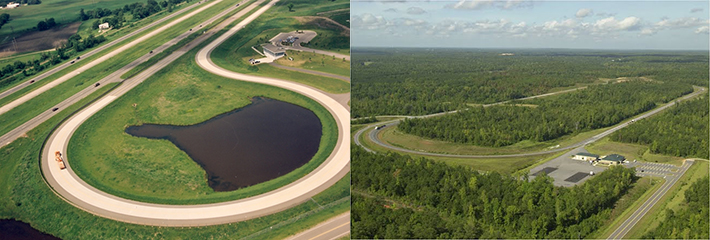
Representatives of the test tracks are meeting next week in Minneapolis at the 19th Annual TERRA Pavement Conference. They said the partnership will develop a national hot mix asphalt cracking performance test and expand the scope of existing pavement preservation research at the NCAT facility in Auburn, Alabama, to include northern test sections in Minnesota.
MnROAD plans to build test sections at its facility and also off-site on a low- and high-volume road, which may include concrete test sections if funding allows. These Minnesota test sections will supplement 25 test sections built by NCAT on an existing low-volume haul route in 2010 and an off-site high-volume test road planned for this summer in Alabama to assess the life-extending benefits of different pavement preservation methods. Both agencies have also been developing performance tests to predict the cracking potential of asphalt mixes, and they will now work together on that research as well.
“We will collect and analyze the data in similar ways, and I think we’ll have a greater appeal nationally, as we cover a range of climate conditions,” said MnROAD Operations Engineer Ben Worel.
Participation in the pavement preservation study is $120,000 per year for the initial research cycle, which will drop to $40,000 after three years; the cracking study will run three years at $210,000 per year. Alabama will be the lead state for this effort.
State departments of transportation are asked for commitment letters this month if they are interested in joining either study, even if they do not have SP&R (State Planning and Research) dollars available at the time. Participating agencies will get to design the scope of the research and be kept advised of the ongoing findings, so they can benefit early from the project. Initial planning meetings will be done through a series of webinars in March and April of this year with participating agencies.
At a January 8 webinar, speakers said the research will help states determine how long pavement preservation treatments will last.
“Many DOTs have really well-designed and well-thought-out decision trees, where they can take pavement management data and end up with a rational selection of pavement alternatives. But the issue of extending pavement life is the really big unknown, because references provide a broad range of expected performance,” NCAT Test Track Manager Buzz Powell said.
Another benefit is that states can learn how pavement treatments hold up in both hot and cold climates.
“It’s 14 degrees right now in Mississippi. It rains about every three days, freezes and then thaws,” said Mississippi Chief Engineer Mark McConnell. “So we need to know how pavement preservation is going to work in the north as well.”
For additional information, contact Ben Worel (ben.worel@state.mn.us) at MnROAD or Buzz Powell (buzz@auburn.edu) at NCAT.
Aerial views of the pavement test tracks at MnROAD (left) and NCAT (right).
Results of a newly released MnDOT research report shed new light on the role transportation plays in our state’s economic competitiveness, and highlight the unique challenges faced by some of the state’s major industry clusters.
The report, authored by Professor Lee Munnich of the University of Minnesota’s Humphrey School of Public Affairs, underscores the importance of a reliable transportation system in facilitating economic growth. Munnich examined the impact of transportation on Minnesota’s competitive industry clusters — geographically concentrated, interconnected groups of companies and institutions that share knowledge networks, supply chains and specialized labor pools.
MnDOT Research Project Engineer Bruce Holdhusen said MnDOT’s goal with the study was to discover how its investment decisions could help support job creation and economic prosperity.
“The idea is to look at the companies and industries that are already bringing money into the state, figure out what their transportation challenges are, and then use that information to see what kind of investments we could make to support their continued growth,” Holdhusen said.
MnDOT is incorporating the results of the study into its statewide freight planning. The industry clusters-approach also is being used by MnDOT in a statewide effort to talk with manufacturers, other shippers, and carriers about their transportation priorities and challenges. MnDOT will focus on its Metro District starting this summer. Two similar projects have been undertaken in Greater Minnesota, with a third study starting later this year. (Results from one study, in southwest Minnesota/District 8, are available online.)
The full report is available online, and examines a wide range of industries, including forest products, medical devices, robotics and processed foods. We’ve pulled out a few interesting tidbits below.
Recreational Vehicles (Northwest Minnesota)
Minnesota winters are great for snowmobiling, but not always great for shipping snowmobiles. (Photo by Dave Gonzalez, MnDOT)
As noted in the report, Minnesota’s extreme winter weather poses unique challenges to its economic competitiveness. Ironically, nowhere is this more evident than in the state’s snowmobile-producing northwest corner.
Polaris and Arctic Cat (together with smaller, more specialized firms like Mattracks) employ thousands of Minnesotans, producing a wide variety of recreational vehicles and accessories that are sold and distributed all over the world. While the companies’ snowmobiles might fare well in a blizzard, the trucks that deliver them don’t. A bad snowstorm can cause delays in both supply and product shipments; it can also prevent employees from getting to work, or even shut down a plant altogether. On a larger scale, these issues make it difficult for the companies to expand at their ideal rates.
The report notes that MnDOT’s 511 system is an important source for many companies to identify and respond to potential shipping delays. It recommends continuous improvements to the system.
The Mayo Clinic (Rochester Area)
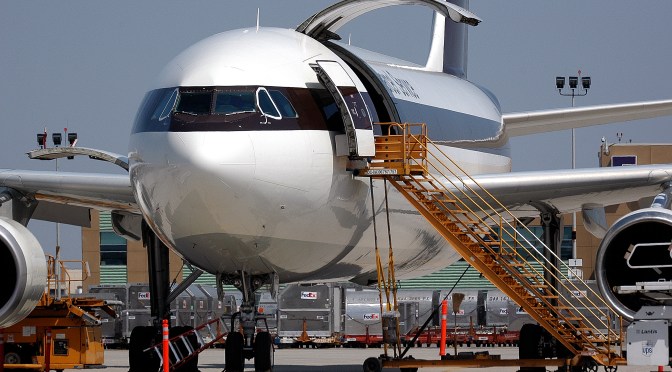
Air carriers like FedEx have limited capacity for refrigerated shipments, which creates challenges for shipping medical lab samples. (Photo by Dave Gonzalez, MnDOT)
The Mayo Clinic has become synonymous with the Rochester metropolitan area, and for good reason: it employs 37,000 residents and brings in 500,000 unique patients each year from all 50 U.S. states and 150 countries. As you might imagine, generating that much activity in a community of only 110,000 people creates some unique and significant transportation challenges.
Unlike most competitor institutions (Johns Hopkins in Baltimore, for example), the Mayo clinic is located in a relatively small metropolitan area. The local airport has an older navigation system and offers less direct commercial air service. As a result, it depends on high-quality transit and freight service to help accommodate the constant flow of visitors and supplies. The shipping of highly perishable lab samples is also a challenge, as air carriers have limited capacity for refrigeration. Finally, adverse weather conditions can affect emergency services dispatchers’ ability to send fast modes of transportation such as helicopters.
Hospitality and Tourism (Brainerd Lakes Area)
Lakeside resorts a great way to enjoy Minnesota’s scenic beauty — but getting there can be a challenge. (Photo by Dave Gonzalez, MnDOT)
The oil boom in North Dakota has generated a lot of wealth in a short amount of time, and resorts like the Grand View Lodge in Nisswa would love to capture some of it by enticing new vacationers from the west. The trouble is, the area is inconvenient to reach from that direction.
A four-lane highway makes it easy for visitors from St. Cloud or the Twin Cities to visit resorts in the Brainerd area, but travelers coming from the Dakotas face a more circuitous route. Air travel options help to an extent, as visitors from even farther distances can fly into Fargo and then drive in from there. St. Cloud also has daily air service from Chicago, which helps maintain a constant flow of visitors.
A new tool developed by the Local Road Research Board helps cities and counties assess how much increased heavy vehicle traffic affects local roads.
Researchers created an analysis method and corresponding spreadsheet tool that city and county engineers can use to calculate the impact of heavy vehicles on asphalt roads beyond what was planned in the original pavement design.
The information will help agencies optimize services, such as garbage collection, for the least amount of damage. It will also help agencies better plan roads in new developments, as well as redesign existing roads that are nearing the end of their lives.
Lack of Data
Heavy trucks cause local roads to deteriorate more quickly than passenger vehicles, but it is challenging to quantify the impacts, especially for areas where traffic was not forecast at the time a road was designed.
Many local engineers in Minnesota have requested information about the impact of heavy vehicles in light of new construction, commercial distribution facilities and hauling routes. This information is needed to assist in local road planning and maintenance.
Two Methods
In a newly completed study, investigators developed two methods for calculating heavy vehicle impact:
Calculate the additional bituminous material (and associated costs) that would have been required to construct the pavement had the heavy truck traffic been predicted when the pavement was designed.
Calculate the portion of a pavement’s design life, measured in equivalent single-axle loads (ESALs), consumed by unanticipated vehicles.
“Before this project, there wasn’t an easy way for an engineer to determine how much a specific truck was going to decrease the life of a road,” said Deb Heiser, Engineering Director, City of St. Louis Park.
Whereas previous research has calculated the impact of extremely heavy vehicles over the short-term (typically the course of a construction project), this project calculates the impact of long-term increases in traffic from vehicles that are heavy, but still mostly within normal legal weight limits.
The tool can be used for a single street segment or an entire road network. Users can also compare current situations with proposed ones to evaluate the impact of potential changes in heavy traffic levels.
In recent years, the transportation community has introduced significant changes to improve left-turn safety at signalized intersections—and for good reason. Nationally, intersection crashes represent one-fifth of all fatal crashes, and most of these are crashes involving left turns.
In response to this serious safety problem, the FHWA has adopted a new national standard for permissive left turns: the flashing yellow arrow. This signal warns drivers that they should proceed with a left turn only after yielding to any oncoming traffic or pedestrians. Flashing yellow arrow signals can help prevent crashes, move more traffic through an intersection, and provide additional traffic management flexibility.
Many transportation agencies, including MnDOT, are interested in using the new flashing yellow arrow signals to accommodate within-day changes: protected left turns (signaled by a green arrow) could be used when needed to lower crash risk, while permitted left turns (signaled by a flashing yellow arrow) could be used to reduce delay when crash risk is low.
“Of course, this requires being able to predict how the risk of left-turn crashes changes as intersection and traffic characteristics change within the course of a day,” says Gary Davis, a professor of civil, environmental, and geo- engineering at the University of Minnesota.
To help engineers make more informed decisions about when to use flashing yellow arrows, Davis is leading the development of a model that could help predict the probability of left-turn crash risk at a given intersection at different times of day. This model—which will ultimately be available as a set of spreadsheet tools—will help traffic engineers determine when the crash risk is sufficiently low to allow for the safe use of flashing yellow arrows. The project is sponsored by MnDOT and the Minnesota Local Road Research Board.
To develop the statistical model, the researchers needed to determine how the risk for left-turn crashes varies depending on time of day, traffic flow conditions, and intersection features (such as number of opposing lanes, number of left-turn lanes, and median size). The process included developing a database containing left-turn crash information, intersection features, and traffic volumes, as well as developing a set of 24-hour traffic pattern estimates to help fill gaps where hourly traffic volume counts were not available. The resulting statistical model uses this information to determine relative crash risk for every hour of the day at a given type of intersection.
Currently, Davis and his team are using the model to develop a spreadsheet tool that will allow traffic engineers to choose their type of intersection and enter the available turning movement count. The tool will then generate a specialized graph for that intersection showing the relative crash risk by time of day. Any time the crash risk is at or below the level identified as acceptable, engineers can consider using flashing yellow arrows.
“By simulating how crash risk changes as traffic conditions change, this model could help identify conditions when permitted left-turn treatments would be a good choice and what times of day a protected left turn might be a better option,” Davis says.
Moving forward, Davis is leading an additional project related to the use of flashing yellow arrows, funded by the Roadway Safety Institute. The project will first review video data of drivers making permitted left turns to characterize left-turn gap acceptance and turning trajectories. Then, Davis will incorporate the findings into the existing statistical model. To further improve the model’s accuracy, the study will compare the crashes described by the simulation model with reconstructed real-world left-turn crashes.
Replacing traffic signs at the right time is an important science.
Waiting too long can endanger lives and expose an agency to a lawsuit. But replacing traffic signs prematurely could cost a single city tens of thousands of dollars per year.
If fully implemented, new recommendations developed by MnDOT and the Local Road Research Board (LRRB) could save public agencies as much as $41 million over three years by helping them better manage their signs and meet new federal requirements on retroreflectivity without replacing signs prematurely. Here’s how:
Reducing Inventories
At a purchase price of $150 to $250 a piece, plus $20 per year for maintenance, the cost of an unnecessary traffic sign adds up. (Maintenance costs involve replacing signs that have been vandalized, knocked down, or that no longer meet required levels of retroreflectivity.)
In a case study of townships in Stevens County, Minnesota, researcher Howard Preston found that nearly a third of traffic signs were not required and served no useful purpose. The average township has 180 signs, which results in an annual maintenance cost of $3,600. The average county has 10,000 signs — an annual maintenance cost of $200,000.
Public agencies could save a collective $26 million* just by removing unnecessary or redundant signs from the field, Preston said. A traffic sign maintenance handbook developed by the LRRB and MnDOT guides agencies through that process.
Longer Lives
Traffic signs have more life in them than the typical 12-year manufacturer’s warranty, Preston said. But how often agencies replace them varies throughout the state.
Whereas small municipalities may replace signs on an individual basis through spot-checking for retroflectivity, MnDOT has a schedule. Each of the agency’s 400,000 signs is replaced within 18 years of installation.
Preston found that MnDOT could safely extend the service life of its signs to 20 years, which would save an estimated $1.3 million within the first few years of implementation.
Assuming (in lieu of a research-backed benchmark) that local municipalities would likely start replacing signs around the 15-year mark to ensure compliance with the federal law, Preston estimates that townships, cities and counties could avoid a collective $6 million in unnecessary costs per year just by adhering to the minimum 20-year replacement schedule recommended by the study.
Agencies are required by federal law to have a method in place for ensuring that signs maintain adequate retroreflectivity. A replacement schedule based on science is one way; regular physical inspection is another.
Researchers, who consulted other state’s studies and also examined signs in the field, determined that the life of the modern sign in Minnesota is at least 20 years.
It’s possible that traffic signs actually retain their retroreflectivity for 30 years or more, but further study is needed since sheeting materials on today’s traffic signs haven’t been deployed long enough to know, researchers say.
A test deck at the MnROAD facility will track the condition of Minnesota signs over the next decades — and perhaps push the recommended replacement cycle longer.
*This figure and the $41 million total above account for cost savings calculated over an initial, three-year period. Ongoing cost savings thereafter may be different, according to Preston.
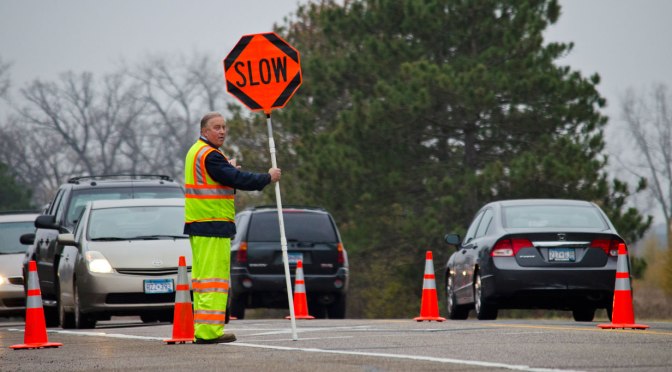
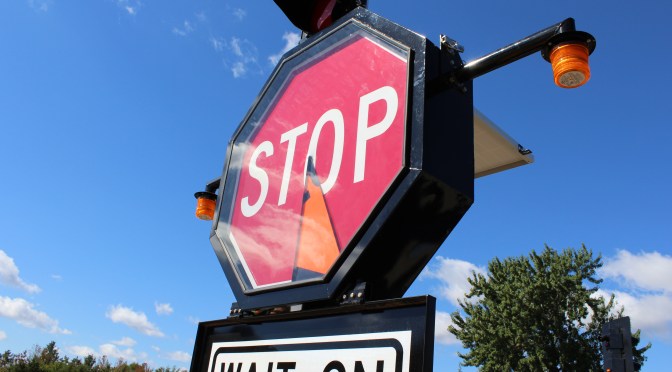
Like a traditional flagger, an Automatic Flagger Assistance Device directs drivers through work zones and other problem areas. But whereas traditional flagging requires workers to stand dangerously close to moving traffic, AFADs can be operated remotely, keeping the flaggers out of harm’s way.
“This is a very risky environment from our employees,” MnDOT Research Services Project Advisor Alan Rindels said. “Any flagger you talk to can recount a time he or she had to jump in a ditch to avoid a vehicle.”
Using a remote control, a single worker can easily operate two AFADs simultaneously, freeing up personnel to perform other tasks and speed up the completion of a road project. MnDOT estimates that the resulting cost savings can cover an AFAD’s purchase costs within two years.
MnDOT recently undertook a pilot implementation of three sets of AFADs, introducing them to maintenance staff and identifying the most appropriate situations for their use. Researchers reviewed past AFAD use in Minnesota, observed traditional flagger and AFAD operations in action, interviewed MnDOT maintenance personnel about their experiences and held two hands-on training sessions that were attended by more than 60 people.
Results showed that drivers obeyed the AFAD instructions and that AFADs work well for stationary construction projects. These successful demonstrations should encourage the wider use of AFADs and enhance worker safety in a cost-effective way.
MnDOT Research Services & Library produced the video above, which details the experiences of a MnDOT road crew who recently started working with AFADs.
(Bonus: Watch MnDOT flagger Joe Elsenpeter talk about jumping into a ditch to avoid being hit.)
*Note: This blog post was adapted from an article in the latest issue of our newsletter, Accelerator. Click here to subscribe.
The data collected at the scene of a crash by law enforcement officers are important for more than just drivers and their insurance companies. The information is also used on a much larger scale by state agencies and researchers to analyze and evaluate crashes, trends, and potential countermeasures.
“Big decisions get made based on that data—million-dollar decisions,” says Nichole Morris, a research associate at the U of M’s HumanFIRST Laboratory. “So you have to be sure that what goes in to that report is high quality and reflects what actually happened at the scene of the crash.”
As part of an effort to improve this data quality in Minnesota, Morris is leading a team of HumanFIRST researchers in a project to redesign the electronic crash report interface used by law enforcement officers. The team’s goal is to create a new interface that improves the accuracy, speed, reliability, and meaningfulness of crash report data.
The project is occurring in conjunction with a redesign of Minnesota’s crash records database and is being sponsored by the Traffic Records Coordinating Committee (TRCC) at the Minnesota Department of Public Safety (DPS) and by MnDOT.
“In industry, they do this work all the time, looking at usability and design. But when you think about what a state does in terms of usability, nothing like this to our knowledge has ever been done. This makes it a very exciting and revolutionary project for Minnesota,” Morris says.
In the first phase of the project, the researchers completed a human factors analysis on the existing crash report interface to identify potential problem areas. This included a step-by-step task analysis and in-depth interviews with law enforcement officers.
During this process, the researchers identified several areas they hoped to improve. For instance, they wanted the new interface to be smarter, making better use of autofill features to reduce the amount of manual data entry.
Following the analysis, the team built two versions of a mock crash report interface for usability testing: a wizard and a form. In both versions, the researchers added decision aids to ease usability. They also significantly improved the system’s autofill capabilities, reducing the ratio of officer to system data entry from 6:1 to nearly 1:1.
The researchers then conducted four rounds of usability testing with law enforcement officers for both the wizard and the form. Results were split: half the officers preferred the wizard and half preferred the form. Because of these findings, the TRCC is planning to build full versions of both, Morris says, which will allow officers to use the version they prefer.
Going forward, the researchers plan to make a few more adjustments to the research prototype before handing it off to the state vendor, Appriss, which will build the new system. The team will then work collaboratively with Appriss to complete additional beta and usability testing before the new interface launches in January 2016.
“The results of the HumanFIRST prototypes are being combined with the vendor’s prior experience for a best-of-breed approach,” says Kathleen Haney, traffic records coordinator at DPS. “This is a fantastic project, and the results will be relevant for years to come.”
Minnesota’s transportation research governing boards put a new emphasis on financial benefits when selecting next year’s round of transportation research projects.
MnDOT’s Transportation Research Innovation Group (TRIG) and the Local Road Research Board announced their Fiscal Year 2016 funding awards this week after hearing proposals from researchers in several states. They selected 20 research proposals hall-marked by novel approaches to improving the environment, increasing transportation safety, improving construction methods and boosting the bottom line.
“We asked the principal investigator to present the safety and financial benefits up front, and how they can be implemented to improve the transportation system and economic viability of Minnesota,” said MnDOT Research Management Engineer Hafiz Munir. “We’re making a point early in the process to identify those potential benefits, quantify them and document them in our tracking system.”
Researchers will test new technology that could make crack-free pavements; find better, faster and less expensive ways to reclaim roads; and even explore how to use waste material from road construction projects as part of the landscaping to absorb water runoff.
Links are provided below to brief descriptions of each of the projects:
The results of last season’s deicing study are in — just in time for our next snow.
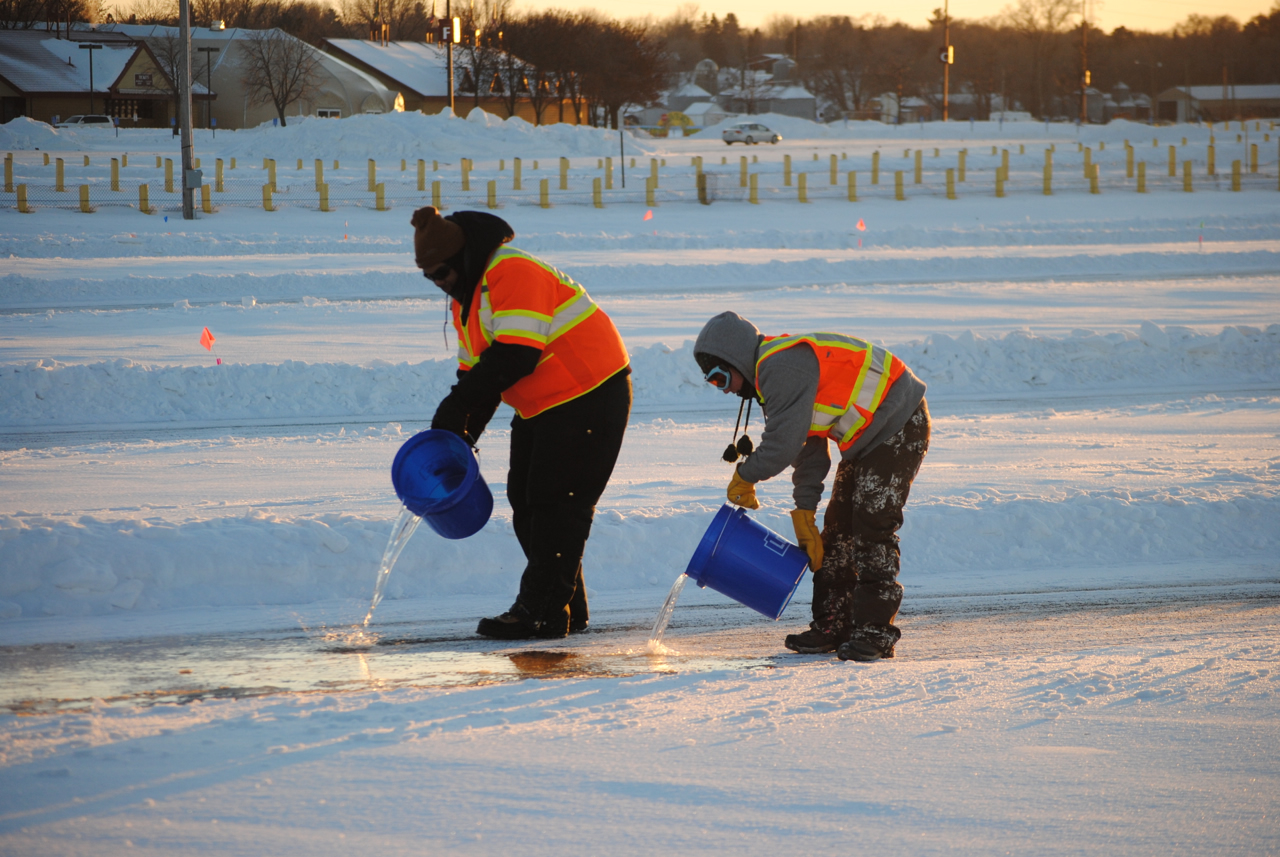
Last winter, Minnesota State University researcher Steve Druschel set up experimental lanes at two Shakopee entertainment parks and a test site on a Mankato bridge to examine the life cycle of winter maintenance, from plowing and the application of chemicals to the drainage of chemical residue after the roadway has been treated.
What the Study Found
The majority of chloride appears to leave the roadway by plow ejection, vehicle carry-away or tire-spray spreading, rather than through storm drainage, even in warmer storms.
Pavements don’t hold chloride very long in a precipitation event, even after anti-icing/pre-treatment.
Deicer effectiveness. Warmer temperatures provide more melt from the deicer. Little melt was observed below
10 degrees Fahrenheit unless sunlight provided warming, and prewetting produced no significant difference in deicer performance.
Dry pavements may be better candidates for pretreatment, with researchers noting that any wetness on the pavement ahead of a storm limited anti-icer effectiveness.
Truck traffic after deicer application was found to significantly improve deicer performance, resulting in both a wider and quicker melt.
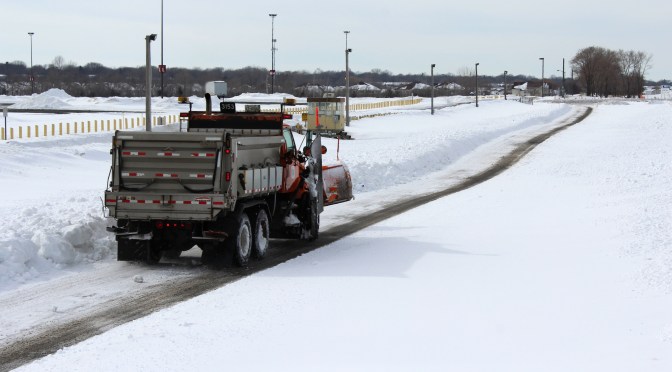
Plow effectiveness. Even with different snow and temperature conditions, the evaluation of plow speed provided the same findings: snow rises higher in the curvature of the plow at higher speeds, creating a broader spray off the plow ends, and higher speeds decrease scrape quality.
Students pour water to form ice on a test lane in Shakopee.
What’s Next?
The research team has proposed a third phase of this project to continue their work in the field, which is expected to include further examination of the impact of truck traffic on deicer effectiveness, variations in plow setup and expanded testing under varying weather conditions and snow structure.
Related Resources
Field Effects on Deicing and Anti-Icing Performance – Technical Summary (PDF, 1 MB, 2 pages); Final Report (coming soon)
Salt Brine Blending to Optimize Deicing and Anti-Icing Performance –Technical Summary (PDF, 1 MB, 2 pages) and Final Report (PDF, 11 MB, 151 pages) (previous study)