


TRB Webinar: Connected Mobility Futures—Integrating Transit and Technology

Pre-registration is required.

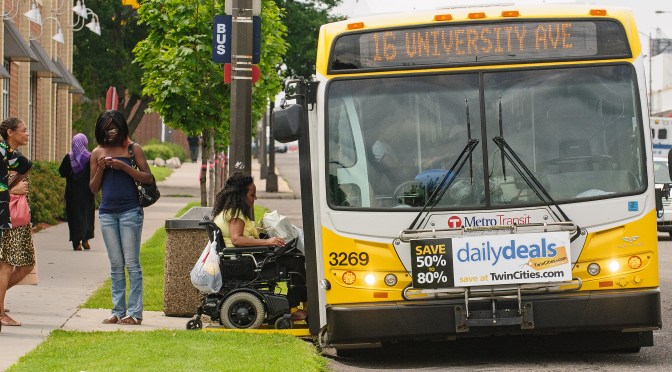
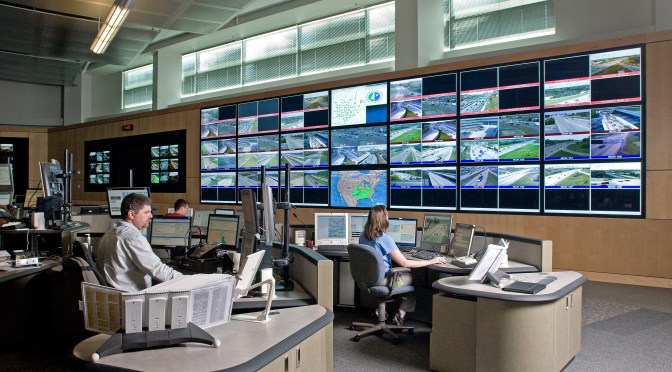
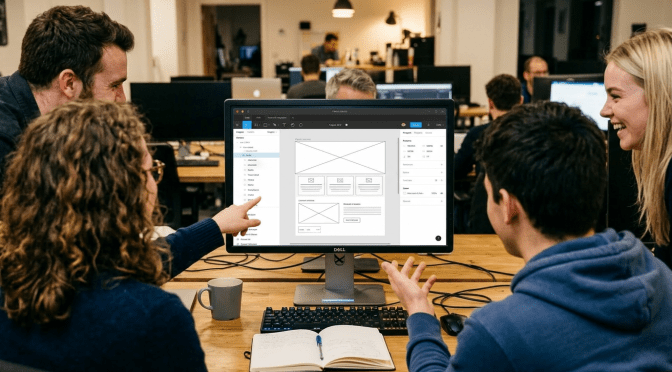
Public transit agencies are reimagining mobility through innovation, integration, and technology to create seamless travel experiences and improve access for all users. TRB will host a webinar on Tuesday, December 16, 2025 from 1:00 PM to 2:30 PM Eastern that will highlight strategies and technologies transforming the future of connected mobility. This session will explore how public agencies and technology partners are addressing fragmented systems through open platforms, integrated trip planning, and seamless fare payment, drawing on lessons from the Federal Transit Administration’s Integrated Mobility Innovation (IMI) and Accelerating Innovative Mobility (AIM) programs. Attendees will also gain insights into how Mobility-as-a-Service (MaaS) and Autonomous Mobility-on-Demand (AMoD) can expand access, improve service efficiency, and rebuild ridership. Presenters will share real-world examples, research, and lessons learned to help agencies advance scalable, user-centered transportation systems.

Continue reading TRB Webinar: Connected Mobility Futures—Integrating Transit and Technology

Identifying Factors That Affect Stormwater Basin Performance

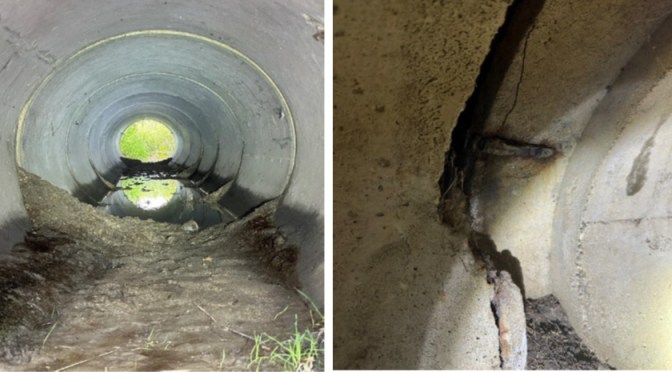
Stormwater basins are used to control runoff, prevent flooding and limit pollutants from reaching rivers, lakes and other large bodies of water. MnDOT monitors and maintains more than 400 infiltration and filtration basins statewide, and that number continues to grow. Identifying indicators of needed maintenance will increase management efficiency and basin performance. Field research at 28 basins identified basin age and silt content as two important factors to consider when planning inspections and taking corrective actions.

Continue reading Identifying Factors That Affect Stormwater Basin Performance

CTS Webinar: A New System to Report School Bus Stop-Arm Violations 

Wednesday, December 10, 2025
11:30 a.m.–1:00 p.m. CST
Zoom Virtual

School bus stop-arm violations by motorists pose a serious risk to children. A new University of Minnesota study investigated the existing violation reporting ecosystem, finding issues like underreporting, underenforcing, and significant workflow inefficiencies and barriers across all stakeholder groups.

To address these systemic barriers, study researchers concluded that a centralized statewide online portal is needed to streamline communication, simplify data access, and standardize reporting. They also provided near-term recommendations until this comprehensive solution can be developed.

Join this webinar to learn about the research findings and proposed short- and long-term recommendations for improving the reporting system, with the goal of making bus stops safer for children across Minnesota and beyond

Continue reading CTS Webinar: A New System to Report School Bus Stop-Arm Violations 

Beyond the border: Canadian studies consider permeable pavement, climate change impacts on deicing operations

Reprinted from MnLTAP News, November 17, 2025

The 2025 Salt Symposium highlighted two studies from Canada, one comparing salt applications on permeable and asphalt surfaces and another considering the impact of climate change on municipal operations. Hosted by Bolton & Menk, the August 5 Salt Symposium brought together professionals from throughout the world to share research, projects, and approaches for chloride management.

Continue reading Beyond the border: Canadian studies consider permeable pavement, climate change impacts on deicing operations

Beyond traffic: Transportation as a social construct

Reprinted from CTS News, September 8, 2025

Urban transportation is more than roads and bridges: it’s a powerful social force that shapes our lives and influences our opportunities, well-being, and even power dynamics. Consider the everyday experience of commuting to work—the route you take, the cost of the ride, and the people you encounter are all shaped by social forces. By looking at transportation through this social lens, University of Minnesota researchers are moving beyond physical infrastructure to understand its deeper impact on society.

Continue reading Beyond traffic: Transportation as a social construct

CTS Webinar: Innovations for Energy-Efficient Transportation

About the Event

Transportation is one of the largest sources of greenhouse gas emissions in the U.S., and reducing those emissions is key to tackling the climate crisis. New technologies—from eco-friendly navigation apps to connected and automated vehicles—offer exciting opportunities to make our transportation system cleaner and more energy efficient. But these tools can also create unexpected challenges, such as increased traffic congestion or higher overall emissions, if not carefully designed.

In this webinar, researchers will share new approaches to smarter routing and vehicle technology that can lower energy use and reduce emissions. Join us to learn how innovations in navigation, automation, and vehicle control could help shape a more sustainable future.

Speakers

Zongxuan Sun is a professor in the Department of Mechanical Engineering at the University of Minnesota. He is an expert on dynamic systems and control with applications in automotive propulsion systems. He worked at the General Motors Research Center for seven years prior to joining the University in 2007. His research work includes system modeling, control theory, building unique instruments, and testbeds for experiments.

Michael Levin is an associate professor in the Department of Civil, Environmental, and Geo- Engineering at the University of Minnesota and a CTS scholar. His research focuses on modeling connected and automated vehicles and intelligent transportation systems to predict and optimize how these technologies will affect travel demand and traffic flow. Levin is specifically interested in using traffic flow, transportation network analysis, and operations research methods to study these new technologies and their effects on cities.

Registration

This webinar is free, but registration is required. Once you have registered, you will receive an email confirmation with a Zoom link. The link should not be shared with others; it is unique to you.

Please let us know how we can ensure that this webinar is inclusive to you. What accommodations or access needs can we help facilitate? Contact Samantha Hahn-Douville at snhahn@umn.edu when you register to help us provide you with the best access.

If you’re unable to join us for the live broadcast, a recording will be available here after the event.

For more information, go to the CTS website.

Related MnDOT Research

Bike infrastructure planning based on mobile-sourced data and anticipated route shifts (Active)

Impacts of Shared Mobility on Infrastructure usage, Greenhouse Gas Emissions, and Accessibility (Active)

Quantifying the Influence of Driver Behavior on Greenhouse Gas Emissions and Air Quality (Active)

Cost/Benefit Analysis of Fuel-Efficient Speed Control Using Signal Phasing and Timing (SPaT) Data: Evaluation for Future Connected Corridor Deployment (2023)

Mitigating the Negative Effects of Spaghetti Junctions

Complex highway interchanges in large metropolitan areas, also referred to as spaghetti junctions, have contributed greatly to enhancing vehicular connectivity and spurring economic growth. But the benefits of this built infrastructure are not evenly distributed, and neighborhoods near these highways are often negatively impacted. This project explored strategies used by other states to mitigate the consequences of spaghetti junctions that MnDOT could implement to improve conditions and livability for similar neighborhoods in Minnesota.

Continue reading Mitigating the Negative Effects of Spaghetti Junctions

Evaluating Taconite as a Lower Cost Friction Treatment

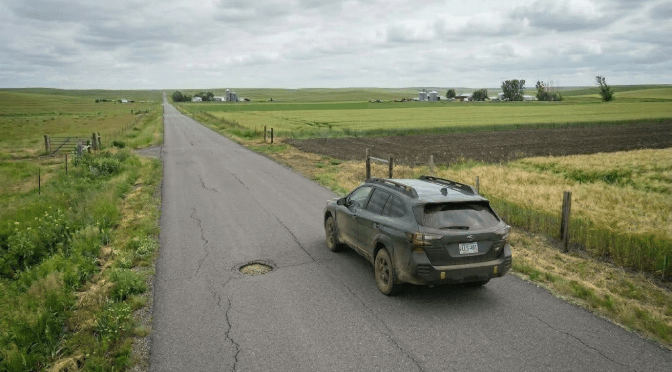
High friction surface treatments (HFSTs) on Minnesota roads are composed of imported, industry standard calcined bauxite aggregate. This material is expensive, and producing it is energy-intensive. Taconite aggregate, a by-product of the Minnesota mining industry, is a potential alternative to calcined bauxite that is less expensive. This research compared taconite and calcined bauxite in field skid resistance performance testing to determine the feasibility of using taconite in place of calcined bauxite in HFST applications.

Continue reading Evaluating Taconite as a Lower Cost Friction Treatment

CTS Webinar: Innovations for Energy-Efficient Transportation

Thursday, November 13, 2025, 12:00–1:30 pm Virtual

About the Event

Transportation is one of the largest sources of greenhouse gas emissions in the U.S., and reducing those emissions is key to tackling the climate crisis. New technologies—from eco-friendly navigation apps to connected and automated vehicles—offer exciting opportunities to make our transportation system cleaner and more energy efficient. But these tools can also create unexpected challenges, such as increased traffic congestion or higher overall emissions, if not carefully designed.

In this webinar, researchers will share new approaches to smarter routing and vehicle technology that can lower energy use and reduce emissions. Join us to learn how innovations in navigation, automation, and vehicle control could help shape a more sustainable future.

Speakers

Zongxuan Sun is a professor in the Department of Mechanical Engineering at the University of Minnesota. He is an expert on dynamic systems and control with applications in automotive propulsion systems. He worked at the General Motors Research Center for seven years prior to joining the University in 2007. His research work includes system modeling, control theory, building unique instruments, and testbeds for experiments.

Michael Levin is an associate professor in the Department of Civil, Environmental, and Geo- Engineering at the University of Minnesota and a CTS scholar. His research focuses on modeling connected and automated vehicles and intelligent transportation systems to predict and optimize how these technologies will affect travel demand and traffic flow. Levin is specifically interested in using traffic flow, transportation network analysis, and operations research methods to study these new technologies and their effects on cities.

Registration

This webinar is free, but registration is required. Once you have registered, you will receive an email confirmation with a Zoom link. The link should not be shared with others; it is unique to you.

Credit

Attendees are eligible for Professional Development Hours (PDHs) and American Institute of Certified Planners (AICP) certification maintenance credits.

More information

For more information or to request support, go to complete announcement on the Center for Transportation Studies website.

Related MnDOT Research Projects

Evaluating Road Designs That Use Lower Quality Aggregate

Aggregate materials used in the base and subbase layers of pavements provide structural support and drainability to Minnesota roads. But the supply of locally available high-quality aggregate material is becoming increasingly scarce. This project explored sustainable and cost-effective solutions for constructing durable flexible pavement roads with lower quality aggregate material.

Continue reading Evaluating Road Designs That Use Lower Quality Aggregate

Minnesota's transportation research blog