
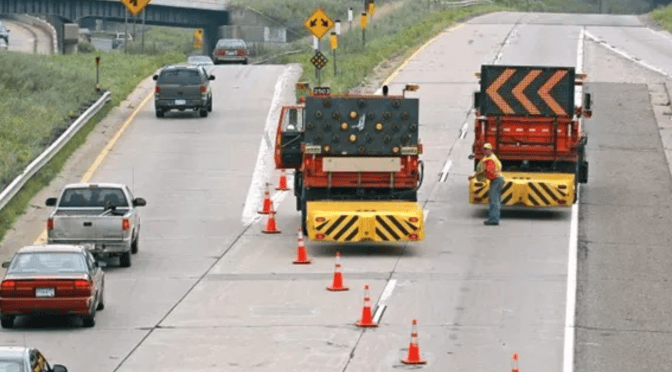
Highway construction sites present significant safety challenges to workers and the traveling public. Technologies have been developed to reduce work zone risk, but current options are often a significant expense that relies on prebuilt infrastructure or other upfront setups. This project developed a safety warning system that integrated advanced analytical algorithms with a low-cost and easily scalable sensor network consisting of wearable alert units for workers, collision detection devices for heavy equipment and intrusion detection sensors for traffic cones.
Continue reading Using Sensors to Improve Work Zone SafetyAll posts by mndotresearch
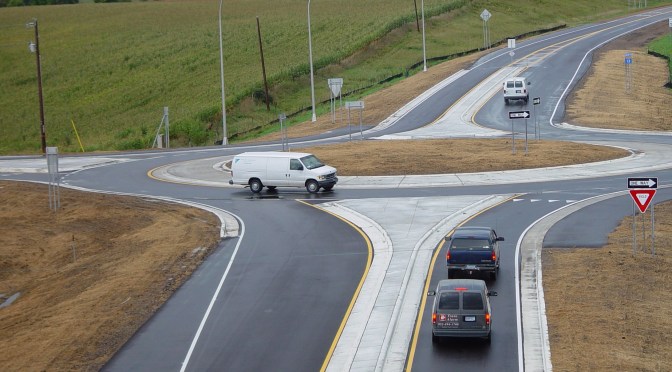
Understanding Economic Impacts of Roundabouts and J-Turns
Roundabouts and J-turns improve safety and road user experiences. While public familiarity and acceptance of these alternative intersections designs increase over time, questions remain regarding economic impacts on nearby businesses. An analysis of roundabouts and J-turns continued to show benefits for road users and no notable negative economic impacts on nearby businesses.
Continue reading Understanding Economic Impacts of Roundabouts and J-Turns
Impacts of Shared Mobility in Transportation Modeling
Newer modes of transportation—ride-hailing services, car sharing, bike sharing and scooter sharing—impact travel behavior and outcomes such as accessibility, traffic congestion and greenhouse gas emissions. Yet current travel modeling analyses do not adequately incorporate these modes, resulting in inaccurate predictions of their influence. This project integrated shared mobility into traffic modeling for more accurate predictions that local governments can consult to make transportation planning decisions.
Continue reading Impacts of Shared Mobility in Transportation Modeling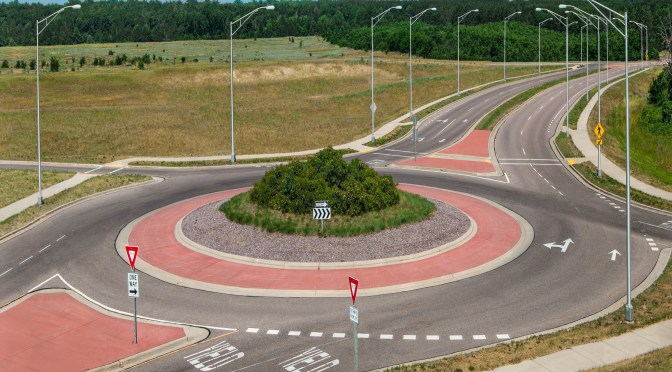
Upstream and Downstream Traffic Calming Benefits of Roundabouts
Roundabouts have been repeatedly shown to reduce fatal and serious crashes, in part by slowing vehicles as they move through intersections. Less was known, however, about how far those speed-reducing effects extend beyond the intersection itself or how they compare with other intersection types. To better understand these upstream and downstream impacts, MnDOT and local transportation agencies worked with investigators to measure vehicle speeds at roundabouts, signalized intersections and all-way stop-controlled intersections. The results showed that roundabouts provide traffic calming benefits beyond the intersection, supporting their continued use as a safe and effective design alternative.
Continue reading Upstream and Downstream Traffic Calming Benefits of Roundabouts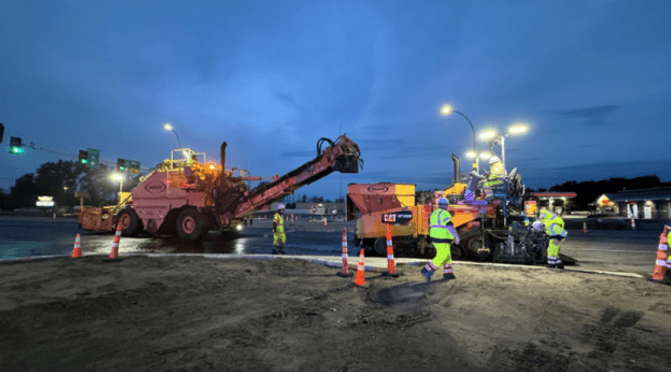
Incorporating Environmental Assessments of Paving Roadways
To limit the environmental impacts of transportation projects, agencies need to identify the sources of greenhouse gas emissions throughout a project’s life cycle. By identifying specific sources and activities that generate emissions, the Minnesota Department of Transportation (MnDOT) can take steps to reduce its carbon footprint. This project explored the use of life cycle assessments and Environmental Product Declarations to measure and reduce the emissions associated with MnDOT paving projects, specifically the transportation of asphalt from production plants to job sites and subsequent paving activities.
Continue reading Incorporating Environmental Assessments of Paving Roadways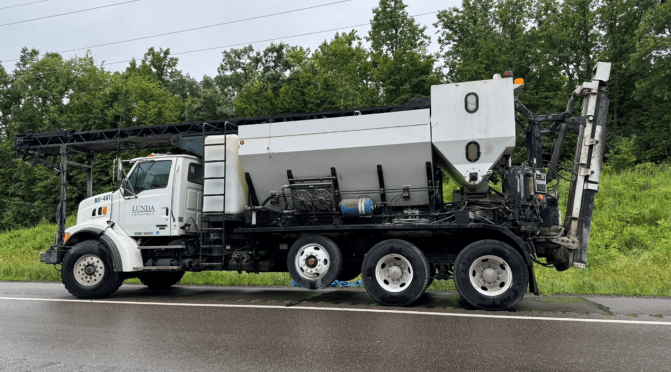
Evaluating a New Low Slump Concrete for Bridge Decks
For over 30 years, MnDOT has used the same low slump concrete overlay mixture to extend the service life of bridge decks. However, MnDOT suspected that changes in the materials used in the mixture over time may have contributed to increased cracking. This project evaluated a new mixture design, with and without glass fibers, to reduce cracking, improve sustainability and lower costs.
Continue reading Evaluating a New Low Slump Concrete for Bridge Decks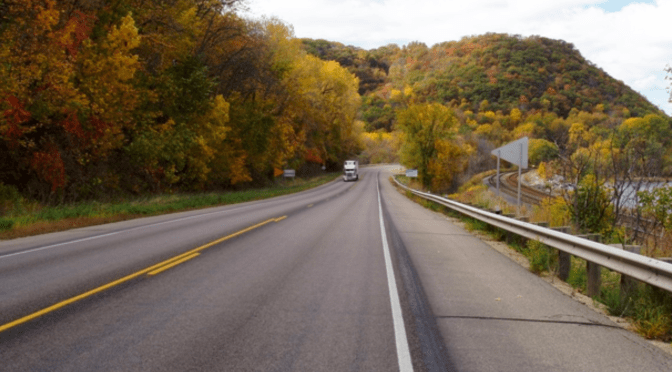
Preventive Road Sawing and Sealing to Reduce Maintenance Costs
Asphalt pavements will inevitably begin cracking and require maintenance to preserve an adequate level of service. However, preemptively sawing and sealing roads at prescribed locations can reduce cracking and improve maintenance predictability. To help the state’s transportation agencies better manage pavement deterioration, the Local Road Research Board sought to compare the performance of a lower-cost unmodified asphalt binder using the saw-and-seal method with that of a higher-cost polymer-modified asphalt binder without using saw and seal.
Continue reading Preventive Road Sawing and Sealing to Reduce Maintenance Costs
Evaluating the Use of Stabilizers on Gravel Roads
Gravel roads often experience significant deterioration that requires costly maintenance. To mitigate this deterioration, transportation agencies can apply chemical stabilizers to improve aggregate cohesion. This project examined the mechanical, environmental and economic performance of five gravel stabilizers and three application methods to determine the best options for reducing deterioration.
Continue reading Evaluating the Use of Stabilizers on Gravel Roads
Mitigating Surface Tenting to Improve Road Quality
Transverse cracking and tenting are significant problems for asphalt pavements, especially in colder climates where the asphalt layer contracts during winter conditions. While the impacts of frost on roads are generally known, more data is needed about treatments to mitigate tenting and the influence of base layers on tenting behavior. This project examined the effectiveness of pavement treatment options and identified primary causes of tenting to help state and local engineers limit future tenting.
Continue reading Mitigating Surface Tenting to Improve Road Quality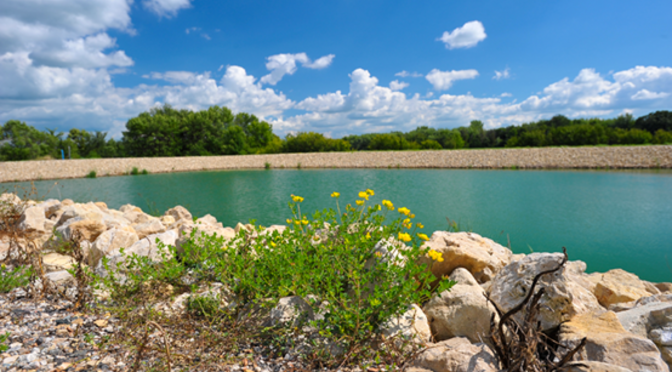
Reducing Phosphorus Pollution from Ponds
Ponds and historic wetlands are essential for preventing excessive phosphorus from reaching downstream waters. These systems remove solids, nutrients, metals and hydrocarbons from stormwater runoff as particles settle to the bottom. However, low oxygen levels in the water can cause phosphorous to be released from bottom sediments. This project examined the effectiveness of strategies to limit that release and reduce negative downstream impacts.
Continue reading Reducing Phosphorus Pollution from Ponds
