
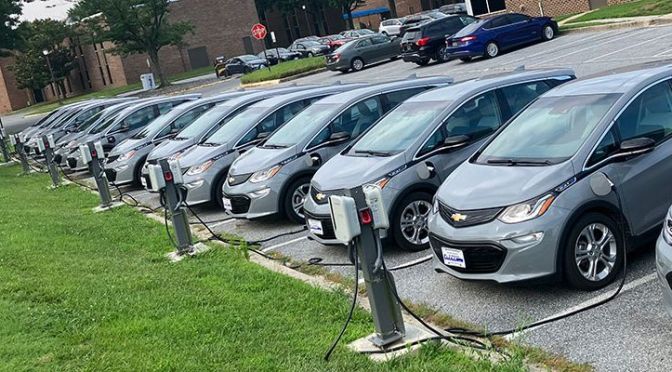
While electric vehicles (EVs) provide benefits over traditional gas-powered vehicles, they also come with challenges. Investigators surveyed and interviewed staff, analyzed costs and developed an optimization model to address these challenges. Project findings will help agencies across Minnesota achieve a successful and cost-effective transition to the increased use of EVs.
Public agencies that are integrating EVs into their fleets face a number of challenges, including staff perceptions; vehicle driving ranges, especially during cold Minnesota winters; charging infrastructure; costs; and maintenance requirements. To successfully integrate EVs into their fleets, state, county and local agencies need solutions and strategies to address these challenges.
This project evaluated staff perceptions and opinions of EVs, examined current fleet compositions, determined the EV class with the best return on investment and identified required infrastructure upgrades to accommodate EVs. The results provide a blueprint for agencies and municipalities to consider as they expand EV use in their fleets.
What Did We Do?
Employee surveys and in-depth interviews with fleet managers assessed organizational readiness by evaluating perceptions, concerns and operational barriers.
Data collected from a wide range of agencies about vehicle types, use patterns and parking facilities was used in a detailed analysis of fleet composition and infrastructure capacity. A cost–benefit analysis used this data to compare the 10-year life cycle costs of EVs to traditional gas-powered vehicles classified as heavy-, medium- and light-duty vehicles.
Using city of Minneapolis trip data, investigators then developed an optimization model that can formulate a phased plan for installing charging infrastructure that limits total costs and operational disruptions. The model estimated the fleet size needed for agency operations, optimized EV adoption strategies and identified advantageous locations for charging stations.
What Did We Learn?
Surveys and interviews found that agency and staff sentiment toward EV integration is neutral, with primary concerns focused on limited vehicle range, insufficient charging infrastructure, high upfront costs and specialized maintenance needs. Cold weather reliability and battery safety were also significant concerns, especially for rural agencies.
“Integrating EVs into agency fleets has some obstacles, but these recommendations can help make the transition smoother and more effective,” said Lyndon Robjent, division director, Carver County Public Works.
A 10-year life cycle cost analysis demonstrated that light-duty EVs are a better value than traditional gas-powered vehicles. Similarly, more expensive heavy-duty EVs are better if driven for a high number of miles due to lower operating expenses. Some medium-duty EVs such as cargo vans can be a better value, but other types such as pickup trucks do not currently offer a positive return on investment.
While 57% of agencies have sufficient infrastructure to accommodate charging needs, they still face obstacles such as installation costs and power availability. Depot charging is the preferred strategy, but opportunities exist for agencies to share charging infrastructure to reduce costs and accelerate adoption. For example, clustering charging stations at centralized depots accessible to multiple agencies could represent the most efficient initial charging locations, although interagency cooperation and coordination may present some challenges.
The optimization model focused on guidance to overcome key challenges and take advantage of opportunities where possible. For example, the model found that most round-trip distances were less than 60 miles, which makes en route charging unnecessary. Additionally, an analysis of charging schedules found that super off-peak charging at night could support fleets with fewer EVs, minimizing both costs and operational disruption. However, as fleet size increases, a portion of charging would need to occur during more expensive daytime hours.
What’s Next?
As agencies move forward with additional purchases and uses of EVs, financial analyses indicate they should prioritize light-duty vehicles, such as sedans and SUVs. Heavy-duty vehicles are less optimal as they have high initial costs and require high mileage to be cost-effective. Successful EV implementation will occur through a phased and flexible approach that allows for cost-effective capital expenditures, organizational learning and infrastructure planning to eliminate inefficiencies such as uncharged return trips.
Further, planning strategies must account for a wide array of vehicle charging needs by incorporating faster charging technology and considering options for sharing public charging infrastructure. Agencies and municipalities also need to pay specific attention to applicable policies and requirements such as electrical capacity upgrades, conduit installation, fire safety ventilation, physical layouts that are compliant with the Americans with Disabilities Act and smart load management systems to ensure effective transitioning to increased EV usage.

