Tag Archives: pavement

Rough roads? How everyday cars might help flag trouble spots

Reprinted from CTS News, May 11, 2026

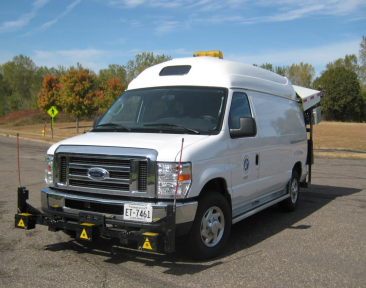
To assess pavement conditions throughout the state, the Minnesota Department of Transportation (MnDOT) uses a van specially equipped with advanced technology that measures roughness, cracking, and other signs of distress on a roadway’s surface. That system has its limitations, however. The vans cost about $800,000 each, and the data collection requires extensive coordination, trained personnel, and sensitive equipment that is limited to operating in warmer summer months. In addition, the data collection takes place once a year on MnDOT routes and every other year on County State Aid Highways.

van equipped with technology to measure pavement conditions
Mn/DOT’s Pathway Services, Inc. Digital Inspection Vehicle (DIV)

Could there be a more efficient and more timely way to assess the state’s road pavement conditions? To find out, researchers at the University of Minnesota (UMN) explored whether data already being generated by everyday vehicles could enhance MnDOT’s current method. 

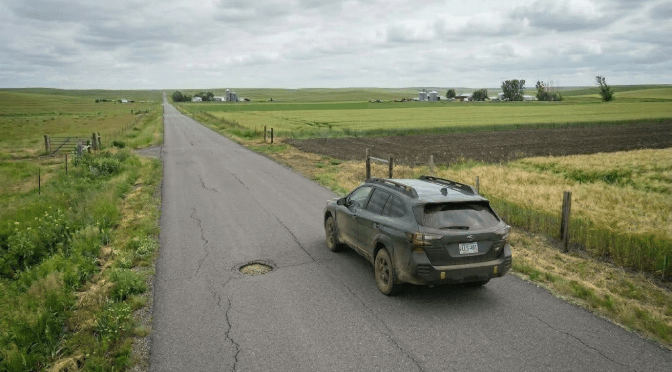
To test this, UMN researchers equipped study vehicles with a simple plug-in scanner that captured onboard diagnostics data, explains CTS scholar Raphael Stern, the project’s co-investigator and UMN associate professor of civil, environmental, and geo- engineering. Modern vehicles already have sensors that collect this data, which can be used to monitor and optimize vehicle performance. That same data could provide clues to how a vehicle is responding to pavement beneath it, he says.

“If we could show that this can be done in Minnesota, MnDOT or local agencies can implement this technology,” says lead investigator and CTS scholar Mihai Marasteanu. “They could have a very good idea about the conditions of pavement every day—not just once a year.”

For this project, researchers adapted methodologies from Denmark’s Live Road Assessment (LiRA) project, considered to be the most comprehensive effort to use onboard vehicle sensors for continuous pavement monitoring. That initiative provided insights into both the technical feasibility and practical challenges of extracting meaningful pavement quality metrics from standard vehicle data.

Researchers tested a similar approach on three routes in Minnesota to capture a diverse range of pavement conditions under real-world driving scenarios. One route was a 15-mile loop in the northeast Twin Cities metropolitan area that covered urban and suburban road segments with consistent traffic flow. Another was a 96-mile loop between Minneapolis and Northfield, comprising a mix of urban, suburban, and rural roadways. The third was the 2.6-mile loop at MnROAD, MnDOT’s research facility near Albertville.

The plug-in scanner collected data on vehicle location, speed, and 3D acceleration; the last measures the intensity and complexity of vibrations transmitted from the road through the vehicle’s suspension system.

Across the three routes, researchers collected more than 9,000 data points. Machine learning models used 694 data values to predict pavement quality using the International Roughness Index (IRI) for a given pavement section.

Researchers compared and validated predictions against data from MnDOT and a commercial pavement‑monitoring system. Results demonstrated a correlation across diverse road conditions, although accuracy decreased in areas where pavement conditions changed quickly or road surfaces had defects. Predictions were also more accurate on highway segments than local roads because of variable urban driving environments.

Of the eight learning models evaluated, one achieved 94 percent accuracy on predicting pavement roughness. The performance of each model varied based on environmental factors, data collection conditions, and road types.

The research successfully demonstrated that vehicle sensor data can effectively support continuous infrastructure monitoring, Marasteanu says. “It could save money in the long run and give a much more accurate representation of pavement conditions over the entire year,” he notes.

The project, funded by MnDOT, included implementation guidelines for large-scale deployment, equipment standardization protocols, data-processing pipelines, and risk-mitigation strategies.

MnDOT is now exploring how to extend the research beyond the study vehicles, says Curt Turgeon, director of MnDOT’s Office of Materials and Road Research. One way will be to use commercial data sources that already collect similar information from everyday vehicles. For example, NIRA Dynamics, headquartered in Sweden, partners with automakers Volkswagen and Volvo to collect anonymized sensor data from consumer vehicles. These data streams are captured continuously throughout the year.

“MnDOT has a contract with NIRA to determine how this data might enhance our pavement management decisions as well as potentially document snow and ice response,” he says. “They also have a module that may flag potholes or other in-road hazards based upon vehicles swerving.”

—Peter Raeker, contributing writer

Related reading

Continue reading Rough roads? How everyday cars might help flag trouble spots

Evaluating Road Designs That Use Lower Quality Aggregate

Aggregate materials used in the base and subbase layers of pavements provide structural support and drainability to Minnesota roads. But the supply of locally available high-quality aggregate material is becoming increasingly scarce. This project explored sustainable and cost-effective solutions for constructing durable flexible pavement roads with lower quality aggregate material.

Continue reading Evaluating Road Designs That Use Lower Quality Aggregate

Understanding the Performance of Road Base Stabilization Additives

Full-depth reclamation (FDR)—an effective and efficient pavement reconstruction method—can be made even more sustainable by strengthening the road base. Laboratory and field testing of proprietary stabilizers used to amend FDR material illustrated improvements in pavement stiffness and economic benefits over time. New pavement design standards for base stabilizers can guide road engineers in choosing the optimal products for sustainable roads.

Continue reading Understanding the Performance of Road Base Stabilization Additives

Development of Mix Designs and Matrix of Materials for MnROAD Low Carbon Concrete Test Site

To address climate change mitigation goals, highway agencies are seeking alternative concrete paving mixtures that have a reduced embodied carbon content (ECC).

The research team first focused on developing a matrix of reduced ECC concrete mixtures to be tested at MnROAD. The 16 concrete mixtures selected for inclusion in the test matrix met minimum engineering requirements to ensure constructability and performance and were approved by MnDOT.

Between July 27 and August 9, 2023, 16 test cells were constructed at the MnROAD I-94 facility to evaluate reduced ECC concrete paving mixtures. The purpose of constructing these cells was to assess the in-service performance, environmental impact, and constructability of various alternative supplementary cementitious materials (ASCMs) that may reduce the embodied carbon content of concrete, while providing an opportunity to assess test results and in-service performance in coming years.

A preliminary environmental assessment showed that most mixtures were expected to have either a similar or lower ECC compared to the control mixture representative of typical MnDOT paving-grade concrete. Quality assurance testing conducted on field-cast specimens revealed generally acceptable results; most of the materials had similar performance compared to the control mixture, but the cells will continue to be monitored.

Finding High-Performing Aggregate Bases for Long-Lasting Pavement

Two county roads provided a testing ground for three combinations of aggregate bases and asphalt binders. Results from more than two decades of research and monitoring of pavement test sections validated previous conclusions. A larger gradation aggregate base showed superior performance over the pavement life cycle when compared with the standard aggregate base. Additionally, sections constructed without transverse joints to allow natural thermal cracking outperformed sections with sawn and sealed joints.

Continue reading Finding High-Performing Aggregate Bases for Long-Lasting Pavement

New Project: Improving and Developing Pavement Design Inputs and Performance Functions for Cold Recycled Pavement Layers

Local agencies in Minnesota use cold recycling technologies for flexible pavement rehabilitation because of their economic and environmental benefits. The three main methods are cold in-place recycling (CIR), cold central plant recycling (CCPR), and stabilized full-depth reclamation (SFDR).

Continue reading New Project: Improving and Developing Pavement Design Inputs and Performance Functions for Cold Recycled Pavement Layers

Measuring Pavement Density for Sustainable Centerline Joints

Longitudinal joints, created when lanes are paved sequentially, often need significant maintenance as the joints crack or deteriorate. While materials, construction methods and other factors may cause joint deterioration, insufficient pavement density is primarily responsible for weak joints, and measuring density has not traditionally been a widespread practice. New recommendations for joint construction and quick, nondestructive methods of measuring density during construction will support local agencies in laying longer-lasting pavement.

Continue reading Measuring Pavement Density for Sustainable Centerline Joints

Continuous Moisture Measurement During Pavement Foundation Construction

Accurate and timely moisture measurement of earthwork during compaction of foundation layers is crucial to proper construction and long-term durability of the pavement structures. Since the traditional methods for measuring moisture are point specific, expensive and/or time consuming. None of the existing methods have been able to deliver real-time, continuous moisture measurements that would aid engineers in delivering more durable pavement structures.

Continue reading Continuous Moisture Measurement During Pavement Foundation Construction

Effect of Low and Moderate Recycled Concrete Aggregate Replacement Levels on Concrete Properties

As the demand for aggregate in construction increases, recycling concrete waste as aggregate has been recognized as an environmentally sustainable solution with potential cost savings. It would allow recycling of construction and demolition waste and reduce some of the need to quarry and haul virgin aggregate. However, the use of recycled concrete aggregate (RCA) has been limited by concerns over its quality and performance, and by lack of uniform specifications as to what kind and how much of the aggregate to use in pavement construction. Studies and on-the-ground experience have shown that high levels of RCA reduce the durability of pavements. The effects of lower replacement levels have not been well documented, however.

Continue reading Effect of Low and Moderate Recycled Concrete Aggregate Replacement Levels on Concrete Properties