

Reprinted from CTS News May 6, 2026
The limited public transit infrastructure often found in rural areas can make it difficult for residents to access essential services such as healthcare, education, and grocery shopping—especially those without personal vehicles or who are unable to drive. Mobility-as-a-Service (MaaS) is a platform that integrates multiple transportation options and booking/e-ticketing with a smartphone app. While MaaS has primarily been developed and deployed in urban areas, it also offers potential benefits for rural area residents, such as improving transportation access, reducing social isolation, and simplifying the passenger experience.
A study sponsored by the Minnesota Department of Transportation (MnDOT) assessing the benefits of deploying its MaaS app in southern Minnesota was honored with this year’s CTS Robert C. Johns Research Partnership Award.
MnDOT’s MaaS platform was implemented in southern Minnesota in March 2023 to streamline and promote transit use, incorporating features such as interactive trip planning and mobile payment. The study area is served by seven different transit agencies, covering seven small cities and the surrounding rural areas.
Led by University of Minnesota Department of Civil, Environmental, and Geo- Engineering associate professor and CTS scholar Alireza Khani, the research team aimed to learn how residents benefited from having access to a variety of mobility options through the MaaS platform, as well as if the platform increased transit ridership and how it could be improved.
“This work represents a collaborative effort to better understand how people, especially those in rural Minnesota without many transportation options, might engage with emerging transportation technologies, mainly mobility-as-a-service,” Khani said when accepting the award. “This project is about people, their mobility options, their choices, and how technology can support more efficient, equitable, and sustainable transportation.”
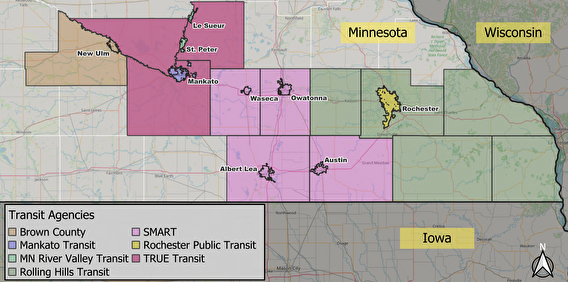
The research team worked closely with MnDOT’s project management team and the platform development team to address the unique challenges of rural MaaS. Recognizing that existing data was insufficient to capture rural transit nuances, the team developed specialized data-collection spreadsheets and protocols. By training local transit service providers to use these tools for one week for both pre- and post- MaaS deployment phases, the team obtained primary data to analyze rider behavior across both fixed-route and demand-responsive transit (DRT). They also used the data to evaluate equity and service quality for disadvantaged populations. This collaboration between the University and the providers ensured that the MaaS implementation was not only technically sound but also tailored to the specific operational realities of southern Minnesota’s transit landscape.
Analysis of booking and ride data provided a clearer picture of how people use transit and how both riders and providers felt about their experiences, informing areas for improvement by deploying MaaS. Results showed a notable ridership increase of 4.2 percent for DRT and paratransit services following MaaS deployment, compared to a marginal 0.2 percent increase in the control group. In addition, a before-and-after study of trip location data showed MaaS’s ability to boost transit service rates in areas with lower-income residents.
“This is a great example of academic partnership with the public and private sector in a really practical way,” McFadden said during the awards ceremony. “We have brought rural transit up to parity with a lot of the technology that has been common in urban settings for about the last decade. This project has been a leader and driven both the public and private sector to bring along our rural transit systems. And so everybody is getting access to the same information.”
The research results provided a thorough evaluation of the pilot and have been key in shaping future rural transit projects. The evaluation served as a proof-of-concept for MnDOT, directly informing the decision to expand the MaaS system to the entire state. Additionally, the methods and findings have been widely shared with the professional community and received national attention, “highlighting the broader relevance of what started here in Minnesota,” Khani added. By bridging the gap between a regional pilot and a statewide initiative, this research serves as a strategic roadmap for modernizing rural transit in Minnesota and beyond.
The Research Partnership Award is named in honor of former CTS director Robert Johns. The award is presented annually to a team of individuals who have collaboratively drawn on their diverse expertise to achieve significant impacts on transportation.
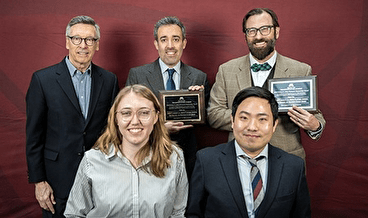
Project team
- University of Minnesota: Alireza Khani, Kwangho Baek, Hannah DeBruin
- MnDOT: Elliott McFadden
- Federal Transit Administration: Steve Mortensen
- Cambridge Systematics: Raphael Barcham
—Amy Friebe, CTS senior editorial manager

