A new video produced by the Local Road Research Board helps the public understand why some bad roads aren’t always fixed first.
The seven-minute video explains what causes road pavements to deteriorate and why, like the saying, “throwing good money after bad,” it may be more cost-effective to put maintenance dollars into roads that still have life left in them versus roads that are in the worst condition.
In it, city and county engineers discuss how they use a pavement management program to decide which roads to fix when, in order to stretch limited resources in the most effective way possible.
“We’ve learned that if we wait for things to break and fall apart, they’re much more costly to replace than if we put a little bit into it during its life cycle,” says Mark Maloney, City of Shoreview public works director.
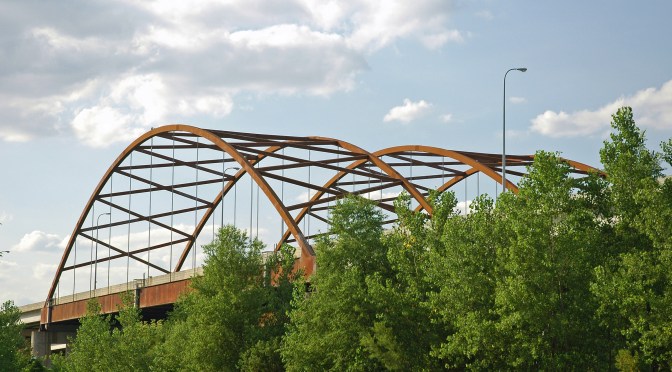
While not inherently unsafe, MnDOT’s fracture-critical bridges — those having critical, nonredundant components — must be inspected on a regular basis. To help track the health of these bridges, MnDOT has developed a bridge health monitoring system that uses electronic instrumentation to provide advance warning of structural distress.
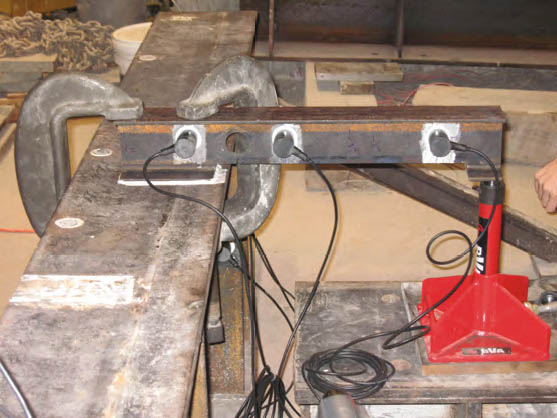
The system detects acoustic emissions — stress waves caused when cracks form and propagate in the steel components of a bridge. Researchers recently deployed and tested the system on the Cedar Avenue/Highway 77 Bridge in Burnsville, enabling them to develop procedures for automatically collecting and processing data.
“Ever since the collapse of the I-35W bridge in Minnesota, many states have been interested in developing a bridge health monitoring system that will help engineers address the many challenges of managing infrastructure and ensure the longevity and safety of our bridges,” said Moises Dimaculangan, MnDOT bridge rating engineer.
To help distinguish real monitoring events from false alarms, researchers conducted tests to capture acoustic emission data caused by brittle fractures in steel beams using the same bridge health monitoring system currently being used at the Cedar Avenue Bridge.
MnDOT will continue to use the system to monitor the Cedar Avenue Bridge, a steel tier-arched bridge over the Minnesota River. It was chosen because it is fracture-critical, but has no history of cracking. The test deployment also led to guidelines for monitoring other fracture-critical bridges.
University of Minnesota researchers recommend further investigation into acoustic emission data analysis methods, as well as using the system developed in this project to monitor another steel bridge, one with a history of cracking.
*Note: This article was adapted from the upcoming May–June 2014 issue of our Accelerator newsletter. Sign up today to receive your free print edition or to receive email notification when new issues become available online. Subscribe here.
Putting GPS units on MnDOT highway mowers is expected to speed mowing operations and cut herbicide usage by 50-percent in metro area ditches, reducing groundwater contamination.
MnDOT’s Metro District highway maintenance division will be one of the first — if not the first — state agencies in the country to equip the majority of its maintenance tractors with Automated Vehicle Location systems.
Not only will crews be able to effortlessly track their progress — reducing paperwork and freeing time for other maintenance activities — but the AVL’s live mapping software will help them avoid noxious weed patches, thereby reducing their spread.
Last year, MnDOT tested the GPS software on five mowers.
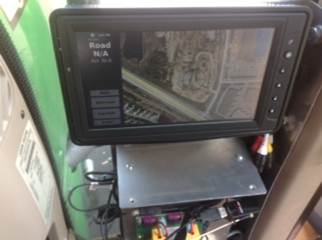
“AVL alone enables the tracking of vehicle positions, but when combined with equipment sensors and an on-board monitor with user interface, it becomes a very innovative way to reduce operation costs,” said MnDOT Project Engineer Trisha Stefanski, who applied for funding from MnDOT’s Transportation Research Innovation Group for the pilot project.
Vehicle tracking systems have been shown to reduce chemical usage by crop farmers, improve route efficiencies in truck driving and help cities and counties track snowplows.
The on-screen mapping shows the location of weed patches, so mowers can avoid them, reducing their spread.
MnDOT Metro, which tested five AVL units last year, hopes to equip as much of its remaining fleet as possible.
In the grant application, Stefanski estimated the technology will pay for itself in about a year’s time, largely due to herbicide savings.
Noxious weeds
MnDOT is required by law to manage certain noxious weeds along its highways. Each year, weed inspectors survey one-quarter of metro ditches for weeds, which enables them to concentrate eradication efforts on the worst areas.
Touch-screen maps will contain the noxious weed locations so operators can see weed patches and mow around them.
Herbicide usage is estimated to drop an estimated $100,000 to $150,000 per year. (This estimate was based on the original funding request. Final numbers haven’t been released.)
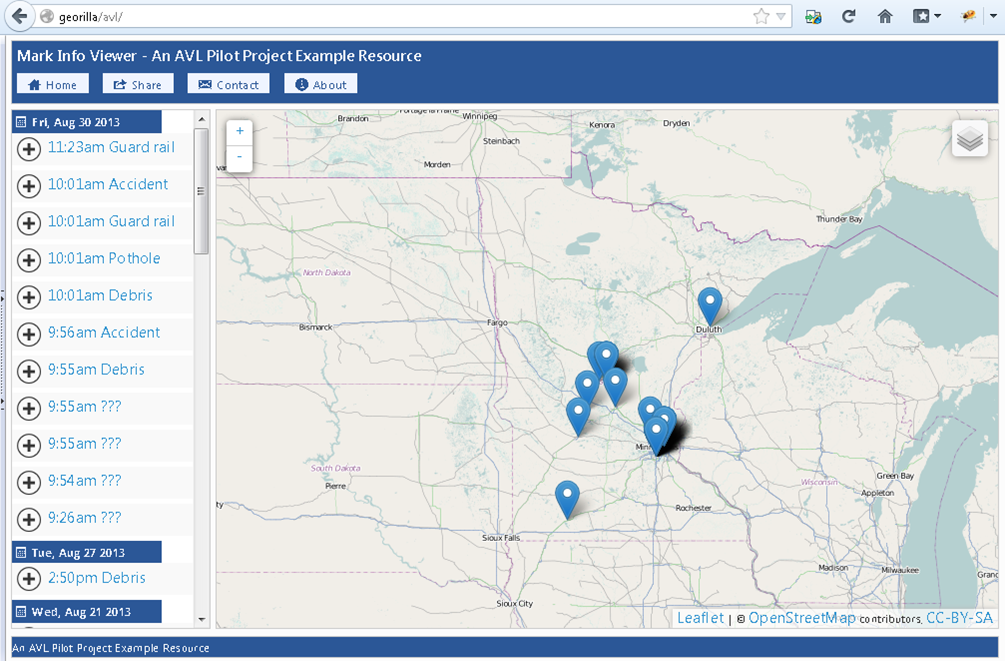
Operators can use the on-screen map to mark the location of new patches of noxious weeds.
Noxious weeds like Wild Parsnip — which can cause painful skin boils — might even be eradicated, reducing the risk for field crews, such as construction workers and Adopt a Highway volunteers.
Until now, maintenance crews have relied on paper maps to identify weed locations, which is less effective.
“What’s better, looking at a live screen when you’re going down the road and seeing where weeds are coming up, or trying to refer to a piece of paper?” Stefanski said.
Other advantages
The AVL equipment will also allow for automated reporting.
Mower operators can use the on-board AVL monitor to mark the location of guardrail hits, potholes, washed-out culverts, debris and unmarked noxious weeds.
Operators can electronically mark the location of guardrails, debris, potholes and more.
Currently, operators must track their activities using hand-written forms or spreadsheets in the office.
The AVL system will also automatically track their location history, allowing operators to optimize their routes based on how long it took to mow segments in the past.
It will also be easier to answer questions from the public, who want to know the last time a certain ditch was mowed.
“Making everything geographically located adds so much analysis opportunity,” Stefanski said.
MnDOT also has AVL technology on an herbicide applicator to better track where it’s sprayed. Other future potential applications including pothole patching and road sweeping operations, Stefanski said.
In an effort to encourage more use of safety rest areas and reduce drowsy driving, the Minnesota Department of Transportation is bolstering amenities and plans to install new signage at select rest areas across the state.
Drowsy driving is conservatively estimated to cause at least 1,550 deaths nationwide each year and $12.5 billion in monetary damage.
Motorists would stop more frequently at rest areas if they knew what rest areas offered, according to market research completed in 2009.
MnDOT will design and install highway symbol signs to advertise the amenities at 13 rest areas in a pilot project funded by MnDOT’s Transportation Research Implementation Group.
“We are using this as a way to entice drivers to take a break, pull over and refresh before returning to the road,” said Robert Williams, MnDOT Safety Rest Area Program Manager and the project proponent.
Rest areas in Brainerd and Cass Lake, Minn., can now offer a tourism-related gift shop, thanks to a change in law.
Amenities differ greatly between rest areas within the state, as well as across the country; this depends on when they were built and whether they are located on an interstate, state highway or toll road.
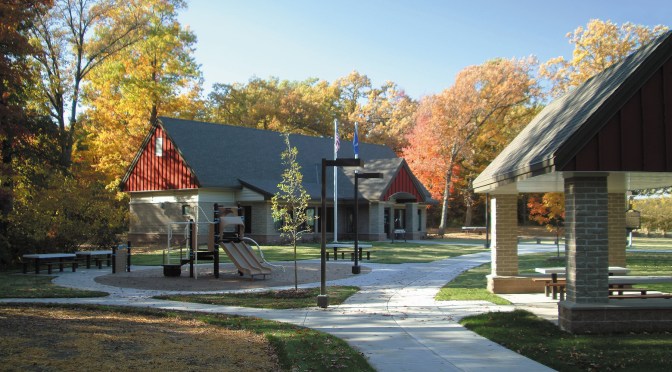
Older, smaller rest areas may only have a bathroom and picnic area, while newer facilities often have features such as children’s play areas, staffed travel counters and dog runs.
In the future, the state may consider new amenities such as gift shops, adult exercise equipment to rejuvenate motorists, electrical vehicle charging stations and perhaps even electrification stations to allow truck drivers to power their TV or refrigerator without idling their vehicle.
Research has found that as the spacing of rest areas increases beyond 30 miles, the number of drowsy driving crashes goes up exponentially, Williams said.
Each sign will advertise up to six amenities.
Proposed Signage
Symbols on each sign will identify up to six amenities, such as in the example above, which depicts an assisted restroom, gift shop, ticket sales, EV charging stations, childrens’ playlot and adult exercise equipment.
MnDOT will evaluate the pilot project to determine if the symbol signs are effective in communicating to travelers the amenities offered at individual rest areas and if the signs were a factor that encouraged them to stop.
If the two-year project goes well, the state may add similar signs to the remaining 39 Class I safety rest areas (those rest areas equipped with flush toilets).
Some of the signs will require a request to FHWA for experimentation. The intent is to install the signs in the summer of 2015 at rest areas on northbound I-35, eastbound I-94, as well as at the Brainerd Lakes Area Welcome Center on Hwy. 371.
Rest Area Offerings Increase
Although travelers and state DOTs would often like to introduce new amenities, state and federal laws limit what states can offer.
Toll roads and highways built before 1960 (the Interstate era), mostly in the East Coast or Chicago area, have fewer federal restrictions than rest areas in Minnesota and may feature restaurants or convenience stores.
Changes to Minnesota state law in 2005 and recent changes to federal law in MAP-21 now allow limited commercial activities, such as tourism-related gift shops and ticket sales at rest areas. MnDOT and its partners have taken advantage of some of these changes at its visitor centers in Brainerd/Baxter and Cass Lake.
In addition, the state is exploring the concept of using rest areas as transit transfer facilities, where long-distance bus carriers and regional transit lines can exchange passengers.
These transit hubs would shorten travel times for long-distance travelers and allow the rest areas to serve multiple functions while providing a comfortable waiting area for passengers.
(Feature image courtesy Michael McCarthy, Center for Transportation Studies.)
Earlier this year, we wrote about the Minnesota Bicycle and Pedestrian Counting Initiative, a project that developed guidelines and protocols to help transportation planners accurately count non-motorized traffic. This groundbreaking research involved a diverse partnership of state and local officials, University of Minnesota faculty, and private and nonprofit organizations.
On Wednesday, April 23, the project team (photo above) was honored with an award from the Center for Transportation Studies. Team members accepted the CTS Research Partnership Award in a ceremony at the McNamara Alumni Center in Minneapolis. The award is given each year to projects that have resulted in “significant impacts on transportation” and that draw on “the strengths of their diverse partnerships” to achieve their results.
The video below, produced by CTS, explains the importance of the project. MnDOT is now in the process of implementing the research results by installing permanent counters and using portable counters in select locations around the state. MnDOT plans to use the information for a variety of purposes, including planning, safety analysis, investment planning and quality-of-life analysis.
A new technology that uses 3D-imaging sonar will enable MnDOT engineers to visualize the substructure of a bridge in a way they never have before.
Until now, MnDOT has relied on human divers and depth finders to identify problems beneath the water.
Divers are limited by what they can see and feel in murky waters, however, and depth finders can only look down, not around.
“With this new technology, we will be able to provide high resolution three-dimensional images of underwater areas, structures and objects to show what is occurring, regardless of water clarity,” said MnDOT Bridge Waterway Engineer Petra DeWall, who has received funding from MnDOT’s Transportation Research Innovation Group to purchase the equipment.
Video imagery from a sonar inspection of Minneapolis’ Third Avenue bridge is above.
Currently, MnDOT hires engineer divers to physically inspect about 500 bridges every five years. They look for cracked concrete, exposed reinforcement and other detrimental conditions.
Although divers can spot issues, they can’t always thoroughly assess the scope of a problem, such as the amount of sediment being washed out around a bridge pier, a problem called bridge scour.
It can also be difficult — or dangerous — for divers to venture down for an inspection.
This was the situation last winter with the Third Avenue Bridge in downtown Minneapolis, where the streambed has degraded around a bridge pier, causing erosion to the pier.
“The Third Avenue inspection was not totally detailed. We knew there was a void under the bridge, but it was very hard to visualize,” DeWall said.
Early ice build-up halted further inspection in November, so MnDOT asked 3D sonar scanner manufacturer Teledyne BlueView to scan the area as a demonstration of its equipment.
A video of the inspection is below:
Multiple holes were cut in the ice sheet to deploy the sonar, which provided an image of the bridge scour by emitting sound-waves that created a point cloud.
“It gives you a large data set of where the sound reaches and comes back to the equipment,” DeWall explained.
The 3D image provides a level of detail that will enable repair and construction contractors to make more accurate bids, saving MnDOT money on projects.
Although dive inspectors are also beginning to invest in this new technology, MnDOT wants its own equipment to perform quick assessments of troublesome spots without going through the lengthy contracting process.
The Federal Highway Administration is conducting a pooled fund study to see if the technology eliminates the need for dive inspectors all-together.
MnDOT also plans to use its 3D scanning sonar to inspect repair projects and assess bridge construction.
One of DeWall’s first goals is to take a scan of the Hastings bridge after construction is complete, which will provide a baseline scan that can be compared against future inspections. The old bridge has had problems with the loss of rocks at its piers. It is unclear if the rock just sinks or is washed away downstream. Monitoring will let MnDOT see what is happening over time.
“Inspection is just one part of it,” DeWall said of the sonar equipment. “The big interest in this project is coming from our construction folks.”
Post-Construction
Imagine building a new house and not being able to complete the final walk-through.
This is the situation that transportation departments face when they build a new bridge, due to the limitations of underwater inspections.
“With 3D technology, you can go back afterward and check to make sure things were done the way they were supposed to,” DeWall said.
DeWall wishes the state had the scanner many years ago when a bridge was built that required expensive correction.
A bridge construction crew left construction material behind under the water, which wasn’t discovered until the redirected water flow caused significant erosion to the bridge pier.
Divers picked up that something was going on during a routine inspection, but engineers still had to bring in depth finders to get a better look. Due to the water current, they were limited in how close they could get to the bridge pier, and turbulence crashed their boat against the pier, damaging the transducer.
Not only would this 3D technology have provided a more thorough assessment than the depth finder, it also could have captured the imagery from a safe distance away.
If there was ever a winter that demonstrated what cold weather can do to asphalt pavements, last one was it. But future winters may wreak less havoc on Minnesota roadways, thanks to a new asphalt mixture test in the final stages of evaluation by MnDOT’s Office of Materials and Road Research (OMRR).
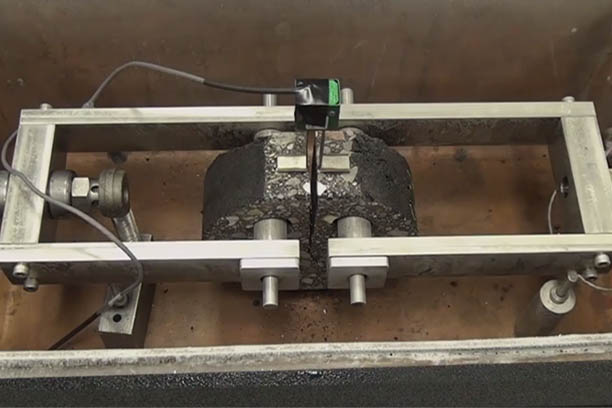
Developed through a decade-long multi-state research project, the Disc-shaped Compact Tension (DCT) test evaluates the low-temperature performance of asphalt mixes. (See a video about the project that helped develop the DCT test below.)
For the first time, engineers will be able to predict how well a contractor’s proposed asphalt mix will hold up under harsh Minnesota winters.
“Performance testing is assuring that we’re getting what we’re paying for,” explained MnDOT Research Project Engineer Luke Johanneck.
Low-temperature cracking is the most prevalent form of distress found in asphalt pavements in cold climates. As the temperature drops, the pavement tries to shrink, creating cracks that allow water to seep in and eventually lead to pavement deterioration.
Until now, engineers have typically evaluated the individual components (such as amount of crushed aggregate and asphalt binder grade) and volumetric properties (such as air voids and asphalt content) of an asphalt mix, not how the final product performs in low temperature.
“It’s like baking a cake,” explained MnDOT Bituminous Engineer John Garrity. “Our current system says put in a half-cup of oil, two eggs and cake mix. Rather than just looking just at those individual components, taste the cake to see how good it is.”
Created by researchers at the University of Illinois, the DCT test applies tension to an asphalt mixture sample to determine its thermal fracture resistance. The test was determined to be the best of several methods looked at in another research study, conducted by the University of Minnesota with assistance from neighboring state universities.
The test measures the fracture energy of asphalt mixture lab or field specimens, which can be used in performance specifications to control various forms of cracking.
The Office of Materials and Road Research is conducting pilot tests to become more familiar with the DCT test and to educate road contractors, who may eventually be required to use the test in Minnesota.
“This is very new to a lot of people that have been in the business for a long time,” Johanneck said.
Last summer, OMRR asked five contractors to submit asphalt mixes for testing. If a mix didn’t pass, the contractor was given suggestions for how to modify their recipe to better resist thermal cracking. This summer, OMRR plans to collect asphalt mixes from around the state to see how they measure up against a set of performance targets that were developed in the pooled fund study.
“We envision this at some point being part of our standard bid specifications,” Garrity said.
Those with a professional interest in the subject might be interested in a new video from MnDOT Research Services & Library (below) that demonstrates how to do the sample preparation for the DCT test.
The new Roadway Safety Institute, a $10.4 million regional University Transportation Center (UTC) established in late 2013, will conduct a range of research, education, and technology transfer initiatives related to transportation safety. Led by the University of Minnesota, the two-year consortium will develop and implement user-centered safety solutions across multiple modes.
The Institute will be a focal point for safety-related work in the region, which includes Minnesota, Illinois, Indiana, Michigan, Ohio, and Wisconsin. Other consortium members are the University of Akron, University of Illinois at Urbana-Champaign, Southern Illinois University Edwardsville, and Western Michigan University.
Max Donath, professor of mechanical engineering at the U of M, serves as the new Institute’s director. In this month’s issue of the CTS newsletter, Catalyst, Donath shared his vision for theInstitute.
According to Donath, the Institute will focus on addressing regional traffic safety priorities, educating the public, and attracting more professionals to the safety workforce by connecting with students.
Research topics will focus on two key areas, Donath said: high-risk road users and traffic safety system approaches. The goal of this work is to prevent the crashes that lead to fatalities and injuries on the region’s roads.
One unique Institute effort will involve working with American Indian communities in the region to explore and address the unusually high number of motor vehicle crash fatalities on tribal lands. “Our research will work to better understand why this is happening and to develop more effective solutions,” Donath said.
Across Minnesota, hundreds of wooden bridges are reaching the end of their lifespan, but counties don’t know which ones to repair and which ones to replace.
In 2010, a timber bridge partially collapsed in Nobles County, heightening concerns about the state of inspections statewide.
“A lot of it right now is just visual and sounding the wood – striking it with a hammer and interpreting dull or hollow sounds,” said MnDOT State Aid Bridge Engineer David Conkel.
Timber bridges are at a critical point in Minnesota, not only because of the sheer number built in the 1950s and 1960s, but because it’s difficult to judge their structural soundness without advanced equipment.
While current inspection methods adequately identify areas of advanced decay, they do a poor job of detecting early decay or internal deterioration, especially in the timber substructure.
MnDOT and the Local Road Research Board have partnered to develop better inspection and repair methods on behalf of Minnesota counties. Training will be held in May and June for county inspectors. [Register here]
The most troublesome area of decay on a timber bridge are in the pilings, which usually have contact with the water. The drying and wetting of the water causes rot to form.
Identifying internal deterioration early is essential because once significant rot is noted, a timber bridge can slip into a severe condition within just two to three years.
Early bridge makers treated timber bridge elements with creosote to prevent decay from fungi and insect damage. However, because it was typically applied to the shell, a good external condition may hide severe internal deterioration.
“The timber bridge elements typically decay from the inside out due to the lack of preservative in the center of the timber,” explained Matt Hemmila, St. Louis County Bridge Engineer. “The outside will look okay, but the inside may be highly deteriorated.”
Better Inspection
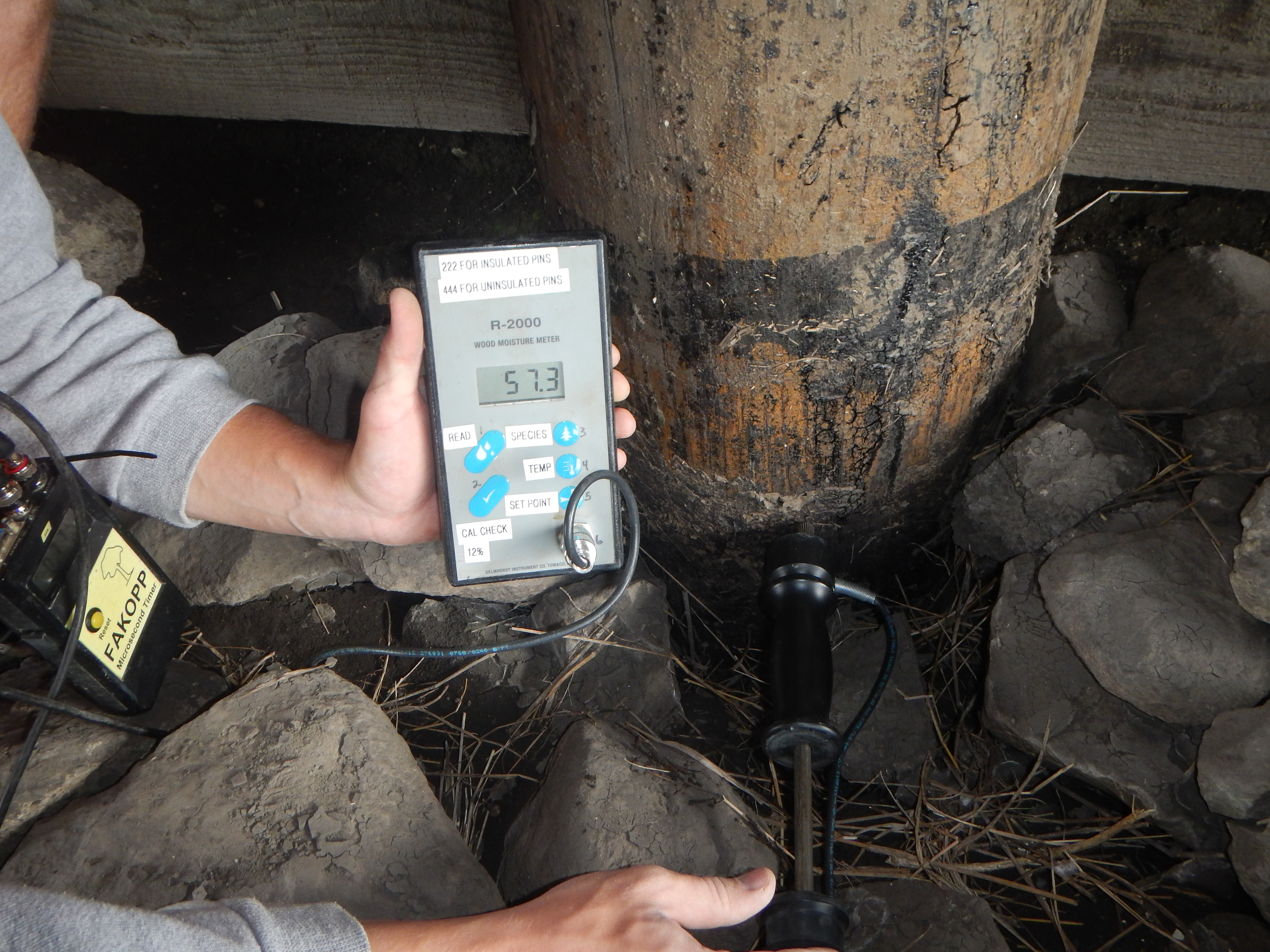
Resistance microdrills and stress wave timers are two proven inspection tools that counties can use to see past the surface of a timber bridge and identify the actual amount and area of internal rot. But Minnesota counties have lacked this equipment and the training.
“These tools will enable us to identify the bad bridges before the decay shows up visually– but it will also tell us which bridges are still good so we can allocate the funds we have to replace the worst bridges,” Hemmila said.
A stress wave timer (video above) locates bad areas on a bridge by using probes to measure the time it takes for sound to travel through the material. A decayed piling will have a time that is more than double that of a sound piling.
A resistance microdrill (video below) can then be used to determine how much good wood is left in a piling or timber element by drilling a bit into the wood and measuring the resistance.
MnDOT and the LRRB are developing a customized inspection manual and standardized inspection protocols, which can be integrated into the state’s bridge data management software.
“Good inspections can catch potential problems early and possibly avoid emergency closures or load postings,” Conkel said. “It enhances safety while also helping stretch available funding for bridge repair and replacement.”
Baby Boomers
Minnesota has one of the highest concentrations of timber bridges in the country — 1,600 (down from 1,970 in 2001), more than half built before 1971.
These bridges typically start experiencing issues in their substructure when they reach 40 to 60 years old, with decay usually occurring where the piling meets the ground or water line – a perfect environment of air and moisture for rot to thrive and propagate.
Unfortunately, some bridges were unwisely built on the pilings of former bridges.
“Well-maintained, well-designed and well-treated bridges can last a long time, equivalent to other materials,” said Brian Brashaw, director of Wood Materials and Manufacturing Program at the University of Minnesota-Duluth.
Because bridge engineers have been unable to fully assess the internal cross-sections of timber bridges, they have been very conservative when assessing timber bridges, Brashaw said, resulting in load limit reductions and bridge replacements.
“The use of advanced techniques will take the guess work out of the equation, allowing for better decision-making on which bridges need repair or replacement now,” Brashaw said.
With no formal national or state guidance, MnDOT and the Local Road Research Board undertook a research project to identify state-of-the-art inspection practices and marry those techniques with the needs of Minnesota county engineers.
“We don’t have enough money to just replace all the timber bridges, so we want to provide county engineers with more advanced inspection tools so they can determine how much decay there is in the piling, and other susceptible areas,” Conkel said.
A second LRRB project, led by Iowa State University, is advancing the development of cost-effective repair techniques that counties can use to lengthen a bridge’s service life.
“We can’t build them fast enough, so we have to find a way to make them last longer so we can catch up,” Hemmila said.











 Crossroads