How Better Sign Management Could Save Minnesota Millions

Replacing traffic signs at the right time is an important science.

Waiting too long can endanger lives and expose an agency to a lawsuit. But replacing traffic signs prematurely could cost a single city tens of thousands of dollars per year.

If fully implemented, new recommendations developed by MnDOT and the Local Road Research Board (LRRB) could save public agencies as much as $41 million over three years by helping them better manage their signs and meet new federal requirements on retroreflectivity without replacing signs prematurely. Here’s how:

Reducing Inventories

At a purchase price of $150 to $250 a piece, plus $20 per year for maintenance, the cost of an unnecessary traffic sign adds up. (Maintenance costs involve replacing signs that have been vandalized, knocked down, or that no longer meet required levels of retroreflectivity.)

In a case study of townships in Stevens County, Minnesota, researcher Howard Preston found that nearly a third of traffic signs were not required and served no useful purpose. The average township has 180 signs, which results in an annual maintenance cost of $3,600. The average county has 10,000 signs — an annual maintenance cost of $200,000.

Public agencies could save a collective $26 million* just by removing unnecessary or redundant signs from the field, Preston said. A traffic sign maintenance handbook developed by the LRRB and MnDOT guides agencies through that process.

Longer  Lives

Traffic signs have more life in them than the typical 12-year manufacturer’s warranty, Preston said. But how often agencies replace them varies throughout the state.

Whereas small municipalities may replace signs on an individual basis through spot-checking for retroflectivity, MnDOT has a schedule. Each of the agency’s 400,000 signs is replaced within 18 years of installation.

Preston found that MnDOT could safely extend the service life of its signs to 20 years, which would save an estimated $1.3 million within the first few years of implementation.

Assuming (in lieu of a research-backed benchmark) that local municipalities would likely start replacing signs around the 15-year mark to ensure compliance with the federal law, Preston estimates that townships, cities and counties could avoid a collective $6 million in unnecessary costs per year just by adhering to the minimum 20-year replacement schedule recommended by the study.

Agencies are required by federal law to have a method in place for ensuring that signs maintain adequate retroreflectivity. A replacement schedule based on science is one way; regular physical inspection is another.

Researchers, who consulted other state’s studies and also examined signs in the field, determined that the life of the modern sign in Minnesota is at least 20 years.

It’s possible that traffic signs actually retain their retroreflectivity for 30 years or more, but further study is needed since sheeting materials on today’s traffic signs haven’t been deployed long enough to know, researchers say.

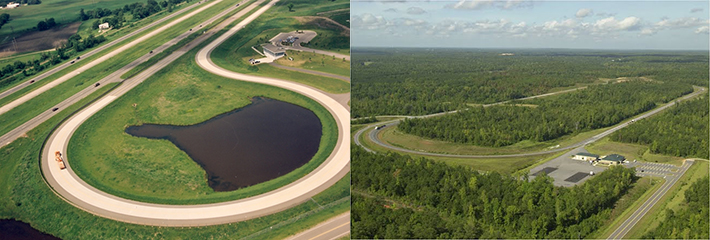
A test deck at the MnROAD facility will track the condition of Minnesota signs over the next decades — and perhaps push the  recommended replacement cycle longer.

*This figure  and the $41 million total above account for cost savings calculated over an initial, three-year period. Ongoing cost savings thereafter may be different, according to Preston.

Related Resources

Sign Maintenance Management Handbook (PDF, 13 MB, 119 pages)

Traffic Sign Life Expectancy study

Auto-Flaggers Keep Road Crews Safe, Save MnDOT Money

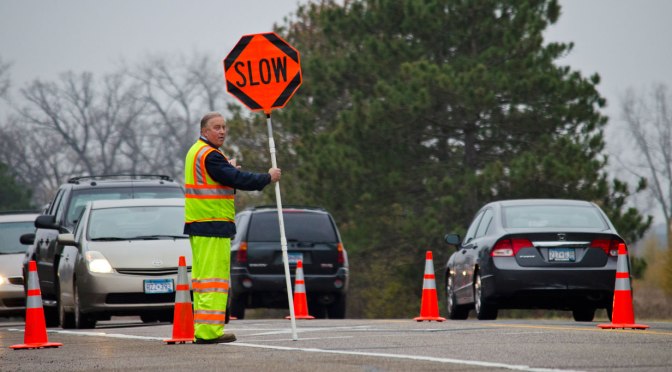
Like a traditional flagger, an Automatic Flagger Assistance Device directs drivers through work zones and other problem areas. But whereas traditional flagging requires workers to stand dangerously close to moving traffic, AFADs can be operated remotely, keeping the flaggers out of harm’s way.

“This is a very risky environment from our employees,” MnDOT Research Services Project Advisor Alan Rindels said. “Any flagger you talk to can recount a time he or she had to jump in a ditch to avoid a vehicle.”

Using a remote control, a single worker can easily operate two AFADs simultaneously, freeing up personnel to perform other tasks and speed up the completion of a road project. MnDOT estimates that the resulting cost savings can cover an AFAD’s purchase costs within two years.

MnDOT recently undertook a pilot implementation of three sets of AFADs, introducing them to maintenance staff and identifying the most appropriate situations for their use. Researchers reviewed past AFAD use in Minnesota, observed traditional flagger and AFAD operations in action, interviewed MnDOT maintenance personnel about their experiences and held two hands-on training sessions that were attended by more than 60 people.

Results showed that drivers obeyed the AFAD instructions and that AFADs work well for stationary construction projects. These successful demonstrations should encourage the wider use of AFADs and enhance worker safety in a cost-effective way.

MnDOT Research Services & Library produced the video above, which details the experiences of a MnDOT road crew who recently started working with AFADs.

(Bonus: Watch MnDOT flagger Joe Elsenpeter talk about jumping into a ditch to avoid being hit.)

*Note: This blog post was adapted from an article in the latest issue of our newsletter, Accelerator. Click here to subscribe.

Related Resources

New crash report interface will improve usability and data quality

The data collected at the scene of a crash by law enforcement officers are important for more than just drivers and their insurance companies. The information is also used on a much larger scale by state agencies and researchers to analyze and evaluate crashes, trends, and potential countermeasures.

“Big decisions get made based on that data—million-dollar decisions,” says Nichole Morris, a research associate at the U of M’s HumanFIRST Laboratory. “So you have to be sure that what goes in to that report is high quality and reflects what actually happened at the scene of the crash.”

As part of an effort to improve this data quality in Minnesota, Morris is leading a team of HumanFIRST researchers in a project to redesign the electronic crash report interface used by law enforcement officers. The team’s goal is to create a new interface that improves the accuracy, speed, reliability, and meaningfulness of crash report data.police_guy

The project is occurring in conjunction with a redesign of Minnesota’s crash records database and is being sponsored by the Traffic Records Coordinating Committee (TRCC) at the Minnesota Department of Public Safety (DPS) and by MnDOT.

“In industry, they do this work all the time, looking at usability and design. But when you think about what a state does in terms of usability, nothing like this to our knowledge has ever been done. This makes it a very exciting and revolutionary project for Minnesota,” Morris says.

In the first phase of the project, the researchers completed a human factors analysis on the existing crash report interface to identify potential problem areas. This included a step-by-step task analysis and in-depth interviews with law enforcement officers.

During this process, the researchers identified several areas they hoped to improve. For instance, they wanted the new interface to be smarter, making better use of autofill features to reduce the amount of manual data entry.

Following the analysis, the team built two versions of a mock crash report interface for usability testing: a wizard and a form. In both versions, the researchers added decision aids to ease usability. They also significantly improved the system’s autofill capabilities, reducing the ratio of officer to system data entry from 6:1 to nearly 1:1.

The researchers then conducted four rounds of usability testing with law enforcement officers for both the wizard and the form. Results were split: half the officers preferred the wizard and half preferred the form. Because of these findings, the TRCC is planning to build full versions of both, Morris says, which will allow officers to use the version they prefer.

Going forward, the researchers plan to make a few more adjustments to the research prototype before handing it off to the state vendor, Appriss, which will build the new system. The team will then work collaboratively with Appriss to complete additional beta and usability testing before the new interface launches in January 2016.

“The results of the HumanFIRST prototypes are being combined with the vendor’s prior experience for a best-of-breed approach,” says Kathleen Haney, traffic records coordinator at DPS. “This is a fantastic project, and the results will be relevant for years to come.”

Read more about the project in the December 2014 CTS Catalyst.

MnDOT, LRRB Pick New Research Projects with Financials in Mind

Minnesota’s transportation research governing boards put a new emphasis on financial benefits when selecting next year’s round of transportation research projects.

MnDOT’s Transportation Research Innovation Group (TRIG) and the Local Road Research Board announced their Fiscal Year 2016 funding awards this week after hearing proposals from researchers in several states. They selected 20 research proposals hall-marked by novel approaches to improving the environment, increasing transportation safety, improving construction methods and boosting the bottom line.

“We asked the principal investigator to present the safety and financial benefits up front, and how they can be implemented to improve the transportation system and economic viability of Minnesota,” said MnDOT Research Management Engineer Hafiz Munir. “We’re making a point early in the process to identify those potential benefits, quantify them and document them in our tracking system.”

Researchers will test new technology that could make crack-free pavements; find better, faster and less expensive ways to reclaim roads; and even explore how to use waste material from road construction projects as part of the landscaping to absorb water runoff.

Links are provided below to brief descriptions of each of the projects:

Bridges and Structures

Environment

Maintenance

Materials and Construction

Multimodal

Policy and Planning

Traffic and Safety

Decoding the Deicers

The results of last season’s deicing study are in — just in time for our next snow.

Last winter, Minnesota State University researcher Steve Druschel set up experimental lanes at two Shakopee entertainment parks and a test site on a Mankato bridge to examine the life cycle of winter maintenance, from plowing and the application of chemicals to the drainage of chemical residue after the roadway has been treated.

What the Study Found

  • The majority of chloride appears to leave the roadway by plow ejection, vehicle carry-away or tire-spray spreading, rather than through storm drainage, even in warmer storms.
  • Pavements don’t hold chloride very long in a precipitation event, even after anti-icing/pre-treatment.
  • Deicer effectiveness. Warmer temperatures provide more melt from the deicer. Little melt was observed below
    10 degrees Fahrenheit unless sunlight provided warming, and prewetting produced no significant difference in deicer performance.
  • Dry pavements may be better candidates for pretreatment, with researchers noting that any wetness on the pavement ahead of a storm limited anti-icer effectiveness.
  • Truck traffic after deicer application was found to significantly improve deicer performance, resulting in both a wider and quicker melt.
  • Plow effectiveness. Even with different snow and temperature conditions, the evaluation of plow speed provided the same findings: snow rises higher in the curvature of the plow at higher speeds, creating a broader spray off the plow ends, and higher speeds decrease scrape quality.
Students pour water to form ice on a test lane in Shakopee.

What’s Next?

The research team has proposed a third phase of this project to continue their work in the field, which is expected to include further examination of the impact of truck traffic on deicer effectiveness, variations in plow setup and expanded testing under varying weather conditions and snow structure.

Related Resources

Field Effects on Deicing and Anti-Icing Performance – Technical Summary (PDF, 1 MB, 2 pages); Final Report (coming soon)

Salt Brine Blending to Optimize Deicing and Anti-Icing Performance –Technical Summary (PDF, 1 MB, 2 pages) and Final Report (PDF, 11 MB, 151 pages) (previous study) 

The 411 on Sign Management

A revised handbook offers Minnesota cities and counties the latest tips on how to meet new sign retroreflectivity requirements, as well as the 411 on sign maintenance and management – everything from knowing when it’s time to remove a sign to creating a budget for sign replacement.

The best practices guide – produced in conjunction with a new sign retroreflectivity study – also offers case studies from around the state.

“The life cycle of traffic signs, from installation to replacement, is a pretty complex issue and it can be a challenge to get your arms around,” said Tim Plath, Transportation Operations Engineer for the city of Eagan. “This handbook really boils it down into some basic concepts and also gives you the resources to dig deeper if necessary. It’s a good resource to have at your fingertips.”

2014RIC20-1

This handbook updates a previous version issued in 2010, to include new FHWA  retroreflectivity and maintenance and management requirements and deadlines.

“Maintenance/management of a large number of signs can potentially be an administrative and financial challenge for many local road authorities,” explained Sulmaan Khan, MnDOT Assistant Project Development Engineer.

Here’s a video demonstration of a sign life reflectometer (the Gamma 922), another resource MnDOT has available for local government agencies. Cities, townships or counties may borrow the reflectomer by contacting the Office of Materials and Road Research, (651) 366-5508.

Related Resources

Traffic Sign Maintenance/Management Handbook (PDF)

Traffic Sign Life Expectancy – Technical Summary (PDF) and Final Report (PDF)

Gamma 922 demonstration (video)

Six Ways to do Multimodal in Greater Minnesota

Can rural Minnesota do multimodal?

You betcha, says a new study by University of Minnesota researcher Carol Becker, who compiled 65 examples of innovative multimodal rural and small urban transportation projects from around the United States.

The study, funded by the Minnesota Department of Transportation, looks at alternatives for promoting and strengthening multimodal transportation in rural and small urban areas. Becker developed these six case studies to showcase different modes and strategies:

Retrofitting Sidewalks

The city of Olympia, Washington, was mostly built during the automobile era. As a result, most of the city developed without sidewalks. In 2004, Olympia passed a voter referendum that linked enhanced parks with adding sidewalks throughout the city. The referendum was supported by parents who wanted safe routes to school for their children and by environmentalists who wanted alternatives to driving. But the key to voter approval was linking recreation at parks with recreation walking to and from the parks. The Parks and Pathways program is now retrofitting miles of sidewalks into neighborhoods.

A sidewalk that was built using utility tax funds on San Francisco Avenue in Olympia, Washington.
Intercity Bus Service

North Dakota has the third-lowest population density in the United States. Despite this, it has a network of buses that connect small towns to larger regional centers. Such alternatives to driving allow residents — particularly elderly and disabled persons — to stay in their communities rather than move to large cities to access needed services.
InterCity

Senior Transportation

A nonprofit in Mesa, Arizona, implemented a program to reimburse eligible seniors for car trips provided by other individuals. The program was moved to the regional transit provider for expansion. It did not scale up well, however, and was recently replaced with the East Valley RideChoice Program, which provides seniors and disabled adults with  discounted cards for taxi service. RideChoice participants can receive up to $100 of taxi service per month for either $25 or $30, depending on their city of residence.

Photo courtesy of  Valley Metro RideChoice
Photo courtesy of RideChoice
Integrating Highways into Small Town Fabric

One challenge to making smaller communities more walkable and pedestrian-friendly is that most small towns are built around MainStreethighways. In fact, unless a bypass has been built, the main street of a small town is also typically a highway. This creates a conflict between groups who want to move vehicles efficiently and groups who want pedestrian-friendly downtowns.

Oregon took two steps to help mediate this:

  • Added a functional classification to the Oregon Highway Manual for the portion of roadway that runs through small towns. This functional classification has very different design standards that can accommodate walking, biking, commercial activity along the roadway, parking along the roadway and many other small-town needs.
  • Main Street: When A Highway Runs Through It” was written to help local governments understand their options for creating a multimodal environment and better advocate for their interests with the Oregon Department of Transportation. The document explains ODOT funding processes and  shows examples of design options. Local governments can then adopt these elements and standards into their local plans, which ODOT must work with when doing highway improvements.
Complete Streets

Clinton, Iowa, is a city with a population of 27,000 on the Mississippi River in eastern Iowa. In 1995, the rail yard closed, which provided an opportunity to redevelop land. The city created a comprehensive long-range plan that included remediating soil contamination, purchasing land for redevelopment, realigning two streets and increasing transportation choices with a “complete streets” design. The reclaimed land will support a multi-use path, sidewalks and connections to cross streets.

Approximately $50 million has been secured for the project.  A $2.7 million Transportation Investment Generating Economic Recovery (TIGER) grant was also received from the U.S. Department of Transportation in 2012 to pay for a multi-use trail with a direct connection to the Mississippi River Trail, decorative lighting and plantings. In the future, land will be sold for higher density, walkable development.

A look at part of Clinton, Iowa’s redeveloped old railroad area, now called Liberty Square.
Impact Fees for Funding Infrastructure

As resistance increases to broad-based taxes, there has been a shift toward funding transportation with fees linked to specific projects. Examples include:

  • Concurrency laws, which require capacity in governmental systems (either planned or existing) before development can occur. If capacity does not exist, development cannot occur. In the state of Washington, a number of cities use concurrency to set transportation fees paid by new development. Bellingham, Washington, uses this kind of system to raise funds for transportation projects.
  • Development impact fees. Contra Costa County, California, has a capital plan for transportation improvements and sets a fee that is paid by new development to fund that infrastructure. Fees vary from under $1,000 to over $15,000 depending on where new development is occurring. The county expects to raise more than $845 million in transportation dollars from 2014 to 2030 using such a mechanism.
  • Allowing local units of government to create special districts to fund transportation projects.
Related Resources

Rural and Small Urban Multi-Modal Alternatives for Minnesota – Final Report

Teen Driver Support System helps reduce risky driving behavior

Although teen drivers make up a small percentage of the U.S. driving population, they are at an especially high risk of being involved in a crash. In fact, drivers between ages 16 and 19 have higher average annual crash rates than any other age group.

To help teen drivers stay safe on the road, researchers at the U of M’s HumanFIRST Laboratory have been working for nearly 10 years on the development of the Teen Driver Support System (TDSS). The smartphone-based application provides real-time, in-vehicle feedback to teens about their risky behaviors—and reports those behaviors to parents via text message if teens don’t heed the system’s warnings.

TDSS provides alerts about speed limits, upcoming curves, stop sign violations, excessive maneuvers, and seat belt use. It also prevents teens from using their phones to text or call (except 911) while driving.

The research team recently completed a 12-month field operational test of the system with funding from MnDOT. The test involved 300 newly licensed teens from 18 communities in Minnesota.

To measure the effectiveness of the TDSS on driving behavior, the teens were divided into three groups: a control group in which driving behavior was monitored but no feedback was given, a group in which the TDSS provided only in-vehicle feedback to teens, and a group with both in-vehicle and parent feedback from the TDSS.

Preliminary results show that teens in the TDSS groups engaged in less risky behavior, especially the group that included parent feedback. These teens were less likely to speed or to engage in aggressive driving.

Although these results demonstrate that the TDSS can be effective in reducing risky driving behavior in teens, Janet Creaser, HumanFIRST research fellow and a lead researcher on the project, stresses that technology is not a substitute for parent interaction.

“The whole goal of our system is to get parents talking to their teens about safe driving.” Creaser says. “And maybe, if you’re a parent getting 10 text messages a week, you’ll take your teen out and help them learn how to drive a little more safely.”

Read the full article in the November issue of Catalyst.

How those little blue lights make intersections safer

A story from WCCO-TV last week answered a question that has likely been puzzling many commuters passing through Ramsey County: what are those blue lights popping up on traffic signals?

The report explains that the blue lights illuminate when a traffic signal changes to red, allowing a patrol officer to witness and enforce a signal violation more easily and safely. What the report doesn’t explain is the safety benefits to be gained from increased red light enforcement.

In Ramsey County, the proposal for a recent large deployment of blue lights came from traffic engineers, not police.

“Our county safety highway program conducted by MnDOT indicated a lot of right-angle crashes related to people running red lights,” said Ramsey County Planner Joseph Lux. “These are typically the accidents with the severest injuries.”

As part of the statewide Towards Zero Deaths (TZD) initiative in July 2013, MnDOT worked with counties to develop safety plans that emphasize low-cost, high-value safety improvements.

A federal grant is helping fund the installation of 128 blue lights at 49 intersections in Ramsey County (see locations) over the next two weeks. Deputies will begin enforcement later this month, but the hope is that the blue lights will be so effective,  active enforcement won’t be necessary long-term.

A blue light, positioned on each of the four corner intersection poles, turn on whenever the opposite signal light turns red.

“The comments we’ve received from local police is they don’t want to write tickets; they just want people to quit running red lights,” Lux said.

IMG_2431
Blue light indicators were affixed to existing signal poles at Lexington Avenue and Larpenteur Avenue in Roseville.

The blue light indicators allow a police officer to view an infraction from many viewpoints, instead of having to pursue the offending vehicle through the intersection. Also only one squad is required to patrol an intersection; not two.

The blue light indicators have been shown to increase traffic safety. In Florida, crashes due to people running red lights fell by 33 percent, according to a low-cost safety improvement pooled fund study conducted on behalf of MnDOT and 37 other states.

Unlike Florida’s blue lights, Ramsey County’s are being placed on the signal pole, instead of the masthead. They’re more prominent than a couple indicators the county tried previously at accident-prone intersections in Little Canada and Maplewood.

“They’re bright and noticeable to the public, but not distracting, like the ones Florida puts on the masthead,” Lux explained.

According to WCCO-TV, the blue lights are funded by a $120,000 federal grant, with $13,000 in matching local funds.

Temporary signs will be put up by Ramsey County to notify the public of the new indicators.

A few other Minnesota communities — including Blaine, Crystal, Olmsted County and Dakota County — have also installed blue light indicators in recent years.

Lux explained that Ramsey County is installing blue lights on intersections that are easily enforced by law enforcement, as well as those that aren’t, in hopes that the public will obey them all because of the heightened presence.

Minnesota's transportation research blog