Tag Archives: MnDOT

Geotextile research at MnROAD

Geotextiles are synthetic polymer materials used to improve the performance of roadways. As discussed in this 2011 technical summary, geotextiles facilitate filtration and water drainage, improve the integrity and functioning of base materials, and provide a stable construction platform over soft or wet soils. These improvements can benefit both the cost-efficiency and longevity of pavements.

Geosynthetic materials have been used throughout Minnesota, and can be found in both reconstructed and new roadway projects. The use of geotextiles as a separator layer under concrete overlays, however, has had limited documentation in Minnesota and other cold weather climates. MnROAD‘s recent dedication of several test cells to this purpose will determine the performance of this application of geotextiles, with the goal of improving its applications on other Minnesota roadways.

The new test sections, designated as Cells 140 and 240, consist of a very thin, 3-inch concrete overlay over an existing 7-inch concrete pavement constructed 20 years ago. Some unique features of the design include the use of a fiber-reinforced concrete mix, two different thicknesses of the nonwoven geotextile, and the use of a special type of glue, rather than nails, to fasten it to the existing concrete before paving.

The fabric and fiber used in the concrete mix were supplied through a public-private partnership with Propex Geotextile Systems. The results of this study, along with other unbonded overlays constructed at MnROAD and around the country, will be incorporated into a new national pooled fund project — TPF 5-(269) — led by MnDOT. This project will develop an improved mechanistic design procedure for unbonded overlays.

A second application being demonstrated at MnROAD is the use of a geosynthetic drainage system under several dowel bar baskets in new concrete pavement test section. Minnesota has historically used a dense-graded base layer under concrete pavements to provide a stable foundation and construction platform. However, this material drains very slowly, and traps moisture within the joints, leading eventually to significant distress (See Effect of Drainage on the Performance of Concrete Pavement Joints in Minnesota.) This application will compare the use of the geotextile drainage material placed under both sealed and unsealed joints, as well as a control joint without the drainage material.

Best practices for trail crossings – webinar and draft report

Last week, MnDOT Research Services hosted a workshop on a forthcoming report, “Decision Tree for Identifying Alternative Trail Crossing Treatments.” It was broadcast as a webinar, the recording of which is now available online via Adobe Connect:

http://mndot.adobeconnect.com/p8hlfripuwe/

The final report is coming soon, but in the meantime you can see the draft version on our website (link), along with case studies and other related documents.

Are energy-efficient streetlights cost-effective?

In 2010, the City of Minneapolis installed 55 energy-efficient streetlights from nine different manufacturers along 46th Street between 34th and 46th avenues. The project, part of Hennepin County’s Minnehaha-Hiawatha Community Works program, was designed to field test various models of light-emitting diode (LED) and induction lights. Over the course of two years, researchers observed, evaluated and compared the performance of various lighting products, detailing the results in a recently published report available on the MnDOT Research Services website.

In a broad sense, the results of the study would appear to confirm what has become common knowledge regarding energy-efficient technologies: while they cost  more up front, in the long run they have the potential to save money in the form of reduced energy and maintenance costs. The study also demonstrates that  energy-efficient streetlights are capable of producing adequate light output and are well-received by residents.

However, if the big question is whether energy-efficient streetlights can save local governments money, the answer  is somewhat complicated. The study found that both the levels of light ouput and the amount of time it takes to recoup costs varies significantly by product. Page 16 of the report (page 25 of the PDF) features a table comparing various products’ light output and estimated payback time. With one notable exception, the results show that products with the highest light output (i.e. the highest performers and therefore the most desirable) tend to also have the longest payback time. The amount of time it takes to generate a cost savings from energy-efficient streetlights can be as short as 2.6 years or as long as 24 years, depending on the product.

Some other interesting tidbits from the study:

  • Researchers observed operational cost savings of 50-75 percent, depending on the product.
  • Eighty percent of the savings came from reduced maintenance costs, while only 20 percent came from reduced energy costs.
  • In a survey of area residents, 76 percent responded positively to the new, energy-efficient lights.

The study demonstrated that energy-efficient streetlighting is a feasible option for local governments, with the caveat that agencies need to research lighting products thoroughly before making a choice as to which one to use. Ultimately, considering the ever-decreasing cost of LEDs, the use of energy-efficient streetlighting technologies is likely to grow.

Read more:

Free webinar July 9 on best practices for bicycle trail crossings

Intersections between trails and roadways can be dangerous places for bicyclists and pedestrians. Next week, MnDOT Research Services is offering a free webinar on a forthcoming manual designed to help make trail crossings safer.

On Tuesday, July 9, from 1:00 p.m. to 2:30 p.m. (CDT), University of Wisconsin—Madison Professor David Noyce will be conducting a workshop on his forthcoming handbook, “Decision Tree for Identifying Alternative Trail Crossing Treatments.” The project, funded by MnDOT and the Local Road Research Board, aims to identify current engineering state-of-the-practice for trail crossings and provide guidance as to appropriate crossing designs and vehicular and bicycle right-of-way hierarchies.

You can click on the link below at the specified date and time to watch the webinar. No registration is required.

http://mndot.adobeconnect.com/trailcrossing/

Bridging the gap between research and implementation

The end goal of transportation research, broadly speaking, is to see the results implemented — that is, to transfer the knowledge generated through research to those who can put it to good use. Research Services and the Center for Transportation Studies use a variety of tools to help disseminate research results: our respective websites, email lists, social media, newsletters and this blog, to name a few. But what do we know about how our audiences actually interact with these various channels of communication?

At the Transportation Research Board Annual Meeting earlier this year, researchers from Nebraska presented the findings of a very interesting survey on how engineers and other transportation practitioners prefer to learn about research results. Their presentation, entitled “What Engineers Want: Identifying Transportation Professionals as an Audience for Research,” is available via Slideshare. (Unfortunately, WordPress won’t let me embed it.)

Some key takeaways from the survey:

  • Practitioners overwhelmingly prefer one- or two-page technical briefs to other types of research communication products. (Other popular formats include presentations, video highlights and webinars.)
  • By a wide margin, practitioners use search engines like Google or Bing to seek research results (compared to other options like contacting a colleague or university faculty).
  • Practitioners are mostly interested in information on how to implement findings, as well as cost-benefit analyses of implementation.

The survey results present what I think is a fairly realistic and nuanced picture of the audience for transportation research; they’re also consistent with our (Research Services) own internal research on the issue. The bottom line is that research results need to be condensed into usable bits of information and made easily accessible in a variety of formats. People want information they can use, without having to dig for it. More importantly, they want it in whatever their preferred format is, whether it be print, email, Web, RSS, social media or in-person presentations.

Interestingly, Research Services already produces the kind of two-page technical briefs described in the survey. We call them “technical summaries,” and they are among our most popular products. We generally produce a technical summary for each research project we manage, and post them on our website alongside the full research report. Reading a two-page summary, written in layman’s terms, is certainly easier than poring over research reports that oftentimes number in the hundreds of pages, so it’s not surprising that even those with a strong engineering background prefer the format.

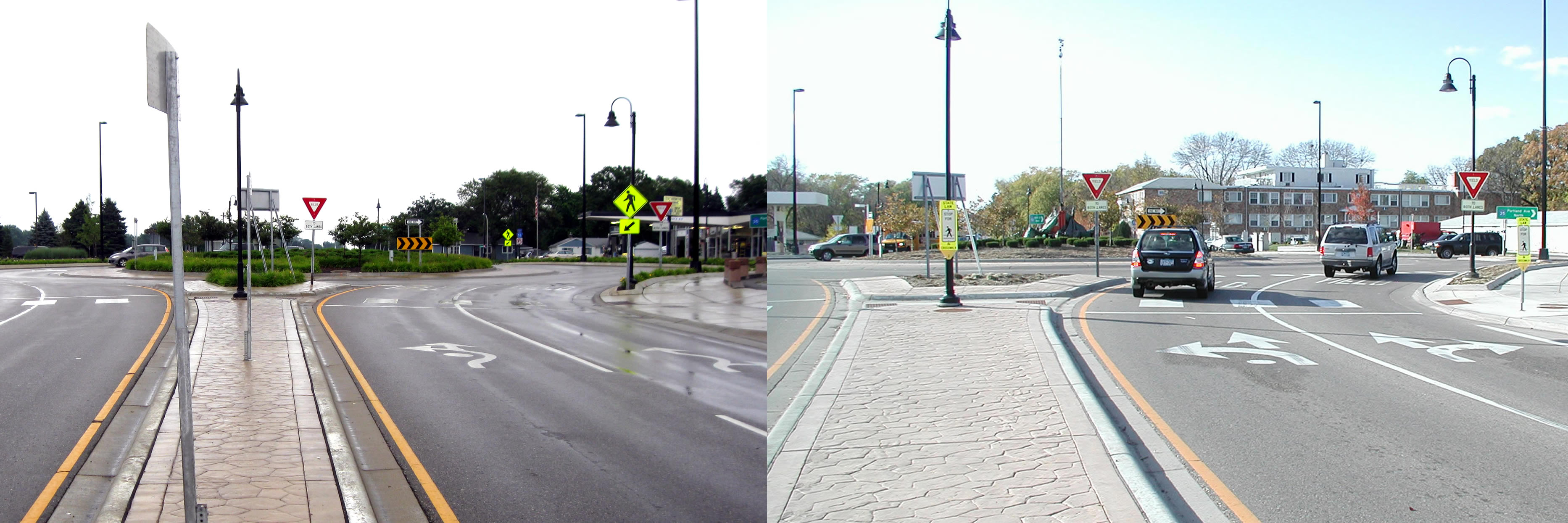
As a side note, last Friday we published a batch of 10 new technical summaries — along with two new transportation research syntheses, which are a type of literature review. Topics range from pedestrian and bicycle safety in roundabout crossings to the effect of intelligent lane control systems on driver behavior. You can check the full list on the Research Services main page.

Now it’s your turn: What forms of communication do you think are most effective at reaching transportation practitioners? Which ones do you prefer? Let us know in the comments.

Permeable pavements could protect the environment, save taxpayer dollars

KSTP has a nice story today on the Minnesota Department of Transportation’s ongoing research into permeable pavements at the MnROAD research facility. (The video isn’t embeddable on WordPress, but you can find a direct link here.)

Permeable pavements (also known as “porous” or “pervious” pavements) are designed to allow water to pass through roadways and infiltrate directly into the underlying aggregate and soil. Their primary effect is to reduce stormwater runoff, which carries harmful materials from the road’s surface out into waterways. Of course, reducing runoff also mitigates the need for the kinds of costly drainage structures that are normally required to manage stormwater. Permeable pavements also reduce noise and mitigate the potential for hydroplaning, among other documented benefits.

These types of pavements are already used in some areas in Minnesota — mainly in parking lots and city streets — and MnDOT has been studying their potential use for full-depth roadway pavements. As the video indicates, so far the results have been encouraging. (You can read more about MnDOT’s ongoing research on the MnROAD website.)

As a side note, the amount of water these pavements can absorb is quite impressive. Last month, we posted a new Local Road Research Board video on stormwater management. In one scene, a public works crew dumps what appears to be several hundred gallons of water onto a permeable pavement and watch as it disappears almost instantaneously. (Watch the clip here.)

Here are the results of some recent permeable pavement studies here in Minnesota:

‘Three Ways to Cook a Pothole’

In April, we posted about an innovative pothole-filling technology being developed by the Minnesota Department of Transportation and the University of Minnesota, Duluth. The technique involves zapping pothole patches and the surrounding pavement with a special truck-mounted, 50,000-watt microwave. Researchers have found that heating the base and the patch material at the same time creates a stronger, longer-lasting bond that provides for a more permanent pothole fix.

Last week, the MnDOT/UMD microwave technology found its way into a new MnDOT video (above) that also explores two other experimental pothole-patching methods. One involves using a large “electric oven”-type heating element instead of a microwave. The other utilizes a new exothermic (i.e. heat-generating) asphalt mixture containing taconite from northern Minnesota mines. The video compares the potential benefits of all three of the new technologies, which the department hopes will someday lead to “more pothole-patching power for the taxpayer dollar.”

See also:

Portable weigh-in-motion system demonstration

Weigh-in-motion (WIM) systems consist of sensors placed in road pavements to measure the weight of vehicles passing over them, along with other data such as speed, axle load and spacing, and vehicle type. This data is used to enforce weight limits on trucks and is also useful in a wide range of other applications, such as pavement design and traffic analysis.

However, constructing and maintaining permanent roadside WIM stations is expensive, so these systems are installed primarily on roadways with heavy traffic, such as interstate and trunk highways, and rarely used for rural local roads. Meanwhile, heavy truck volumes on local roads are increasing, significantly shortening their lives. A less costly, portable WIM system is needed for such roads so that collected data can be used to better design these roads to accommodate heavy truck traffic.

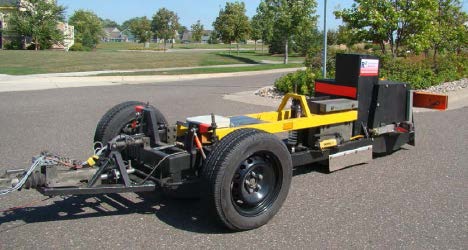
One solution for bringing WIM technology to local roads is to implement a portable, reusable system similar to pneumatic tube counters used to conduct traffic counts. With funding and technical assistance from MnDOT and the Local Road Research Board, Professor Taek Kwon of the University of Minnesota—Duluth has developed a prototype system that has already proven to be nearly as accurate as the more expensive, permanent systems.  MnDOT Research Services staff drove up to MnROAD this week to observe a live demonstration of the technology, and made this short video.

The research being conducted here is part of an implementation project based on Kwon’s original study, the results of which can be found in this research report and its accompanying two-page technical summary from MnDOT Research Services.

White House honors MnDOT traffic boss for work on rural intersection safety

The White House named Minnesota Department of Transportation State Traffic Engineer Sue Groth one of its 12 transportation “Champions of Change” for her role in implementing life-saving technology to help prevent collisions at rural intersections. The rural intersection conflict warning systems, which use sensors and lights to give motorists real-time warnings about traffic conditions, were developed by MnDOT’s Office of Traffic, Safety and Technology.

It’s worth noting that MnDOT Research Services and the University of Minnesota are also currently working on a project to develop a low-cost version of these systems using LEDs and solar panels. The ongoing research, being conducted by University of Minnesota— Duluth Professor Taek Kwon, is a continuation of the Advanced Light-Emitting Diode Warning System project completed in 2010.

Here’s the press release from MnDOT:

ST. PAUL, Minn. – On Wednesday, May 8, 2013, the White House honored Sue Groth, Minnesota Department of Transportation’s state traffic engineer, as one of 12 people who are Transportation “Champions of Change.” The Champions event, “Transportation Technology Solutions for the 21st Century,” focused on individuals or organizations that have provided exemplary leadership in developing or implementing transportation technology solutions to enhance performance, reduce congestion, improve safety and facilitate communication across the transportation industry at the local, state or national level.

“These Champions represent the very best in American leadership, innovation and progress,” said Secretary Ray LaHood. “I’m proud to recognize these transportation leaders who work every day to grow our economy and help us reach our destinations more quickly, efficiently and safely.”

The MnDOT Office of Traffic, Safety and Technology has been selected as a Champion of Change for their work to reduce fatal and life-changing crashes on Minnesota roadways, while enhancing mobility for all users. OTST is being honored for designing, testing and helping to deploy dozens of life-saving rural intersection conflict warning systems throughout Minnesota, while leading a national effort to do more of the same throughout rural America. These systems save lives at rural intersections that might otherwise not warrant or afford more traditional traffic control devices or geometric improvements.

See also:

Research partnerships create better pavements

As is painfully evident this time of year, Minnesota’s weather is highly destructive to our asphalt roadways.  One of the biggest challenges for transportation practitioners in cold-climate states like ours is low-temperature cracking in asphalt pavements. The distress caused by  our extreme weather variations and constant freeze-thaw cycles wreaks havoc on our asphalt streets and highways, causing decreased ride quality, increased maintenance costs and shorter pavement lifespans.

On April 17, the Center for Transportation Studies presented its 2013 Research Partnership Award to the team members of a multi-state, Minnesota-led study designed to combat the problem. The project, Investigation of Low Temperature Cracking in Asphalt Pavements, Phase II,” was a national pooled-fund study involving six state DOTs, four universities, the Minnesota Local Road Research Board and the Federal Highway Administration. It resulted in a new set of tools — test methods, material specifications and predictive models — that will be used to build longer-lasting pavements.

The project is a prime example of the value and benefits of cooperative research. Each organization brought its own unique strengths and expertise to bear on the problem. The University of Minnesota, led by Professor Mihai Marasteanu, brought its strength in lab testing of binders and mixtures, for example; other universities leveraged their respective expertise in data analysis, statistics and modeling capabilities. MnDOT, as the lead state agency, controlled the finances and kept the research on track, guiding the process through technical advisory panels. MnDOT’s materials laboratory and its unique MnROAD pavement research facility also played a key role in the study.

The above video provides an excellent overview of the project and includes commentary from key MnDOT and University of Minnesota team members. MnDOT is already moving to implement the results. It plans to use the new test procedure on several road construction projects this year. Iowa and Connecticut are among the other states reportedly planning implementation projects.

See also:

2013 Research Partnership Award winners

From left: University of Minnesota Professor Mihai Marasteanu, the project’s principal investigator; MnDOT State Aid Director Julie Skallman; MnROAD Operations Engineer Ben Worel; and CTS Associate Director for Development and Finance Dawn Spanhake, who presented the award. (Photo by Cadie Adhikary, Center for Transportation Studies)