Category Archives: Research

General research posts.

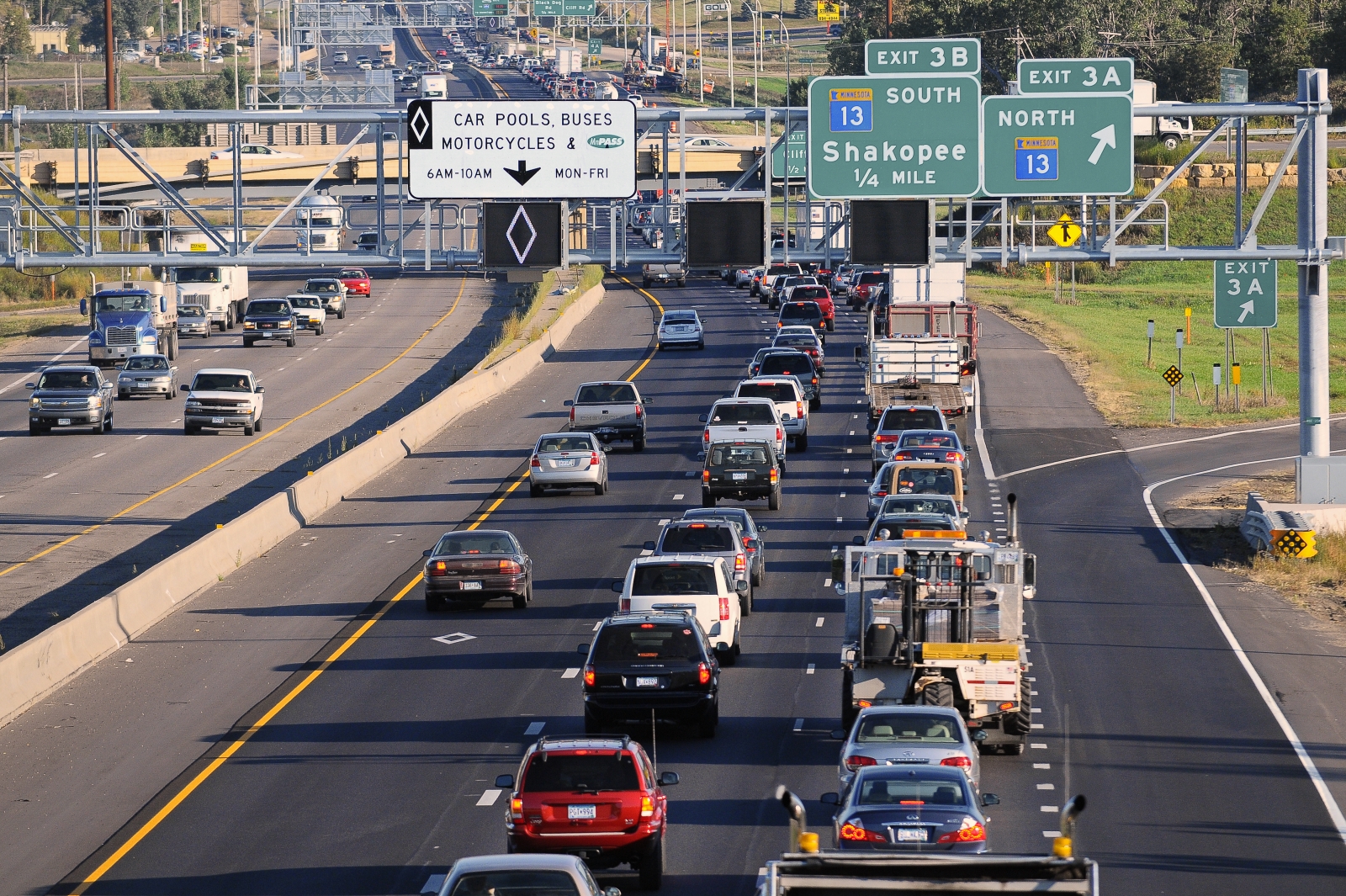
Primary seat belt law continues to save lives, money

Minnesota’s primary seat belt law continues to save lives and reduce serious injuries more than four years after being passed, according to a study by researchers at the U of M’s Humphrey School of Public Affairs.

The study examined Minnesota crash data collected from June 2009 (when the law was implemented) through June 2013 and compared it to expected data based on crash trends over time. Findings indicate that there were at least 132 fewer deaths, 434 fewer severe injuries, and 1,270 fewer moderate injuries than expected during this time.

According to the researchers, the safety benefits of the law translate into a savings of at least $67 million in avoided hospital charges, including nearly $16 million in taxpayer dollars that would have paid for Medicare and Medicaid charges.

The study was sponsored by the Minnesota Department of Public Safety and led by Humphrey School research fellow Frank Douma and Nebiyou Tilahun, a U of M graduate now on the faculty at the University of Illinois-Chicago.

The researchers also examined seat belt use data and survey results that measured support for the law. Findings show that support increased from 62 percent just before the law was passed to more than 70 percent in 2013, while the percentage of Minnesotans buckling up was at an all-time high of nearly 95 percent in 2013. This shows that some people are wearing their seat belts even though they don’t support the law.

When this increased seat belt use is combined with the reduction in fatalities and injuries, it further demonstrates that people are surviving—and even walking away from—crashes that may have had different results if the primary seat belt law had not been in effect.

Read the full article in the June issue of CTS Catalyst.

MnROAD 2014 Peer Exchange (photo gallery)

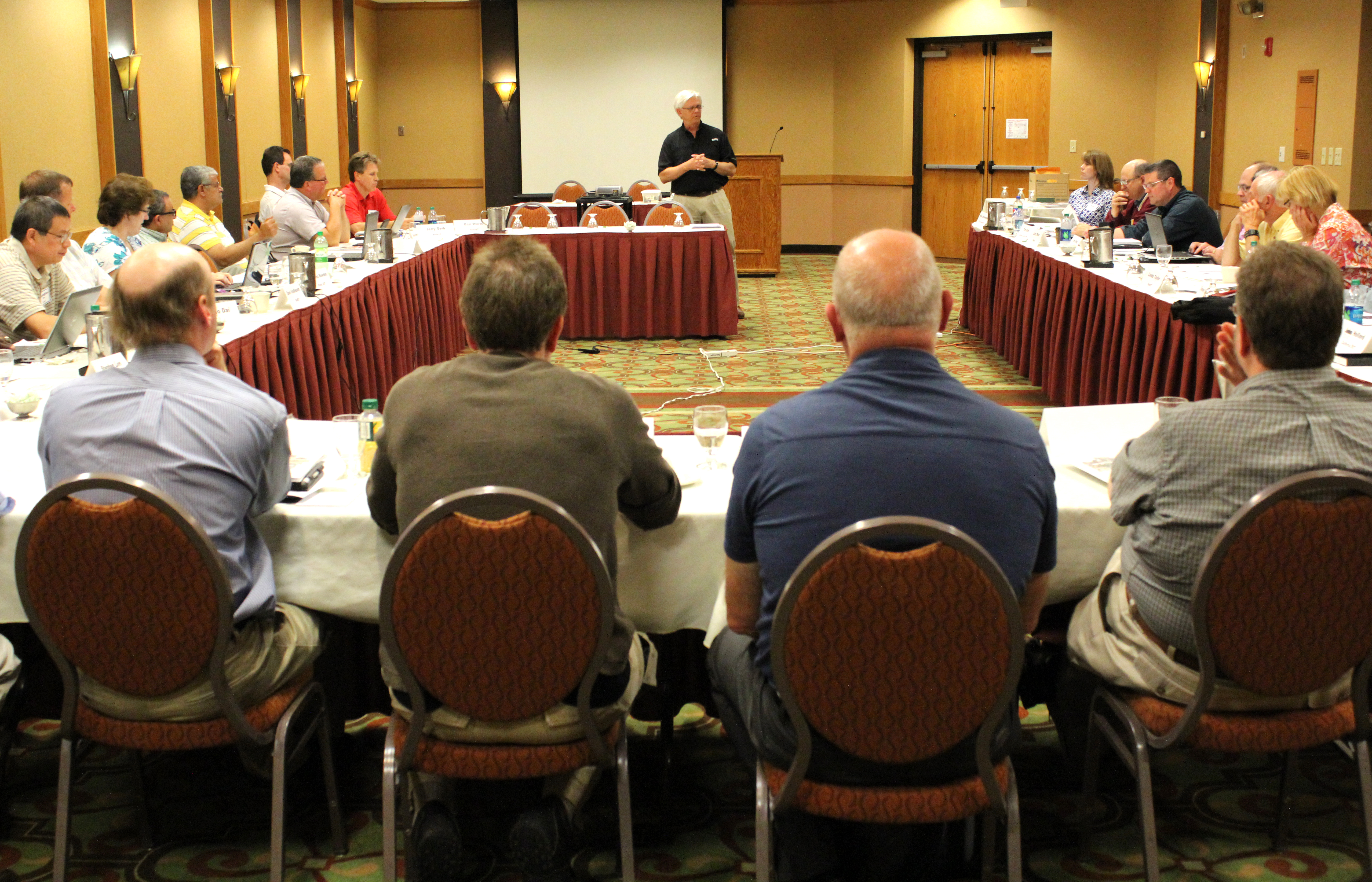
MnROAD is hosting pavement researchers from around North America this week to discuss research conducted at its cold weather pavement testing facility in Albertville, Minnesota.

Participants at the three-day conference (June 10 to 12) are reviewing the findings of recent pooled fund studies, sharing their implementation experience and recommending what projects should be picked for the next round of research.

Bob Orthmeyer from the Federal Highway Administration, said MnROAD was the only facility in the country that could supply several test sections needed for a recent study.
Bob Orthmeyer from the Federal Highway Administration said MnROAD is the only facility in the country that could supply several test sections needed for a recent study.
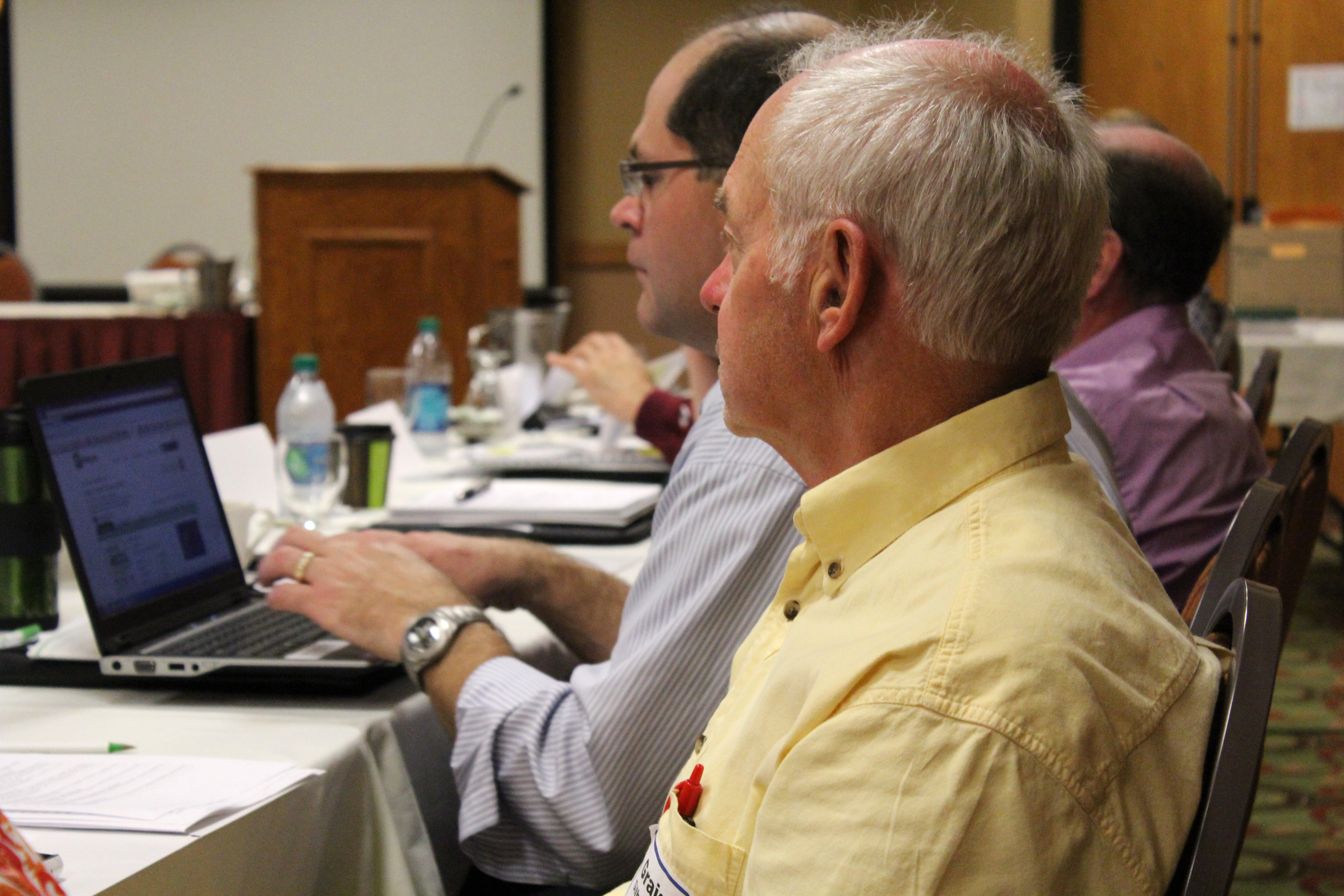
Graig Gilbertson from MnDOT District 8 listens to one of seven presentations Tuesday on the latest research.
Graig Gilbertson from MnDOT District 8 listens to one of seven presentations Tuesday on how agencies have implemented MnROAD’s second phase of research projects.
Stephen Lee shares the Ontario Ministry of Transportation's experiences during a discussion Tuesday on research implementation.
Stephen Lee shares the Ontario Ministry of Transportation’s experiences during a discussion Tuesday on research implementation.
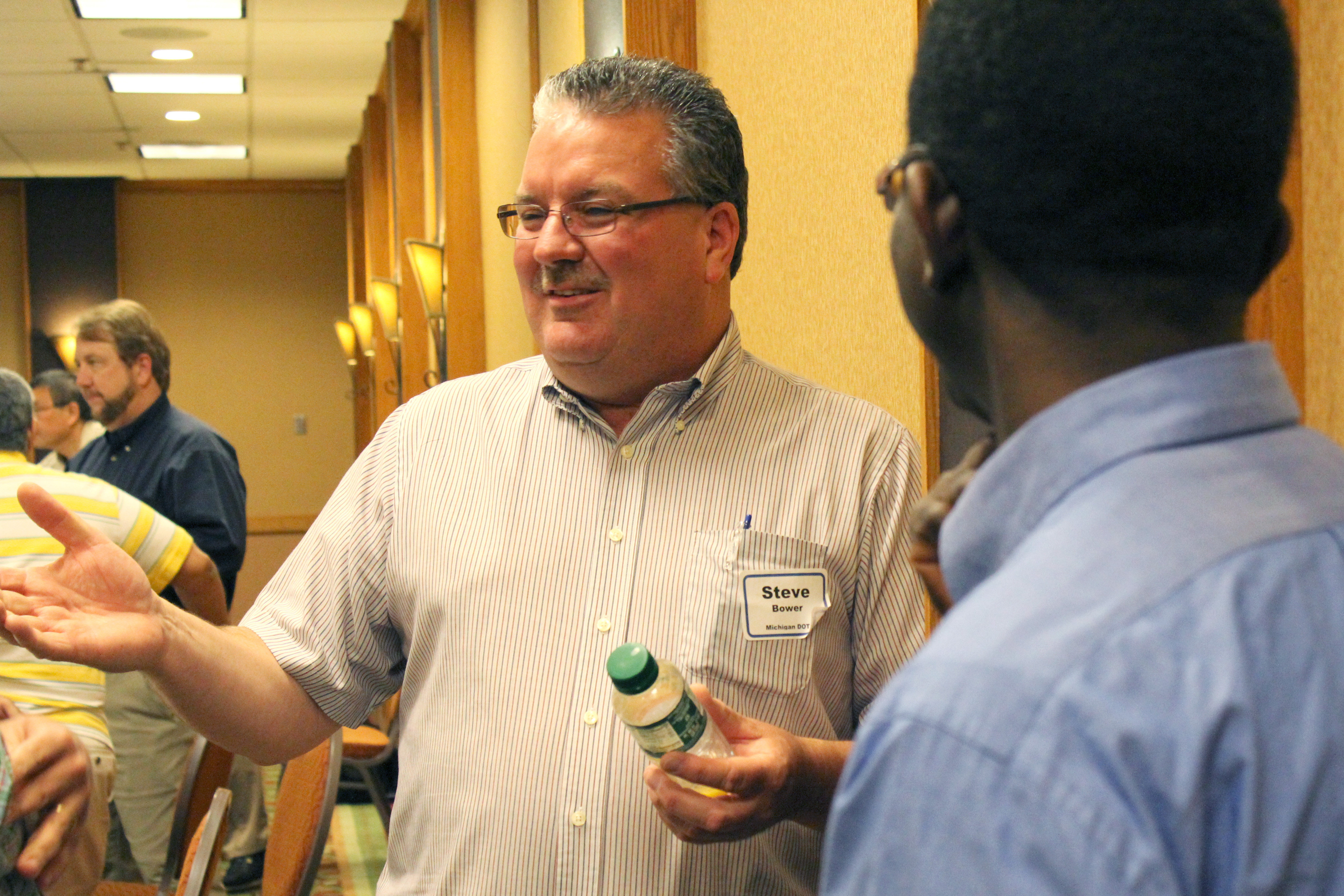
Steve Bower, a Michigan Department of Transportation Research Engineer, visits with MnROAD researcher Bernard Izevbakhai, right, and others during a break.
Steve Bower, a Michigan Department of Transportation Research Engineer, visits with MnROAD researcher Bernard Izevbakhai, right, and other peers.
Construction engineering professor Joe Mahoney, from the University of Washington, leads a group discussion on improving research efforts at the close of the session Tuesday.
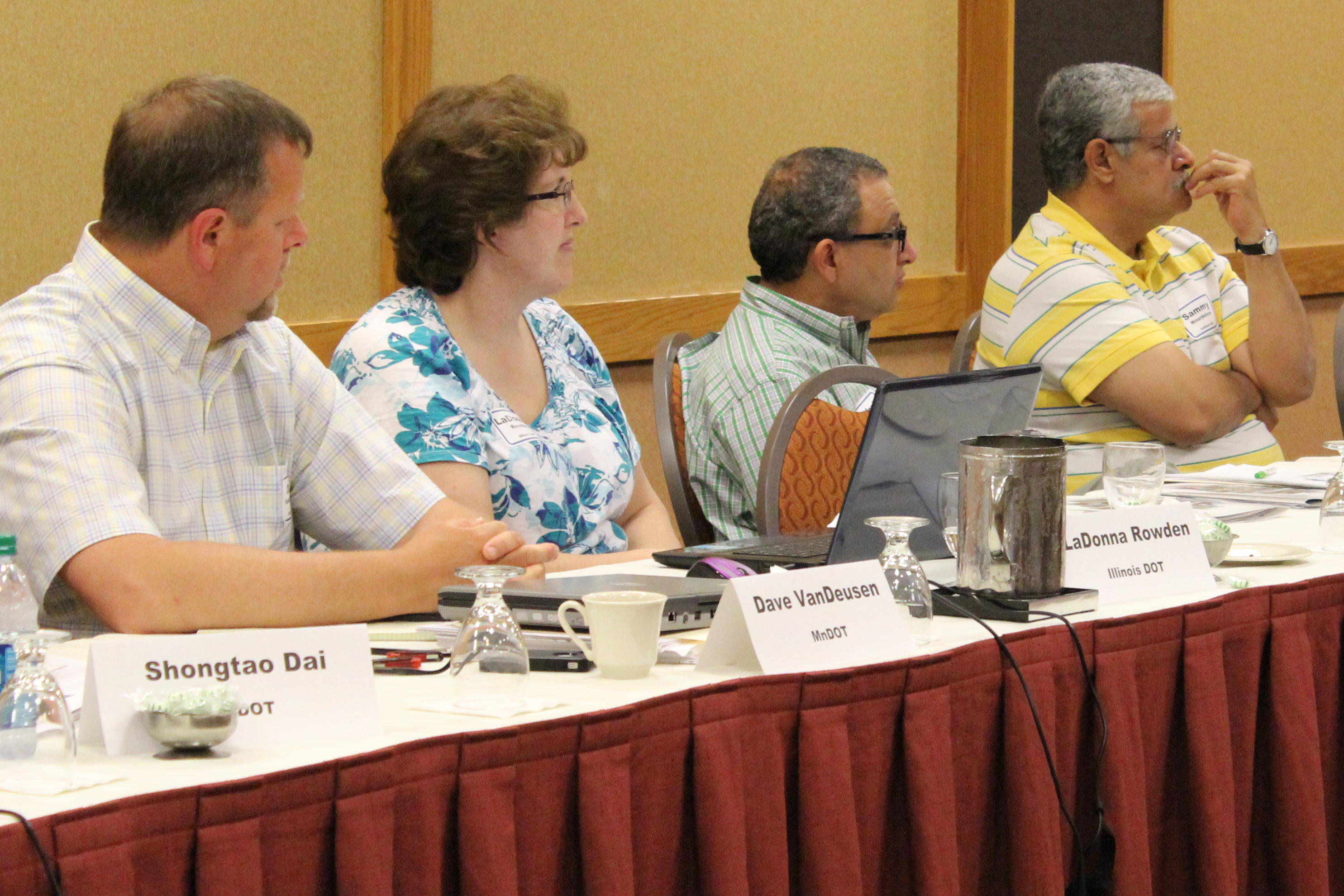
From left, Dave VanDeusen from MnDOT, LaDonna Rowden from the Illinois Department of Transportation, Magdi Mikhail from the Texas Department of Transportation and Samy Noureldin from the Indiana Department of Transportation. — at Holiday Inn Bloomington I-35W.
From left, Dave VanDeusen from MnDOT, LaDonna Rowden from the Illinois Department of Transportation, Magdi Mikhail from the Texas Department of Transportation and Samy Noureldin from the Indiana Department of Transportation.
Researchers came from Missouri, Maine, Texas, Illinois, Michigan, California, Ontario, Wisconsin, Indiana and Washington for the three-day workshop.


Why do men and women travel differently? Study sheds light on gender differences

Despite their more similar roles at work and home than ever before, U.S. men and women continue to have different travel behavior. Historically, employed men have spent more time traveling to work and less time on household and family support trips than women. While this difference is well-documented, explanations for the difference vary widely: some theories say it’s due to biologically driven differences in gender, while others attribute it to socially constructed gender roles or to gendered structural contexts such as labor market segregation and economic inequality.

While much research has examined these theories, few studies have tested their validity based on evidence—which prompted U of M researchers to examine the theories more deeply. “We believe a greater understanding of the underlying reasons for these enduring travel differences is necessary to effectively address the gender equity issue in transportation policy,” says Yingling Fan, assistant professor in the U’s Humphrey School of Public Affairs.

Researchers set out to test the competing theories by analyzing publicly available data from the American Time Use Survey (ATUS) in various ways across groups of workers with different types of family structures. (ATUS is an ongoing time diary study funded by the U.S. Bureau of Labor Statistics.)

First, they tested the theory that travel behavior differences were based on biologically driven gender differences. “If this theory was true, travel differences between men and women could be applied across all population groups regardless of family structure, but this was not the case,” Fan explains. “We found that single female workers and single male workers exhibit no significant difference in travel behavior.”

Next, the team studied the impact of gendered structural contexts, such as women’s greater presence in pink-collar occupations and significantly lower earnings. The team found moderate support for this theory. “These factors are associated with shorter work travel time among some—but not all—family structures,” Fan says.Shopping

Researchers did find strong support, however, for the theory that socially constructed gender roles explain travel behavior differences. “We discovered that while marriage alone doesn’t differentiate travel behavior between men and women, parenthood does have a significant impact,” Fan says. “Interestingly, we found that even being the sole breadwinner does not insulate mothers from socially constructed gender roles—female breadwinners in married single-worker households with children have shorter work commutes and more household support travel than male breadwinners in the same family structure.”

According to the researchers, these findings have important implications. First, policies to minimize auto travel (for environmental purposes, for example) may be unfair to women who wish to reach more job possibilities through longer commutes. In addition, the findings highlight the importance of incorporating parenthood as a prime variable in understanding the gender and mobility connection.

Finally, this research provides insights on how future growth or decline in specific family structures may shape travel demand. “As childless households continue to grow in relation to households with children, it’s possible that fewer female workers will be confined by short work commutes and may choose to spend more time commuting to more desirable jobs, placing new demands on the transportation system,” Fan says.

The research was funded in part by a Minnesota Population Center Program Development Grant.

Reprinted from the May 2014 issue of CTS Catalyst.

Bike to Work Day: progress in Minnesota, but miles to go

By Greg Lindsey

This blog post by University of Minnesota Professor Greg Lindsey was originally posted on the CTS Conversations blog.

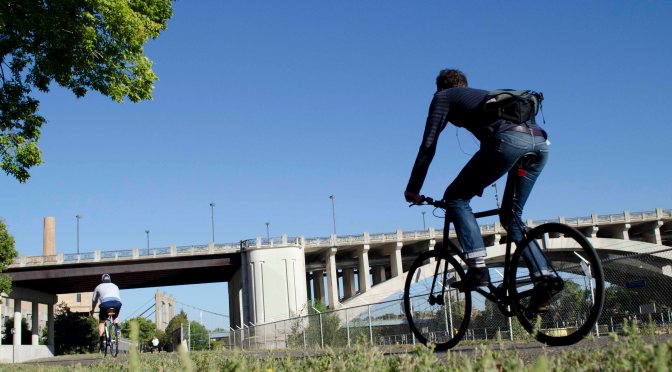
April 9 is national Bike to Work Day, a day to celebrate those who choose bicycling as their principal mode of transportation for commuting, and a time to encourage more people to consider this healthy, efficient transportation option. Minnesota has much to celebrate in terms of bicycle commuting. Bike-Walk Twin Cities and Transit for Livable Communities are wrapping up the National Non-Motorized Pilot Program, a federally funded program to demonstrate the potential to increase biking and walking through focused investment in infrastructure and other interventions. Bicycle commuting rates in Minneapolis have climbed to 4.5%, and Minneapolis now ranks 20th in the nation in bicycle commute share. This is a noteworthy achievement, especially considering our notorious winter weather. These achievements, along with others such as the success of Nice Ride, our pioneering bike share program, have contributed to Minneapolis being named America’s most bike-friendly city by Bicycling Magazine. Celebration of these achievements – which represent hard work by hundreds of individuals and thousands of commuters – certainly is warranted.

But we only need look across municipal boundaries to know we had better put more energy into encouraging bicycling than into celebration. Bicycle commute rates in St. Paul remain below 2% less than half the Minneapolis rate, and rates in most suburban, exurban, and rural communities remain even lower. And the story remains essentially the same for all types of bicycle trips. Jessi Schoner, a doctoral candidate in the Department of Civil Engineering, is analyzing non-motorized mode shares for all trips recorded the Metropolitan Council’s recent Travel Behavior Inventory. Her analyses show that bicycling remains an urban phenomenon, with the share of all trips taken by bicycling highest in Minneapolis, followed by St. Paul, and then suburban and outlying communities. Why is this so? Better infrastructure no doubt is part of the reason, but there likely are other reasons, including housing patterns, access to employment, socio-demographic factors, and culture. Additional research is needed.

But this leads to additional reasons to be optimistic this Bike to Work Day: the commitments made by the Minnesota Department of Transportation (MnDOT) to foster multi-modal transportation systems and the agency’s investments in research to increase understanding of bicycle traffic patterns. In 2013, as part of the Minnesota Bicycle and Pedestrian Counting Initiative, MnDOT funded the installation of the state’s first two automated, continuous in-street bicycle counters. These counters, which monitor bicycle traffic around the clock, 365 days per year, will provide new insights into the bicycle traffic volumes and their daily and seasonal patterns. While bicycle traffic monitoring in Minnesota is only in its infancy, it represents progress towards establishing the evidence base we need to determine how to make bicycling safer and to invest in bicycle infrastructure.

And so celebrate this Bike to Work Day and thank your fellow Minnesotans for all they have accomplished. But also take time to reflect on the work that needs to be done to improve opportunities for cycling throughout the state, for we have miles to go.

Greg Lindsey is a professor at the University of Minnesota Humphrey School of Public Affairs. His areas of specialty include environmental planning, policy, and management. His current research involves studies of the relationship between the built environment and physical activity, specifically factors that affect the use of pedestrian and cycling infrastructure. Lindsey presented some of his bicycle and pedestrian data collection research at the 2014 Minnesota Transportation Conference held March 4-6.

Funding highway projects with value capture could speed project completion

There’s broad agreement that the U.S. transportation system cannot continue to be funded with existing financing and revenue-generation methods. What’s unclear, however, is how to pay for highway projects in the future. The current transportation funding system emphasizes user fees, but there is growing interest in alternative funding strategies. One promising strategy is value capture, which aims to recover the value of benefits received by property owners and developers as a result of infrastructure improvements.

In recent years, University of Minnesota researchers have helped lead the way in value capture research with a series of reports identifying value capture strategies. In a newly published study, the research team applied their previous work to a real-world scenario, with impressive results.

The new research, sponsored by the Minnesota Department of Transportation, focused on the planned development of Trunk Highway 610 (TH 610) in Maple Grove, Minnesota—a stretch of planned state highway delayed for years by state transportation funding shortages. Researchers set out to discover how the value of the enhanced accessibility provided by the planned improvements could be predicted and captured to help fund the project’s completion.

To accomplish their goal, researchers first defined a study area of about 10 square miles surrounding the unfinished highway segment. Then, they modeled property values based on five factors using parcel-level data. This model was designed to isolate the so-called “highway premium” by controlling for other factors that affect land value including water views, open space, railroads, transit stops, and existing highway exits. Using this model, researchers found significant evidence that the completion of the highway could lead to an over $17 million increase in property value.

Researchers expect these findings to have significant benefits for the TH 610 project and beyond.

Read the full article in the March issue of Catalyst.

Photo courtesy of SRF Consulting Group, Inc.

‘Smart window’ technology opens new possibilities for transportation noise control

Nearly every time a highway or airport expansion is proposed, transportation planners face opposition from residents who fear the increased noise levels in their homes and businesses. Traffic noise is often mitigated with physical noise barriers, but the large, thick walls often draw opposition as well.

A new technology developed by University
 of Minnesota mechanical engineering professor 
Rajesh Rajamani as part of 
a research project funded
 by the National Science
 Foundation could soon
 provide a nearly invisible
 solution for transportation 
noise cancellation—and 
give transportation planners another tool for overcoming project opposition.

Noise enters homes close to airports and highways primarily through windows, and windows can transmit ten times the sound energy as walls can, says Rajamani. With this in mind, researchers set out to reduce the amount of transportation noise transmitted through windows.

To accomplish this goal, researchers created a method of active noise control for windows. Active noise control works by using speakers to generate a sound wave that is a mirror image of the undesirable sound wave. Superimposing an “anti-noise” wave of the same amplitude as the undesirable noise wave results in a reduced decibel level of noise in the environment.

The research team began by designing thin, transparent speaker panels to fit in the empty space between the two panes of a double-pane window. Then, the researchers tested the effectiveness of the new speakers, using them to cancel out undesirable transportation noise from outside the home while preserving the desirable noise from inside the home.

In addition to mitigating traffic noise, this new technology offers other surprising benefits. Researchers have found that the “smart window” speakers can actually be used as home audio speakers without losing any of their noise-control benefits.

Read the full article in the February issue of Catalyst.

Innovative pavement textures reduce noise, improve fuel economy

What if something as simple as changing the texture of the pavements we drive on could not only increase safety, but also reduce noise pollution and boost our vehicles’ fuel economy?

It’s possible, according to the latest research from MnROAD, the state’s one-of-a-kind pavement research facility. In a new report, investigators detail how quieter pavement textures, such as those applied by grinding grooves into pavements with diamond-coated saw blades (see the photo above), may also reduce rolling resistance — the force that resists a tire as it moves across the pavement’s surface.

The potential benefits to the public are significant. A 10-percent reduction in rolling resistance could reduce the U.S. public’s fuel consumption by 2–3 percent, eliminate up to $12.5 billion in fuel costs each year (as well as cutting carbon emissions). Add on the cost savings from reducing noise pollution (building noise barriers along highways can cost as much as $3 million per mile), and it’s clearly a win-win situation.

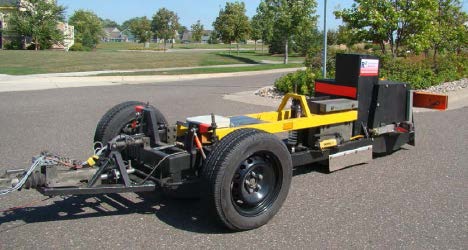
In the study, researchers used an innovative line-laser profiler to develop three-dimensional representations of test pavement surface textures. They then investigated the relationship between these surface characteristics and data on rolling resistance that was collected during a 2011 study using a special test trailer developed by researchers in Poland. This year, the same trailer will be used to conduct a second round of rolling resistance measurements at MnROAD.

The research is related to an ongoing pooled-fund study on concrete pavement surface characteristics. The goal is to produce data that will allow MnDOT to identify ideal ranges for surface characteristics that improve pavements’ quietness and ride quality while keeping them safe and durable.

Learn more
Researchers relied on rolling resistance data from a study conducted in 2011 with a test trailer developed by the Technical University of Gdańsk, Poland. This was the first time such measurements were taken in the United States.

MnROAD earns concrete pavement association award

Staff from MnROAD, the Minnesota Department of Transportation’s cold weather road research facility in Albertville, Minn., were presented with the Marlin J. Knutson Award for Technical Achievement by the American Concrete Pavement Association in December.

The award cites the facility’s well-deserved reputation for being a place where both agency and industry ideas are put to the test. This award was presented as a tribute to the agency’s commitment to learning and putting ideas into practice.

The Marlin J. Knutson Award for Technical Achievement is presented to an individual or group who has made significant contributions to advance the development and implementation of technical innovations and best practices in the design and construction of concrete pavements.

(far right) Gerald Voigt, ACPA president and CEO, presented MnDOT with the Marlin J. Knutson Award for Technical Achievement during a ceremony in December. Receiving the award are (from left) Luke Johanneck, Bernard Izevbekhai, Roger Olson, Tom Burnham, Glenn Engstrom, Maureen Jensen and Sue Mulvihill. (Photo courtesy of the ACPA)
(Far right) Gerald Voigt, ACPA president and CEO, presented MnDOT with the Marlin J. Knutson Award for Technical Achievement. Receiving the award are (from left) Luke Johanneck, Bernard Izevbekhai, Roger Olson, Tom Burnham, Glenn Engstrom, Maureen Jensen and Sue Mulvihill. (Photo courtesy of the ACPA)

“MnROAD is helping to make roads last longer, perform better, cost less, construct faster, and have minimal impact on the environment,” said Gerald Voigt, ACPA president and CEO. “It is a model for other agencies to follow.”

MnROAD is a pavement test track initially constructed between 1991-1993. It uses various research materials and pavements and finds ways to make roads last longer, perform better, cost less to build and maintain, be built faster and have minimal impact on the environment. MnROAD consists of two unique road segments located next to Interstate 94.

Staff from the MnROAD facility in Albertville were recognized during the ACPA’s Distinguished Service and Recognition Awards ceremony in December. (Photo by David Gonzalez)

This article, authored by Rich Kemp, originally appeared in Newsline, MnDOT’s employee newsletter. 

Do streetcars support commercial development? New Orleans results say yes

New streetcar lines are in the planning stages in Minneapolis and St. Paul. Proponents cite not only the lines’ ability to strengthen the transit system, but also their potential as catalysts for development. Estimating the impacts of streetcars is challenging, however, as most U.S. lines operate in downtown areas with many interrelated factors at play. A recent U of M research project examined the issue through the prism of one city’s experience: post-Katrina New Orleans.

The team—research fellow Andrew Guthrie and Assistant Professor Yingling Fan of the Humphrey School of Public Affairs—analyzed building permits near streetcar stops in the downtown business district and in several urban neighborhoods.

“Hurricane Katrina allowed—or required—more redevelopment to occur at a faster pace than 
normal, potentially allowing existing streetcar lines’ latent development impacts to appear,” Guthrie says. “This created an unfortunate yet rare opportunity for study.”

streetcars

The researchers estimated how the frequency of commercial and residential permits changed with distance from streetcar stops, controlling for hurricane damage, proximity to existing commercial areas, and pre-Katrina demographics.

They found that throughout the system, building permits strongly reflect the distance to stops—and that commercial and residential permits move
 in opposite directions within the first 750 feet.

Commercial permits declined the further away the location was from a stop. In residential areas, commercial permits show variation depending on neighborhood characteristics. The number of neighborhood residential permits rose about 24 percent with every 100 feet from a stop.

Based on their results, Guthrie and Fan conclude that traditional streetcar lines can help increase commercial development not just in downtown business districts, but in other urban areas as well. The findings also indicate that streetcars
 shape development in urban neighborhoods in
 a fundamentally different fashion than light rail.

Read the full article in the January issue of Catalyst.