Thicker may not equal stronger when building concrete roadways

Transportation agencies have long placed high importance on the thickness of their concrete roadways, making it a major focus of control and inspection during construction. While it is commonly believed thicker concrete pavements last longer, there is little data to support this claim.

“One big reason for the lack of data on the relationship between concrete pavement thickness and performance is the destructive nature of these measurements,” says Lev Khazanovich, a former professor in the University of Minnesota’s Department of Civil, Environmental, and Geo- Engineering. “Concrete thickness is typically assessed by coring—a destructive, expensive, and time-consuming test that only offers widely spaced measurements of thickness.”

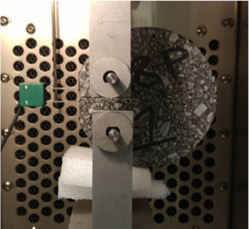
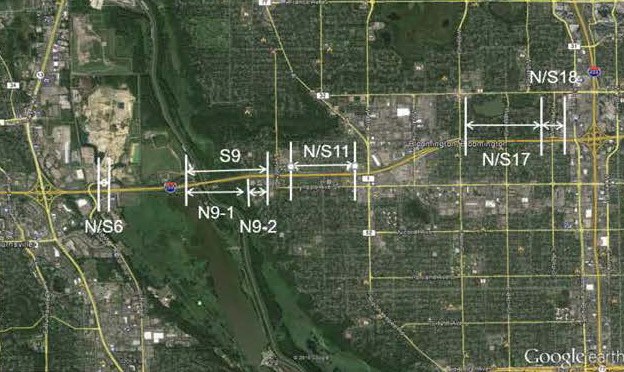
In a MnDOT-funded study, U of M researchers set out to fill this knowledge void by leveraging recent advances in the nondestructive testing of pavements that allow for large-scale, rapid collection of reliable measurements for pavement thickness and strength. They conducted four evaluations on three roadways in Minnesota using ultrasonic technology to collect more than 8,000 measurements in a dense survey pattern along with a continuous survey of observable distress.

“We found that both pavement thickness and stress measurements are highly variable, with a half-inch of variation in thickness about every 10 feet,” Khazanovich says. “Interestingly, three of the four surveys averaged less than design thickness, which is contrary to typical accounts of contractors building slightly thicker slabs in order to avoid compensation deductions.”

Data analysis showed that exceeding design thickness did not seem to increase or decrease pavement performance. However, a measurement of pavement strength and quality known as “shear wave velocity” did produce valuable findings. “A drop in the shear wave velocity strength measurement corresponded to an increase in observable pavement distresses such as cracking and crumbling,” Khazanovich explains. “This was especially apparent when we were able to easily identify locations of construction changes, where significant changes in shear wave velocity matched up with observable distress.”

The results of this study illustrate the importance of material quality control and uniformity during construction, since alterations in pavement strength and quality may significantly influence pavement performance. In addition, researchers say that despite inconclusive thickness results, it is still important that pavement has significant thickness to carry its intended traffic load over its service life. Finally, the study demonstrates that new methods of ultrasonic shear wave velocity testing are useful for identifying changes in construction and design that could lead to higher rates of pavement distress.

For millennials, car ownership and family life may not be obstacles to transit use

As the millennial generation comes of age, indications of a significant generational change in travel behavior have raised hopes of robust growth in transit use. As a whole, this generation owns fewer cars, drives fewer miles, and uses transit more than previous generations. However, one key question remains: will millennials continue their high rates of transit use as the economy improves and they increasingly settle down and start families?

“In older generations we have seen significant declines in transit use that coincide with the transition to family life and child rearing,” says Andrew Guthrie, a research fellow and Ph.D. candidate at the Humphrey School of Public Affairs. To gain insight into the question of whether the millennial generation will be different, Guthrie looked for changes in the extent that two factors—young children in a household and access to a vehicle—affect transit use.

The study, conducted with Humphrey School associate professor Yingling Fan, looked for evidence of these bellwether changes in the Minneapolis–Saint Paul region between 2000 and 2010. This period saw the opening of the region’s first modern light-rail line as well as numerous bus system improvements, including a network of high-frequency local routes. In addition, the region has a strong, knowledge-based economy and has seen an in-migration of millennials.

The researchers used data from the detailed Travel Behavior Inventory conducted by the Twin Cities Metropolitan Council in 2000 and 2010 to compare travel behavior at both the trip and person levels.

Their analysis revealed that both young children in a household and access to an automobile have become “weakening obstacles” to transit use. “Specifically, research models show that participants with access to an automobile were more likely to use transit in 2010 than in 2000, and that participants with young children in their households were less likely than others to use transit in 2000 but not in 2010,” Guthrie says.

“Our models provide strong evidence that the basic relationship between transit use and the presence of young children in a household has changed, as has the relationship between transit use and access to an automobile,” Fan adds. “In fact, regardless of the specific modeling approach, these two traditional obstacles to transit use either weakened or disappeared entirely between 2000 and 2010 in the Twin Cities region.”

According to the researchers, the findings suggest that transit may now be better able to hold on to market share as its millennial users mature and start families, especially in urban areas where walk-and-ride trips are most common. In order to attract and accommodate these transit users, researchers believe ensuring an adequate supply of family housing and family-oriented community features such as high-quality schools and playgrounds in transit-served areas will be critical.

The research this paper was based on was part of a larger project funded by the Metropolitan Council and MnDOT. The paper was recently published in the Transportation Research Record.

U of M provides freeway ‘lid’ expertise for Rethinking I-94 project

MnDOT is exploring the development of freeway “lids” at key locations on I-94 in the Twin Cities. To analyze the potential for private-sector investment and determine what steps might be needed to make lid projects a reality, MnDOT invited the Urban Land Institute (ULI) MN to conduct a Technical Assistance Panel with real estate experts and other specialists. The U’s Metropolitan Design Center (MDC) provided background and research for the panel.

A lid, also known as a cap or land bridge, is a structure built over a freeway trench to connect areas on either side. Lids may also support green space and development above the roadway and along adjacent embankments. Although lidding is not a new concept, it is gaining national attention as a way to restore communities damaged when freeways were first built in the 1960s.

According to MnDOT, roughly half of the 145 bridges on I-94 between the east side of Saint Paul and the north side of Minneapolis need work within the next 15 years. A shorter window applies in the area around the capitol to as far west as MN-280. In anticipation of the effort to rebuild so much infrastructure, the department wanted a deeper understanding of how attractive freeway lids and their surrounding areas would be to private developers and whether the investment they would attract would generate sufficient revenue to pay for them.

The three-day panel session was designed to consider the I-94 corridor and study three specific areas: the I-35W/Minneapolis Central Business District, historic Rondo Avenue in Saint Paul, and Fairview Park in North Minneapolis. It also included a “lightning round” for high-level observations of five other sites.

Mic Johnson, senior fellow with MDC, provided background about lidding and shared successful examples from around the country at the panel kick-off dinner. MDC has analyzed a wide range of freeway lid structures and identified seven basic lid typologies. “These typologies provide broad thematic guidance for thinking about what features best serve a location,” Johnson says.

The briefing book provided to panelists included detailed research by MDC about the economic opportunities of the area’s freeway lids. MDC also created four appendices (projects, case studies, prototypical lid diagrams, and health and economic value) for the panel final report.

MDC has been involved in lid-related activities for several years. Students participating in an Urban Design Studio course in fall 2013 taught by Johnson conducted an extensive analysis of the I-35W/Minneapolis area and created an architectural model of a lid connecting the U of M’s West Bank to Downtown East. Their model was displayed at the IDS Center.

MnDOT Commissioner Charlie Zelle requested that ULI MN convene the panel as part of the larger “Rethinking I-94” project, which is developing a vision for the corridor through a comprehensive public involvement process. “Lid projects are one way being considered that could reconnect neighborhoods such as Rondo that were divided by freeways in the 1960s,” Zelle says. The Rondo neighborhood was also featured in the USDOT’s Every Place Counts Design Challenge in July.

As part of its report to MnDOT, the panel concluded that private-sector development would not pay for the lids directly, but lids would create development interest that could generate significant long-term revenue to pay for lid maintenance, programming, and other amenities.

To build momentum and create an identity for lid projects, the panel also recommended that the area’s lids be considered as a whole under a single banner, not as separate projects, as part of a rebranded vision called the Healthy Communities Initiative. The final report is available on the ULI MN website.

(Adapted from the ULI MN report: Healthy Communities Initiative, Nov. 2016.)

Project seeks to ease traffic congestion in a roundabout way

Freeways and highways aren’t the only urban roads with traffic congestion, even though traffic management strategies have been largely directed toward improving traffic flows there. So, U of M researchers have taken to city streets to reduce congestion in an innovative—albeit roundabout—way.

“There’s been a lot of research focused on controlling congestion on major highways and freeways, but there’s relatively less when it comes to looking at controlling traffic on urban arterials,” says Ted Morris, a research engineer with the Department of Computer Science. “It’s a very different picture when you get into urban arterials and the traffic behaviors going on there, because of the dynamics of route choice, pedestrian interactions, and other factors.”Image of overhead view of roundabout

Morris is part of a research team that aims to create a framework for testing and evaluating new urban traffic sensing and control strategies for arterial networks. The goal is to balance safety and efficiency for all users—especially in places where new types of urban transportation facilities are planned in the next few years.

The team is using the 66th Street corridor in Richfield as a test bed for its research. The city, along with Hennepin County, is in the process of converting a series of signalized intersections along the route to roundabouts over the next few years. The roundabout designs also incorporate new facilities for pedestrians, bikes, and bus transit as part of a multimodal approach.

Initially, the researchers sought to create a larger network of interconnected sensors and a live test bed, Morris says. But funding limitations kept the project area to approximately 10 miles of arterial roads, a portion of which will be supported by a network of interconnected traffic sensors. The research team is instrumenting major intersections along 66th Street with a reliable, low-cost, high-resolution camera mounted on a center pole and supporting electronics as the intersections are being reconstructed.

“You can zoom in pretty closely to capture all the different movements and events that we need to use for measurement and detection,” Morris adds. “The key to this, to really make it reliable, is you need to very carefully quantify gap acceptance and how that varies in time and time of day. You also need to know how pedestrian activities interact with the traffic flow.”

The use of roundabouts has grown in the region because they cost less to build and maintain than signalized intersections, they meet the latest design standards, and they improve safety by reducing traffic conflicts. But predicting the capacity of roundabouts can be especially challenging when factoring in pedestrian traffic, uneven traffic origin-destination flow, heavy vehicle volumes, and approach vehicle gap-selection timing.

In addition to creating a sensor network to obtain real-time vehicle and pedestrian data to help control traffic and keep it flowing smoothly, the researchers also are developing a traffic simulation model that includes almost all of Richfield—more than 140 signalized intersections covering 21 square miles, including the arterials. The simulation model will be used to develop and test traffic control strategies under different scenarios. Minnesota Traffic Observatory director John Hourdos is leading that effort.

This research and the field deployment system are funded through a collaborative grant from the National Science Foundation Cyber Physical Systems program. SRF Consulting is the industrial partner to help design the sensor network and evaluate the system.

Winter Decision-Making Crosses State Lines

Winter weather events have a regional and often national impact. “Storms never stop at the state line,” said Tom Peters, research and training engineer, MnDOT Maintenance Operations. “That’s why it’s so important for us to know about winter maintenance efforts around the country, and particularly at neighboring states with similar climates.”

MnDOT leads the Clear Roads Transportation Pooled Fund Project (clearroads.org), a national winter maintenance research consortium. In 2015, Clear Roads launched a national survey to collect and report the annual winter maintenance operations of state DOTs. The effort included nearly 50 data points related to equipment, materials and costs.

The results, which are available at clearroads.org/winter-maintenance-survey as a Microsoft Excel-based spreadsheet, are available at no cost for users to examine, analyze and parse as needed. Beyond the raw data, the spreadsheet includes calculated statistics and an interactive map for plotting key metrics.

The results quantified much of what was known only anecdotally and provided useful, actionable data. “Data trends by geographic region and over time let us make more informed operations decisions,” Peters said. “We can also draw on this information to communicate with management, elected officials and the public about how MnDOT’s winter operations fit in a national context.”

As the lead state, MnDOT commits significant administrative time and attention across the agency to Clear Roads. “It’s rewarding and satisfying to see such a useful product as one of the payoffs for all this effort,” Peters said.

Additional data collection for the 2015-2016 winter season is already complete. Look for an update to the online database later this year.


Research in Progress

Clear Roads has nearly a dozen research projects in progress, including:

See all of Clear Roads’ current research projects at clearroads.org/research-in-progress.


What’s Next?

At its September meeting in Omaha, Nebraska, the Clear Roads Technical Advisory Committee funded five new projects:

  • Utilization of GPS/AVL Technology: Case Studies
  • Standards and Guidance for Using Sensor Technology to Assess Winter Road Conditions
  • Emergency Operations Methodology for Extreme Winter Storm Events
  • Weather Event Reconstruction and Analysis Tool
  • Training Video for the Implementation of Liquid-Only Plow Routes

What is Clear Roads? 

Clear Roads is a 33-member pooled fund program dedicated to winter road maintenance research. Led by MnDOT, Clear Roads projects evaluate winter maintenance materials, equipment and methods; develop specifications and recommendations; study and promote innovative techniques and technologies; and develop field guides and training curricula. Learn more at clearroads.org.

Newly funded studies tackle big transportation questions

Can Twin Cities roadsides be used to grow habitat for endangered bumble bees? Are unseen factors affecting safety at rural intersectionsHow should Minnesota transportation agencies be preparing for connected vehicle technology?

Minnesota’s next round of transportation research projects will attempt to solve these and other questions facing the state’s transportation community. The Transportation Research and Investment Group, which governs MnDOT’s research program, and the Minnesota Local Road Research Board, which represents cities and counties, recently met and selected 21 transportation research projects for funding in fiscal year 2018.

A couple of MnDOT’s most interesting projects will evaluate the reuse of wastewater at safety rest areas and truck stations and develop a system to optimize the location of 80 truck stations due for replacement in the next 20 years. MnDOT will also partner with the Local Road Research Board to evaluate the use of personal warning sensors for road construction workers.

In addition to the problem of stripping underneath sealcoats on some city streets, other top research projects for local governments involve pedestrian safety enforcement and investigating whether rural, low-volume roads should be treated differently than urban roads for stormwater runoff. Current regulations govern runoff the same, regardless of daily vehicle count or surrounding land use.

“The selected research studies, which typically take one to three years to complete, will address some of the most major policy, environmental and maintenance dilemmas facing transportation practitioners,” said Linda Taylor, director of MnDOT Research Services & Library.

Below is a list of the selected projects, with links to associated need statements. Final project scopes will become available once contracts are approved. For further information, go here.

Bridges & Structures

Materials & Construction

Environmental

Planning

Maintenance Operations

Traffic & Safety 

10 Ways Transportation Research Keeps Minnesotans Moving in the Winter

As the first big snow and ice storms sweep through parts of Minnesota today, we’d like to remind you of some of our great winter weather research studies. Here’s a list of some of this winter-related research from MnDOT and the Local Road Research Board:

Living snow fences

Living snow fences are trees, shrubs, native grasses, wildflowers, or rows of corn crops located along roads or around communities and farmsteads. These living barriers trap snow as it blows across fields, piling it up before it reaches a road, waterway, farmstead or community. Through multiple research efforts, MnDOT continues to advance its practices for living snow fences. Willow plants, which are which are inexpensive and fast-growing, are a new form of snow fence. MnDOT has also developed a tool that allows the agency to better offer a competitive payment to farmers.

Related studies:

Permeable pavement

According to recent studies, researchers believe Minnesota could eliminate salt usage on low-volume local roads by switching to permeable pavements. Permeable pavements — pavements that allow water to seep through them — have been studied in some Minnesota cities, and a research project is currently underway to further investigate how much salt reduction can be expected.

Related studies:

Traffic recovery during winter storms

MnDOT’s Metro District developed a way to automatically determine when to stop plowing a highway after a snow storm. The method involves measuring traffic flow to determine when road conditions have recovered. Current practice calls for maintenance workers to visually inspect traffic lanes. The automated technique could potentially be more accurate and save time and costs.

Related study:

Salt and other deicing chemicals

Minnesota winters are no joke, and Minnesotans still need to get wherever they’re going despite harsh snow and ice conditions. That’s why MnDOT is constantly researching new and improved versions of salt and other deicing chemicals to keep roads safe at the least amount of damage to lakes, rivers and groundwater.

Related studies:

Snowplow blades

A couple years ago, MnDOT snowplow operators in southwestern Minnesota invented an experimental plow that uses the wind to cast snow from the road without impeding traffic or the operator’s view. This winter, MnDOT intends to test multiple types of snowplow blades as part of a larger research project comparing types of deicers.

Related study:

Snowplow technology

While a lot of research has been done on the plow itself, MnDOT hasn’t forgotten to invest in research to improve in-cabin snowplow technology as well. Some of the great technology recently developed to assist snowplow drivers, includes a driver assist application that a MnDOT plow driver used last winter to navigate a storm and rescue stranded motorists. The agency is also studying equipment factors that can cause fatigue in snowplow operators.

Related studies:

Salt-resistant grasses

When the snow melts every spring, the damage salt does to roadside grass is obvious. That’s why researchers have spent years looking into developing and implementing salt-tolerant grasses on roadside settings. The result of this effort has been the introduction and use of salt-tolerant sod and seed mixtures that are made up primarily of fine fescue species. MnDOT is also studying how chlorides are transported within watersheds in order to better focus efforts to reduce deicer usage in  areas where it will have the biggest environmental impact.

Related studies:

Cold-weather cracking prediction test

MnDOT has developed a test that can tell whether a contractor’s proposed asphalt mix will cause the road to crack in the winter. Building roads using better asphalt mixes leads to less cracking and fewer potholes. The test is expected to save the state about $2 million per year.

Related studies:

Pedestrian snow removal

It’s not all about cars and trucks. Minnesotans still ride bikes and walk in the winter. That why MnDOT assembled a comprehensive review of existing practices and policies from other states, as well as a summary of valuable publications that could be referenced while developing a new policy.

Related study:

Maintenance Decision Making

MnDOT research led to the development of a Maintenance Decision Support System and related components provide real-time, route-specific information to snow plow drivers, as well as recommended salt application levels. These recommendations have reduced chemical usage while still achieving performance targets for snow and ice clearance.

Related studies:

Partner States Get First Look at Minnesota Road Experiment

Walking along a half-mile segment of Co. Rd. 8 near Milaca last month, materials engineers from around the country got a first look at a shared test site for pavement preservation.

Nearly 60 one-tenth mile sections of Co. Rd. 8 and nearby Hwy 169 were recently treated with various combinations of fog seals, chip seals, crack seals, scrub seals and microsurfacing and a number of thin overlays. Data will be collected from these experimental test roads for three years and compared with the results of a similar experiment in Alabama, where the same test sections were also built on a low- and high-volume roadway, to see which techniques are the most effective for preserving road life.

“Evaluating pavement performance in both northern and southern climates will provide cost-effective solutions that can be implemented nationwide,” said Ben Worel, MnROAD operations engineer.

Photo of Barry Paye, Wisconsin DOT chief materials engineer; and Tim Clyne, MnDOT Metro District materials engineer.

From left, Barry Paye, Wisconsin DOT chief materials engineer, and Tim Clyne, MnDOT Metro District materials engineer, participate in a discussion about future road research needs. Photo by Shannon Fiecke

Nineteen states, which are co-funding the study through MnDOT’s road research facility (MnROAD), were in town Oct. 26-27 for a joint meeting with the National Center for Asphalt Technology in Auburn, Ala. In addition to touring test sections built this summer near Milaca and at MnROAD’s permanent test track in Albertville, the group reviewed preliminary research results and discussed ideas for new experiments.

MnROAD began two joint research efforts with NCAT last year to advance pavement engineering issues that affect both warm and cold climates. In addition to determining the life-extending benefits of different pavement preservation techniques, the partnership has also built test cells to evaluate which asphalt cracking prediction tests best predict future pavement performance. This second study will help state DOTs improve the quality of asphalt mixes, so roads hold up better through harsh winters, leading to less thermal cracking and fewer potholes.

Click here to learn more about the MnROAD-NCAT partnership.

Minnesota Partners with Neighboring States to Improve Traveler Information

Interstates 90 and 94 between Wisconsin and the state of Washington are major corridors for commercial and recreational travel. Extreme winter weather conditions, prevalent in the northern states within this corridor, pose significant operational and travel-related challenges. Recognizing the value of coordinated, cross-border collaboration for ITS deployment, Minnesota spearheaded the development of a transportation pooled fund study, called North/West Passage, in 2003.

The eight states – Minnesota, Idaho, Montana, North Dakota, South Dakota, Washington, Wisconsin and Wyoming – involved in the study are predominantly rural and face similar transportation issues related to traffic management, traveler information and commercial vehicle operations. They developed an ITS Integrated Work Plan and have completed nine work plans containing 50 projects.

North West Passage Traveler Information Website (roadstosafediscovery.com), the group’s hallmark project, offers travel information for I-90 and I-94 in a single interactive map. In addition to checking weather conditions, road closures and temporary truck restrictions, motorists can find the location of gas stops, rest areas and parks.

The states are currently evaluating a program that allows citizens to report driving conditions so that they can be included in traveler information reporting (a pilot is underway with MnDOT’s 511 system), and another project is comparing winter maintenance practices between corridor states.

“The biggest benefit of this pooled fund study is that it allows MnDOT to see what its neighbors are doing when developing solutions for operational issues. This awareness really helps us make better decisions about our projects at the state level,” said Cory Johnson, Traffic Research Director, MnDOT Office of Traffic, Safety and Technology.

Other major accomplishments:

  • North and South Dakota 511 callers can select to receive information on Minnesota’s highways.
  • An online portal for coordination of traffic management center operations, including guidelines, maps and contact information to manage major events across states.
  • Development of one proposal to hire a contractor to perform work in two states.
A map of possible routes from Milwaukee going west past North Dakota, with boxes the user can check to show Road Work, Weather Alerts, Road Conditions, and other features of the route.
Eight states maintain the North West Passage Traveler Information Website, which shows real-time travel information between Wisconsin and Washington along Interstates 90 and 94. A mobile app is under development.

For more than 30 years, the Federal Highway Administration’s (FHWA’s) Transportation Pooled Fund (TPF) Program has been providing state departments of transportation and other organizations the opportunity to collaborate in solving transportation-related problems. The TPF Program is focused on leveraging limited funds, avoiding duplication of effort, undertaking large-scale projects and achieving broader dissemination of results on issues of regional and national interest.

Knowing While Mowing: GPS Keeps Maintenance Workers Out Of the Weeds

As temperatures fall and days get shorter, MnDOT Metro District maintenance workers are wrapping up a season of mowing grass along roadsides and in medians that they hope will prove a little more efficient than in the past.

Thanks to a research project that installed GPS devices in tractor cabs, operators have a better sense of exactly which areas they need to mow and which areas should be left alone. Five Metro District tractors were tested in 2015. This year, more than 40 tractors were fitted with the automated vehicle location (AVL) technology, which includes a GPS antenna, an on-board central processing unit (CPU) and an in-cab screen with a user interface.

Trisha Stefanski, Metro District asset management engineer, expects one of the biggest benefits of the project to be a reduction in herbicide use. Maintenance crews use herbicide to control the spread of noxious weeds that sometimes get spread during mowing operations. Mapping exactly where noxious weeds are, and providing that information to operators on a real-time, in-cab screen and user interface helps them mow around those areas.

“We’re really hoping it will reduce the amount of herbicide that we’re putting on our roadways by 50 percent,” Stefanski said. “We’re not certain that will be the number, but that’s what we’re hoping for. We think just not mowing those areas will not spread as many noxious weeds and so we don’t have to apply as much herbicide.”

Metro District operators, such as Jesse Lopez, give the AVL technology rave reviews.

“Basically you can see what you shouldn’t mow and what you should mow. So, it makes it easy for me. It’s just like playing a game,” Lopez said. “This actually helps me to optimize what my job is. I know exactly where I’m at and where I’m going. I think everyone should use it – absolutely everybody who is in a mowing situation or a plowing situation.”

In addition, the AVL technology helps maintenance supervisors keep tabs on exactly where their operators are in real time. It also helps supervisors complete reports by automatically providing the geographic areas where mowing has been completed.

Stefanski says the project has gone really well, and she hopes collecting more data over another mowing season will show real savings on herbicide use. In the meantime, she is thinking of other ways AVL technology could be applied to maintenance operations.

“What I really like about the project is that we are taking something used in a lot snow plows and a lot of other technologies – cars, other things, maybe UPS uses them – and we’re putting it into maintenance operations,” Stefanski said. “Having it for mowing, we can also use it for smooth pavements. We can also use it for other things in mowing operations.”

Minnesota's transportation research blog