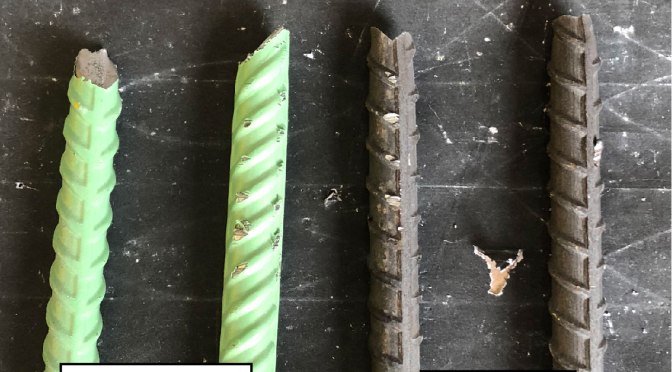
The Minnesota Department of Transportation (MnDOT) had suspended the use of post-installed epoxy-coated rebar for concrete barrier repairs as a precautionary measure because chemical adhesives used in the process are not designed for use with coated bars. But laboratory testing (conducted in a recent MnDOT-sponsored research study) has now shown that using these adhesives with coated rebar for post-installation works well and provides a safety level 200 to 300 times that predicted by manufacturer specifications. MnDOT is considering research recommendations to modify the installation process in order to resume using coated rebar in post-installed concrete crash barriers.
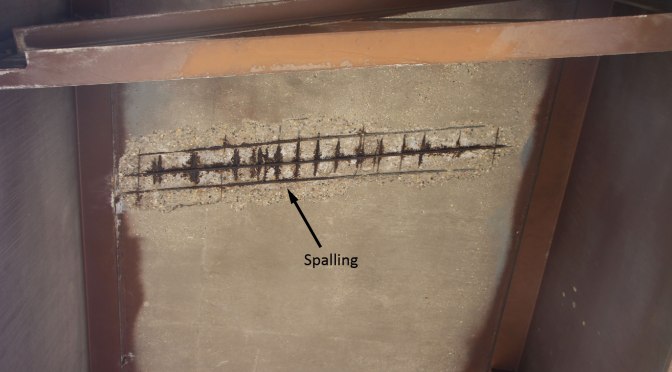
Bridge decks reinforced with one layer of epoxy-coated rebar and a bottom layer of uncoated steel rebar show corrosion damage sooner than decks constructed with all epoxy-coated rebar. Inspection methods should be enhanced to add a rating for cracking density on the underside of bridge decks. Repairs to mixed rebar decks should be conducted once a key deck surface inspection element has received a condition rating of two and held that rating for seven years, which is sooner than the average repair time of 8.5 years.
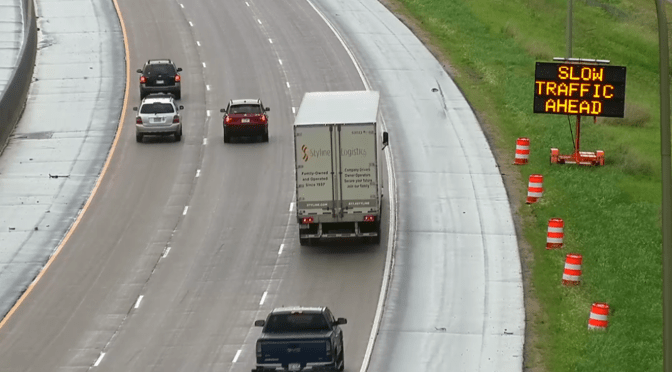
Using an innovative method to calculate vehicle trajectories and gather large amounts of driver data, researchers tested and evaluated the new Smart Work Zone Speed Notification system and determined that its messages successfully influenced drivers to reduce their speed.
MnDOT sought to determine the full range of intersection control information (ICI) currently used in the state and how it could best be made accessible for state transportation system needs. Researchers created the Regional Database of Unified Intersection Control Information, a machine-readable, cloud-based unified ICI system. They determined steps MnDOT could take toward more effective use of its central traffic signal control system, such as mitigating traffic disruption around construction zones and participating more fully in emerging technologies such as vehicle information systems and vehicle automation.
Researchers tested sediment control logs in the lab and in the field to determine the relative filtration capabilities of these devices. They also developed design guidelines for correct selection and contributed to ongoing educational efforts.
Proprietary technologies, industry competition and federal regulatory concerns are slowing the advent of defined standards for connected and autonomous vehicles (CAVs). Researchers investigated the state of CAV implementation to help local agencies begin preparing for the infrastructure needs of these vehicles. CAV-friendly options are considered for eight infrastructure categories. Since truck platooning is the likely first application of this technology, and optical cameras appear imminent as an early iteration of sensing technology, researchers suggest that wider pavement striping and well-maintained, uniform and visible signage may effectively serve the needs of CAVs in the near future while enhancing infrastructure for today’s drivers.
Researchers developed a method for associating travel times and travel costs with transit mobility. In an evaluation of bus–highway system interactions, investigators found that park-and-ride lots and managed lanes put suburban and walk-up urban transit options on equal footing. Bus–highway system interactions improve access to job locations and have improved transit access to job sites by about 20 percent compared to automobile access. When wage-related costs are included, the benefit of automobile use over transit use diminishes significantly.
The Minnesota Local Road Research Board (LRRB) has funded a follow-up study to determine whether a monitoring system it field tested for new drivers, called the Teen Driver Support System (TDSS), affected teenagers’ long-term driver behavior.
A new MnDOT research study determined that depositing concrete grinding residue (CGR) slurry at specific rates on roadside vegetation and soil may not cause lasting harm to plant growth and soil quality; however, follow-up research is recommended.



 Crossroads