Tag Archives: urban

New Project: Feasibility of LED Solar Street Lighting

The need for this research stems from documented safety benefits associated with roadway lighting and the growing challenges in maintaining traditional, wired lighting systems. While rural locations often face high costs for delivering grid power to remote intersections, recent increases in wire theft has affected communities across Minnesota. These issues highlight the importance of exploring alternative, resilient lighting solutions that can improve safety without relying heavily on conventional electrical infrastructure.

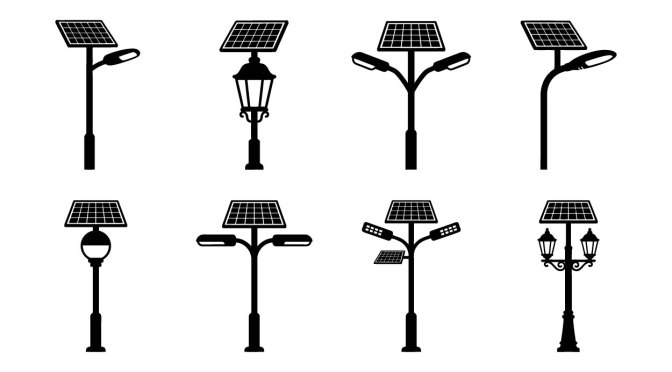
The research process will assess the feasibility of solar‑powered LED roadway luminaires through a combination of laboratory testing, field evaluation, and cost‑benefit analysis. Key activities include analyzing battery performance under cold‑weather conditions, studying how lower illumination levels affect safety and energy use, and examining the practical integration of solar panels and batteries into existing streetlight design. A field implementation at selected sites, including potentially rural intersections or trail locations, will help validate performance and identify operational considerations such as durability, code compliance, and vandalism resistance.

The expected benefits of this work include reduced lifecycle costs, lower environmental impacts, and decreased operational and maintenance demands. Solar‑powered streetlights eliminate the need for grid‑based electricity, reduce wiring infrastructure vulnerable to theft, and offer long‑term savings over a planned service life. Environmental gains are anticipated through reduced energy consumption and lower CO2 emissions, while improved lighting reliability and appropriate illumination levels are expected to support nighttime safety and reduce crash risks statewide.

“This project will provide unbiased, objective research using equipment, methods, and people that would otherwise be unavailable to local government,” said Nick Peterson, city engineer for Saint Paul Public Works. “As a result, Minnesota cities and counties will learn effective strategies for implementing solar-powered street lighting in our cold climate.”

The Objectives:

  1. Test energy storage capacity of Lithium-ion battery under different temperatures. The battery energy storage capacity is a critical component in the feasibility of solar powered LED street lighting in cold northern climates.
  2. Explore the implications of running the streetlights at a lower brightness on power conservation and traffic safety. The balance between the energy demand for street lighting and the traffic safety is critical to an optimized solar powered LED streetlight that has a minimal solar panel and battery size and less effect on the existing streetlight infrastructure design.
  3. Conduct a comprehensive cost-benefit analysis considering material, labor, and maintenance costs for the installation and use of the solar-powered LED luminaire system, along with the benefits, such as the saved utility costs, the avoided costs of nighttime crashes, and the associated environmental benefits, such as the associated reduction of CO2 emissions.
  4. Provide MnDOT with guidelines and specifications on solar-powered LED streetlight implementation details.

Project Details:

  • Start Date: 07/16/2025
  • Estimated Completion Date: 05/31/2027
  • Funding: Local Road Research Board
  • Principal Investigator: Mijia Yang
  • Co-Principal Investigators: Xiangfa Wu and Yao Yu
  • Technical Liaison:  Nick Peterson

Details of the research study work plan and timeline are subject to change.

To receive email updates about this project, visit MnDOT’s Office of Research & Innovation to subscribe.

New Project: Does lowering speed limits reduce driver speeds on urban streets?

In 2019, the Minnesota Legislature passed a law reducing barriers for cities to systematically lower speed limits. The City of St. Louis Park followed this guidance by reducing speed limits in 2021, but initial speed data collected before and 6–8 months after the changes showed little to no short‑term impact. Because driver behavior is habitual and may change slowly, advocates suggest that greater reductions in operating speeds may emerge over time, highlighting the need for repeat monitoring between 2025 and 2027.

This study aims to evaluate whether longer‑term changes have occurred 2–4 years after the initial reductions, while also examining other Minnesota agencies that have implemented or are considering reduced speed limits. The research will gather both measured and anecdotal data, assess “after” speed conditions where needed, and analyze how effectiveness varies based on roadway characteristics and any accompanying speed reduction countermeasures. These efforts address lingering questions about how speed limit changes influence driver behavior and roadway safety over time.

Understanding speed is critical because it directly affects the safety of all road users. According to Minnesota Motor Vehicle Crash Facts 2022, speeding was the leading cause of traffic fatalities, contributing to 130 of the state’s 444 deaths. By identifying agencies that have reduced speed limits, evaluating short‑ and long‑term impacts, and analyzing site‑specific factors, this research will produce guidance to help Minnesota road agencies assess and implement effective speed limit reductions.

“There is renewed interest in lower speed limits on municipal-type streets,” said Victor Lund, traffic engineer with St. Louis County’s Public Works Department. “The objective of this research is to better understand the intersection of speed limit policy, driver behavior and safety, which will result in guidance to better inform policies, practices and speed limits that support safer streets.”

The Objectives:

  1. Identify local agencies in Minnesota that have implemented reduced speed limits or may consider implementation along with any speed reduction countermeasures that have been implemented with the reduced speed limits.
  2. Evaluate the short-term and long-term effects of speed limit reductions implemented in Minnesota through the collection and analysis of speed data.
  3. Assess how these effects vary based on site characteristics or speed reduction countermeasures that were implemented in coordination with the reduced speed limit.
  4. Based on the findings, develop a summary document to aid Minnesota road agencies in assessing potential speed limit reductions.

Project Details:

  • Estimated Start Date: 06/25/2025
  • Estimated Completion Date: 06/30/2027
  • Funding: MnDOT and Local Road Research Board
  • Principal Investigator: Peter Savolainen
  • Co-Principal Investigators: Tim Gates
  • Technical Liaison: Victor Lund

Details of the research study work plan and timeline are subject to change.

To receive email updates about this project, visit MnDOT’s Office of Research & Innovation to subscribe.

New Project: Effect of Centerlines on Prevailing Traffic Speeds of Low-Speed, Two-Lane, Two-Way Roads in Urban Contexts

Vehicle speed has a substantial influence on both the likelihood and severity of crashes involving nonmotorized road users. Reducing speeds on urban streets, in particular, enhances safety for the greatest number of vulnerable road users.

Continue reading New Project: Effect of Centerlines on Prevailing Traffic Speeds of Low-Speed, Two-Lane, Two-Way Roads in Urban Contexts

Performance Testing of Regional Roadside Turfgrass

Keeping Minnesota’s roadsides green is about more than just aesthetics—healthy turfgrass can improve water quality, reduce erosion and road noise, and provide animal habitat. However, harsh conditions such as heat, drought, and salt use can make it difficult for roadside turfgrass to thrive.

Researchers tested a wide variety of turfgrass cultivars over several growing seasons—in both urban and rural environments across five states.

Continue reading Performance Testing of Regional Roadside Turfgrass

Speed Notification System Warns Drivers Approaching Urban Work Zones

Using an innovative method to calculate vehicle trajectories and gather large amounts of driver data, researchers tested and evaluated the new Smart Work Zone Speed Notification system and determined that its messages successfully influenced drivers to reduce their speed. 

Continue reading Speed Notification System Warns Drivers Approaching Urban Work Zones