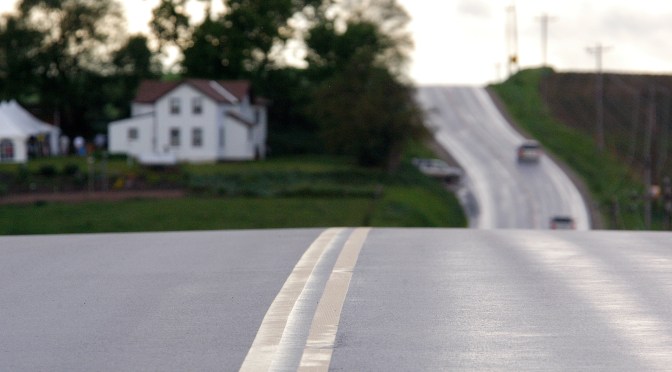
This research focuses on improving the durability of asphalt pavements by examining emerging technologies, materials, and temperature‑control methods. Recent advancements—such as warm mix asphalt (WMA), polymer modifiers, bio‑binders, and surface treatments that reduce heat absorption—show strong potential for reducing asphalt aging and increasing resistance to thermal cracking. Environmental factors, including pavement shading from trees, have also demonstrated measurable effects on pavement temperature and long‑term performance.
Building on these developments, this project aims to conduct a comprehensive review of existing tools and evaluate two promising approaches in detail: WMA technology and updated asphalt binder specifications. Experimental testing will compare WMA with conventional mixtures, analyzing compaction behavior and low‑temperature cracking resistance using methods such as gyratory compaction and semi‑circular bend testing. Parallel testing of asphalt binders will assess new specification parameters to predict cracking performance more accurately under Minnesota’s climate conditions.
“We are always looking at increasing durability in our pavements,” said Michael Flaagan, county engineer for Pennington County, Minnesota. ”This research gives us additional choices in increasing performance with the potential for cost savings.”
The anticipated outcome is a set of practical guidelines for Minnesota agencies to integrate WMA and improved binder selection into current pavement practices. These strategies are expected to increase pavement lifespan, reduce maintenance costs, lower emissions, and support better decision‑making for agencies with limited budgets. By identifying and validating the most effective tools and materials, the project contributes to long‑term sustainability, cost efficiency, and improved resilience of the state’s asphalt pavement network.
The Objectives:
- Conduct a comprehensive literature review of current technologies, materials, and temperature‑control methods that improve asphalt pavement durability.
- Evaluate the compaction behavior and low‑temperature cracking resistance of warm mix asphalt (WMA) in comparison with conventional mixtures through laboratory testing.
- Assess newly proposed asphalt binder specification parameters using low‑temperature binder tests, including Bending Beam Rheometer (BBR) and Asphalt Binder Cracking Device (ABCD) methods, to better predict cracking performance.
- Develop preliminary guidelines for integrating WMA technologies and improved binder selection into Minnesota’s asphalt paving practices.
Project Details:
- Estimated Start Date: 07/18/2025
- Estimated Completion Date: 06/30/2027
- Funding: MnDOT and the Local Road Research Board
- Principal Investigator: Mihai Marasteanu
- Co-Principal Investigators: Jia-Liang Le, Ethan Rossow, Mugurel Turos, and Zifeng Zhao
- Technical Liaison: Michael Flaagan
Details of the research study work plan and timeline are subject to change.
To receive email updates about this project, visit MnDOT’s Office of Research & Innovation to subscribe.