

The Minnesota Local Road Research Board recently funded a project to survey and analyze the use of Geographic Information System (GIS)-based asset management tools for city and county public works departments.
Continue reading New Project: GIS Tools and Apps – Integration with Asset Management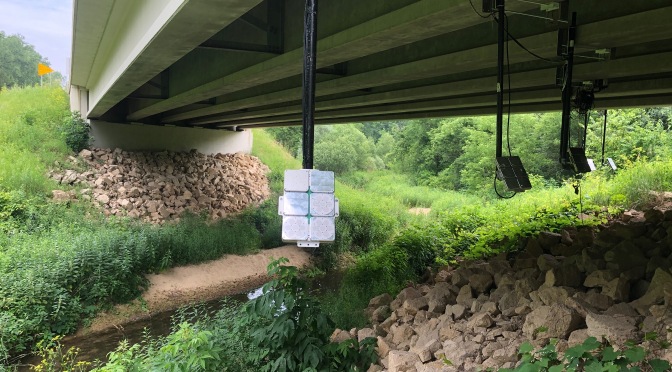
New Project: Use of Innovative Technology to temporarily Deter Bat-Bridge Use Prior to and During Construction
MnDOT has funded a study to evaluate the use of non-lethal ultrasonic acoustic devices to temporarily deter bats from bridges before and during construction projects.
Continue reading New Project: Use of Innovative Technology to temporarily Deter Bat-Bridge Use Prior to and During Construction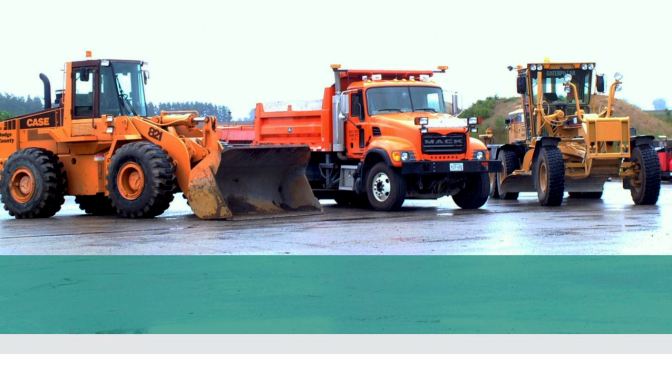
Guidebook helps cities and counties choose tools for managing fleets
Managing a fleet of trucks, heavy equipment, and other vehicles challenges road agencies large and small. While large agencies like MnDOT use software and specialized administrators to manage fleet management systems electronically, city and county agencies often do not. For some small agencies, fleet management may fall to a shop mechanic or two.
Continue reading Guidebook helps cities and counties choose tools for managing fleets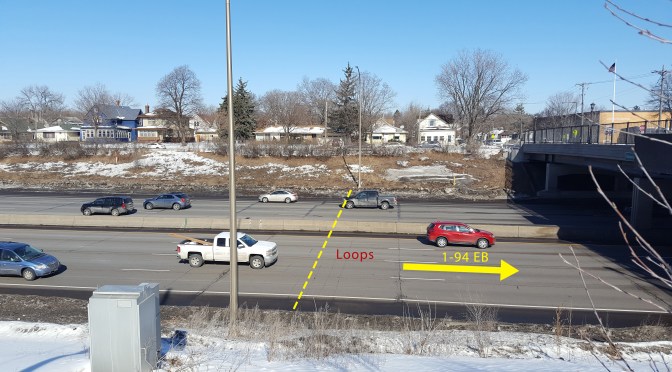
Leveraging Existing Inductive Loops to Classify Highway Vehicles
Researchers evaluated the use of existing inductive loop installations in Minnesota for vehicle classification. Results showed that inductive loops may be effective at identifying and classifying individual vehicles as they pass, but the system will require further refining for Minnesota use.
Continue reading Leveraging Existing Inductive Loops to Classify Highway Vehicles
Roadside Turf That Tolerates Salt, Heat and Ice
A recently completed research study has identified turfgrass species and cultivars that perform best under the heat and salt on Minnesota roadsides.
Continue reading Roadside Turf That Tolerates Salt, Heat and Ice
Recycling Asphalt Pavement Offers Strong Alternative to New Aggregate Base
In a newly completed study, researchers found that stabilized full-depth reclamation has produced stronger roads for commercial loads in Minnesota, and the method shows promise for uses in rural agricultural areas. How much greater the strength gained with each stabilizing agent is better understood, though not conclusively.
Continue reading Recycling Asphalt Pavement Offers Strong Alternative to New Aggregate Base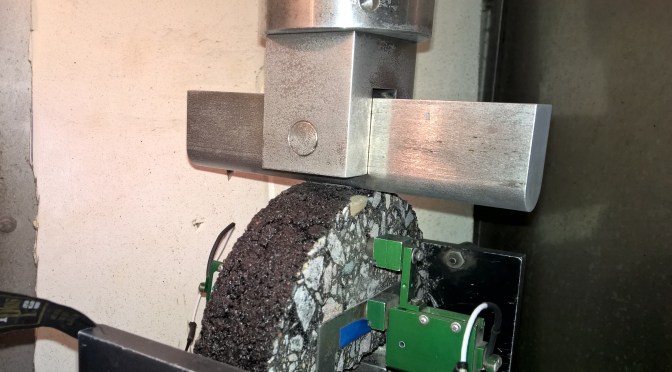
Testing Methods for Crack Resistance in Asphalt Materials
The Minnesota Department of Transportation is working with other state agencies in a pooled fund study to improve methods for testing crack resistance of asphalt mixtures. To expand options further, MnDOT asked researchers to evaluate alternative tests with standard lab equipment. The new tests produced repeatable results. Methods include the semicircular bend (SCB) test in a nontypical configuration, a dynamic modulus test of smaller asphalt mixture samples, a bending beam rheometer (BBR) test of mixtures, and a BBR of asphalt material for binder selection.
Continue reading Testing Methods for Crack Resistance in Asphalt Materials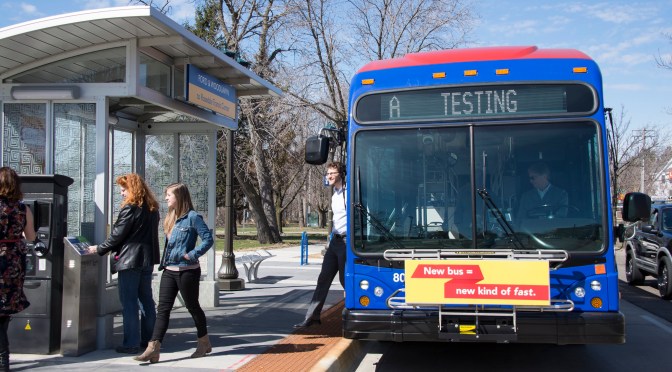
Impact of Arterial Bus Rapid Transit on Traffic and Users
Video and statistical analyses showed that arterial bus rapid transit (ABRT) along Snelling Avenue in Minneapolis-St. Paul had no significant impact on traffic volume and wait times at intersections. Survey results demonstrated that users prefer the A Line over local bus service and consider it roughly equivalent to express bus, light rail and commuter rail service. Though ABRT has not converted automobile drivers to transit riders, users enjoy its easy payment format, cleanliness, route service and convenience. This study also provided recommendations for future ABRT line design considerations.
Continue reading Impact of Arterial Bus Rapid Transit on Traffic and Users
New Tools to Optimize Truck Station Locations
The Minnesota Department of Transportation (MnDOT) has 137 truck stations across the state. These stations house and allow maintenance of MnDOT highway equipment as well as provide office and work space for highway maintenance staff. Within 20 years, 80 of these stations will need to be replaced as they reach the end of their effective life spans. Researchers developed a geographic information system based modeling tool to determine the most effective locations for truck stations in the state. Using data from many sources, a new research study has determined that MnDOT could rebuild 123 stations, relocate 24 on land available to MnDOT and combine two. MnDOT would save millions of dollars using the location optimization alternatives over the 50-year life cycle of a typical truck station.
Continue reading New Tools to Optimize Truck Station Locations
Study Suggests 70 Percent RAP for Minnesota Gravel Road Surfaces
Researchers examined mixtures of recycled asphalt pavement (RAP) and aggregate for new gravel road surface layers in the lab and in the field. Although test results did not align perfectly, and field results were somewhat uneven, findings suggest that mixtures with 70 percent RAP content can reduce dust generation. After a year of service these roadways can match all-aggregate gravel road performance in terms of strength, but with a smoother ride.
Continue reading Study Suggests 70 Percent RAP for Minnesota Gravel Road Surfaces Crossroads