Category Archives: Traffic and Safety

Work Zone Safety- How to Make Construction Sites Safer

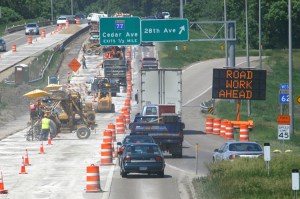
If you have spent any time driving on Minnesota roads and highways lately, you know that road construction work zones are all over the place. They can contribute to traffic delays and require vigilance to ensure the safety of both drivers and workers.

MnDOT and the Minnesota Local Road Research Board (LRRB) are doing their best to make  work zones more efficient and safer for crew members and the traveling public alike.

Here’s a roundup of some of the great work zone safety projects under way or recently completed:

New – Temporary Traffic Control for Low Volume Roads

FlyerPicCity and county workers sometimes have trouble determining how to select the appropriate work zone for low traffic roads. The Minnesota Local Road Research Board (LRRB) recently published two supplemental guidebooks to help local agencies identify the appropriate work zone layout for low-volume urban and rural roadways based on the maintenance activity. The guides are intended to supplement MnDOT’s 2014 Temporary Traffic Control Zone Layouts Field Manual.The LRRB has also requested changes to the field manual  for low-volume roadways in a letter to the MN Committee on Uniform Traffic Control Devices.

Smart Work Zone Speed Notification 

MnDOT is testing a system on I-94 this summer that it hopes will reduce work zone crashes by raising driver awareness of upcoming congestion. Systems with the same purpose have been tested in rural work zones, but mostly applied to locations where backups were predictable.

The Smart Work Zone Speed Notification System will take a different approach, informing drivers of the speed ahead, as opposed to a variable speed limit system tested previously on I-94, which also detected congestion but provided advisory speeds to drivers. It is envisioned that the new system will have greater success in reducing rear-end crashes on large, urban freeway work zones.

The new system is being tested and evaluated on I-94, east of downtown St. Paul, during work to replace and repair the roadway.

NEW –  Speed Cameras in Work Zones

OLYMPUS DIGITAL CAMERAPolice enforcement and speed limits are the main method of reducing the speed of drivers in Minnesota work zones. While this practice is effective, reducing speeds by approximately 10 to 15 mph, it is not practical to staff every work zone with law enforcement. As an alternative, some states are using automated speed enforcement cameras in work zones.
Automated speed enforcement cameras have been shown to reduce speeds in work zones, but such research did not evaluate how the cameras impact driver attention.

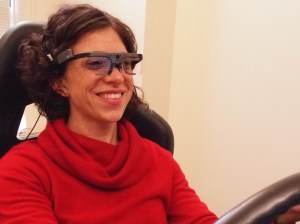
This study explored driver awareness and found that automated speed enforcement cameras in work zones are not a source of driver distraction. It also revealed differences in work zone driving behavior: Older drivers were least able to follow another vehicle closely, while younger drivers were least likely to monitor their speed carefully.

NEW –  Reducing Work Zone Delay by Improving Traffic Models

2016-12 ImageAccurate estimation of delays caused by lane closures on highways is critical important to effectively manage traffic flows around work zones.

A recent study, completed in March 2016, improves methods for estimating reduced traffic capacity and diversion rates for highway work zones.

Researchers analyzed traffic patterns from past work zones in the Twin Cities metro area and were able to develop a tool that can estimate estimate traffic diversion for a given work zone.

The next step is an implementation project to test and streamline the software.

Work Zone Intrusion Reporting

TRS1506 ImageWork zone intrusions — when traveling vehicles enter the work space of a work zone — are a clear safety concern even if they do not result in an accident, and they may indicate locations where future accidents are likely.

MnDOT was interested in learning how other state DOTs collect work zone intrusion data, both the technology used for data collection and the specific information they collect.

This Transportation Research Synthesis (TRS), completed in June 2015, surveyed state DOTs and conducted follow-up interviews with states that collect work zone intrusion data. The survey found that the relatively small number of states that do collect intrusion data typically do so via paper or electronic form.

As a result of the TRS, a recently funded research project proposes to develop a simple method to track and gather information on work zone intrusions. The aim of this process will be to produce a reporting interface (in the same vein as the Crash Report Usability And Design Project for the Department of Public Safety) that gathers essential information without being onerous to work crews.

Auto Flaggers: Keeping Crews Safe, Saving Manpower

Training was provided to introduce MnDOT maintenance workers to Automatic Flagger Assistance devices, which can improve safety in work zones by allowing flaggers to provide traffic guidance without having to be in the flow of traffic.

Using a remote control, a single worker can easily operate two AFADs simultaneously, freeing up personnel to perform other tasks and speed up the completion of a road project, the pilot study found. MnDOT estimates that the resulting cost savings can cover an AFAD’s purchase costs within two years.

MnDOT has planned a project to determine whether it is feasible to use a self-propelled device to push or pull an AFAD so it can be used in moving operations such as patching potholes or cracks, which make up more than half of MnDOT’s flagging operations.

Using Smartphone and Bluetooth Technologies to Help the Visually Impaired Navigate Work Zones 

2014-12 ImageIn a study released in February 2014, researchers developed and tested a new system to provide audible messages to visually impaired pedestrians for navigating work zones.
The system uses Bluetooth beacons attached to work zone infrastructure that sends messages to a pedestrian’s smartphone app rather than the traditional method of beeping buttons that announce a message when pressed.

Technology to Alert Drivers to Work Zones

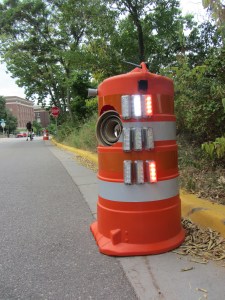
2012-26 ImageBy creating a tactile vibration and sound, rumble strips effectively alert distracted drivers to potential danger. However, they are not suitable for moving operations because repositioning them is too labor-intensive. MnDOT needed a method of alerting drivers about upcoming work zones that is more dynamic than
static signs but is portable and can be used in a moving work zone.

The Intelligent Drum Line system, developed in a 2012, could significantly improve work zone safety by relaying audible and visual warnings from traffic drums to speeding drivers as they approach. Further development is needed to ensure the system is cost-effective and portable to serve MnDOT’s needs.

Video Demonstration: Robotic Message Painter Prototype

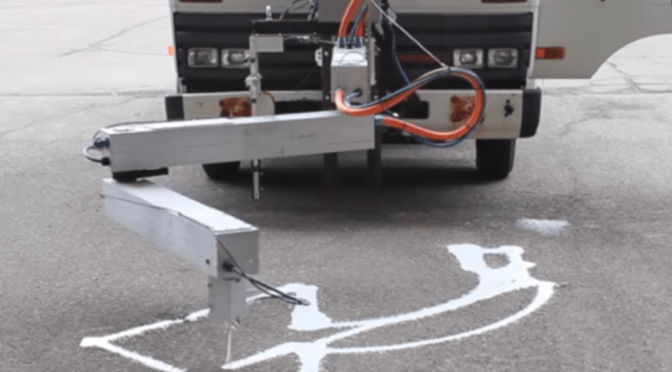
In the above video, University of Minnesota-Duluth Associate Professor Ryan Rosandich tests a prototype of a robotic arm he developed to paint messages and markings on roadways. He calls the machine “The MnDOT Robot.”

During a test run in October 2015, the MnDOT robot painted a right-turn arrow and the word “ahead” on pavement at MnDOT’s Pike Lake station in Duluth.

Rosandich hopes commercial companies will show an interest in further developing his proof-of-concept technology into something that road authorities can use regularly to make work easier, faster and safer for their employees.

Companies interested in commercializing this technology can contact Andrew Morrow at amorrow@umn.edu.

Editor’s Note: The paint used in the above demonstration was diluted due to the cold weather at the time of the demonstration and does not reflect the condition of the paint expected in a typical application.

Internship program helps students build skills, make connections

While some interns spend their days making copies and coffee runs, Caitlin Johnson spent her summer internship working on a research project exploring ways to improve safety in work zones.

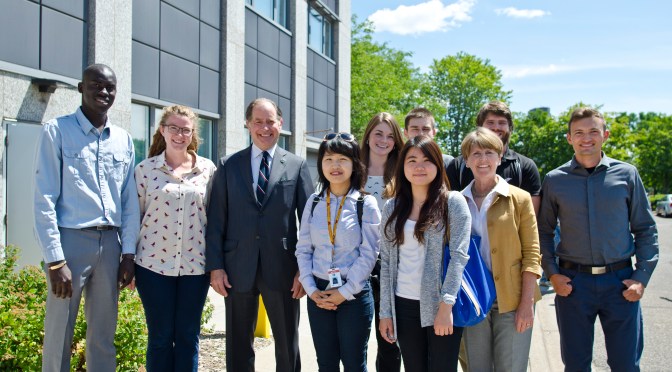
Johnson, a fifth-year civil engineering student, is one of eight undergrads from the University of Minnesota who participated in this year’s Summer Transportation Internship Program.

Interns worked at MnDOT for 10 weeks and gained valuable transportation-related experience in areas ranging from designing roadways to measuring pavement movement. The program, offered jointly by CTS and MnDOT, is now in its fourth year.

This year’s participants included the following students, working in these MnDOT offices:

  • Caitlin Johnson, Office of Traffic, Safety and Technology
  • Mamadou Mbengue, Office of Environmental Stewardship
  • Ellie Lee, Office of Design
  • Luke Horsager, Bridge & Hydraulics Office
  • Sheue Torng Lee, Materials & Pavement Office
  • Trenton Pray, Materials & Concrete Office
  • Colleen Tamara Maluda, Environmental & Vegetation Office
  • Lucas Karri, Bridge Office

Johnson says her internship at MnDOT gave her the opportunity to study a topic that hasn’t been explored in-depth in the past and present those findings to industry professionals, including staff from the Federal Highway Administration. Luke Horsager, a civil engineering senior, spent his internship with the Bridge & Hydraulics Office equipping MnDOT boats with new GPS and Bluetooth software used for river mapping and monitoring bridge scour. He says he enjoyed gaining hands-on experience with the technology.

Heidi Gray, a MnDOT Metro District designer who supervised intern Ellie Lee in the Office of Design, says the internship program is valuable not only for the students, but also for the supervisors and MnDOT as a whole. While the interns gained important hands-on work experience and made valuable professional connections, MnDOT supervisors were introduced to talented young professionals.

“It’s really good to get young people in here and teach them what MnDOT is all about,” Gray says. “I personally have enjoyed the opportunity to teach and pass along what I know. It’s a good refresher.”

Application materials for the 2016 Summer Transportation Internship Program will be available on the CTS website in early November.

For more information, read the full article in the September issue of Catalyst or visit the internship program web page.

Roadway deaths and what Minnesota is doing about it

Joint article produced with MnDOT Research Services

Minnesota developed the Strategic Highway Safety Plan a decade ago, as the nation set a goal of reducing roadway deaths to less than one person per 100 million vehicle miles traveled. Last year, the nation still hadn’t reached this milestone (1.1 deaths occurred per 100 million miles), but Minnesota had lowered its fatality rate to 0.63 deaths (down from 1.48 deaths from 20 years ago).

“When I look at what Minnesota has done over the last 15 years compared to other states, we’re one of the few states that has a pretty consistent downward trend [in fatal crashes],” said Brad Estochen, MnDOT state traffic engineer, who gave an update on the highway safety plan during a recent presentation at the Roadway Safety Institute. “I think we’re doing some unique things here that have given us these results.”

These steps, Estochen says, have included passing a primary offense seatbelt law (seatbelt usage is now above 90 percent), investing in strategic safety infrastructure like high-tension cable median barriers and focused enforcement of DWI, speed and seatbelt laws.

Developing a plan

To best understand the risk factors for fatal and serious injury crashes, the state combined real-life crash data with input from professionals in engineering, law enforcement, emergency medical services, as well as everyday road users. The results showed that most crashes in the state involve multiple factors—such as road conditions, driver impairment and driver age.

Estochen said this approach of analyzing data and gaining stakeholder perspectives provided new insights into the dynamic causes of fatal and serious injury crashes.

In conjunction with the Departments of Health and Public Safety, MnDOT created a highway safety plan aimed at both professional stakeholders and the community that identified critical strategies for reducing serious traffic incidents. It has been updated in 2007 and 2014, most recently.

MnDOT also created a complimentary document for every county and MnDOT district (respectively called the county safety plan and district safety plan) to help local agencies identify locations and potential projects for reducing fatalities.

“We were the first state to take the SHSP concept to the local level. It was identified as a noteworthy practice by FHWA and other states are now starting to engage locals in developing specific plans for their use and implementation,” Estochen said.

The highway safety plan is an integral part of Toward Zero Deaths, the state’s cornerstone traffic safety program that has a goal of reducing fatalities to less than 300 per year by 2020.

Overall, Estochen said one of the best ways to reduce crashes in the state is to promote a culture of traffic safety — something he hopes the highway safety plan contributes to.

“Creating a traffic safety culture has nothing to do with building bigger and better roads,” he said. “It really has to do with making us as a state, as a community and as individuals responsible for our actions.”

Engaging the next generation of the transportation workforce

In July, CTS introduced the next generation of the workforce to transportation topics and careers during a two-week summer program. Thirty students entering seventh through ninth grade attended the CTS-hosted National Summer Transportation Institute, where they got hands-on experience with topics ranging from distracted driving to aeronautics to traffic management.

As part of the program, attendees toured campus, visited the U of M’s transportation-related labs, and learned tips on researching, studying, public speaking, and writing. In addition, participants learned about many aspects of transportation, including human factors, roadway safety, bridge design, surveying, and traffic simulation.

This slideshow requires JavaScript.

The camp also included outings to several MnDOT facilities, UPS, Metro Transit, the Minneapolis–St. Paul International Airport, the Minnesota Transportation Museum, and boat tours of the St. Croix River Crossing construction site and St. Paul Port Authority.

Highlights for attendees included riding the light rail and going behind the scenes in a Metro Transit control room, watching airplanes take off and exploring maintenance equipment at the airport, getting up close to bridge construction on the St. Croix River Crossing boat tour, and using a driving simulator to learn about distracted driving at UPS.

“I really enjoyed using the driving simulators,” said one of the ninth-grade program participants. “It was a hands-on experience that truly taught me the dangers of texting while driving and how much harder it really is.”

In post-program evaluations, parents reported that their children had learned valuable information about transportation topics, careers, and related education opportunities.

“This was one of the best camps we have ever experienced,” one parent said. “There was always a plan for college, and this program increased enthusiasm, preparedness, and maturity.”

“[The program] opened up my daughter’s horizon for future career choices and major focus areas after high school,” another parent said.

The program was sponsored by CTS with funding from the Federal Highway Administration administered by the Minnesota Department of Transportation (MnDOT).

To learn more, read the full article in the August issue of Catalyst.

Applying LiDAR to county transportation systems

A handful of county highway department employees in the Rochester area gathered recently at the Olmsted County Public Works Service Center for a presentation and live demonstration by University of Minnesota Research Fellow Brian Davis about his team’s work involving light detection and ranging – or LiDAR.

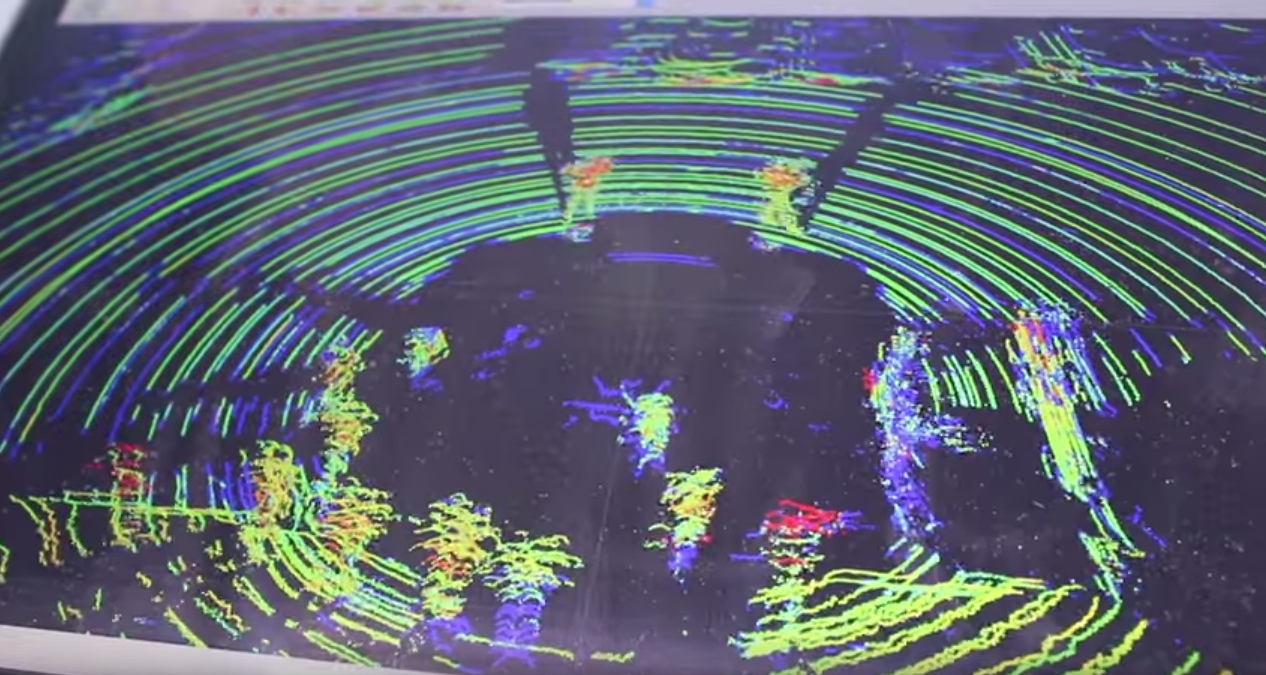
“LiDAR is like radar, but with light,” Davis said. “It gives you information about what’s around the sensor.”

Event attendees gather around a sedan outfitted with a spinning LiDAR sensor. (Photo by Micheal Foley, MnDOT)

Davis and his fellow researchers have outfitted a sedan with special LiDAR equipment and other technology that is capable of capturing a 360-degree, 3-D view of a scene in real time.

“We use the car as a test bed,” Davis said. “We have a lot of different types of sensors on the car that we use for the different projects that we’re working on. Right now we have a LiDAR sensor on top. Sometimes we have a high-accuracy GPS receiver in there. We have a cellular modem. We have a handful of inertial sensors. So it’s a lot of different stuff that we use to cater to the application.”

For his presentation, Davis showed the attendees some of the data his team had already collected.

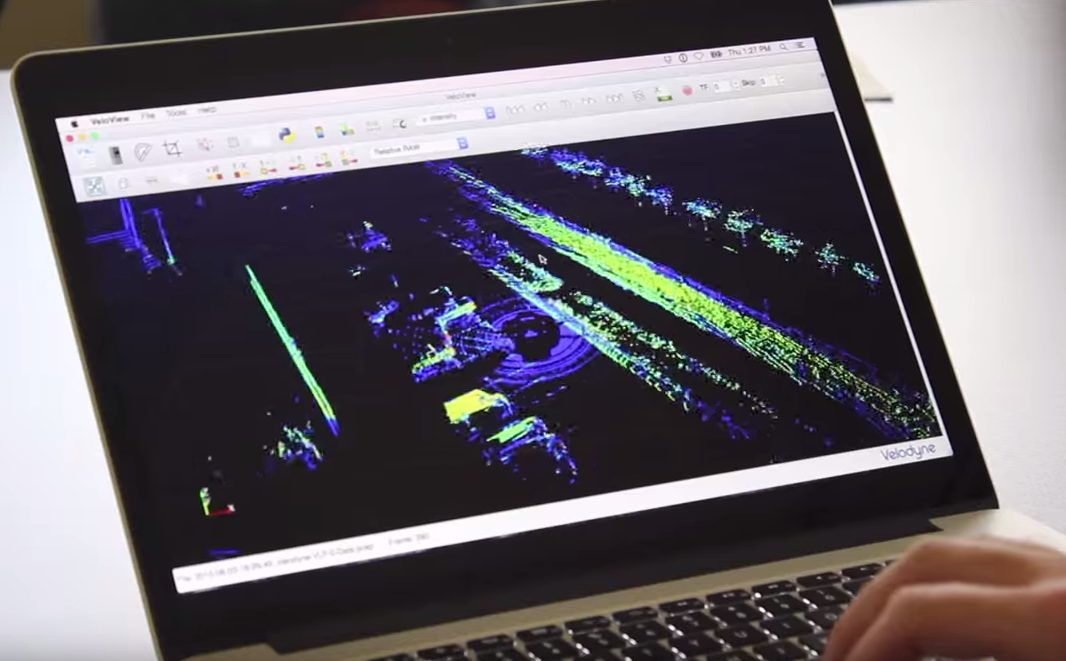
Davis presents data that shows the LiDAR-equipped sedan moving along a roadway. (Photo by Micheal Foley, MnDOT)

“We showed a handful of pre-collected data at a handful of intersections around Rochester and Minneapolis,” Davis said. “What it shows is the point cloud collected by the sensor – just the raw point cloud with no post-processing done. In that information you can see people moving through it, cars moving through it, buses and light rail trains.”

Event attendees move around the sedan to see how the LiDAR sensor views them. (Photo by Micheal Foley, MnDOT)

After the presentation, Davis led the group to the parking lot for a close-up look at the technology and how it collects data and displays that data in real time. Le Sueur County GIS manager Justin Lutterman was among those who could envision possible applications for LiDAR.

“It’ll be interesting to see where this can go,” Lutterman said. “I’m sure the private industry will take off with this and emergency management, or the sheriffs and ambulances, would appreciate this kind of technology on their vehicles for a situation they might have to recreate. Roads and traffic designers  would be able to monitor their resources, pavements, traffic counts and things like that.”

Over the coming months, researchers will gather more data to develop a workshop for county personnel interested in learning more about LiDAR and how it can be applied in their transportation systems.

“The next steps for this project are to collect some data with the car at intersections. Then we can use that information to fine tune our algorithms,” Davis said. “What the algorithms are going to do is take that raw data and give us useful information, like the number of cars, or the time a car passes through an intersection. That all feeds into the workshop we’re developing. The workshop is going to be for county GIS workers, traffic engineers and county engineers who are interested in learning about these technologies.”

Major Ramp Metering Upgrade Reduces Freeway Delays

Motorists are experiencing less delay on metro-area highways, thanks to major changes to the Twin Cities’ ramp metering system.

The Minnesota Department of Transportation has reconfigured ramp meters to be more in sync with real conditions. With changes to the turn-on and turn-off criteria, the meters are actually running for a shorter period of time and are only activated when needed.

Ramp meters are traffic lights placed on freeway entrance ramps that control the frequency that vehicles can enter the highway. Sensors embedded in the pavement collect the vehicle traffic data used to time approximately 440 ramp meters.

Staff at the Regional Transportation Management Center, which manages the ramp meters, say the whole system is operating better because of changes that were implemented approximately one year ago (based off a 2012 study).

University of Minnesota-Duluth professor Eil Kwon developed the system’s new software algorithms. In a case study of Highway 100, he found that the delay on the mainline dropped by nearly half.

On northbound Highway 100, the amount of “delayed vehicle hours” — defined as the vehicle hours of traffic flow with speeds less than 45 mph — that motorists experienced dropped 48 percent during the months of October and November in 2012 when compared to the same period in 2011. During the same time period, total volume on that section of northbound Highway 100 increased by 2.7 percent, Kwon said. In spring 2013, the amount of delayed vehicle hours had been reduced by 17 percent.

These results are preliminary, as additional analysis is needed to determine if these results are typical throughout the system on other freeway corridors. However, based on a personal savings of $16.50 per hour, the scenario described above represents a cost savings to motorists of $1,353 to $3,447 per day (depending on the season). That’s as much as $339,150 to $861,640 per year for just a six-mile stretch of highway.

More efficient

Under the old system, each ramp meter would turn on based on current traffic conditions, but the criteria to turn on were easily met, causing the meters to turn on too soon. The old system did not have turn-off criteria, allowing meters to run until a pre-set time of day.

With the new system, improvements were made to make the meters respond more appropriately to current traffic conditions. The turn-on criteria were improved so that meters come on only when needed, and turn-off criteria were added, allowing meters to turn off when traffic conditions improved.

The new metering system is particularly effective at reducing the number of meters operating on light traffic days.

“On days like the ones leading up to Thanksgiving, where traffic may be 10-to-15 percent less than normal, instead of, say, 150 ramp meters being on at a particular time, now maybe only 50 ramp meters will be operating,” explained MnDOT Freeway System Operations Engineer Jesse Larson.

Upgrades to the ramp metering system also allow for a better picture of what traffic is like at a given moment, because it’s now based on corridor density rather than traffic flow.

Traffic flow is the measurement of the number of vehicles passing a given point. Using traffic flow was flawed, in that similar traffic flows can occur at different speeds. The old system couldn’t differentiate between 1,000 cars passing by at 20 miles per hour versus 1,000 cars passing at 60 miles per hour, for example.

Corridor density, on the other hand, is the number of vehicles per lane per mile. By measuring density instead of traffic flow, the system has a more accurate picture of what current conditions are like on the freeway.

Another bonus: ramp meters will no longer release a bunch of cars simultaneously once an entrance ramp fills up. That’s because the system can now detect the ramp filling up and release the extra cars gradually instead.

The amount of hours vehicles wait at entrance ramps fell by nearly 50 percent during the fall months along a section of Highway 100.
Twin Cities ramp meters now turn on and off based on live traffic conditions.

Related Resources

Development of Freeway Operational Strategies with IRIS-in-Loop Simulation study

Minnesota: Are You Ready to Mumble?

In the search for a quieter rumble strip, Minnesota may have found a winner in California.

California’s standard rumble strip design outperformed Minnesota’s and Pennsylvania’s in a comparison study along a rural highway near Crookston, Minnesota. (Read the recently published report.)

“California’s rumble strip still gave significant feedback to drivers, but it was significantly less noticeable outside the vehicle,” said engineering consultant Ed Terhaar, who performed a noise analysis with acoustical engineer David Braslau on behalf of the Minnesota Local Road Research Board.

A California-style sinusoidal rumble strip, installed along a Polk County Highway.

Although they serve as an effective warning to drivers, rumble strips can cause unwanted noise when a vehicle drifts over a centerline or edgeline.

Both the LRRB and the Minnesota Department of Transportation, which is sponsoring a companion study, are interested in finding a new design that still captures the driver’s attention, but minimizes the sound heard by neighboring residents.

Polk County tests

Terhaar and Braslau’s research showed that Minnesota and California’s designs produce a similar level of interior noise. Although external decibel levels are not that different from each other either, Minnesota’s rumble strip has a considerably stronger tone that can be heard further away.

“California’s sound is less sharp, less intrusive and less noticeable,” Braslau said. “Minnesota’s has a really sharp peak. So while the absolute sound level of California’s isn’t all that much lower, its perception is less.”

Testing was performed using three different vehicles – a passenger car, pickup truck and semi-trailer truck – at three different speeds – 30, 45 and 60 miles per hour.

In general, Pennsylvania’s rumble strip had both a quieter interior and exterior sound than California’s and Minnesota’s.

Like Pennsylvania, California’s rumble strip has what is called a sinusoidal design – a continuous wave pattern that’s ground into the pavement (it’s the style commonly used in Europe and has been called a “mumble strip” because it’s quieter). The main difference between the two is that California’s wave length is 14 inches, while Pennsylvania’s is 24 inches.

Minnesota’s design is much different than the sinusoidal pattern used by the other two states.

“It’s not a continuous wave – it’s basically chunks of pavement taken out at certain intervals with flat pavement in between. It’s more of an abrupt design, whereas California and Pennsylvania’s are more continuous and smooth,” Terhaar explained.

The next step for researchers is to test variations of the California rumble strip design at MnDOT’s Road Research Facility (MnROAD).

The 8-inch rumble strip tested in Crookston is the typical edgeline design used by Polk County, but it was found to be too narrow for semi tires, so MnDOT will look at wider designs in its follow-up study. Researchers will also look at the impacts to motorcyclists and bicyclists, as well as the California rumble strip’s centerline striping capability.

The Minnesota rumble strip, left, and California rumble strip, right.
The Minnesota rumble strip, at left and also pictured in top photo, and California rumble strip, right.

Related Resources

Rumble Strip Noise Evaluation study

MnDOT looks for solution to noisy highway rumble strips – Crossroads article

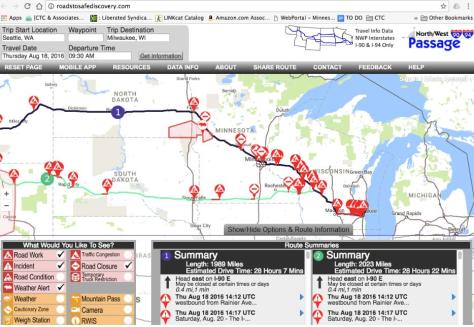
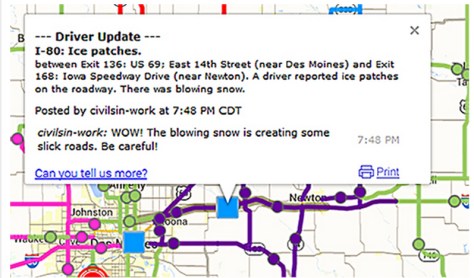
MnDOT Tests Crowdsourcing to Improve Road Condition Reporting

The Minnesota Department of Transportation is testing a crowdsourcing application that will allow motorists to update winter weather road conditions on the state’s 511 system.

The Regional Transportation Management Center is planning a soft launch of Citizen Reporting in April, initially inviting MnDOT employees to post their experiences on routes they travel.  By next winter, the RTMC hopes to invite the public to do the same.

“We suspect that citizen reporters will be similar in ethic to the kinds of people who volunteer to be weather spotters,” said MnDOT Transportation Program Specialist Mary Meinert, who assists with day-to-day operations of 511.

511 Citizen Reporting
Iowa launched Citizen Reporting in November. Here is an example of a citizen report.

Currently,  MnDOT maintenance crews report road conditions, but Greater Minnesota lacks 24/7 coverage and its reports can become quickly outdated, especially on highways that aren’t plowed as frequently or lack traffic cameras, said 511 System Coordinator Kelly Kennedy Braunig.

Citizen reporting, especially on weekends, will help keep that information fresh.

“We try to explain on the website that we only update from 3–6 a.m., 3–6 p.m. Monday through Friday and as road conditions change, but we still get many emails requesting more frequent road condition information,” Braunig said.

Even a recent comment on MnDOT’s Facebook page pointed out the limitations in one area of the state: “Updates [only] come during government work hours.”

Growing Service

It’s actually a welcome sign that the public wants more from 511.

Seven years ago, when Braunig applied for her job, not many people used 511. In fact, at the time, she wasn’t even aware of the service, which provides information to travelers on weather-related road conditions, construction and congestion.

Today, 511’s online program and mobile app are accessed by more than 5,000 people per day during the winter (and about half as many during the summer). Data comes from MnDOT’s construction and maintenance offices, as well as state trooper data and incident response. This real-time information is available for all of Minnesota.

In the Twin Cities metro area, more than 700 traffic cameras allow MnDOT and State Patrol dispatchers to check the condition of 170 miles of highways and monitor traffic incidents at any time. Rochester, Duluth, Mankato and Owatonna also have cameras for incident management and traffic monitoring.

The 511 system’s greatest challenge is in Greater Minnesota, where road condition information is used daily by schools, ambulance personnel and truckers, as well as the traveling public, but information isn’t updated frequently outside of business hours.  Citizen reporting will be a beneficial resource.

Other states

Other northern states face similar challenges as Minnesota, but have been able to improve the timeliness of road condition data with assistance from truckers and other motorists.

In Wyoming, more than 400 citizen reporters (primarily truckers) call in road conditions to the Transportation Management Center. In Idaho, citizen reporters directly put the information into the 511 system. Minnesota will be the fifth state to adopt citizen reporting, following Iowa, which launched its service in November 2014.

Like Iowa, Minnesota’s citizen reporting will initially focus on winter roads.

To participate, people will need to take an online training module and then register their common routes, perhaps the highways they take to work or their way to the cabin on the weekends. These contributions will be marked as a citizen report on the website.

“Minnesota truck drivers are loyal users of the 511 system and we suspect they will also make some of our best reporters,” Meinert said.

Minnesota is part of a 13-state consortium that shares a 511 service technology provider. States with citizen reporting recently shared their experiences in a Peer Exchange sponsored by North/West Passage, a transportation pooled fund that is developing ways to share 511 data across state lines.

“With citizen reporting we hope to give people a voice and a chance to participate,” Braunig said.

Making SMART Signals even smarter

Your drive home may be a few minutes quicker today thanks to a team of researchers who are making it easier for Minnesota engineers to retime traffic signals.

It normally costs $3,500 to retime a signal due to the time involved in collecting the data and optimizing timings. But over the past several years,  MnDOT-funded research has helped develop the SMART Signal system, which not only collects traffic and signal-phase data automatically, but also identifies under-performing traffic signals and generates optimal signal timing plans with minimal human intervention.

Traffic delays typically grow 3 to 5 percent per year due to outdated signal timing; however, most traffic signals in the United States are only re-timed every two to five years (or longer).

“Large-scale deployment of the SMART Signal system will significantly change the state-of-the-practice on signal re-timing because MnDOT won’t have to retime a traffic signal based on a fixed schedule,” said University of Michigan researcher Henry Liu (formerly a University of Minnesota professor), who began developing the system in the mid-2000s. “Instead, because of the reduced cost of signal data collection and performance measurement, signal retiming becomes performance-driven rather than schedule-based.”

You can view the traffic monitoring on corridors with SMART-Signal systems on this website, http://dotapp7.dot.state.mn.us/smartsignal/.

MnDOT (along with many cities and counties) embeds loop detectors in road pavements that notify a traffic signal that a vehicle is present. Staff normally must manually track wait times to determine how the signal timing is affecting traffic.

But SMART Signal automates much of this process by recording how long a vehicle waits at an intersection and automatically reporting the data (along with signal timing) to a central server. The data — viewable in real-time on this website  — can then be analyzed to determine traffic patterns and optimal signal timing.

Recent enhancements to the SMART Signal system were successfully tested on Highway 13 in Burnsville, reducing vehicle delay there by 5 percent.  The benefit could be in the double digits for corridors with worse traffic delays.

SMART Signal — which stands for Systemic Monitoring of Arterial Road Traffic — has been installed at more than 100 Minnesota intersections and is currently in the process of commercialization.

The latest research optimizes the system’s ability to reduce traffic delays by developing a framework to diagnose problems that cause delays at traffic signals and an algorithm that automatically optimizes the signal plan to address these problems. The software upgrade has since been integrated into all SMART Signal intersections.

Across the country, the financial benefit of retiming signals has been shown to be tremendous. On San Jose Boulevard in Jacksonville, Florida, for instance, traffic delays in one corridor dropped 35 percent and resulted in an annual estimated fuel savings of $2.5 million.*

“Data collection and performance monitoring are critical for improving traffic signal operations, and yet before the development of the SMART Signal system, these tasks were prohibitively expensive for most agencies because of the number of signals involved,” Liu said.

Future Applications

Liu is also looking at other potential applications for SMART Signal :

  • Improving safety at intersections with unusually high crash rates and predicting which intersections are likely to have elevated crash rates in the future.
  • Developing traffic signal timing models for diverging diamond intersections.
  • Determining how traffic and vehicle routes are affected by construction lane closures and detours on signalized highways.

A real-time adaptive signal control, which would automatically adjust signal timings based on current conditions, is not currently feasible with the SMART Signal system because it would require additional vehicle sensors. The latest SMART Signal research does, however, automate the data collection and calculations that would help the development of such a system.

Data collection
A data collection unit collects event-based traffic and signal data and sends it to a remote center for analysis.

*The Benefits of Retiming Signals,” ITE Journal, April 2004

Note: This blog post was adapted from an article in the latest issue of our newsletter, Accelerator. Click here to subscribe.

Related Resources

Research Project: Automatic Generation of Traffic Signal Timing Plan (2015)

(Development of the SMART-SIGNAL system began with Real-Time Arterial Performance Monitoring System Using Traffic Data Available from Existing Signal Systems (2009). It continued with Research Implementation of the SMART SIGNAL System on Highway 13 (2013) , which refined the system and its user interface, and Improving Traffic Signal Operations for Integrated Corridor Management (2013), which developed data-based strategies for relieving congestion by adjusting signal timings.)