Tag Archives: MnDOT

Auto-Flaggers Keep Road Crews Safe, Save MnDOT Money

Like a traditional flagger, an Automatic Flagger Assistance Device directs drivers through work zones and other problem areas. But whereas traditional flagging requires workers to stand dangerously close to moving traffic, AFADs can be operated remotely, keeping the flaggers out of harm’s way.

“This is a very risky environment from our employees,” MnDOT Research Services Project Advisor Alan Rindels said. “Any flagger you talk to can recount a time he or she had to jump in a ditch to avoid a vehicle.”

Using a remote control, a single worker can easily operate two AFADs simultaneously, freeing up personnel to perform other tasks and speed up the completion of a road project. MnDOT estimates that the resulting cost savings can cover an AFAD’s purchase costs within two years.

MnDOT recently undertook a pilot implementation of three sets of AFADs, introducing them to maintenance staff and identifying the most appropriate situations for their use. Researchers reviewed past AFAD use in Minnesota, observed traditional flagger and AFAD operations in action, interviewed MnDOT maintenance personnel about their experiences and held two hands-on training sessions that were attended by more than 60 people.

Results showed that drivers obeyed the AFAD instructions and that AFADs work well for stationary construction projects. These successful demonstrations should encourage the wider use of AFADs and enhance worker safety in a cost-effective way.

MnDOT Research Services & Library produced the video above, which details the experiences of a MnDOT road crew who recently started working with AFADs.

(Bonus: Watch MnDOT flagger Joe Elsenpeter talk about jumping into a ditch to avoid being hit.)

*Note: This blog post was adapted from an article in the latest issue of our newsletter, Accelerator. Click here to subscribe.

Related Resources

New crash report interface will improve usability and data quality

The data collected at the scene of a crash by law enforcement officers are important for more than just drivers and their insurance companies. The information is also used on a much larger scale by state agencies and researchers to analyze and evaluate crashes, trends, and potential countermeasures.

“Big decisions get made based on that data—million-dollar decisions,” says Nichole Morris, a research associate at the U of M’s HumanFIRST Laboratory. “So you have to be sure that what goes in to that report is high quality and reflects what actually happened at the scene of the crash.”

As part of an effort to improve this data quality in Minnesota, Morris is leading a team of HumanFIRST researchers in a project to redesign the electronic crash report interface used by law enforcement officers. The team’s goal is to create a new interface that improves the accuracy, speed, reliability, and meaningfulness of crash report data.police_guy

The project is occurring in conjunction with a redesign of Minnesota’s crash records database and is being sponsored by the Traffic Records Coordinating Committee (TRCC) at the Minnesota Department of Public Safety (DPS) and by MnDOT.

“In industry, they do this work all the time, looking at usability and design. But when you think about what a state does in terms of usability, nothing like this to our knowledge has ever been done. This makes it a very exciting and revolutionary project for Minnesota,” Morris says.

In the first phase of the project, the researchers completed a human factors analysis on the existing crash report interface to identify potential problem areas. This included a step-by-step task analysis and in-depth interviews with law enforcement officers.

During this process, the researchers identified several areas they hoped to improve. For instance, they wanted the new interface to be smarter, making better use of autofill features to reduce the amount of manual data entry.

Following the analysis, the team built two versions of a mock crash report interface for usability testing: a wizard and a form. In both versions, the researchers added decision aids to ease usability. They also significantly improved the system’s autofill capabilities, reducing the ratio of officer to system data entry from 6:1 to nearly 1:1.

The researchers then conducted four rounds of usability testing with law enforcement officers for both the wizard and the form. Results were split: half the officers preferred the wizard and half preferred the form. Because of these findings, the TRCC is planning to build full versions of both, Morris says, which will allow officers to use the version they prefer.

Going forward, the researchers plan to make a few more adjustments to the research prototype before handing it off to the state vendor, Appriss, which will build the new system. The team will then work collaboratively with Appriss to complete additional beta and usability testing before the new interface launches in January 2016.

“The results of the HumanFIRST prototypes are being combined with the vendor’s prior experience for a best-of-breed approach,” says Kathleen Haney, traffic records coordinator at DPS. “This is a fantastic project, and the results will be relevant for years to come.”

Read more about the project in the December 2014 CTS Catalyst.

MnDOT, LRRB Pick New Research Projects with Financials in Mind

Minnesota’s transportation research governing boards put a new emphasis on financial benefits when selecting next year’s round of transportation research projects.

MnDOT’s Transportation Research Innovation Group (TRIG) and the Local Road Research Board announced their Fiscal Year 2016 funding awards this week after hearing proposals from researchers in several states. They selected 20 research proposals hall-marked by novel approaches to improving the environment, increasing transportation safety, improving construction methods and boosting the bottom line.

“We asked the principal investigator to present the safety and financial benefits up front, and how they can be implemented to improve the transportation system and economic viability of Minnesota,” said MnDOT Research Management Engineer Hafiz Munir. “We’re making a point early in the process to identify those potential benefits, quantify them and document them in our tracking system.”

Researchers will test new technology that could make crack-free pavements; find better, faster and less expensive ways to reclaim roads; and even explore how to use waste material from road construction projects as part of the landscaping to absorb water runoff.

Links are provided below to brief descriptions of each of the projects:

Bridges and Structures

Environment

Maintenance

Materials and Construction

Multimodal

Policy and Planning

Traffic and Safety

Decoding the Deicers

The results of last season’s deicing study are in — just in time for our next snow.

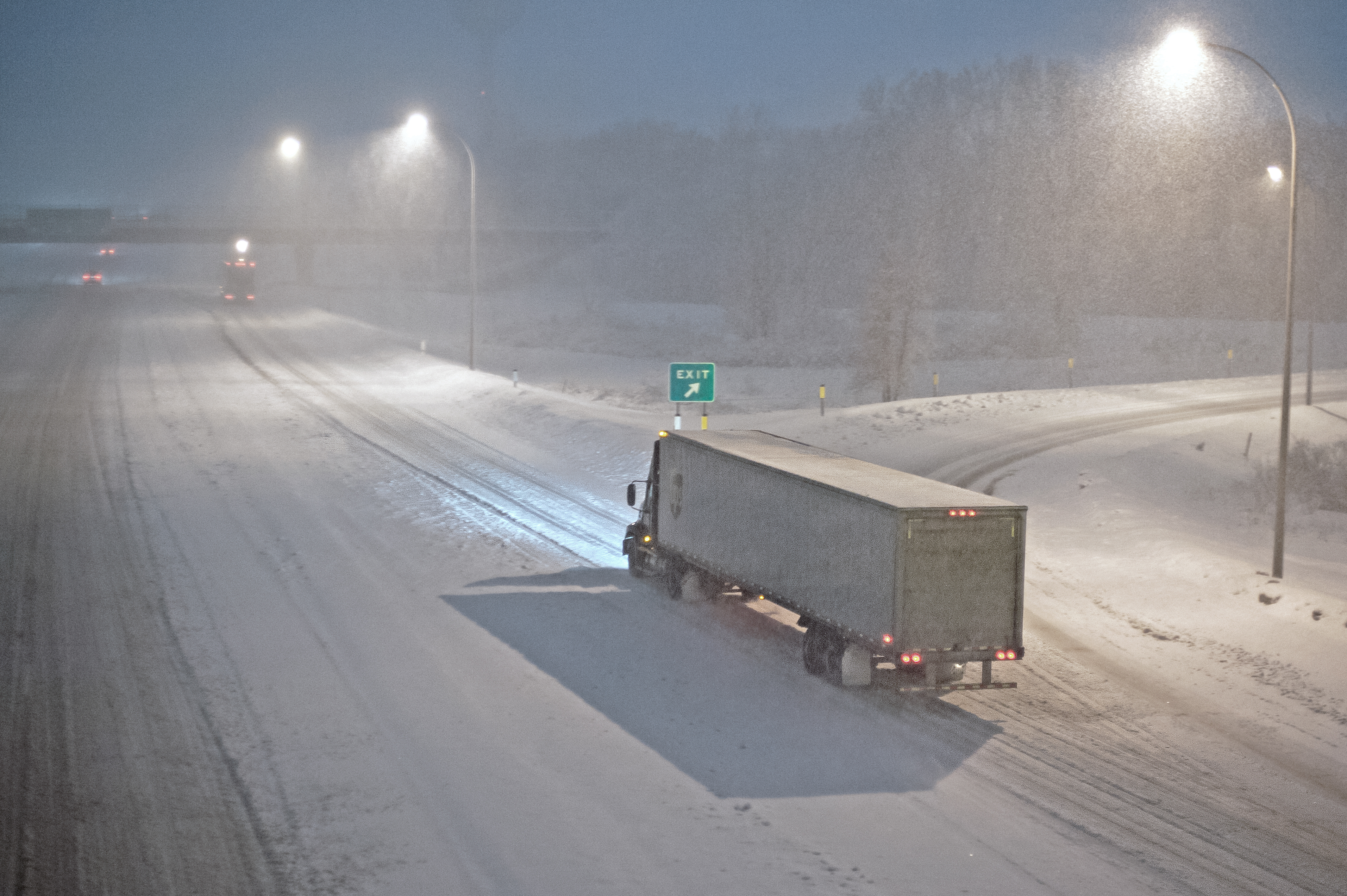
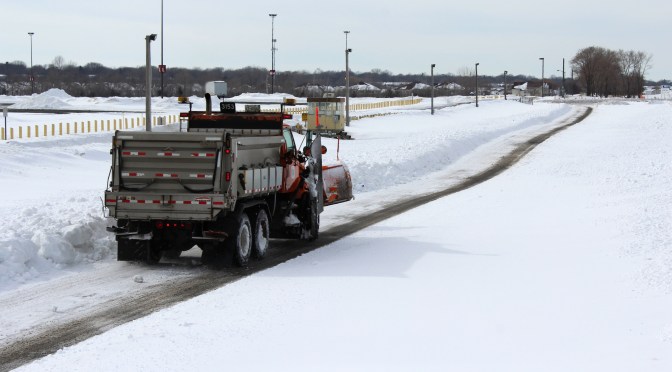
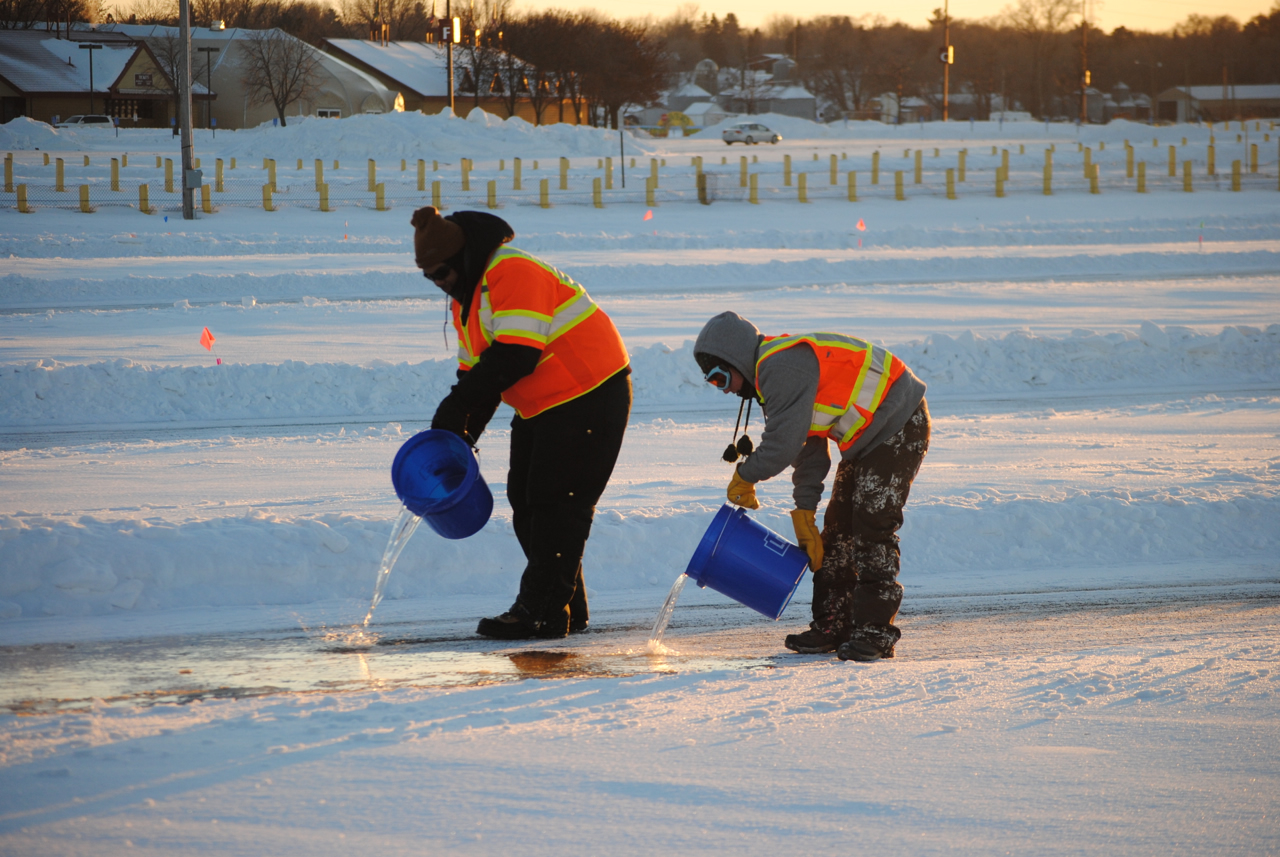
Last winter, Minnesota State University researcher Steve Druschel set up experimental lanes at two Shakopee entertainment parks and a test site on a Mankato bridge to examine the life cycle of winter maintenance, from plowing and the application of chemicals to the drainage of chemical residue after the roadway has been treated.

What the Study Found

  • The majority of chloride appears to leave the roadway by plow ejection, vehicle carry-away or tire-spray spreading, rather than through storm drainage, even in warmer storms.
  • Pavements don’t hold chloride very long in a precipitation event, even after anti-icing/pre-treatment.
  • Deicer effectiveness. Warmer temperatures provide more melt from the deicer. Little melt was observed below
    10 degrees Fahrenheit unless sunlight provided warming, and prewetting produced no significant difference in deicer performance.
  • Dry pavements may be better candidates for pretreatment, with researchers noting that any wetness on the pavement ahead of a storm limited anti-icer effectiveness.
  • Truck traffic after deicer application was found to significantly improve deicer performance, resulting in both a wider and quicker melt.
  • Plow effectiveness. Even with different snow and temperature conditions, the evaluation of plow speed provided the same findings: snow rises higher in the curvature of the plow at higher speeds, creating a broader spray off the plow ends, and higher speeds decrease scrape quality.
Students pour water to form ice on a test lane in Shakopee.

What’s Next?

The research team has proposed a third phase of this project to continue their work in the field, which is expected to include further examination of the impact of truck traffic on deicer effectiveness, variations in plow setup and expanded testing under varying weather conditions and snow structure.

Related Resources

Field Effects on Deicing and Anti-Icing Performance – Technical Summary (PDF, 1 MB, 2 pages); Final Report (coming soon)

Salt Brine Blending to Optimize Deicing and Anti-Icing Performance –Technical Summary (PDF, 1 MB, 2 pages) and Final Report (PDF, 11 MB, 151 pages) (previous study) 

The 411 on Sign Management

A revised handbook offers Minnesota cities and counties the latest tips on how to meet new sign retroreflectivity requirements, as well as the 411 on sign maintenance and management – everything from knowing when it’s time to remove a sign to creating a budget for sign replacement.

The best practices guide – produced in conjunction with a new sign retroreflectivity study – also offers case studies from around the state.

“The life cycle of traffic signs, from installation to replacement, is a pretty complex issue and it can be a challenge to get your arms around,” said Tim Plath, Transportation Operations Engineer for the city of Eagan. “This handbook really boils it down into some basic concepts and also gives you the resources to dig deeper if necessary. It’s a good resource to have at your fingertips.”

2014RIC20-1

This handbook updates a previous version issued in 2010, to include new FHWA  retroreflectivity and maintenance and management requirements and deadlines.

“Maintenance/management of a large number of signs can potentially be an administrative and financial challenge for many local road authorities,” explained Sulmaan Khan, MnDOT Assistant Project Development Engineer.

Here’s a video demonstration of a sign life reflectometer (the Gamma 922), another resource MnDOT has available for local government agencies. Cities, townships or counties may borrow the reflectomer by contacting the Office of Materials and Road Research, (651) 366-5508.

Related Resources

Traffic Sign Maintenance/Management Handbook (PDF)

Traffic Sign Life Expectancy – Technical Summary (PDF) and Final Report (PDF)

Gamma 922 demonstration (video)

Continuous Scour Monitoring Improves Bridge Safety

A leading cause of bridge failure is bridge scour, which occurs when rapidly moving water erodes riverbed soil around abutments or piers.

Monitoring bridge scour with traditional inspection methods can be dangerous and difficult, so MnDOT has been working with researchers from the University of Minnesota’s St. Anthony Falls Laboratory to develop a continuous monitoring system to test certain bridges more safely and efficiently.

MnDOT currently monitors 45 scour-critical bridges — and local Minnesota agencies monitor 360 more — using visual inspections or water data websites during flooding events. Once a predetermined threshold is exceeded, portable scour monitoring equipment is deployed to measure scour depth.  If scour has undermined the foundations of a bridge, inspectors close it for repair.

But portable scour monitoring systems can be difficult and dangerous to deploy from the bridge deck or boat in fast-moving water. It can also be difficult to get inspectors to sites quickly enough in areas subject to flash flooding.

A better alternative for such situations are fixed scour monitoring devices that continuously monitor scour and send data wirelessly to bridge personnel, alerting them when scour reaches a dangerous level.

The Highway 43 Bridge in Winona was affixed with continuous bridge scour monitoring equipment.
New technology

MnDOT has not historically made use of fixed scour monitoring equipment, but as advances in technology have made these devices more affordable and reliable, the agency  became interested in exploring the use of fixed monitoring equipment at locations where the use of portable equipment is problematic. ( A major concern for fixed scour monitoring is damage from debris and ice.)

Researchers have installed fixed remote monitoring stations on four such bridges.

Stations on the first two bridges (Highway 14 over the Minnesota River in Mankato and Highway 43 at the Mississippi River in Winona, pictured at top) ran successfully for three years, with outages due to primarily to power and communication issues.

Researchers learned valuable lessons from these bridges and have now installed monitoring equipment on two more: The Old Hastings Bridge (Highway 61 over the Mississippi River), on which float-outs were installed; and the Dresbach Bridge (Interstate-90 over the Mississippi River), which had a tilt meter and underwater sonar device installed.

“The less familiar personnel are with technical equipment, the less they tend to use it,” said Andrea Hendrickson, State Hydraulics Engineer, MnDOT Office of Bridges and Structures. “This research project gave us the familiarity and technical information we need to be comfortable using fixed scour monitoring equipment on bridges that warrant it.”

Related Resources

*Editor’s note: This article was adapted from an article in the latest issue of our newsletter, Accelerator. Read it online, or sign up to receive it by mail. 

Video: Load Testing for the Winona bridge

New video, below, shows how explosions are used to test the bedrock for the new Highway 43 bridge in Winona.

Bridge engineers use “pile load testing”  to find out how much weight and resistance the ground will bear. It not only saves time and money, but helps design a bridge that will sit securely on the bedrock, below the river.

The statnamic test used in the video is one part of this process.

Winona Bridge Statnamic Test


How load testing works: 

It begins with digging and pounding.

Two different kinds of piles are put into the ground:

  • A hollowed shaft, which is filled with rebar and concrete. It goes 30 to 50 feet below the bedrock to create a solid pillar that can assess how much weight and sway the ground will bear.
  • A steel pipe that is hammered into the ground. Since the bedrock is about 100 to 150 feet below the river, these pipes are welded together end-to-end to reach that length.

Once the piles are in, they’re tested two different ways.

  • Pile Dynamic Analysis, with gauges affixed to the top of the pile to read the pressure put on it when hit with a pile driver.
  •  A Statnamic test (shown in videos), which involves accelerating a heavy weight by setting off a controlled combustion reaction. This shows how much resistance the pile can take.

Once the data is collected for the bridge design, the piles are cut off two feet below the river bed.

Mobile imagery, LiDAR help MnDOT maintain its assets

How do you quickly and cost-effectively get an accurate inventory of transportation assets spread out along more than 1,100 miles of roadway?

That was the problem facing the Minnesota Department of Transportation’s Metro District, which needed an inventory of its plate beam guardrail and concrete barriers.

To accomplish this, engineers in the district launched an innovative research implementation project using a pair of mobile mapping technologies — Light Detection and Ranging (LiDAR) and mobile imaging — that can collect vast amounts of geospatial data on highway infrastructure in a safe and efficient manner.

Mobile imaging uses a camera mounted on a vehicle driving at highway speeds to take high-resolution photos at regular intervals. It’s accurate to within 1 foot, which makes it suitable for use in preliminary (30 percent) design plans without additional field surveys. In this project, researchers collected mobile images of roadway barriers and extracted data from them along Metro District roadways, including all ramps, overpasses, interchanges, weigh stations, rest areas and historical sites.

A MnDOT worker replaces a section of broken guardrail.
A MnDOT worker replaces a section of broken guardrail on I-94 near the Lowry Tunnel in Minneapolis. (Photo by Dave Gonzalez, MnDOT)

Researchers also collected LiDAR data at three Metro District sites. LiDAR uses a laser range finder and reflected laser light to measure distances. It provides survey-grade data accurate to within 0.1 foot, but it is significantly more expensive to collect than mobile imaging.

“Mobile imagery and mobile LiDAR are relatively new technologies, but this research shows that they are options that we can use. Collecting this information manually would have taken a lot more time and money,” said MnDOT Asset Management Engineer Trisha Stefanski.

MnDOT’s barrier inventory will provide invaluable information for design, planning and maintenance. The data will be published on MnDOT’s Georilla map server, where it will be beneficial to a variety of projects and recurring tasks. For example, if a vehicle hits a barrier, maintenance staff will be able to check the database to see the type of barrier and end treatment to ensure they bring the right equipment to make repairs. Although the project focused on barriers, the imagery contains data on other assets as well. MnDOT has already used the imagery to extract noise wall and sign data.

This blog post was adapted from an article in our upcoming issue of Accelerator, MnDOT’s research and innovation newsletter.

3D-vertical
Thousands of data points can be extracted from this image of a Highway 61 roadway segment created with LiDAR Technology.