

Using an existing county road project as context, researchers examined the digital technologies and processes associated with civil integrated management (CIM). A comparison of CIM with the traditional methods used in the proposed county project demonstrated the advantages of CIM.
Continue reading Implementing CIM in Preliminary Design of Infrastructure
Resources Help Local Agencies Plan for CAV Roadway Needs
In a recently completed project, funded by the Local Road Research Board, researchers developed a reference tool and compiled a literature review that local agencies could use to anticipate the infrastructure needs of connected and automated vehicles. Agencies can use these resources to plan for infrastructure upgrades and maintenance activities.
Continue reading Resources Help Local Agencies Plan for CAV Roadway Needs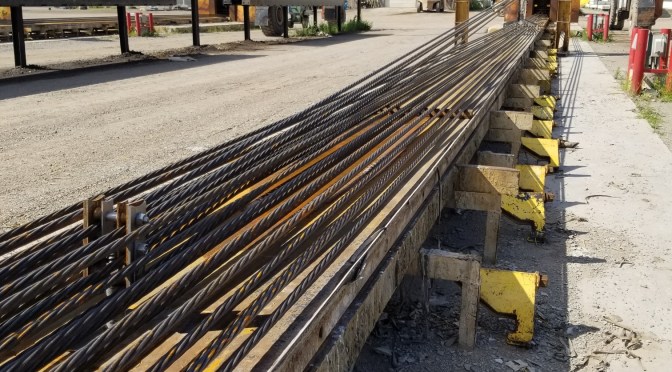
Using Debonded Strands to Reduce End Stress in Bridge Beams
A new MnDOT-funded research study has found that most agencies in states with weather similar to Minnesota’s use debonded strands in prestressed concrete bridge beams. MnDOT may begin piloting debonding as an alternative to draping, which manufacturers claim is time-consuming, challenging to worker safety and expensive.
Continue reading Using Debonded Strands to Reduce End Stress in Bridge Beams
Collaboration with Minnesota Zoo aims to conserve wildlife
Turtles and other wildlife are at risk along Minnesota roadways.
MnDOT is collaborating with the Minnesota Zoo on a new research project installing small animal exclusion fencing. The fencing is intended to redirect turtles (and other small animals) to culverts and bridges where they can cross the road safely.
Continue reading Collaboration with Minnesota Zoo aims to conserve wildlife
Low-Temperature Cracking Test Produces Repeatable, Reliable Results
Researchers ran a sophisticated low-temperature asphalt cracking performance test at multiple labs to study the test, its variability and repeatability, and its additional promise in studying reflective cracking susceptibility of overlays. Results put MnDOT closer to implementing test specifications for low-temperature cracking test for pavement mixes.
Continue reading Low-Temperature Cracking Test Produces Repeatable, Reliable Results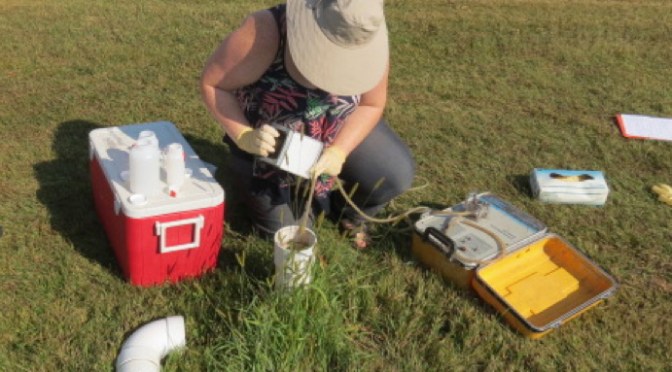
Investigating Wastewater Reuse at Rest Areas and Truck Stations
Researchers have provided MnDOT with a comprehensive and practical evaluation of what the agency would need to do to develop wastewater reuse systems for its truck stations and rest areas. Two sites will install the research project’s recommended systems soon.
Continue reading Investigating Wastewater Reuse at Rest Areas and Truck Stations
Smartphone App Alerts Drivers Exceeding Speed Limits on Curves
Researchers have developed a proof-of-concept curve speed warning system for use with mobile phones, a technology they hope car manufacturers might adopt for in-vehicle systems. The proof-of-concept system uses data from local road agencies on curve locations, speed limits and signage with geofencing to trigger cloud-based data alerts to road users driving faster than recommended speeds for curves.
Continue reading Smartphone App Alerts Drivers Exceeding Speed Limits on Curves
Using Regional Materials to Manage Stormwater Runoff
Researchers determined that natural soil amended with locally sourced materials performed well in bioslopes and bioswales. This practice will allow MnDOT to avoid hauling in costly commercial materials for stormwater management installations.
Continue reading Using Regional Materials to Manage Stormwater Runoff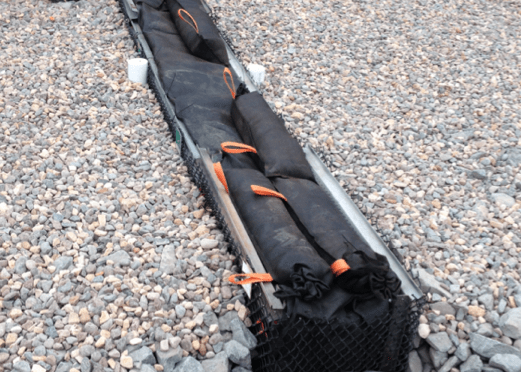
Evaluating Iron-Enhanced Swale Ditch Checks for Phosphorus Removal
Researchers documented performance of an iron-enhanced ditch check filter to remove phosphorus from stormwater over three years. The filter was effective, but its performance decreased over time, and it will require relatively frequent maintenance. Several design changes may be considered.
Continue reading Evaluating Iron-Enhanced Swale Ditch Checks for Phosphorus Removal
New Project: GIS Tools and Apps – Integration with Asset Management
The Minnesota Local Road Research Board recently funded a project to survey and analyze the use of Geographic Information System (GIS)-based asset management tools for city and county public works departments.
Continue reading New Project: GIS Tools and Apps – Integration with Asset Management Crossroads