

The availability of hybrid electric utility vehicles expands the field of choices for a fleet manager looking to replace or expand fleets. In order to justify new vehicle purchases, fleet managers of local agencies need to determine how choices impact budgets and operations.
Continue reading Evaluating the Use of Hybrid Vehicles in Municipal Fleets
Monitoring System Provides Decade of Data From I-35W Bridge
This article was originally published in Catalyst, August 2020.
On August 1, 2007, the I-35W Saint Anthony Falls Bridge collapsed in Minneapolis. Its replacement, open to traffic just over a year later, was instrumented with more than 500 sensors to record the new structure’s behavior and evaluate the effectiveness of different monitoring strategies. A 10-year review of the bridge’s monitoring system is now available from U of M researchers.
Continue reading Monitoring System Provides Decade of Data From I-35W Bridge
Smartphone-Based Coaching for New Teen Drivers May Offer Long-Term Benefits
This article was originally published in Catalyst, August 2020.
More than five years ago, U of M researchers studied a group of new teen drivers to gauge the effects of real-time, in-vehicle coaching with their innovative Teen Driver Support System (TDSS) smartphone application. Now, a follow-up study offers new understanding about the system’s long-term effectiveness in reducing risky driving behavior.
Continue reading Smartphone-Based Coaching for New Teen Drivers May Offer Long-Term Benefits
Green Stormwater Infrastructure: Tradeoffs and Maintenance
This article was originally published in Catalyst, August 2020.
Using “green” infrastructure is a useful strategy for handling city stormwater, which may contain deicers and other contaminants from streets and sidewalks. Choosing the right method and ensuring it doesn’t cause unforeseen damage, however, is another matter.
Continue reading Green Stormwater Infrastructure: Tradeoffs and Maintenance
Link Between Air Quality, Happiness Could Guide Infrastructure Decisions
This article was originally published in Catalyst, August 2020.
By connecting measures of happiness to transportation, researchers are developing new metrics that can help cities prioritize infrastructure investments. In a new study, a research team that included Humphrey School of Public Affairs professor Yingling Fan found that air quality appears to be linked with a variety of emotional well-being (EWB) outcomes.
Continue reading Link Between Air Quality, Happiness Could Guide Infrastructure Decisions
New Project: Taconite as a Lower Cost Alternative High Friction Surface Treatment for Low-Volume Roads in Minnesota
A northern Minnesota mining byproduct could provide a more affordable option for a highly effective, but expensive pavement safety treatment called High Friction Surface Treatment (HFST), and help expand its usage across the state.
Continue reading New Project: Taconite as a Lower Cost Alternative High Friction Surface Treatment for Low-Volume Roads in Minnesota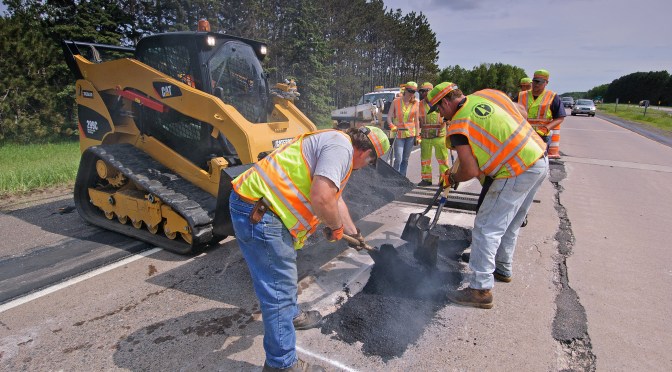
New Project: The Impact of Deferred Maintenance in Minnesota
Expenditures for maintenance are not keeping pace with the needs of the local transportation system. When local governments face fiscal stress, planned maintenance gets postponed to make funding available for other purposes. As deferred maintenance grows, the work and investments needed to bring an asset into a good condition grow too.
Continue reading New Project: The Impact of Deferred Maintenance in Minnesota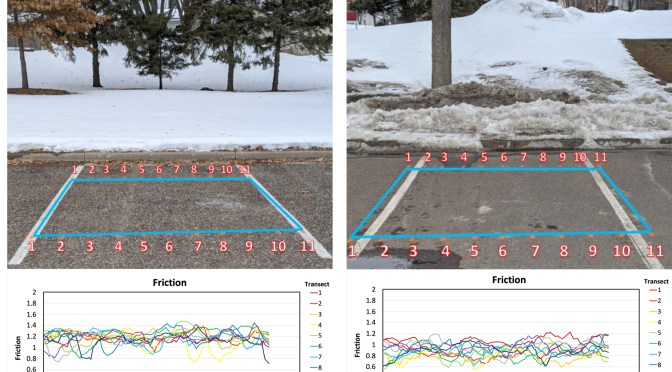
Permeable Pavements Reduce Slippery Conditions During Winter Thaw
Road salt and particularly sodium chloride is used for de-icing roadways during winter months in cold climates but can have a negative impact on the environment. A recently completed research project by the Minnesota Local Road Research Board investigated the use of permeable pavements that are not treated with road salt as an alternative to impermeable pavement surfaces that are treated with road salt.
Continue reading Permeable Pavements Reduce Slippery Conditions During Winter Thaw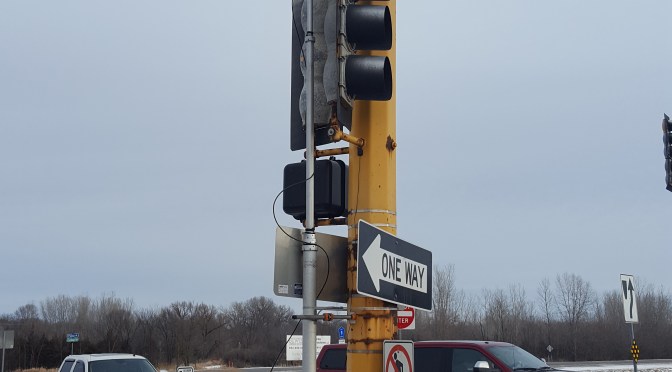
New Project: Refining Inductive Loop Signature Technology for Statewide Vehicle Classification Counts
With increasing traffic volumes and greater restrictions on placing road tubes to perform vehicle classification counts, it is necessary to find innovative ways to collect vehicle class data on roadways.
Continue reading New Project: Refining Inductive Loop Signature Technology for Statewide Vehicle Classification Counts
New Project: Autonomous Vehicles – What Should Local Agencies Expect?
Connected Automated Vehicles (CAV) are part of tomorrow’s transportation future happening today. The evolution of vehicle technology is shifting how drivers interact with the infrastructure around them. Local agencies are beginning to respond and anticipate these changes, while CAV manufacturers request to test their vehicles on local roadways further pushing the urgency on local agencies.
Continue reading New Project: Autonomous Vehicles – What Should Local Agencies Expect? Crossroads