Category Archives: Research

General research posts.

‘New logistics’ will change the way goods are delivered—and how the road network is used

Today, moving freight accounts for more than a third of the world’s transport energy—and that share is growing. The rise in global trade, online retailing, and business-to-business delivery is not only changing how goods are moved but also the type of goods moved and how far or frequently they are transported.

Currently, this massive movement of goods throughout the economy relies on an intricate—and largely decentralized—multimodal network of truck, rail, ship, and airplane delivery. However, change is on the horizon. In a study sponsored by MnDOT and the Minnesota Local Road Research Board, U of M experts outline the important impacts these changes will have on the road network and transportation infrastructure.

“There is hope that new methods of organization and proposed standardization will increase efficiency of freight movement and give rise to a new era of goods transport,” says Adam Boies, an assistant professor in the Department of Civil, Environmental, and Geo- Engineering (CEGE). “In the years to come, we expect that advances in logistics systems will be enabled by new technologies, approaches, and the desire for increased efficiency.”newlogistics2

Changes in the way logistics operations are organized will help drive advances. New information technology permits the sharing of data between and across businesses, which in turn drives efficiency and leads to fuller vehicles. “This may reduce the distance traveled by heavy goods vehicles per unit of GDP, which may in turn reduce costs and entice more demand for delivered goods,” says CEGE professor David Levinson, the study’s principal investigator. “Ultimately, this could mean fewer trips by individual consumers and more deliveries. We anticipate the result will be a net reduction in distance traveled.”

The study also examined some of the potential drivers for changes in the freight industry as a result of logistics reorganization. These include supply chain pooling, in which individual logistics operations are shared between collaborators, and the Physical Internet Initiative, which seeks to create standards for packaging to enable the homogenization of freight technology. “While both of these advancements have the potential to increase logistics efficiency by reducing the transportation of empty loads, they will also increase truck weights—which may increase pavement damage,” Boies says.

Other transportation and logistics changes will result from shifts in the ways businesses and consumers receive goods and services, including business-to-business systems and technologies that enable a sharing economy, same-day delivery services, 3-D printing, and “last mile” delivery services. In addition, a growing portion of purchases can be delivered directly over the Internet. “Delivery is easily automated for data-based goods like books, music, video, and software,” Levinson says. “Purchases that could once only be completed by moving things can now be done by moving data.”

The research is part of a multi-pronged study that analyzed the technological shifts altering surface transportation and the implications for Minnesota. Findings are available in a final report: The Transportation Futures Project: Planning for Technology Change.

Willow shrubs could be next great Minnesota snow fence

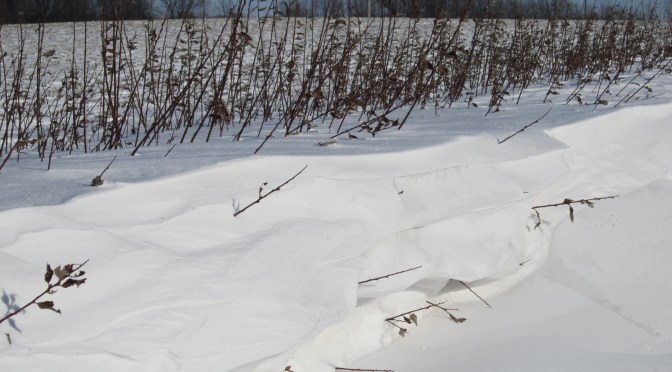
The benefits of living snow fences and other snow control tools to keep roadways clear of blowing and drifting snow have been known for decades, and MnDOT has been using a variety of these techniques for years to catch  snow before it gets to a road.

Living snow fences often consist of trees, grasses and even corn stalks left standing in a farmer’s field.  Now willow shrubs are being added to the list as a fast-growing, inexpensive snow control measure.

What’s new

WillowSeptember
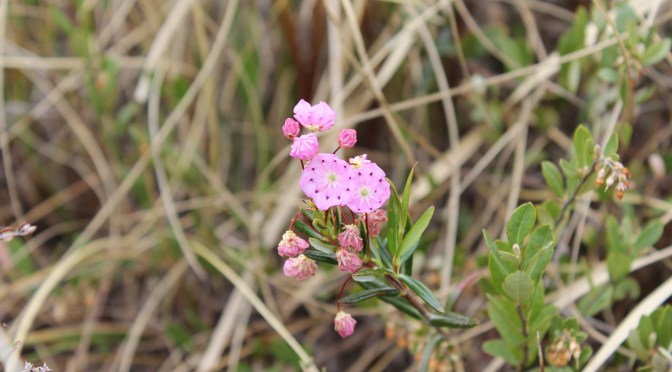
Fish Creek willow shrubs (left) grow alongside corn in September 2015.

Researchers recently completed a study that investigated whether willow shrubs could make good living snow fences. While typical snow-fence plants, such as dogwood or cranberry shrubs, can take five to 20 years to establish themselves, shrub willows were effective at trapping snow after just two growing seasons, according to the study.

In spring 2013, researchers installed three varieties of shrub willow side-by-side in two-row and four-row configurations along about a quarter of a mile of Highway 14 in Waseca, where snow drifts are an issue. In April 2014, they cut the shrubs down to the ground  to encourage branching and bush density. Though the trimmed willows had little impact on drifting snow the first winter, each willow-shrub plot was collecting two to three metric tons of snow by the second winter, according to the research report. Researchers believe that after three or four growing seasons the willow shrubs could catch the entire mean annual snowfall on the site.

In the four-row configuration recommended by researchers, costs of raising, furnishing, planting and mulching came to about $3.60 per plant, which is dramatically less than the contract bid cost for traditional living snow fence species that cost more than $50 per plant. In addition, the willow shrubs could be harvested and sold as biomass every few years to provide an income source.

Past research

Willow trees is just the latest advancement in the state’s snow control program. A 2012 research project evaluated the costs and benefits of living snow fences and provided MnDOT with a payment calculator to determine how much to compensate landowners for installation and maintenance costs.

A recent research implementation project created a mobile-friendly Web version of the payment calculator tool.  The website also contains a tool for designing a own snow fence.

MnDOT has used these tools and other promotional efforts to nearly double the number of farmers with contracts for corn rows enrolled in the Living Snow Fences program.

What’s next

The willow species recommended by researchers will be evaluated further in 2017 when they install it as a living snow fence on a new construction site on Highway 60 between Windom and Mountain Lake. Researchers also recommend a future study to compare volume of road salt use before and after installation. They also want to look into identifying appropriate buffer distances to keep willow roots from interfering with cropland root systems.

Resources

Alternative fuels will help shape Minnesota’s transportation future

The mix of fuels used to power the vehicles on our nation’s roadways is diversifying rapidly.  While gasoline and diesel are still dominant, an increasing percentage of vehicle power is coming from alternatives such as biofuel, natural gas, and electricity. What could this shift mean for Minnesota’s transportation future? MnDOT and the Minnesota Local Road Research Board turned to U of M experts for analysis.

“The rise of alternative fuels is something we need to keep a close eye on, because it presents a number of issues that may significantly alter our state’s transportation system,” says Adam Boies, an assistant professor in the U of M’s Department of Civil, Environmental, and Geo- Engineering (CEGE).

Minnesota leads the nation in biofuel use, in part due to a series of legislative acts designed to encourage ethanol production and consumption. Boies predicts, however, that biofuel consumption in the state is near saturation and that future shifts will likely be between biofuels. “These shifts may alter the routes of heavy-goods vehicles in the state as refineries shift from corn and soy to fuels derived from agriculture wastes and forest byproducts,” he says.

If the price of natural gas remains significantly lower than diesel fuel, natural gas vehicles will likely make up an increasing share of the heavy-duty vehicle fleet in Minnesota. A larger natural gas refueling infrastructure will need to be developed, most likely by private organizations that manage fleets of vehicles. “As this happens,” Boies says, “efforts must ensure that natural gas vehicles and refueling infrastructure do not emit significant quantities of methane, which has a high global warming potential.”

Minnesota electric vehicle sales have lagged behind the nation—winter temperatures are one factor—but Boies expects the numbers to rise. He estimates 16 percent of new cars sold in Minnesota in 2035, and 56 percent in 2050, will be electrified. The growing numbers will require a more robust charging infrastructure, likely supplied or subsidized by government agencies, he says.

In the long term, on-road charging systems are being investigated. In these systems, under study in several countries, charging coils embedded within the roadway transfer power wirelessly to vehicles. “The systems could make electric vehicles drastically more efficient by reducing vehicle battery size,” he says.

Better vehicle efficiency is likely to continue the trend of falling fuel tax revenues. “Minnesota will need a method for producing revenues from electric vehicles to maintain long-term funding for the transportation road network,” he says. “Currently the higher price of electric vehicles results in increased revenues during vehicle registration, which tends to offset the difference in fuel tax revenues. However, as the price differential between electric vehicles and traditional vehicles shrinks, there will be decreased funding for Minnesota roadways unless additional revenue sources are found.”

Finally, emphasis on fuel efficiency in the light-duty and heavy-duty vehicle fleets will drive the weight of these vehicle segments in opposite directions. “Light-duty vehicles will get lighter and heavy-duty vehicle fleet operators will lobby for increased weight limits on Minnesota roadways to reduce the energy intensity of goods deliveries,” Boies says. “This growing disparity in weight between the two vehicle classes may require increased safety measures to reduce the severity of crashes between vehicle classes.”

“The question of how alternative fuels and electric vehicles will impact the transportation system, ownership models, and operating costs, as well as vehicle and driver safety, are extremely important topics to study,” says Ken Buckeye, MnDOT program manager. “The potential for these trends to impact our revenue streams is also very significant. When you couple those trends with the federal mandate for a CAFÉ standard of 56 mpg by 2025, we are likely to see some profound impacts that reach across modes, jurisdictions, and funding mechanisms.”

Boies’s research is part of a multi-pronged study funded by MnDOT and the LRRB that analyzed the technological shifts altering surface transportation and the implications for Minnesota. Other contributors included CEGE professor and principal investigator David Levinson and associate professors Jason Cao and Yingling Fan of the Humphrey School of Public Affairs. Their high-level white papers are compiled in a final report: The Transportation Futures Project: Planning for Technology Change.

Taking the guesswork out of measuring winter operations

Being able to accurately and reliably estimate traffic conditions during snow events is critical to transportation agencies. Typically, state DOTs use measurements such as “time to bare pavement”—based on the visual inspection of plow drivers—to gauge the progress of snow operations. These estimates are limited, however, by the subjectivity and inconsistency of human-based measurements.

Now, new research sponsored by the MnDOT and led by University of Minnesota Duluth civil engineering professor Eil Kwon aims to take the guesswork out of assessing traffic conditions during winter weather events.

“Dr. Kwon’s research on a new approach to snow and ice performance reporting is exciting,” says Steve Lund, state maintenance engineer and director of the Office of Maintenance at MnDOT. “For quite a few years, MnDOT snowfighters have been reporting their performance through a visual review of the roadway conditions. Our snowfighters have a tough job—automating the performance reporting will remove that task from their duties. Also, looking at traffic returning to a ‘normal’ condition is truly the ultimate goal or outcome measure, and where we want to go.”

In the first phase of this project, researchers developed a prototype process that uses data on traffic speed, flow, and density collected by loop detectors in the Twin Cities metro area to estimate the point at which traffic patterns return to normal—an indicator that the roadway surface has “recovered.” In the newly published second phase, researchers further analyzed the traffic flow patterns during snow events under normal and snow conditions and refined the earlier prototype into a traffic-data-based measurement process for snow operations.

“We found that by comparing the variation patterns in traffic flow during a snow event with those during normal weather conditions, we could successfully identify the recovery status of the traffic flow at a given location,” Kwon says.

Based on their findings, the researchers developed a new process to identify the Normal Condition Regain Time (NCRT)—as an alternative to the traditional “time to bare pavement” measurement used to gauge the progress of maintenance operations during a winter weather event.

One advantage of the new process is that it can reflect how road surface conditions affect traffic flow differently during day and night periods. “Nighttime traffic flow patterns are substantially different from those during daytime periods,” Kwon says. “We identified normal traffic patterns separately for daytime and nighttime conditions to account for these differences in estimating the recovery status.”

Future research plans include the development of an operational version of the NCRT estimation system that can be used on a daily basis to analyze and improve snow operations, and the creation of an online version that can be used for coordinating snow operations in real time.

“There is a lot of potential to use these findings to make snow operations even more effective and efficient,” Kwon says. “For example, the analysis of the relationship between the NCRT measures and operational strategies such as plowing start time and methods could help further refine MnDOT’s winter maintenance strategies.”

For more information, download the technical summary (PDF) or the project’s final report.

MnPASS extension on I-35E shaped by U of M study

Based in part on a planning study conducted by U of M researchers at the Humphrey School of Public Affairs, MnDOT is extending MnPASS Express Lanes on Interstate 35E in the northeast Twin Cities. The extension will build on the project currently adding MnPASS lanes from Cayuga Street to Little Canada Road.

The study, funded by MnDOT and the Federal Highway Administration (FHWA), examined the feasibility of extending these MnPASS lanes from Little Canada Road north to County Road 96. During peak periods, MnPASS lanes provide a congestion-free option to transit vehicles, carpools, and motorcycles at no cost—and to single-occupant vehicles for a fee.

Led by Director Lee Munnich and Associate Director Frank Douma of the Humphrey School’s State and Local Policy Program, the U of M research team worked with Parsons Brinckerhoff to develop and evaluate several concepts for the MnPASS extension. The goal was to provide an option that reduced congestion for all users, including drivers in the general-purpose traffic lanes and transit users. The team also included Mary Vogel from the U’s Center for Changing Landscapes.

The primary challenge was how to handle MnPASS traffic through the recently reconstructed I-694/I-35E interchange. After going over several design options, the team recommended what it termed a “hybrid” option, which creates a continuous southbound MnPASS lane and a discontinuous northbound MnPASS lane through the interchange.

Researchers also engaged community stakeholders and corridor users to gather feedback about the proposed alternatives and worked to illustrate options that could facilitate greater transit, carpool, and vanpool use in communities along this section of I-35E.

Additional recommendations developed by the team—in partnership with representatives from MnDOT, the FHWA, and the Metropolitan Council—included continuing to educate community motorists about the MnPASS program as well as expanding transit options by creating more park-and-ride sites, encouraging mixed land uses, and building better walking and biking connections.

Based on these recommendations, MnDOT is moving forward with the hybrid option for the project, says Brad Larsen, director of the MnPASS Policy and Planning Program. MnPASS lanes will be added to southbound I-35E between County Road 96 and Little Canada Road; through the I-35E/I-694 commons area, the existing inside lane will be designated as a MnPASS lane during peak periods. There will be no MnPASS lane northbound through the commons area, but a lane will be added north of the interchange from County Road E to County Road J.

Construction on the extension project is expected to begin in March 2016, with the lanes slated to open in late 2016.

More information:

(Featured photo courtesy of David Gonzalez, MnDOT.)

Census report looks at U.S. commuting patterns; U of M report analyzes Twin Cities’ patterns

A recent report issued by the U.S. Census Bureau looks at commuting patterns by U.S. workers in 2013 using data from the American Community Survey. It highlights differences in rates of automobile commuting by key population characteristics such as age, race, ethnicity, and the types of communities in which workers live.

One finding of note: young people in big cities were much less likely to drive to work in 2013 than they were several years earlier. For instance, urban workers aged 25 to 29 showed about a 4-percentage-point decline in automobile commuting between 2006 and 2013.

You can also find an extensive analysis of commuting behavior that was produced locally. In a recent multifaceted study sponsored by the Metropolitan Council and MnDOT, U of M researchers analyzed travel behavior over time in the Twin Cities.

The extensive five-part study report is based on the rich set of data produced by the Met Council’s Travel Behavior Inventory household travel survey. David Levinson, RP Braun/CTS Chair in the U’s Department of Civil, Environmental, and Geo- Engineering, was the study’s principal investigator.

The five components of the report examine:

  • Changes in travel duration, time use, and accessibility
  • Changes in walking and biking
  • The effect of transit quality of service on people’s activity choices and time allocation
  • Changes in travel behavior by age cohort
  • Telecommuting and its relationship with travel and residential choices

For more information:

Applying LiDAR to county transportation systems

A handful of county highway department employees in the Rochester area gathered recently at the Olmsted County Public Works Service Center for a presentation and live demonstration by University of Minnesota Research Fellow Brian Davis about his team’s work involving light detection and ranging – or LiDAR.

“LiDAR is like radar, but with light,” Davis said. “It gives you information about what’s around the sensor.”

Event attendees gather around a sedan outfitted with a spinning LiDAR sensor. (Photo by Micheal Foley, MnDOT)

Davis and his fellow researchers have outfitted a sedan with special LiDAR equipment and other technology that is capable of capturing a 360-degree, 3-D view of a scene in real time.

“We use the car as a test bed,” Davis said. “We have a lot of different types of sensors on the car that we use for the different projects that we’re working on. Right now we have a LiDAR sensor on top. Sometimes we have a high-accuracy GPS receiver in there. We have a cellular modem. We have a handful of inertial sensors. So it’s a lot of different stuff that we use to cater to the application.”

For his presentation, Davis showed the attendees some of the data his team had already collected.

Davis presents data that shows the LiDAR-equipped sedan moving along a roadway. (Photo by Micheal Foley, MnDOT)

“We showed a handful of pre-collected data at a handful of intersections around Rochester and Minneapolis,” Davis said. “What it shows is the point cloud collected by the sensor – just the raw point cloud with no post-processing done. In that information you can see people moving through it, cars moving through it, buses and light rail trains.”

Event attendees move around the sedan to see how the LiDAR sensor views them. (Photo by Micheal Foley, MnDOT)

After the presentation, Davis led the group to the parking lot for a close-up look at the technology and how it collects data and displays that data in real time. Le Sueur County GIS manager Justin Lutterman was among those who could envision possible applications for LiDAR.

“It’ll be interesting to see where this can go,” Lutterman said. “I’m sure the private industry will take off with this and emergency management, or the sheriffs and ambulances, would appreciate this kind of technology on their vehicles for a situation they might have to recreate. Roads and traffic designers  would be able to monitor their resources, pavements, traffic counts and things like that.”

Over the coming months, researchers will gather more data to develop a workshop for county personnel interested in learning more about LiDAR and how it can be applied in their transportation systems.

“The next steps for this project are to collect some data with the car at intersections. Then we can use that information to fine tune our algorithms,” Davis said. “What the algorithms are going to do is take that raw data and give us useful information, like the number of cars, or the time a car passes through an intersection. That all feeds into the workshop we’re developing. The workshop is going to be for county GIS workers, traffic engineers and county engineers who are interested in learning about these technologies.”

Salt-tolerant sod and seed mixes bring greener roadsides to Minnesota

For Minnesota’s roadside grasses, life isn’t easy. To survive, grass must be able to withstand extreme stresses including drought, heat, disease, soil compaction, poor quality soils, and high levels of road salt. Ideally, it could survive all that while still looking lush and green.

“Many roadsides, especially in metropolitan areas, need to look good,” says Eric Watkins, associate professor in the Department of Horticultural Science. “In addition to aesthetics, quality roadside vegetation is needed to prevent erosion and maintain water quality from roadside runoff.”

In 2010, MnDOT noticed a number of its new sod and seed plantings were failing and asked U of M experts to take a look at its specification. “We saw the problem immediately,” Watkins says. “The specification was for a mix with a lot of Kentucky bluegrass, which needs a great deal of care and watering. There was clearly an opportunity for improvement.”

During the next several years, Watkins’ team, led by former graduate student Josh Friell, worked to identify the best seed and sod for use along Minnesota’s roadsides in research sponsored by the Minnesota Local Road Research Board and MnDOT. Findings are now available in a final report.

The study was completed in several stages. First, many different types of cool-season grasses were planted in the fall and assessed the following spring to determine their ability to establish and survive on roadsides in Minnesota. Next, researchers looked at the salt tolerance of those grasses.

Eric Watkins (third from left) leads a greenhouse tour of grass mixtures.

“In cold-weather climates like Minnesota’s, salt tolerance is required because of the application of deicing salts in the winter,” Watkins explains. “To determine if a grass species could stand up to this stress, we applied different levels of salt solution to the different grass species in a greenhouse. We identified several types of fescue grass as the most salt tolerant.”

Based on the results of the first two stages, researchers developed and tested 50 different grass mixtures along Minnesota’s roadsides and evaluated the survival and performance of those plantings for two years. In addition, each mixture was planted under a movable rain-out shelter to determine drought tolerance. This phase of the study resulted in the identification of a mix of three types of fescue for planting on roadsides in Minnesota.

Finally, researchers needed to find out if the new grass mixture would work as sod (sod growers need to be able to harvest it properly from their sod fields). “Most sod currently grown in Minnesota is Kentucky bluegrass, which isn’t the best for winter survival when salt stress is a problem,” says Watkins. “We grew 51 different grass mixtures as sod for 22 months and found that contrary to popular belief, fine fescue mixtures produced sod of acceptable strength for harvest.”

MnDOT has applied the research to standard specifications for construction activities for salt-tolerant sod products, salt/shade/drought-tolerant turf seed mixtures, and a third-party certification program for ensuring performance standards are met based on past and current research results, says Dwayne Stenlund, MnDOT erosion control engineering specialist. Researchers are also working with the state’s sod growers to produce sod grown from the new seed blends.

Moving forward, the researchers plan to continue their work to improve Minnesota’s roadside grass plantings. “The reality is that the success of sod or seed plantings depends on a number of factors, including time of year, amount of water, soil preparation, temperature, and sod harvest depth,” Watkins says. “In our next project, beginning this spring, we will identify the most important factors for the success of roadside plantings and sod cultivation, and then help MnDOT update the specifications for managing new installations.”

Travel behavior study shows drivers are spending less time traveling

Something unprecedented has happened to Americans’ travel patterns. Even before the recent recession, total distance traveled per person had started to decline, and the rate of total vehicle travel had begun to steadily decrease as well.

In a new five-part series of research reports sponsored by MnDOT and the Metropolitan Council, University of Minnesota researchers are delving into a set of rich data encompassing more than four decades of travel behavior surveys to enable the region’s transportation planners to better understand how its residents make decisions about whether, when, where, and why to travel.

In the first study, researchers examined how changes in the accessibility of destinations—such as jobs, shopping, and leisure activities—have changed travel behavior in the past 20 years.

“We started with a detailed analysis of travel surveys conducted by the Metropolitan Council in 1990, 2000, and 2010,” says David Levinson, the study’s principal investigator and RP Braun/CTS Chair in the Department of Civil, Environmental, and Geo- Engineering. “We found that people are spending slightly less time in motion and more time at home. We also found that accessibility is a significant factor in determining not only travel behavior but overall time budgeting in general. In short, each person has to decide how they will use the time allotted to them each day, and many of those decisions are directly related to the transportation and land-use systems in place.”

A deeper look into the data sheds additional light on the relationship between accessibility and travel behavior. For example, trip durations for workers have gone up for all activities between 1990 and 2010. More noticeably, distances for trips have increased markedly: workers take jobs farther from their homes and shop farther from their homes. Travel speeds also increased for the average worker, due to more travel on faster suburban roadways that carry a larger share of all travel. In contrast, for non-workers, trip durations and overall travel time have gone down.

“Interestingly, although time, distance, and speed per trip has generally risen for workers, the number of those trips is declining,” Levinson says. “As a result, overall, fewer miles are being traveled and less time is being allocated to travel.”

Total time spent shopping also decreased for workers and for males, likely caused in part by an increase in online commerce. “The Internet has provided electronic accessibility, much as the transportation network has in the material world,” Levinson explains. “It helps to facilitate commerce, communication, education, and leisure. This may lead to a decreased need for people to travel, and account for more time spent at home.”

Jonathan Ehrlich, planning analyst with the Metropolitan Council, says the research “helps us get more value from our travel surveys and will aid in understanding how travel is changing, and what the risks are in the assumptions and models we use for planning and forecasting.”

The findings will prove useful not just for Twin Cities transportation planners but for planners and engineers worldwide. “Our models can be easily adapted to data from other cities or for other activities besides work,” Levinson says. “This creates an approach that can be used to gauge the impact of a transportation project from an accessibility standpoint and determine how that project will translate into time allocation.”

Other parts of the study will look at changes in telecommuting behavior over time, the effect of transit quality of service on people’s activity choices and time allocation, changes in travel behavior by age cohort, and analysis of bicycling and walking in light of land-use and transportation system changes.

Crossroads will feature coverage of these projects as they are completed.

Winter seminars highlight research on work-zone safety, culvert design, and more

Join us in person on the U of M campus or tune in online to the CTS winter research seminars. The seminars will highlight a sampling of the latest transportation research at the U of M.

Here’s this year’s seminar schedule:

Each seminar will be held in Room 50B at the Humphrey School of Public Affairs. Or, if you can’t make it in person, you can watch the seminars live online or view recordings posted after the events. For details about the live broadcasts, see the individual seminar web pages.

There’s no cost to attend, and each seminar qualifies for one Professional Development Hour.

Hope to see you there!