Tag Archives: Local Road Research Board

Updated stormwater guide reflects new research, experience

Reprinted from Catalyst, December 16, 2024

Effective stormwater management is essential for maintaining healthy urban environments, but it requires consistent monitoring and maintenance to prevent costly failures—something that municipalities across the state have struggled with for years.

At a recent CTS webinarAndy Erickson, research manager at the University of Minnesota’s St. Anthony Falls Laboratory and CTS scholar, guided more than 160 attendees through recent changes made to the Minnesota Stormwater Inspection and Maintenance Resource Guide. The original guide, published in 2009, has been revised to incorporate more than a decade’s worth of field applications, research, and practical experience. The updated resource aims to improve the inspection, operation, and maintenance of stormwater management practices across the state, providing practitioners with essential tools to optimize stormwater management and increase cost-effectiveness.

Stormwater management is crucial for controlling urban runoff, and systems such as green infrastructure and low-impact development reduce pollution before stormwater is sent to lakes, rivers, and streams. However, these systems require regular upkeep to remain effective, and maintenance challenges arise from their passive nature and logistical issues in large urban areas. One key problem is the lack of on-site staff for monitoring and making the proactive inspections vital for preventing failures. Regular maintenance can reduce costs by avoiding the need for major repairs, but municipalities may still struggle to stay within their maintenance budgets, as funding for upkeep is often inadequate compared to the cost of new infrastructure.

“Since there are no operating staff on-site to see when these things fail or see what’s causing them to fail, we have to be proactive in our inspections,” Erickson said. That means inspectors must travel multiple times to locations spread out across the metro region—which significantly increases costs. “Depending on the size of the practice, your total maintenance cost might become more than your original construction cost within five years of the life of that practice,” he said. 

The 2024 update to the Minnesota Stormwater BMP Maintenance Resource Guide aims to address this issue by offering detailed instructions for inspecting and maintaining various stormwater systems. The updated guide includes inspection checklists in the form of fillable PDF documents. These checklists should streamline the inspection and documentation process and help inspectors assess site conditions, including vegetation health, erosion, and drainage performance. And the forms can be easily updated and reused, providing a practical tool for ongoing stormwater management. “The forms are not static, but rather are intended to serve as a resource that can be used and adapted to fit a jurisdiction’s particular needs,” Erickson explained.

Following items from the checklist, the guide provides specific maintenance recommendations based on inspection findings, including how to address issues such as erosion, vegetation dieback, and structural failures. 

“You can go through these to really home in on what maintenance is needed and when the maintenance is needed,” Erickson said.

The updated Minnesota Stormwater BMP Maintenance Resource Guide is now available online for download.

—Emma McIntyre, CTS communications intern

Related Resources

Crowdsourcing meets transportation planning with bike and pedestrian data counts

Increasing active transportation is an ongoing effort for transportation planners. Biking and walking can help decrease auto dependence, air pollution, and climate change and improve public health. Plus, it can help transportation agencies meet their strategic goals. The challenge? Making good decisions requires good data, and data for walking and biking trips can be hard to find.

Continue reading Crowdsourcing meets transportation planning with bike and pedestrian data counts

Measuring Pavement Density for Sustainable Centerline Joints

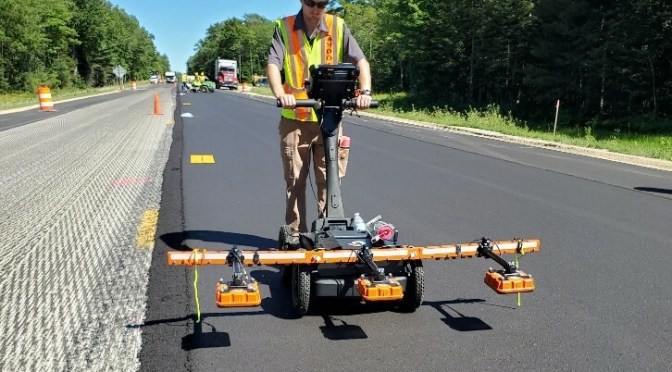
Longitudinal joints, created when lanes are paved sequentially, often need significant maintenance as the joints crack or deteriorate. While materials, construction methods and other factors may cause joint deterioration, insufficient pavement density is primarily responsible for weak joints, and measuring density has not traditionally been a widespread practice. New recommendations for joint construction and quick, nondestructive methods of measuring density during construction will support local agencies in laying longer-lasting pavement.

Continue reading Measuring Pavement Density for Sustainable Centerline Joints

Developing a Best Practices Manual for Roadway Drainage

Ineffective drainage can lead to expensive roadway damage and decrease a pavement’s service life. New guidance will help local agencies understand drainage issues unique to their areas and provide design considerations to mitigate pavement damage resulting from moisture.

Continue reading Developing a Best Practices Manual for Roadway Drainage

Improving Driver Yielding to Pedestrians at Intersections

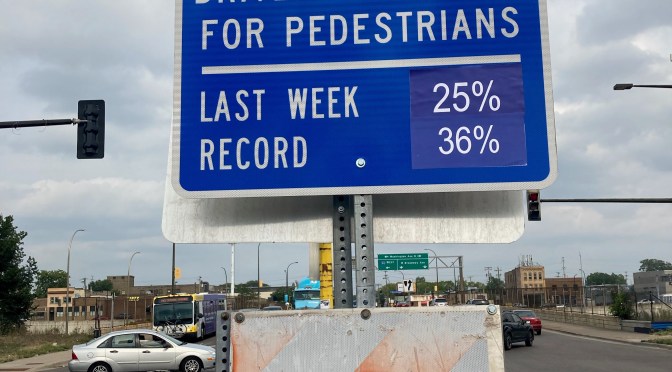
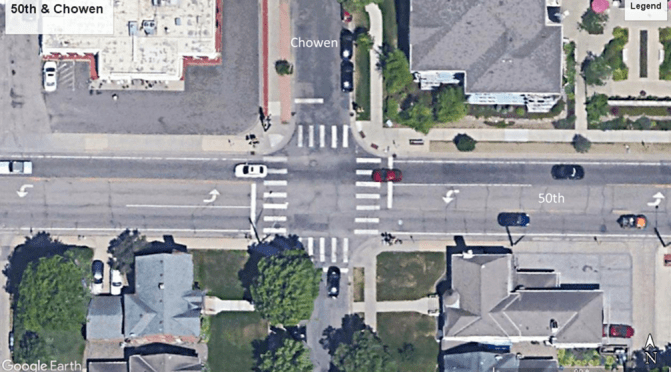
Improving the rates of drivers yielding to pedestrians has been challenging despite crosswalk laws. Expanding on an earlier study, researchers further explored the effectiveness of engineering treatments at road crossings, giving agencies a deeper understanding of how to maximize pedestrian safety.

Continue reading Improving Driver Yielding to Pedestrians at Intersections

Developing Smart Signs for Traffic Control in Work Zones

Providing traffic control in work zones is one of the highest risk jobs in the country. Flaggers are often considered the first line of defense against distracted, inattentive or aggressive motorists who may intrude into these work areas. A new, cost-effective system that tracks an oncoming vehicle’s trajectory can warn workers of an unsafe intrusion into the work zone and alert drivers to slow or stop.

Continue reading Developing Smart Signs for Traffic Control in Work Zones

Impacts of Lane Conversions on Level of Service

Reconfiguring roadways, also referred to as a “road diet,ˮ can be a low-cost safety solution that makes space for different travel modes in addition to motor vehicle traffic. New guidance gives local engineers an initial indication of whether a road conversion would result in a loss of capacity given the roadway motor vehicle traffic demand.

Continue reading Impacts of Lane Conversions on Level of Service

Strategies improve pollinator roadside habitat, reduce costs

First published in Catalyst, May 22, 2023.

Transportation agencies revegetate roadsides after construction projects to provide road stability, stormwater filtration, and visual appeal. Revegetation is also a good opportunity to create pollinator-friendly habitat. However, planting and maintaining ditches can be expensive, funds for such projects are usually limited, and there isn’t much data on which methods actually work.

Continue reading Strategies improve pollinator roadside habitat, reduce costs

20 Tips to Up Your Social Media Game

One of the best ways to connect with communities about projects and events that affect them is to reach them where they already are – on social media.  But whether you’re a social media newbie or a communications professional, there are always new trends, technology, and platforms to learn, and it can be overwhelming.

Continue reading 20 Tips to Up Your Social Media Game

Pavement Preservation Techniques for Local Agencies

Cities and counties need affordable pavement preservation treatments, but preservation strategies are often geared towards higher-volume roads. The Minnesota Local Road Research Board has developed new guidance on five lower-cost treatments that is more applicable to local agencies and can be used to preserve pavements based on the type and severity of pavement distress.

Continue reading Pavement Preservation Techniques for Local Agencies