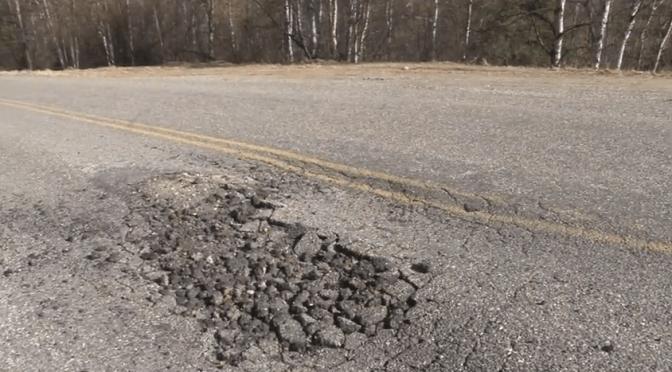
A new video produced by the Local Road Research Board helps the public understand why some bad roads aren’t always fixed first.
The seven-minute video explains what causes road pavements to deteriorate and why, like the saying, “throwing good money after bad,” it may be more cost-effective to put maintenance dollars into roads that still have life left in them versus roads that are in the worst condition.
In it, city and county engineers discuss how they use a pavement management program to decide which roads to fix when, in order to stretch limited resources in the most effective way possible.
“We’ve learned that if we wait for things to break and fall apart, they’re much more costly to replace than if we put a little bit into it during its life cycle,” says Mark Maloney, City of Shoreview public works director.
If you’ve ever driven near a bike lane and not known what to do, you’re not alone.
A forthcoming video from the Local Road Research Board seeks to answer common questions about on-street bike lanes and help bicyclists and motorists better understand the rules. The video is due to be released this spring; in the meantime, we thought we’d give you a sneak preview by addressing three common misconceptions about bike lane rules and safety.
1) Are bicyclists required to use a bike lane, when present?
No. Although bike lanes usually provide the smoothest, safest and most efficient method of transportation — for everybody — they are not required to use them. They are allowed to ride outside bike lanes to make turns or avoid debris, and they still have the option of using an adjacent trail where available.
2) Are vehicles allowed to enter bike lanes?
Yes, but only to park or turn onto a driveway or street. Motorists should treat bike lanes like any other lane of traffic and yield to approaching bicyclists, but they do have the right to enter bike lanes when turning.
3) Do bicyclists have to follow the same rules as motorists?
Yes. Bicycles are considered vehicles under Minnesota state law and have the same rights and responsibilities. Cyclists are required to obey stop signs and signal their turns, just like motorists.
A recent federal project funded 75 miles of new bike lanes in four communities, including the city of Minneapolis. Biking in these areas increased 50 percent; 7,700 fewer tons of carbon dioxide were emitted and gas consumption was reduced by 1.2 million gallons. (Source)
Watch for the LRRB’s new bike safety video on Crossroads this spring. In the meantime, check out MnDOT’s tips on bicycle safety.
This video above showcases a new kind of intersection conflict warning system being developed for use primarily by local agencies at rural, two-way stop intersections. Called the ALERT System, it uses a simple but ingenious combination of radar, wireless communication and flashing LEDs to alert drivers to the presence of approaching vehicles, thereby helping them identify safe gaps in the cross traffic and avoid potentially deadly collisions.
These types of systems are nothing new; MnDOT and other state DOTs have been developing them for more than a decade under the ENTERPRISE pooled fund program. MnDOT also recently kicked off a three-year project to deploy 20–50 of its Rural Intersection Conflict Warning Systems at selected at-risk intersections across the state. The main difference with the ALERT System is that it’s designed to be cheaper and easier to deploy than existing ICWS technologies. While that might sound like an incremental improvement, the difference for cash-strapped local agencies could be huge.
Since the ALERT System uses solar power, it doesn’t have to be hooked up to the power grid — which means that, in theory, county public works crews could install it themselves. The system also uses a simplified controller that doesn’t require a traffic signal technician to install and maintain, and detects vehicles using radar rather than in-pavement sensors. These factors might encourage greater adoption of ICWS technologies, which studies have shown to reduce both the frequency and severity of crashes.
The project is now in its second phase. It still faces a number of hurdles before could be ready to deploy, but Vic Lund, the traffic engineer for St. Louis County and the project’s main champion, says the results so far have been encouraging. In the video below, Lund shares his thoughts on the project, its challenges and the future of Intelligent Transportation Systems in Minnesota.
Regardless of whether you’re familiar with the term “frost heave,” if you live in Minnesota and drive on the roads, you’re already familiar with its destructive capacity. Many of the dips, bumps, potholes and cracks that appear on our roads every spring are a direct result of frost heave, which occurs when water accumulates in the soil beneath the pavement and begins freezing and then thawing along with the changing seasons. The resulting expansion and contraction weakens the road base and leaves it susceptible to damage from traffic loading.
These new videos produced by the Local Road Research Board explain how frost heave works, and describe some of the strategies public works departments use to combat it. The top video is is the shortened, executive-summary version, while the bottom video is the full, 13-minute version meant for transportation professionals.
MnDOT Research Services recently released its 2013 request for proposals. If you have any kind of direct interest in transportation research in Minnesota, chances are you might have known that already. But those with more of a general curiosity might be interested to see the list of research need statements from the RFP, as they provide a nice preview of the next round of potential MnDOT research projects.
As you can see, some are of a highly technical nature. (It’s safe to say that a study on “PCC Pavement Thickness Variation Versus Observed Pavement Distress” would be of interest mainly to engineers.) Others, however, like “The Economic Impact of Bicycling in Minnesota,” might have a broader appeal. In any case, it’s a fascinating glimpse at the myriad of issues that MnDOT is attempting to address through research and innovation.
Here’s the list of research need statements from the 2013 RFP, broken down by category:
Last week, MnDOT Research Services hosted a workshop on a forthcoming report, “Decision Tree for Identifying Alternative Trail Crossing Treatments.” It was broadcast as a webinar, the recording of which is now available online via Adobe Connect:
The final report is coming soon, but in the meantime you can see the draft version on our website (link), along with case studies and other related documents.