Reprinted from Catalyst, November 9, 2023 —Pam Snopl
What’s next in the future of mobility? Infrastructure is always critical—the challenge of how to fund, protect, and maintain it continues unabated, whether from wear and tear or malicious cyberattacks.
Accurate and timely moisture measurement of earthwork during compaction of foundation layers is crucial to proper construction and long-term durability of the pavement structures. Since the traditional methods for measuring moisture are point specific, expensive and/or time consuming. None of the existing methods have been able to deliver real-time, continuous moisture measurements that would aid engineers in delivering more durable pavement structures.
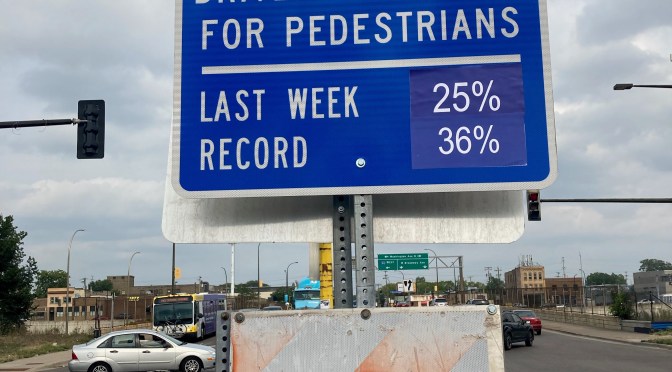
Improving the rates of drivers yielding to pedestrians has been challenging despite crosswalk laws. Expanding on an earlier study, researchers further explored the effectiveness of engineering treatments at road crossings, giving agencies a deeper understanding of how to maximize pedestrian safety.
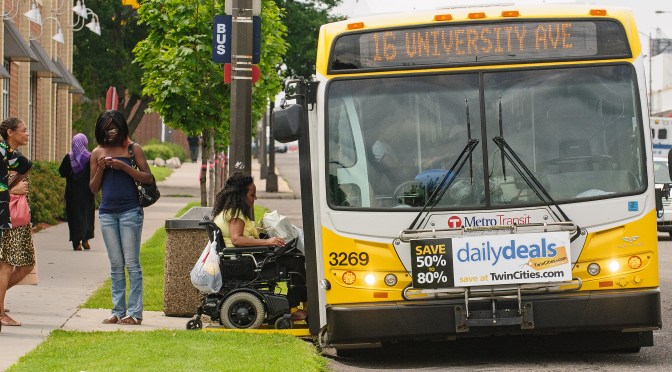
Patterns of movement in cities, especially office job commutes, were substantially altered in 2021 by telework, economic change, and other responses to COVID-19, according to new research from the Accessibility Observatory at the University of Minnesota. While the immediate effects of these behavioral changes, such as reduced congestion and lower transit ridership, have been well documented, new data reveals deeper impacts that differ by the three modes studied: auto, transit, and biking.
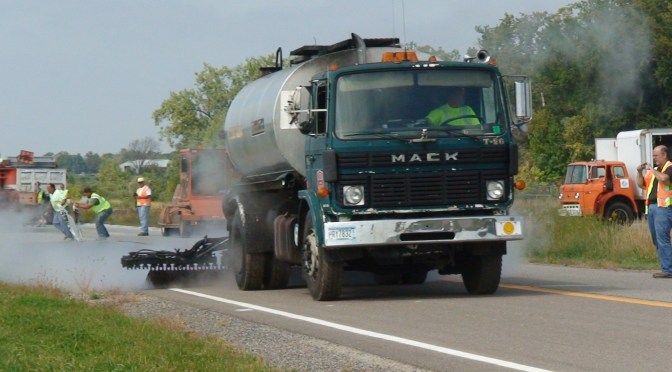
Aging pavement infrastructure and the deterioration of pavement surfaces over time remain an ongoing challenge in meeting roadway user expectations. Preventive pavement preservation treatments that are applied on sound, structured-condition pavements can extend the pavements’ functional service life and reduce future maintenance costs. Fog seals are one of these treatments. Fog seals are applied by spraying a thin layer of emulsion onto the pavement to slow or in some cases reverse the damage caused by oxidative aging. Asphalt emulsions are the most common material used in fog seals. Rejuvenators are usually added to the formulation to lower its viscosity and possibly even rejuvenate the surface of the existing aged pavement.
Speed limits are a popular safety measure used in urban areas. A new analysis that monitored driving speeds before and after posted changes to speed limits reveals lower speed limits may not, at least initially, cause drivers to slow down.
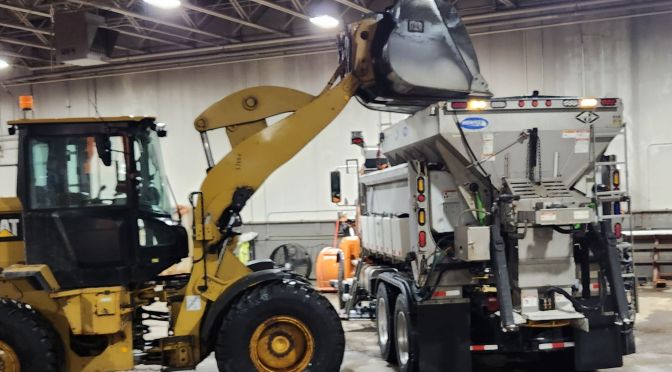
MnDOT maintenance practitioners and managers are always looking for new and better ways to handle winter weather. A recent evaluation of new products revealed which of several new pieces of high-potential winter maintenance equipment were appropriate for use on Minnesota highways. Just as importantly, the agency uncovered the shortcomings of other equipment, identifying critical issues to address before acquiring additional equipment.
As bridge infrastructure in Minnesota and across the country ages, maintaining and preserving the existing bridge network becomes increasingly important—and increasingly challenging. In Minnesota alone, 25 percent of bridge-deck area is more than 50 years old, and the number of bridges rated in “fair” condition has recently overtaken the number rated in “good” condition.
When a transportation innovation shows potential for significantly increasing safety, implementation may seem like the obvious next step. But without public support, a project can be met with resistance that results in delays, additional costs and a lost opportunity to save lives.







 Crossroads