Category Archives: Traffic and Safety

New crash report interface will improve usability and data quality

The data collected at the scene of a crash by law enforcement officers are important for more than just drivers and their insurance companies. The information is also used on a much larger scale by state agencies and researchers to analyze and evaluate crashes, trends, and potential countermeasures.

“Big decisions get made based on that data—million-dollar decisions,” says Nichole Morris, a research associate at the U of M’s HumanFIRST Laboratory. “So you have to be sure that what goes in to that report is high quality and reflects what actually happened at the scene of the crash.”

As part of an effort to improve this data quality in Minnesota, Morris is leading a team of HumanFIRST researchers in a project to redesign the electronic crash report interface used by law enforcement officers. The team’s goal is to create a new interface that improves the accuracy, speed, reliability, and meaningfulness of crash report data.police_guy

The project is occurring in conjunction with a redesign of Minnesota’s crash records database and is being sponsored by the Traffic Records Coordinating Committee (TRCC) at the Minnesota Department of Public Safety (DPS) and by MnDOT.

“In industry, they do this work all the time, looking at usability and design. But when you think about what a state does in terms of usability, nothing like this to our knowledge has ever been done. This makes it a very exciting and revolutionary project for Minnesota,” Morris says.

In the first phase of the project, the researchers completed a human factors analysis on the existing crash report interface to identify potential problem areas. This included a step-by-step task analysis and in-depth interviews with law enforcement officers.

During this process, the researchers identified several areas they hoped to improve. For instance, they wanted the new interface to be smarter, making better use of autofill features to reduce the amount of manual data entry.

Following the analysis, the team built two versions of a mock crash report interface for usability testing: a wizard and a form. In both versions, the researchers added decision aids to ease usability. They also significantly improved the system’s autofill capabilities, reducing the ratio of officer to system data entry from 6:1 to nearly 1:1.

The researchers then conducted four rounds of usability testing with law enforcement officers for both the wizard and the form. Results were split: half the officers preferred the wizard and half preferred the form. Because of these findings, the TRCC is planning to build full versions of both, Morris says, which will allow officers to use the version they prefer.

Going forward, the researchers plan to make a few more adjustments to the research prototype before handing it off to the state vendor, Appriss, which will build the new system. The team will then work collaboratively with Appriss to complete additional beta and usability testing before the new interface launches in January 2016.

“The results of the HumanFIRST prototypes are being combined with the vendor’s prior experience for a best-of-breed approach,” says Kathleen Haney, traffic records coordinator at DPS. “This is a fantastic project, and the results will be relevant for years to come.”

Read more about the project in the December 2014 CTS Catalyst.

Six Ways to do Multimodal in Greater Minnesota

Can rural Minnesota do multimodal?

You betcha, says a new study by University of Minnesota researcher Carol Becker, who compiled 65 examples of innovative multimodal rural and small urban transportation projects from around the United States.

The study, funded by the Minnesota Department of Transportation, looks at alternatives for promoting and strengthening multimodal transportation in rural and small urban areas. Becker developed these six case studies to showcase different modes and strategies:

Retrofitting Sidewalks

The city of Olympia, Washington, was mostly built during the automobile era. As a result, most of the city developed without sidewalks. In 2004, Olympia passed a voter referendum that linked enhanced parks with adding sidewalks throughout the city. The referendum was supported by parents who wanted safe routes to school for their children and by environmentalists who wanted alternatives to driving. But the key to voter approval was linking recreation at parks with recreation walking to and from the parks. The Parks and Pathways program is now retrofitting miles of sidewalks into neighborhoods.

A sidewalk that was built using utility tax funds on San Francisco Avenue in Olympia, Washington.
Intercity Bus Service

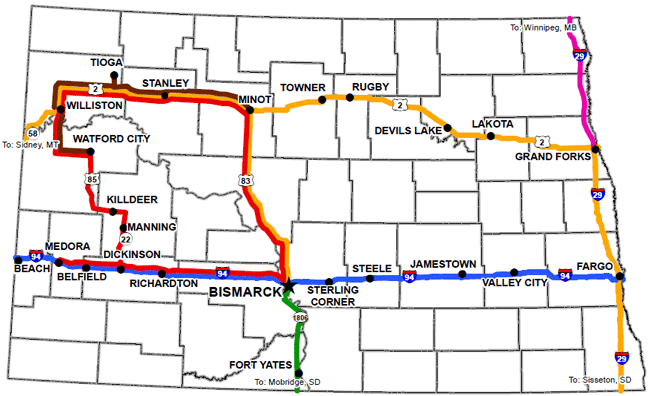
North Dakota has the third-lowest population density in the United States. Despite this, it has a network of buses that connect small towns to larger regional centers. Such alternatives to driving allow residents — particularly elderly and disabled persons — to stay in their communities rather than move to large cities to access needed services.
InterCity

Senior Transportation

A nonprofit in Mesa, Arizona, implemented a program to reimburse eligible seniors for car trips provided by other individuals. The program was moved to the regional transit provider for expansion. It did not scale up well, however, and was recently replaced with the East Valley RideChoice Program, which provides seniors and disabled adults with  discounted cards for taxi service. RideChoice participants can receive up to $100 of taxi service per month for either $25 or $30, depending on their city of residence.

Photo courtesy of  Valley Metro RideChoice
Photo courtesy of RideChoice
Integrating Highways into Small Town Fabric

One challenge to making smaller communities more walkable and pedestrian-friendly is that most small towns are built around MainStreethighways. In fact, unless a bypass has been built, the main street of a small town is also typically a highway. This creates a conflict between groups who want to move vehicles efficiently and groups who want pedestrian-friendly downtowns.

Oregon took two steps to help mediate this:

  • Added a functional classification to the Oregon Highway Manual for the portion of roadway that runs through small towns. This functional classification has very different design standards that can accommodate walking, biking, commercial activity along the roadway, parking along the roadway and many other small-town needs.
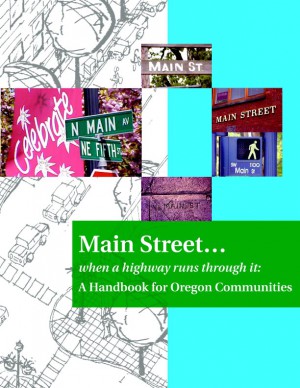
  • Main Street: When A Highway Runs Through It” was written to help local governments understand their options for creating a multimodal environment and better advocate for their interests with the Oregon Department of Transportation. The document explains ODOT funding processes and  shows examples of design options. Local governments can then adopt these elements and standards into their local plans, which ODOT must work with when doing highway improvements.
Complete Streets

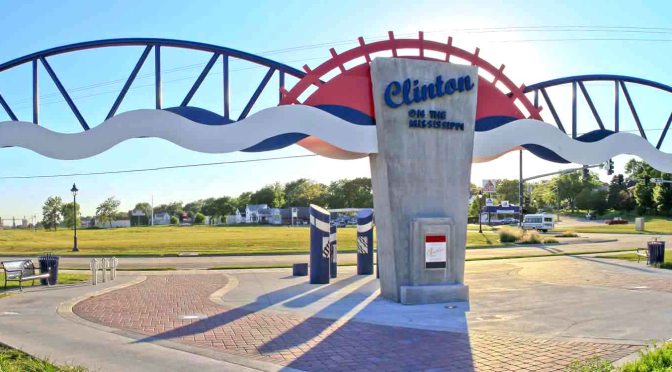
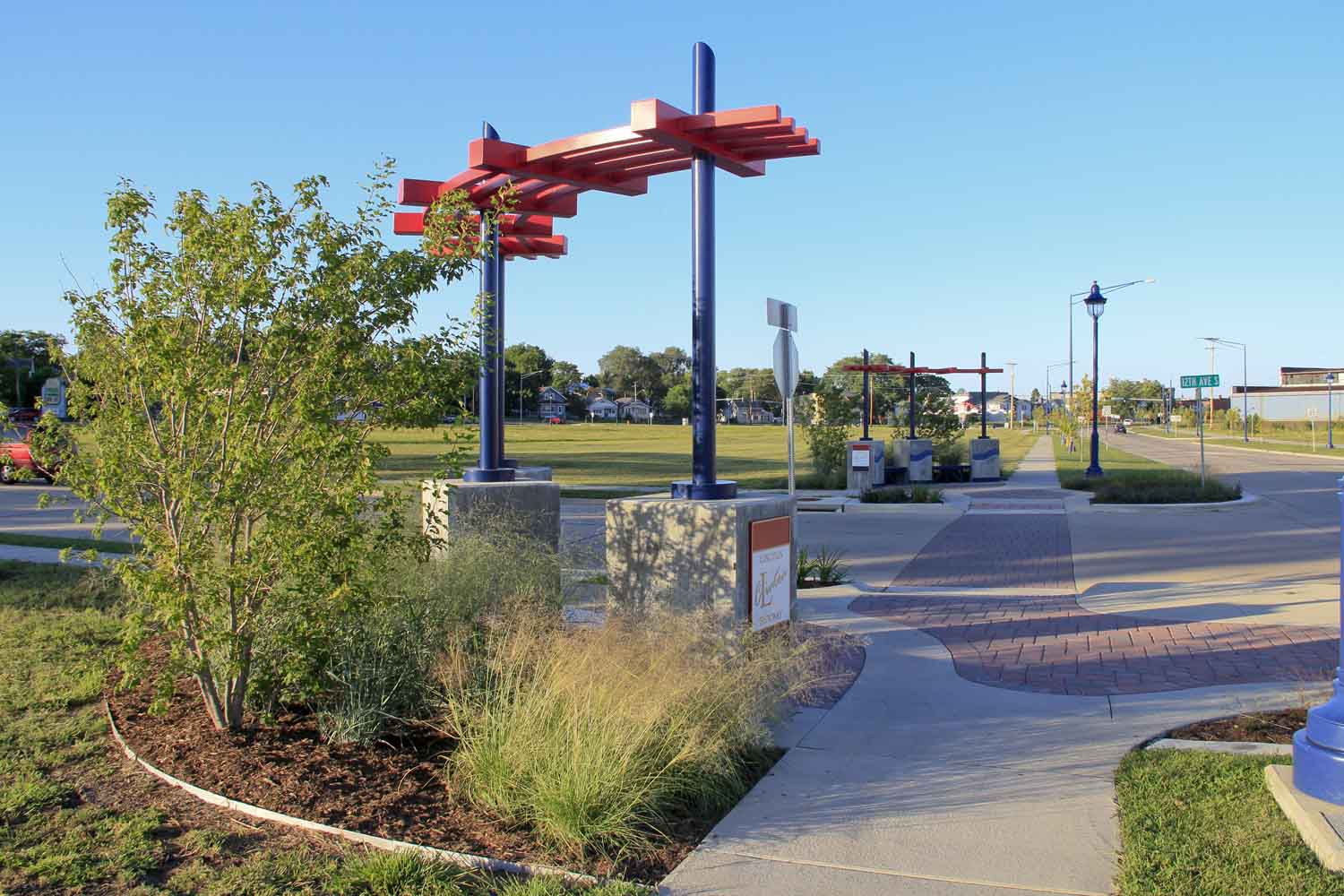
Clinton, Iowa, is a city with a population of 27,000 on the Mississippi River in eastern Iowa. In 1995, the rail yard closed, which provided an opportunity to redevelop land. The city created a comprehensive long-range plan that included remediating soil contamination, purchasing land for redevelopment, realigning two streets and increasing transportation choices with a “complete streets” design. The reclaimed land will support a multi-use path, sidewalks and connections to cross streets.

Approximately $50 million has been secured for the project.  A $2.7 million Transportation Investment Generating Economic Recovery (TIGER) grant was also received from the U.S. Department of Transportation in 2012 to pay for a multi-use trail with a direct connection to the Mississippi River Trail, decorative lighting and plantings. In the future, land will be sold for higher density, walkable development.

A look at part of Clinton, Iowa’s redeveloped old railroad area, now called Liberty Square.
Impact Fees for Funding Infrastructure

As resistance increases to broad-based taxes, there has been a shift toward funding transportation with fees linked to specific projects. Examples include:

  • Concurrency laws, which require capacity in governmental systems (either planned or existing) before development can occur. If capacity does not exist, development cannot occur. In the state of Washington, a number of cities use concurrency to set transportation fees paid by new development. Bellingham, Washington, uses this kind of system to raise funds for transportation projects.
  • Development impact fees. Contra Costa County, California, has a capital plan for transportation improvements and sets a fee that is paid by new development to fund that infrastructure. Fees vary from under $1,000 to over $15,000 depending on where new development is occurring. The county expects to raise more than $845 million in transportation dollars from 2014 to 2030 using such a mechanism.
  • Allowing local units of government to create special districts to fund transportation projects.
Related Resources

Rural and Small Urban Multi-Modal Alternatives for Minnesota – Final Report

Teen Driver Support System helps reduce risky driving behavior

Although teen drivers make up a small percentage of the U.S. driving population, they are at an especially high risk of being involved in a crash. In fact, drivers between ages 16 and 19 have higher average annual crash rates than any other age group.

To help teen drivers stay safe on the road, researchers at the U of M’s HumanFIRST Laboratory have been working for nearly 10 years on the development of the Teen Driver Support System (TDSS). The smartphone-based application provides real-time, in-vehicle feedback to teens about their risky behaviors—and reports those behaviors to parents via text message if teens don’t heed the system’s warnings.

TDSS provides alerts about speed limits, upcoming curves, stop sign violations, excessive maneuvers, and seat belt use. It also prevents teens from using their phones to text or call (except 911) while driving.

The research team recently completed a 12-month field operational test of the system with funding from MnDOT. The test involved 300 newly licensed teens from 18 communities in Minnesota.

To measure the effectiveness of the TDSS on driving behavior, the teens were divided into three groups: a control group in which driving behavior was monitored but no feedback was given, a group in which the TDSS provided only in-vehicle feedback to teens, and a group with both in-vehicle and parent feedback from the TDSS.

Preliminary results show that teens in the TDSS groups engaged in less risky behavior, especially the group that included parent feedback. These teens were less likely to speed or to engage in aggressive driving.

Although these results demonstrate that the TDSS can be effective in reducing risky driving behavior in teens, Janet Creaser, HumanFIRST research fellow and a lead researcher on the project, stresses that technology is not a substitute for parent interaction.

“The whole goal of our system is to get parents talking to their teens about safe driving.” Creaser says. “And maybe, if you’re a parent getting 10 text messages a week, you’ll take your teen out and help them learn how to drive a little more safely.”

Read the full article in the November issue of Catalyst.

How those little blue lights make intersections safer

A story from WCCO-TV last week answered a question that has likely been puzzling many commuters passing through Ramsey County: what are those blue lights popping up on traffic signals?

The report explains that the blue lights illuminate when a traffic signal changes to red, allowing a patrol officer to witness and enforce a signal violation more easily and safely. What the report doesn’t explain is the safety benefits to be gained from increased red light enforcement.

In Ramsey County, the proposal for a recent large deployment of blue lights came from traffic engineers, not police.

“Our county safety highway program conducted by MnDOT indicated a lot of right-angle crashes related to people running red lights,” said Ramsey County Planner Joseph Lux. “These are typically the accidents with the severest injuries.”

As part of the statewide Towards Zero Deaths (TZD) initiative in July 2013, MnDOT worked with counties to develop safety plans that emphasize low-cost, high-value safety improvements.

A federal grant is helping fund the installation of 128 blue lights at 49 intersections in Ramsey County (see locations) over the next two weeks. Deputies will begin enforcement later this month, but the hope is that the blue lights will be so effective,  active enforcement won’t be necessary long-term.

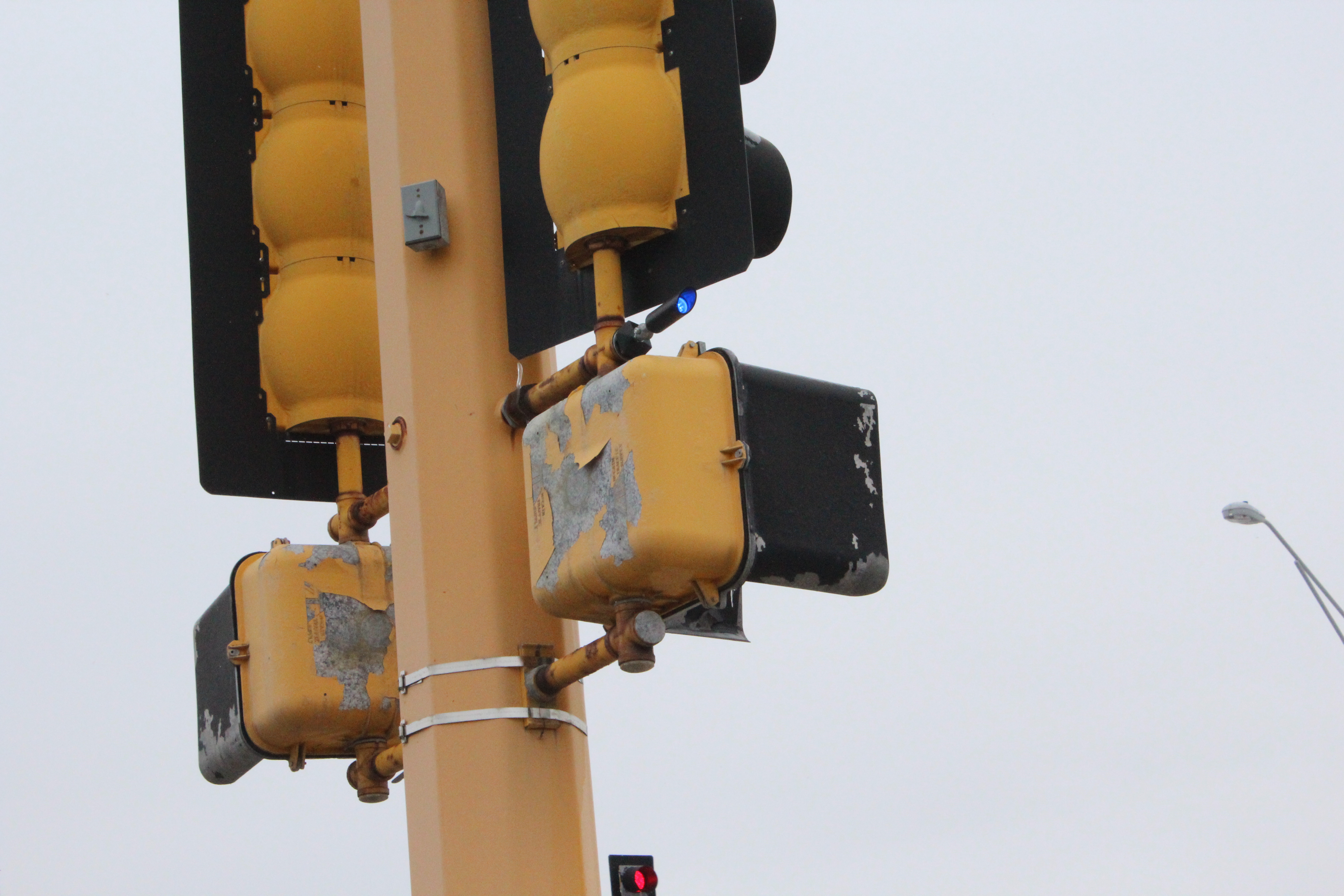
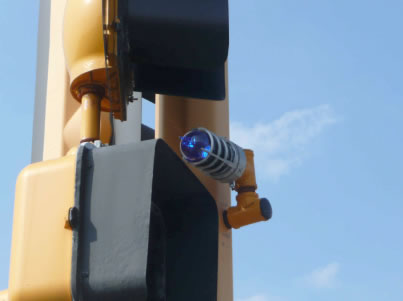
A blue light, positioned on each of the four corner intersection poles, turn on whenever the opposite signal light turns red.

“The comments we’ve received from local police is they don’t want to write tickets; they just want people to quit running red lights,” Lux said.

IMG_2431
Blue light indicators were affixed to existing signal poles at Lexington Avenue and Larpenteur Avenue in Roseville.

The blue light indicators allow a police officer to view an infraction from many viewpoints, instead of having to pursue the offending vehicle through the intersection. Also only one squad is required to patrol an intersection; not two.

The blue light indicators have been shown to increase traffic safety. In Florida, crashes due to people running red lights fell by 33 percent, according to a low-cost safety improvement pooled fund study conducted on behalf of MnDOT and 37 other states.

Unlike Florida’s blue lights, Ramsey County’s are being placed on the signal pole, instead of the masthead. They’re more prominent than a couple indicators the county tried previously at accident-prone intersections in Little Canada and Maplewood.

“They’re bright and noticeable to the public, but not distracting, like the ones Florida puts on the masthead,” Lux explained.

According to WCCO-TV, the blue lights are funded by a $120,000 federal grant, with $13,000 in matching local funds.

Temporary signs will be put up by Ramsey County to notify the public of the new indicators.

A few other Minnesota communities — including Blaine, Crystal, Olmsted County and Dakota County — have also installed blue light indicators in recent years.

Lux explained that Ramsey County is installing blue lights on intersections that are easily enforced by law enforcement, as well as those that aren’t, in hopes that the public will obey them all because of the heightened presence.

RailVolution showcases Minnesota transit successes

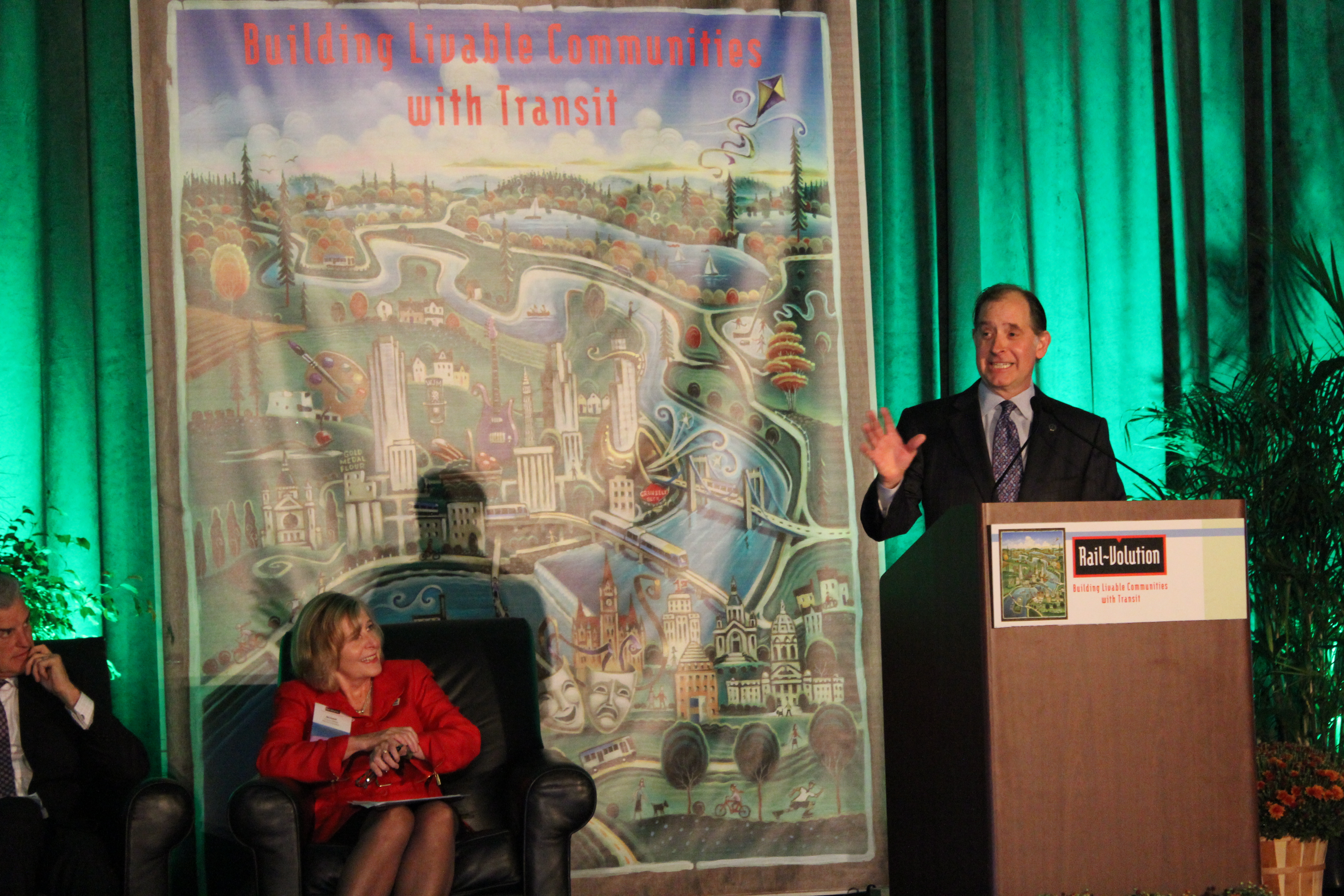
Before a national audience of 1,400 urban planners and transit enthusiasts, Hennepin County Commissioner Peter McLaughlin and others told the story of how the Twin Cities metropolitan area was transformed into a community that embraces “livability” and mass transit, including light rail.

“The growth was horizontal and there were lots of people who were saying it wouldn’t work in Minnesota,” said McLaughlin, during the opening plenary of the RailVolution conference in Minneapolis.

But the metro region bucked years of infighting and helped pass a transportation bill in 2008 that allows counties to tax for the expansion of transit in the metro area. Anoka, Ramsey, Hennepin, Dakota and Washington Counties decided to pool their resources from the quarter-cent transit sales tax, which is why the Southwest Light Rail Line is able to move forward.

“They had to believe their day would come,” McLaughlin said of the counties.

MnDOT Commissioner Charles Zelle, who ran a regional bus company before being appointed to MnDOT, said it was faster for him to bike to the conference than to take his car.

This was the first time the annual conference has been held in the Twin Cities, allowing Minnesota leaders to share their success stories.

Minnesota Department of Transportation Commissioner Charlie Zelle, who biked the Greenway trail to get to the conference, spoke of MnDOT’s commitment to multi-modal transportation and maximizing the health of Minnesota’s people and economy.

“MnDOT is more than a highway department,” he said. “We have a statewide bike plan and we will probably be the second state in the union to have a statewide pedestrian plan.”

Michael Langley of Greater MSP said a mix of transportation types is critical to attracting  talented workers to the Twin Cities, especially millennials.

“Nearly every area of the world is facing a future workplace shortage,” he said. “It’s fueling a competition for talent like we’ve never seen.”

Federal Highway Administration Secretary Anthony Foxx on Tuesday addressed conference attendees about the need for a bipartisan compromise on funding. He proposed moving away from the Highway Trust Fund to a more inclusive transportation account (named the Surface Transportation Trust Fund) that also addresses rail needs, with $19 billion in proposed dedicated funding. He also discussed the recent announcement of $3.6 billion in resiliency funds for transit systems.

During his comments, he wore a red bicycle pin that the MnDOT commissioner frequently wears at multi-modal events.

During the five-day conference, attendees toured the recently completed Green Line and attended dozens of workshops on topics ranging from street walkability to bus-rapid transit to the use of mobile phones to enhance bus service. On Sunday, the Northstar commuter train traveled for the first time to St. Paul’s Union Depot and conference attendees took it back to Minneapolis.

Parking availability system takes aim at truck driver fatigue

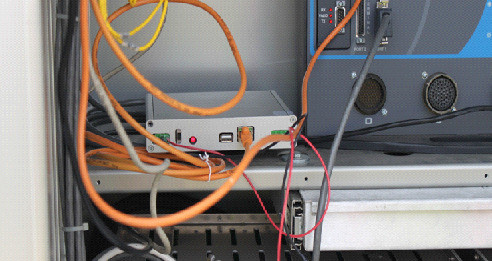
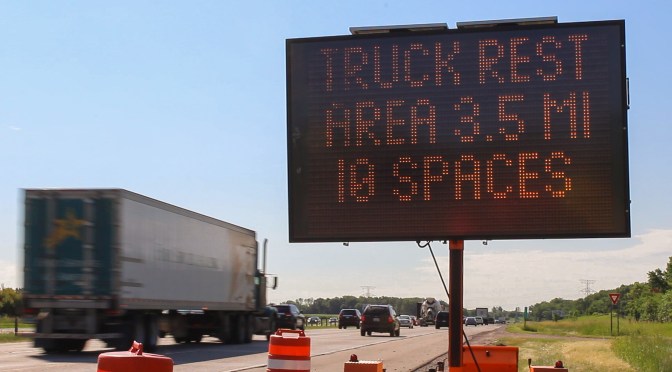
MnDOT, in partnership with the Federal Highway Administration, is test-deploying a high-tech system to help combat drowsy driving and keep truck drivers in compliance with federal hours-of-service regulations.

Developed by researchers at the University of Minnesota, the prototype system lets  drivers know when parking spaces are available at rest stops ahead. It has been deployed at several locations along the heavily traveled I-94 corridor between Minneapolis and St. Cloud.

From today’s MnDOT news release:

ST. PAUL, Minn. – New technology along the I-94 corridor west and northwest of the Twin Cities is helping truckers find safe places to park. Three Minnesota Department of Transportation rest areas are now equipped with automated truck stop management systems that tell truck drivers when parking spaces are available.

The technology will improve safety, lead to better trip and operations management by drivers and carriers and help MnDOT and private truck stop owners manage their facilities more effectively, according to John Tompkins, MnDOT project manager.

“So far, the results have been positive. We’ve had 95 percent accuracy in determining the availability of spaces,” he said.

Federal hours of service rules require truck drivers to stop and rest after 11 hours of driving. Tompkins said if drivers continue to drive beyond 11 hours, they could become fatigued and be forced to park in unsafe locations such as freeway ramps. They could also face legal penalties.

The problem of truck driver fatigue recently took the national spotlight when an allegedly drowsy driver slammed his semitrailer into a limousine carrying actor-comedian Tracy Morgan and six others. One passenger died in the crash.

The parking availability project is led by MnDOT Freight Project Manager John Tompkins and University of Minnesota professor Nikolaos Papanikolopoulos. MnDOT Research Services & Library produced the video above, which demonstrates the system in action. You can learn more about the project on the Center for Transportation Studies website.

Five Innovative Ways to Make Bicyclists and Pedestrians Safer

Last year, 41 people were killed while walking or biking on Minnesota roads and nearly 1,700 were injured.

Dozens of measures are available, however, for making roads safer for pedestrians and cyclists. Minnesota Department of Transportation Pedestrian and Bicycle Safety Engineer Melissa Barnes reviewed some of these design techniques in a recent presentation to city and state transportation engineers. (Watch the full webinar.)

We asked Barnes to highlight her favorite bike and pedestrian safety countermeasures used in Minnesota.

Rectangular Rapid Flashing Beacon RRFB

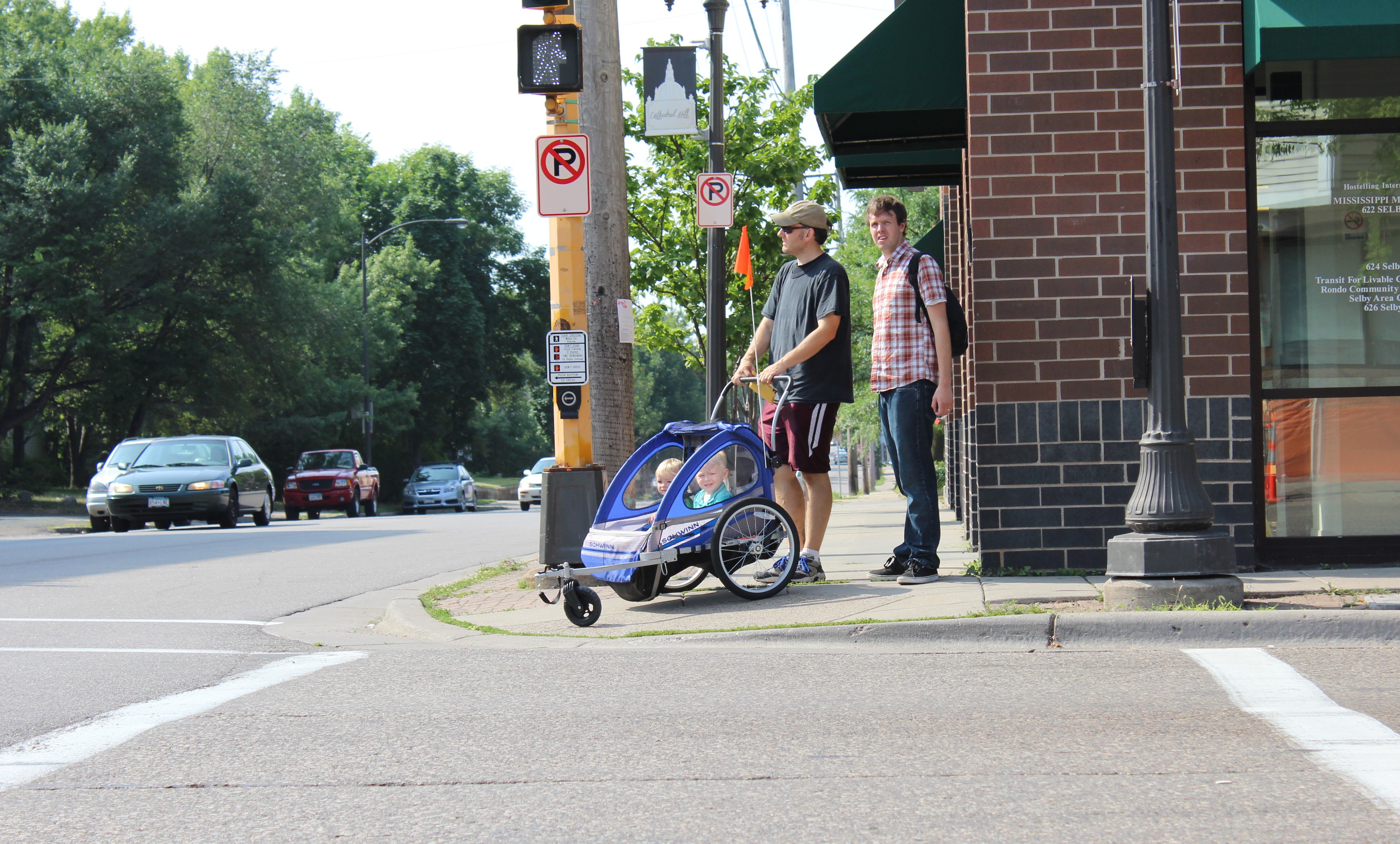
An unusually effective new pedestrian warning device, called the Rectangular Rapid Flashing Beacon, has become quite popular.

User-activated, the device alerts drivers to a pedestrian’s presence with a bright flashing beacon that “looks kind of like an ambulance or fire truck light,” Barnes said. (RRFBs can also be activated passively by a pedestrian’s presence.)

Studies have shown that the number of motorists stopping for pedestrians increases from 18 to 81 percent with the RRFB. Another plus: the device doesn’t appear to lose its effectiveness over time. After two years, compliance has been shown to still be more than 80 percent.

Advanced Stop Lines

It’s not uncommon for a motorist to stop for someone in a crosswalk, only for the vehicle following them to not see the pedestrian and veer around, driving through the crosswalk.

But an advanced stop line, placed 20 to 50 feet prior to a crosswalk, is effective at making both vehicles stop and see the person in the crosswalk.

“They are a really good option at an unsignalized, mid-block crossing,” said Barnes, although the stop line may not be a good option for a two-way stop.

Advanced stop lines have been shown to reduce pedestrian-vehicle conflict up to 90 percent; however, stop lines shouldn’t be placed too far in advance of the crossing, because motorists might then ignore them.

Leading Protected Interval

An innovative treatment called the Leading Protected Interval minimizes conflict by allowing pedestrians to enter a signalized intersection before vehicles do.

The walk signal begins three to seven seconds before the parallel street turns green by extending the time all lights are red.

A right turn on red can be prohibited with this device; however, even without the prohibition, the Leading Protected Interval has been shown to reduce crashes by 5 percent.

Protected Bike Lanes

Protected Bike Lanes

Bike lanes buffered from  traffic with some sort of physical barrier, even parked cars, will reduce all types of crashes. They also increase comfort levels for cyclists, helping keep bikes off the sidewalk.

“A lot of people are much more comfortable biking in these than a regular bike lane,” Barnes said. “It can be a very effective solution for places with lots of cyclists.”

Protected bike lanes, also called cycle tracks, also have a traffic-calming effect.

In New York City, the cycle track reduced all types of crashes an average of 40 percent and up to 80 percent on some roads.

“The challenge is how to design these at intersections,” Barns said. “It’s hard to get the turns right and get everybody visible. It’s pretty important to design these carefully at intersections.”

For those reasons, two-way cycle tracks work best on one-way streets, she said.

Flexible Bollards
Flexiblebollard
Photo courtesy of Reliance Foundry

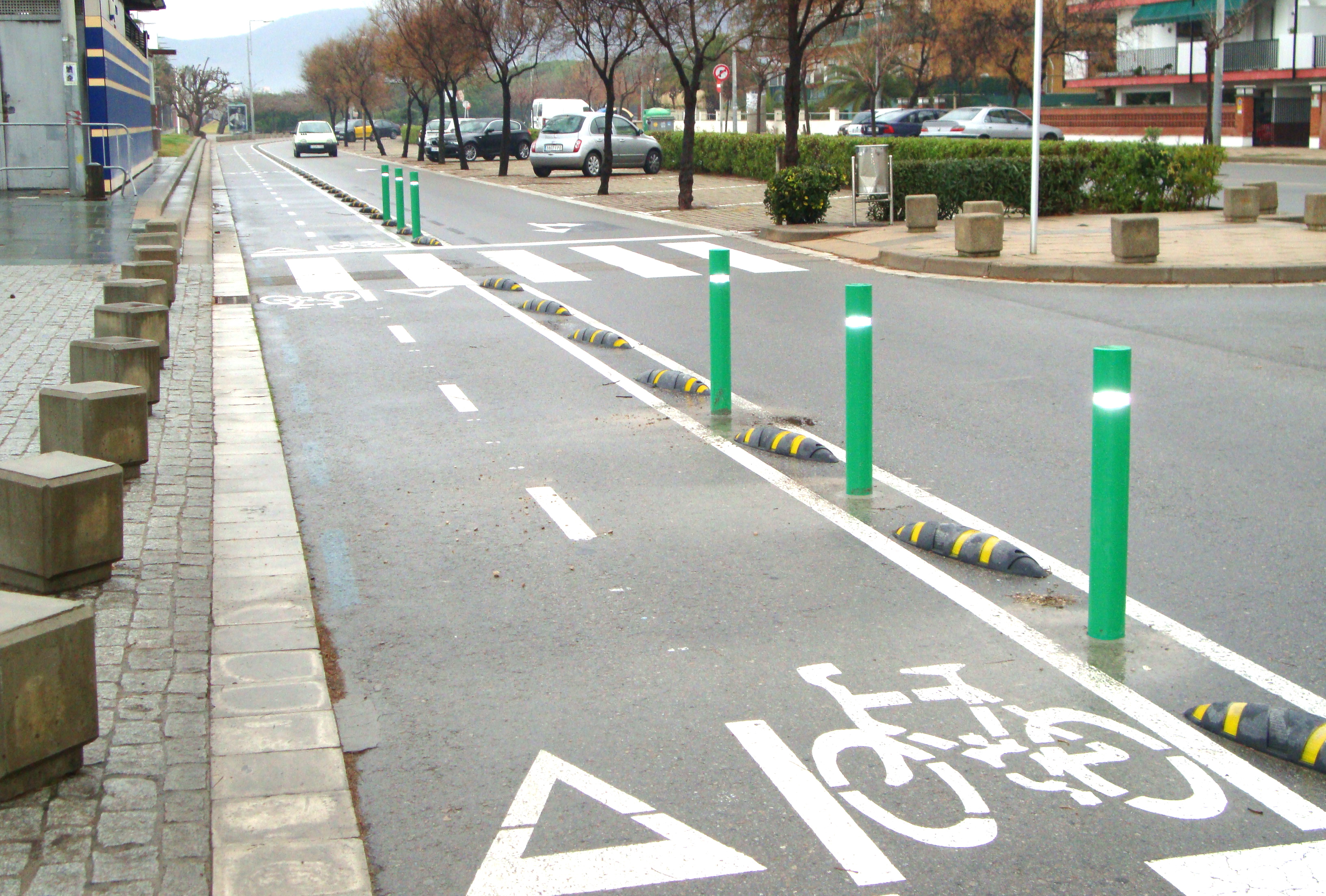
Flexible bollards create temporary curb lines that encourage vehicles to slow down. They can be installed easily and inexpensively.

Flexible bollards bend up to 90 degrees when struck by an errant vehicle. They do not physically stop a car, but encourage vehicles to stay within their lane. Although they can create additional maintenance, they are a good interim solution at locations that need an immediate fix, but have no funding to do so.

Six effective low-cost safety improvements for roads

For the past 10 years, Minnesota and 37 other states have pooled their resources to test the effectiveness of roadway safety improvement strategies. The project, appropriately titled “Evaluation of Low-Cost Safety Improvements,” evaluates key strategies laid out in a national guidebook aimed at reducing the number of annual highway deaths.

Participating states say the project, which has now been extended a total of eight times beyond its original scope, has been a resounding success. MnDOT Safety Engineer Brad Estochen said the pooled-fund study has provided state DOTs much-needed evidence to gain support for implementing new safety improvements.

“Some states want to do a certain strategy, but don’t have the institutional support,” Estochen said. “Through the collaboration of the Peer Exchange, they have national results they can point to.”

We asked Estochen, MnDOT’s technical liaison for the pooled fund, to name his top strategies to come out of the study.

Traffic calming measures

Roadway

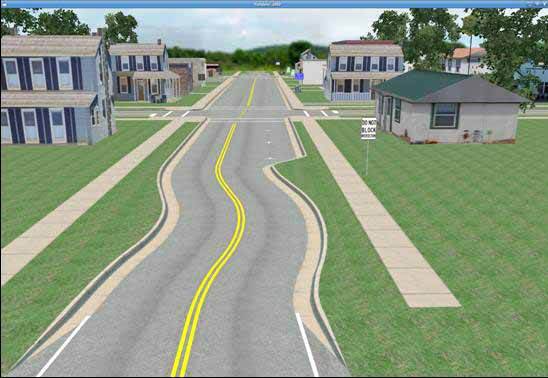
One phase of the study used simulated driving scenes to examine methods of traffic calming (i.e., getting drivers to slow down) in  rural towns. The research found that drivers were most impacted by chicanes — extra curves in the road — and the presence of parked cars on the street. An alternative strategy, curb extensions (also called “bulb-outs”), was found to offer only a small potential safety benefit or no benefit at all.

(Read more about this phase of the study.)

Nighttime visibility improvements

DSC_6498

Researchers also looked at ways of improving nighttime driver visibility on rural roads. Edge lines and post-mounted delineators were selected as the best alternatives for improving curve visibility at night, with curve detection improving 12 percent to 70 percent due to enhanced edge lines. The results are significant, since horizontal curve sections of two-lane rural roads are a major source of roadway fatalities.

(Read more about this phase of the study.)

Flashing beacons at stop-controlled intersections

One way to make drivers aware that they’re approaching a stop sign is to add a flashing beacon to the intersection. Researchers installed various configurations of flashing beacons at more than 100 sites in North and South Carolina and examined the crash data before and after installation.

Courtesy of K-Kystems

Results indicate that standard flashing beacons, as well as some “actuated” beacons (i.e. those that only turn on when traffic is approaching the intersection), are not only effective at reducing crashes, but also economically justifiable based on cost-benefit calculations.This research helped pave the way for more widespread adoption of Minnesota’s Rural Intersection Conflict Warning Systems (RICWS).

(Read more about this phase of the study.)

Edgeline rumble strips

DSC_4106pse

Edgeline rumble strips on curves were shown to significantly improve safety in the third phase of the study, which tested a variety of techniques.

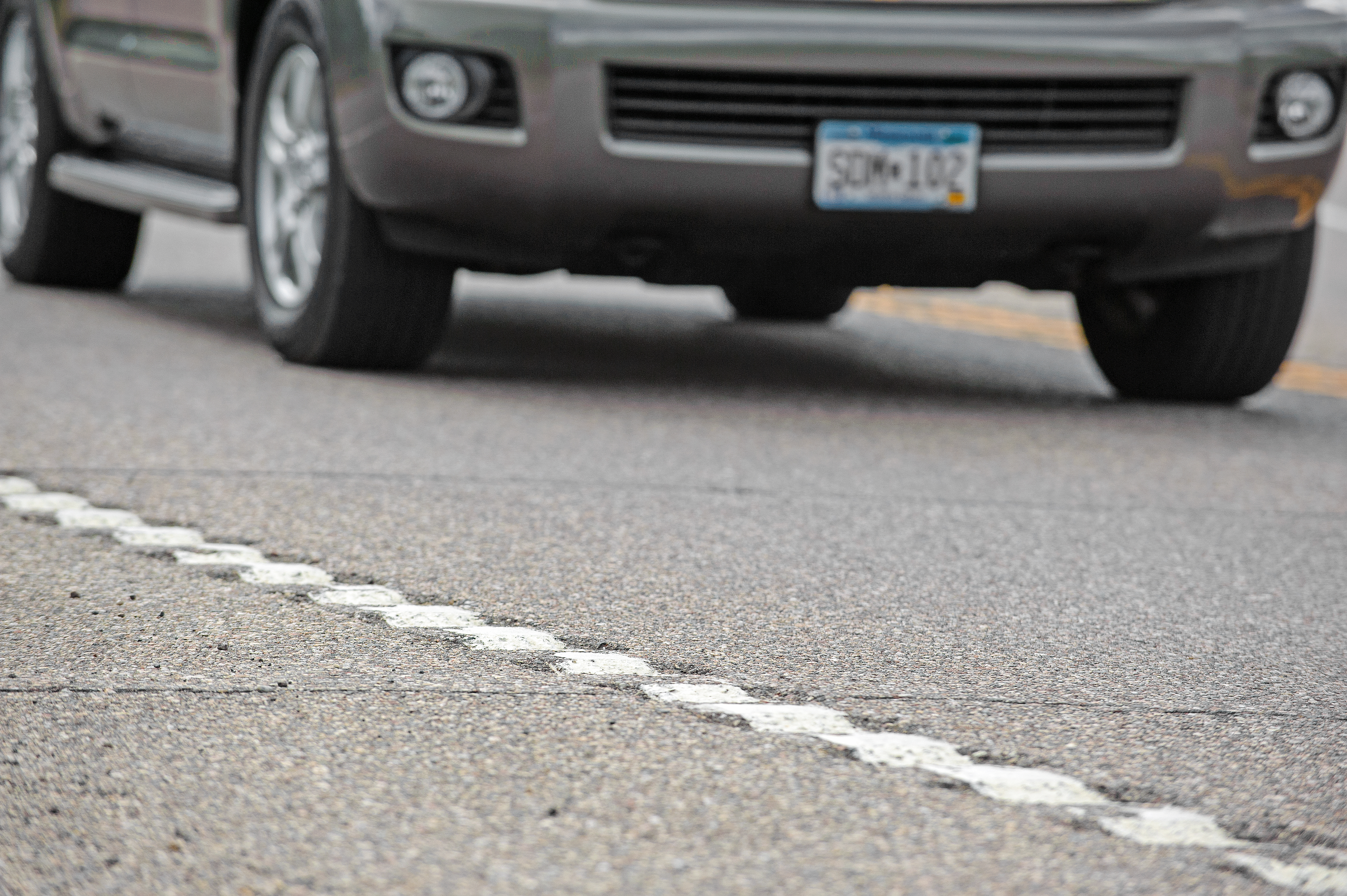
Whereas rumble strips are traditionally ground into centerline or on the shoulder, Kentucky and Florida experimented with placing rumble strips right along the white edgeline of curved sections of road. This method was shown to reduce overall crashes by 29 percent.

(Watch the FHWA website for updates on this phase of the study.)

Red light enforcement devices

Red light indicator
In Florida, crashes due to people running the red light fell by 33 percent thanks to a small light that turns on when the signal turns red. This little light bulb, which is placed on top of a signal, allows for a police officer to sit at the other end of the intersection rather than pursue a car right through the intersection. Not only is it safer, but motorists are also more likely to obey the signal if they know police might be watching on  the other side.

Researchers are also still collecting data on the other techniques studied in phase three, including surface friction treatments on curves and ramps and larger curve warning signs (called chevrons). Watch the FHWA website for updates.

Wider roads in rural areas

manufacturing

Could simply shifting the edge lines of a rural road reduce the number of accidental drive-offs?

Yes, according to this study, which evaluated the effectiveness of various lane-shoulder width configurations on rural, two-lane undivided roads using data from Pennsylvania and Washington.

In general, results were consistent with previous research, showing crash reductions for wider paved widths, lanes and shoulders. For specific lane-shoulder combinations, the study found a general safety benefit associated with wider lanes and narrower shoulders for a fixed pavement width; however, there are exceptions. The report has a chart that shows the optimal lane-shoulder combinations for different sizes of roads.

In theory, there should be no additional cost for these strategies, as an edgeline can be re-striped as part of an existing resurfacing project.

MnPASS: Two systems, both work

I-35W’s MnPASS lane, where vehicles can frequently enter and exit the high-occupancy toll lane, is just as safe as the MnPASS lane on I-394, where motorists only have a few shots to enter the system, a new study finds.

Researchers at the Minnesota Traffic Observatory undertook the MnDOT-funded study because of objections to open systems like the one on 35W.

“The federal government has very strong arguments against the open system. They’re saying it’s going to be dangerous – cause more disruption and more congestion,” said John Hourdos, director of the Minnesota Traffic Observatory. “We found that both roadways are working very well today because they were designed appropriately for their location.”

The definition of an open system is one that has more opportunity for access than restriction. On 35W, a dotted white lane means vehicles can enter the toll lane at will, and a solid line bars access.

Vehicles must have two occupants on-board or an electronic pay card to use the express lanes during rush hour.

MnPASS on Highway 35W.

The reason I-35W allows vehicles to enter MnPASS more frequently than I-394 is because there are more ramps where new vehicles are entering the freeway and might want to get on MnPASS.

Researchers studied whether accidents are more likely to occur by studying the number of accident-inducing vehicle movements along the 35W corridor. They found that areas where accidents are mostly likely to occur are also where the lane would have to allow access anyway under a closed system like 394.

The study also looked at mobility, determining that MnPASS users have just as good free-flowing traffic under the open system.

Helpful tools

Researchers also created design tools that engineers can use to determine where access points should be on MnPASS lanes.

Until now, engineers have relied on rule of thumb. For example, the general guidance for allowing access on a closed system was 500 feet for every lane between the entrance ramp and the HOT.

The tools can be used to automatically determine how fluctuations in the MnPASS fee will affect congestion within the lane.

The fee to use MnPASS depends on the time of day.

As the express lane become more congested, the fee to use it increases. This slows the number of cars entering the lane, increasing the speed of the vehicles already in the lane.

“We ran the tool on three locations on 35W and found that, for example, on Cliff Road, you can increase the traffic by 75 percent and still be okay,” Hourdos said. “You have more leeway there than north of the crossroads of Highway 62 and 35W, for instance.”

 Related Resources

What those signs over the freeway are actually telling you

Two years ago, MnDOT installed a series of electronic speed limit advisory signs over Interstate 94 between Minneapolis and St. Paul. The Variable Speed Limit (VSL) system is designed to reduce congestion and help prevent crashes by recommending lower speed limits to motorists during periods of high traffic.

The new technology has worked in other places, including China and Germany. In Minnesota, a similar VSL system on I-35W reportedly had moderate benefits in reducing the total amount of congestion during the morning commute south of Minneapolis.

Although the verdict on I-94 congestion is still pending,  a newly released study has found that the new system has not made a measurable impact so far on crashes in an accident-prone stretch of freeway in downtown Minneapolis. Why not?

University of Minnesota researcher John Hourdos has a few theories.

One is a simple time  lag in the congestion reporting system. Another is a requirement that all lanes display the same speed limit, which he said causes confusion when only one lane is actually congested. The complexity of the I-94 commons also appears to be beyond what the VSL system was designed to do. And according to Hourdos, one of the most significant problems is the driving public simply doesn’t understand what the signs are telling them.

“People do not know what the system really does,” Hourdos said. “There hasn’t been much education on it other than a couple of news articles over the years. And when they try to decipher it on their own they get even more confused.”

The I-94 Commons area has a major bottleneck where the I-35W northbound ramp merges with I-94 westbound (between Cedar Avenue and 11th Avenue). Vertical red lines indicate locations of gantries that display variable speed limit advisories.

The advisory speed limits are posted in response to varying traffic conditions. As vehicles approach the commons area, the system measures speeds at the bottlenecks. If the traffic slows, the system transmits a reduced advisory speed to drivers approximately 1.5 miles upstream from the location of the slow-down.

Hourdos said many motorists mistakenly believe the speed displayed on the signs is either a reflection of the speed on the current stretch of highway or an indication of the speeds on the highway ahead, rather than a suggested speed for them to follow.

The requirement to display the same speed limit on all signs also compounds the problem, Hourdos said, because when drivers see that the slowdown is only occurring in certain lanes they tend to ignore the signs altogether.

“In the lane that is congested, the real speeds drop much faster than what the VSL system can respond to, reducing the functionality of the system to the eyes of the drivers,” Hourdos said, “while on the fast-moving lanes, it seems the system has no purpose at all.”

From downtown Minneapolis rooftops, traffic monitoring cameras detect shockwaves on Interstate 94.
Data was primarily collected via cameras at the I-94 Commons’ Third Avenue Field station, overlooking an area with a particularly high crash rate.

So is the I-94 VSL system useless? Not necessarily. For one, the new study didn’t measure the system’s impact on congestion — only its ability to reduce crashes on a small portion of I-94. Moreover, the area in question, the I-94 Commons, is fairly unique, having two major bottlenecks, the highest crash rate in the state (nearly one every other day), and five hours of congestion during the afternoon rush hour alone.

“The VSL system was designed for implementation on any freeway and may not have been well-suited for the I-94 Commons area, which is a very complex corridor with high volume weaves and significant shockwave activity,” said MnDOT Freeway Operations Engineer Brian Kary.

Generally speaking, the VSL system was designed to identify slow traffic ahead of where free-flowing traffic is approaching slow or stopped traffic.

“The crash problems within the commons are caused by speed differentials between lanes and shockwave activity within the congestion,” Hourdos said. “The current VSL system was not developed to handle these types of conditions.”

MnDOT and the researchers aren’t giving up, either. A new project is starting later this year to develop and deploy a queue warning system specifically for this high-crash rate location.

Further resources

Investigation of the Impact of the I-94 ATM System on the Safety of the I-94 Commons High Crash Area (PDF), May 2014

Improving Traffic Management on Minnesota Freeways (PDF), May 2012