
Transportation research comes in many different forms and methodologies…
All posts by Nick
New LRRB videos focus on work zone safety
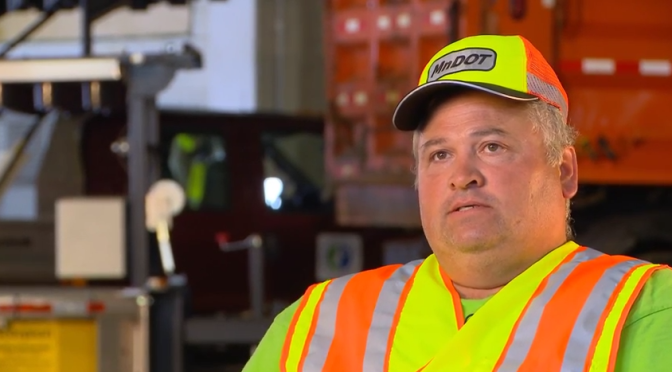
The Minnesota Local Road Research Board is a major source of funding for transportation research in the state. Occasionally, it also produces educational videos designed to raise public awareness of important transportation topics.
Two new video offerings from the LRRB (embedded above and below) are focused on save driving in work zones. While not directly research-related, they might prove a useful resource to transportation professionals. More importantly, they serve to remind us all of the very real and dramatic consequences of work zone crashes, of which there are approximately 2,000 per year in Minnesota.
You might want to also check out some of their other recent YouTube offerings, including explanations of why we need stop signs and speed limits, as well as a fascinating look at how potholes are patched.
MnDOT tests new technologies to monitor bridge scour
A research implementation project could provide MnDOT with a new set of tools to help combat a major source of bridge failure.
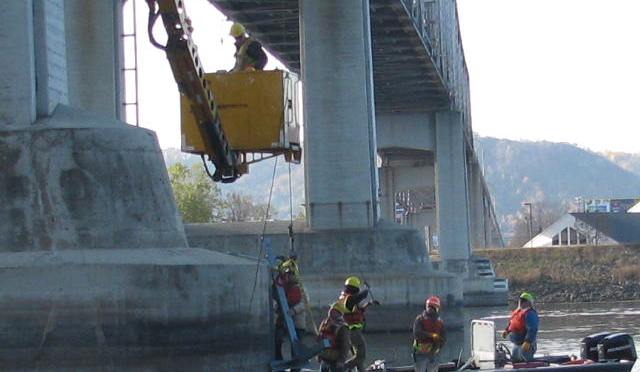
The MnDOT Bridge Office is testing several new methods of monitoring bridge scour — erosion that occurs around bridge piers and abutments during high water-flow events like floods. Acting Waterway Engineer Nicole Danielson-Bartelt said the project’s goal is to be able to monitor scour-critical bridges remotely rather than sending maintenance personnel out on the water during difficult or hazardous conditions.
“There are a number of bridges that are pretty difficult to monitor, especially during high water events,” she said. “Typically, you need to get out on a boat and do either sonar readings or drop weights. It’s dangerous work to be out on the water during those types of events unless you have the right training.”
The project will evaluate several different monitoring technologies, including continuous monitoring equipment like tilt meters and active sonar. The sonar systems, which allows continuous stream bed and water surface elevation data to be transmitted to a website for graphical display, could provide benefits that go beyond monitoring individual bridges.
“The ability to collect continuous, long-term data could help engineers understand short term scour-fill and long term aggradation-degradation cycles,” said Solomon Woldeamlak, a Bridge Office hydraulic engineer. He added that the data can be used to calibrate existing methods of estimating scour at bridges.
Other devices being tested include “float-out” devices, which are buried in the sand around the abutment and send out a signal only if washed to the surface by a scour. Danielson-Bartelt said these non-continuous monitoring devices might be appropriate for bridges where installing permanent sonar is not advisable due to the presence of debris that could damage the equipment.
Monitoring equipment has been installed at two locations: the Highway 43 Winona bridge over the Mississippi River and the Highway 14 Mankato bridge over the Minnesota River. A final report on the project is expected in late 2014/early 2015. You can learn more about some of the products that are being tested on the website of ETI Instrument Systems, Inc., which provided the equipment.

‘Intelligent’ traffic drum could help prevent work-zone tragedies

Work-zone safety is a serious, ongoing challenge for transportation agencies. According to MnDOT, the current three-year average for Minnesota work zones is 1,819 crashes and seven fatalities per year. And that’s not counting near-misses: just talk to anyone who has worked as a flagger, and they will likely have a story about diving into a ditch to avoid being hit by a distracted driver. Consequently, MnDOT is constantly exploring ways to make work zones safer — which brings me to the photo above.
What you’re looking at is no ordinary traffic cone. It’s a prototype of a new warning device called the Intelligent Drum Line system — basically a modified orange traffic drum packed with electronics that can detect speeding drivers and blast them with audiovisual cues to let them know they’re entering the work zone too fast.
Our new technical summary explains the details of the new system, which was developed at the University of Minnesota, with funding and in-kind assistance from MnDOT:
The prototype design uses two modified traffic drums placed 1 to 3 feet from the shoulder of the road and 300 to 400 feet apart. Sensors in the first drum detect vehicles, measure their speed and distance, and communicate this information to the second drum…
When the IDL system detects an oncoming vehicle traveling faster than a threshold speed, the system activates visual warning systems in both drums and initiates a countdown. When the speeding vehicle is approximately 1 second away from the first drum, the system activates an air horn to warn the driver.
As the vehicle passes the first drum, the audible alarm terminates and the system transmits a command to the second drum to start another countdown. When the vehicle is approximately 1 second away from the second drum, the system activates another audible alarm.
Testing of the IDL system at MnROAD has been successful; however, researchers still need to study how drivers react to the system in real-world conditions. Before they can do that, the design will have to be refined so that it can pass Federal Highway Administration crashworthiness tests. On a related note, MnDOT is currently funding a separate University of Minnesota study into which technologies are most effective at capturing drivers’ attention in work zones. The study will include visual and auditory cues similar to the ones used in the IDL prototype.
Learn more:
- Technical Summary (PDF)
- Full Report (PDF)

Using an infrared camera to inspect a bridge deck
Over the last several years, MnDOT has been participating in a national pooled-fund study on using infrared cameras to spot subsurface damage on bridge decks. These damaged areas just below the deck surface are called “delaminations,” and they’re what causes potholes and cracks on the surface. Detecting them is a key part of what MnDOT bridge inspectors do, and it’s huge challenge.
Currently, one of the primary methods of locating delaminations is “chain-dragging” — literally, dragging chains across the surface of a bridge deck. Using this method, inspectors can listen for evidence of hollowed-out areas beneath the surface, which produce a different sound than solid areas. While it works, this practice forces bridge crews to close down lanes and work near moving traffic. These issues have led Minnesota and other states to look for alternatives, and infrared or “thermographic” imaging is one of the top contenders.
In the video above, MnDOT bridge inspector Eric Evens demonstrates how to inspect a bridge deck using an infrared camera (specifically, a FLIR T620 — the model selected for the study). The delaminated areas appear as white or “hot” spots in the image. Evens does a nice job of explaining some of the benefits and potential uses of the camera, including minimizing traffic delays. He also demonstrates the camera’s ability to simultaneously capture photos and infrared images, which could be useful for cataloging the conditions of bridge decks and programming schedules for repairs.
However, as Evens pointed out during the filming, there are both pros and cons to using infrared thermography. One downside is it’s really only effective as the bridge deck warms up in the morning. Another is that it takes some practice to be able to identify which of the “hot spots” are actual delaminations and which are merely dirt or debris on the deck surface, or some other kind of false positive.

Previewing MnDOT’s next round of research projects
MnDOT Research Services recently released its 2013 request for proposals. If you have any kind of direct interest in transportation research in Minnesota, chances are you might have known that already. But those with more of a general curiosity might be interested to see the list of research need statements from the RFP, as they provide a nice preview of the next round of potential MnDOT research projects.
As you can see, some are of a highly technical nature. (It’s safe to say that a study on “PCC Pavement Thickness Variation Versus Observed Pavement Distress” would be of interest mainly to engineers.) Others, however, like “The Economic Impact of Bicycling in Minnesota,” might have a broader appeal. In any case, it’s a fascinating glimpse at the myriad of issues that MnDOT is attempting to address through research and innovation.
Here’s the list of research need statements from the 2013 RFP, broken down by category:
Environment
- Weights and Measurements for Verification of High Organic Soils
- Automated flocculation dosing rates based on real-time turbidity and flow monitoring
Maintenance
Materials and Construction
- PCC Pavement Thickness Variation Versus Observed Pavement Distress
- Evaluation of Recycled Aggregates Test Section Performance
- Design Guideline for Stabilization of Unpaved Shoulder—Phase I (Synthesis study)
- Optimal RAP Content for Minnesota Gravel Roads
- Modernizing Road Construction Plans and Documentation
- Alternate Design Methods to Renew Lightly Traveled Paved Roads
- Full Depth Reclamation (FDR) for Urban and Suburban Street Application
- Prevention of Stripping Under Chip Seals
- Bio-Fog Seal Evaluation
Multimodal
- Understanding and Communicating the Tradeoffs Associated with Urban Roadway Design
- Traffic Impacts of Bike Lanes
- The Economic Impact of Bicycling in Minnesota
- Coordination of Inter-City Multimodal Investments
Policy and Planning
- Methods for Evaluating the Economic Development Potential of Transportation Projects
- Barriers to Right-of-Way Acquisition and Recommendations for Change
Traffic and Safety
- Evaluation of Intersection Conflict Warning Systems
- Dynamic Traffic Assignment (DTA) Mesoscopic Travel Model
- Driver Performance with Future Warning Sign Delivery
- Evaluation of Safety and Mobility of Two-Lane Roundabouts
- Safety study of 35W improvements done under UPA project
- Development of a Queue Warning System Utilizing ATM Infrastructure

What happens when you incentivize transit use during construction projects
In 2010, MnDOT began a three-year long, $67 million repair and upgrade project on I-35 in Duluth. Dubbed the “Mega Project,” it created a serious disruption for Duluth-area commuters. To help mitigate the impact, the Duluth Transit Authority stepped up its bus services, offering free rides in newly established bus-only express lanes as well as access to new park-and-ride lots and various other enticements. Perhaps not surprisingly, many area residents took advantage of their new transit options to avoid construction-related travel delays. But what’s really interesting is what happened after the construction ended.
As described in a recently published MnDOT/University of Minnesota study, commuters who started taking the bus to avoid traffic caused by the construction ended up continuing to ride the bus even after the construction ended. Researchers surveyed riders during and after the 2010 and 2011 construction seasons and found that, even after bus fares went back to normal levels, only 15 percent of the new bus users switched back to driving. Researchers concluded that once riders developed a habit of using transit, the habit tended to stick.
The report author sums up the phenomenon quite nicely in her executive summary:
Human beings are creatures of habit. Most of us travel the same route every day to the same destination. Sometimes, however, something comes along to push us to examine our habits and possibly change them. A major highway construction project can be such an event. (…) This provides a very good opportunity to examine our travel patterns and possibly change our habitual modes.
Of course, this change didn’t just happen on its own. As the technical summary notes, the DTA marketed its services aggressively during this period. (The above photo is just one example.) The study also noted that the elimination of expanded bus services in the winter had a negative impact on ridership.
Read more:

Best practices for trail crossings – webinar and draft report
Last week, MnDOT Research Services hosted a workshop on a forthcoming report, “Decision Tree for Identifying Alternative Trail Crossing Treatments.” It was broadcast as a webinar, the recording of which is now available online via Adobe Connect:
http://mndot.adobeconnect.com/p8hlfripuwe/
The final report is coming soon, but in the meantime you can see the draft version on our website (link), along with case studies and other related documents.
Are energy-efficient streetlights cost-effective?
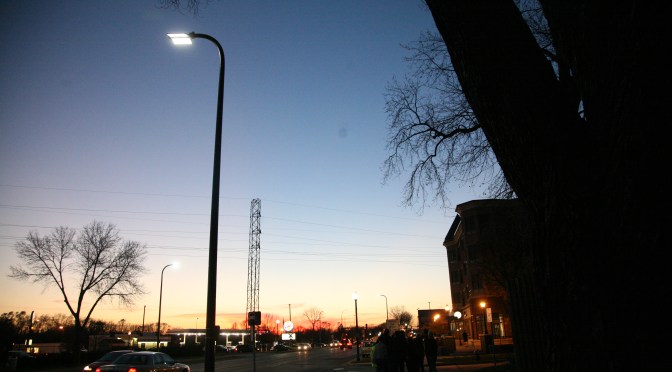
In 2010, the City of Minneapolis installed 55 energy-efficient streetlights from nine different manufacturers along 46th Street between 34th and 46th avenues. The project, part of Hennepin County’s Minnehaha-Hiawatha Community Works program, was designed to field test various models of light-emitting diode (LED) and induction lights. Over the course of two years, researchers observed, evaluated and compared the performance of various lighting products, detailing the results in a recently published report available on the MnDOT Research Services website.
In a broad sense, the results of the study would appear to confirm what has become common knowledge regarding energy-efficient technologies: while they cost more up front, in the long run they have the potential to save money in the form of reduced energy and maintenance costs. The study also demonstrates that energy-efficient streetlights are capable of producing adequate light output and are well-received by residents.
However, if the big question is whether energy-efficient streetlights can save local governments money, the answer is somewhat complicated. The study found that both the levels of light ouput and the amount of time it takes to recoup costs varies significantly by product. Page 16 of the report (page 25 of the PDF) features a table comparing various products’ light output and estimated payback time. With one notable exception, the results show that products with the highest light output (i.e. the highest performers and therefore the most desirable) tend to also have the longest payback time. The amount of time it takes to generate a cost savings from energy-efficient streetlights can be as short as 2.6 years or as long as 24 years, depending on the product.
Some other interesting tidbits from the study:
- Researchers observed operational cost savings of 50-75 percent, depending on the product.
- Eighty percent of the savings came from reduced maintenance costs, while only 20 percent came from reduced energy costs.
- In a survey of area residents, 76 percent responded positively to the new, energy-efficient lights.
The study demonstrated that energy-efficient streetlighting is a feasible option for local governments, with the caveat that agencies need to research lighting products thoroughly before making a choice as to which one to use. Ultimately, considering the ever-decreasing cost of LEDs, the use of energy-efficient streetlighting technologies is likely to grow.
Read more:

Free webinar July 9 on best practices for bicycle trail crossings
Intersections between trails and roadways can be dangerous places for bicyclists and pedestrians. Next week, MnDOT Research Services is offering a free webinar on a forthcoming manual designed to help make trail crossings safer.
On Tuesday, July 9, from 1:00 p.m. to 2:30 p.m. (CDT), University of Wisconsin—Madison Professor David Noyce will be conducting a workshop on his forthcoming handbook, “Decision Tree for Identifying Alternative Trail Crossing Treatments.” The project, funded by MnDOT and the Local Road Research Board, aims to identify current engineering state-of-the-practice for trail crossings and provide guidance as to appropriate crossing designs and vehicular and bicycle right-of-way hierarchies.
You can click on the link below at the specified date and time to watch the webinar. No registration is required.
 Crossroads