Tag Archives: MnROAD

A look at five great environmental research projects

To mark Earth Day 2016, MnDOT Research Services is taking a glance at five stellar examples of current research projects at MnDOT that involve pollution control, wetland mitigation, road salt reduction and new ways of recycling pavement.

1: Reducing Road Construction Pollution by Skimming Stormwater Ponds 
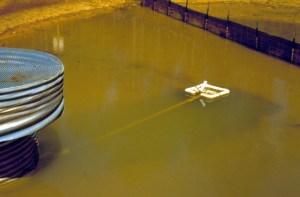
Temporary stormwater ponds with floating head skimmers can remove clean water from the surface of a settling pond.

Soil carried away in stormwater runoff from road construction sites can pollute lakes and rivers.

Stormwater settling ponds provide a place for this sediment to settle before the water is discharged into local bodies of water. However, since stormwater ponds have limited space, a mechanism is needed to remove clean water from the pond to prevent the overflow of sediment-laden water.

MnDOT-funded researchers designed temporary stormwater ponds with floating head skimmers that can remove clean water from the surface of the settling pond, using gravity to discharge water into a ditch or receiving body.

The study, which was completed in spring 2014, identified five methods for “skimming” stormwater ponds that can improve a pond’s effectiveness by 10 percent. MnDOT researchers also created designs for temporary stormwater ponds on construction sites with the capacity to remove approximately 80 percent of suspended solids.

These designs will help contractors meet federal requirements for stormwater pond dewatering. Researchers also determined how often a pond’s deadpool must be cleaned, based on watershed size and pool dimensions.

2: Roadside Drainage Ditches Reduce Pollution More Than Previously Thought  

Photo of roadside ditch
Stormwater infiltration rates at five swales were significantly better than expected based on published rates.

Stormwater can pick up chemicals and sediments that pollute rivers and streams. Roadside drainage ditches, also known as swales, lessen this effect by absorbing water. But until recently, MnDOT didn’t know how to quantify this effect and incorporate it into pollution control mitigation measures.

In a study completed in fall 2014, researchers evaluated five Minnesota swales, measuring how well water flows through soil at up to 20 locations within each swale.

A key finding: grassed swales are significantly better at absorbing water than expected, which may reduce the need for other, more expensive stormwater management practices, such as ponds or infiltration basins.

This could save MnDOT and counties significant right-of-way and construction costs currently expended on more expensive stormwater management techniques.

3: Could Permeable Pavements Eliminate Road Salt Use on Local Roads? 

Robbinsdale
Even with little or no road salt, a permeable pavement like this porous asphalt in Robbinsdale, Minnesota, collects little slush and snow in the winter because it warms well and remains porous enough to infiltrate surface water effectively.

Road salt is used for de-icing roadways during winter months, but can have a negative impact on the environment.

This research, which was just approved for funding through the Minnesota Local Road Research Board in December 2015, will investigate the reduction in road salt application during winter months that can be attained with permeable pavements, while still providing for acceptable road safety.

Some initial investigations (see previous study) suggest that road salt application can be substantially reduced, even eliminated, with permeable pavement systems. The proposed research will investigate this hypothesis more thoroughly, and further document the reduction in road salt application that can be expected with permeable pavement.

4: Highway 53 Shows Potential of Using Road Construction Excavation Areas For Wetland Mitigation
IMG_2764
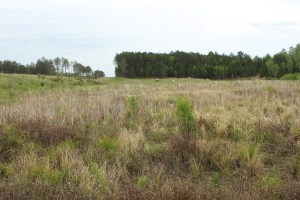
This photo from spring 2015 shows that wetlands have begun to take hold along Highway 53.

Road construction in northeast Minnesota often causes wetland impacts that require expensive mitigation. However, borrow areas excavated for road construction material can be developed into wetland mitigation sites if hydric vegetation, hydric soils and adequate hydrology are provided. Fourteen wetland mitigation sites were constructed north of Virginia, Minnesota along the U.S. Trunk Highway 53 reconstruction project corridor and evaluated for wetland.  The sites were established with the goal of mitigating for project impacts to seasonally flooded basin, fresh meadow, shallow marsh, shrub swamp, wooded swamp, and bog wetlands. All but one of the sites consistently meet wetland hydrology criteria.

The sites contain a variety of plant communities dominated by wet meadow, sedge meadow, and shallow marsh. Floristic Quality Assessment (FQA) condition categories for the sites range from “Poor” to “Exceptional.”

According to the research report published in March 2016, these sites have shown the potential for creating mitigation wetlands in abandoned borrow pits in conjunction with highway construction. Adaptive management, particularly water level regulation, early invasive species control, tree planting, and continued long-term annual monitoring can make mitigation sites like these successful options for wetland mitigation credit.

5: Recycling Method Could Give Third Lives to Old Concrete Roads 
2016-14 Image
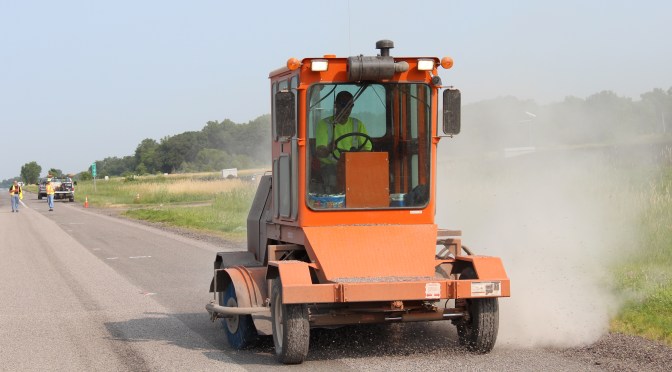
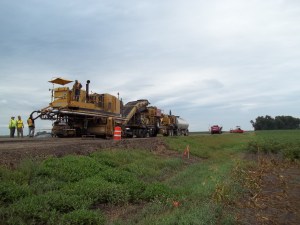
This photo shows a cold in-place recycling equipment train in action.

MnDOT already extends the lives of some old concrete highways by paving over them with asphalt instead of tearing them up. Now MnDOT hopes to add a third life for these old concrete roads by using a process called cold in-place recycling to re-use that existing asphalt pavement when it reaches the end of its life.

Cold in-place recycling (CIR) uses existing pavements, without heat, to create a new layer of pavement. It involves the same process of cold- central plant mix recycling (which is being employed by MnDOT for the first time on two shoulder repair projects this year), but it is done on the road itself by a train of equipment. It literally recycles an old road while making a new road.

CIR has been in use in Minnesota for 20 years, but only with hot-mix asphalt (HMA) over gravel roads. The purpose of a new study, which was approved for funding in April 2016, is to validate Iowa’s promising new practice using CIR on bituminous over concrete.

In this research project (see proposal), MnDOT will use cold-in-place recycling to replace the asphalt pavement on a concrete road and then evaluate it for several years, comparing it also with control sections.

Along with the potential of a better service life, the cost of CIR is much lower than new hot mix asphalt (HMA). Therefore, a 20-percent to 30-percent price reduction per project may be realized.

MnDOT, Alabama center team up for national pavement research

The nation’s two largest pavement test tracks are planning their first-ever co-experiments.

The Minnesota Department of Transportation’s Road Research Facility (MnROAD) and the National Center for Asphalt Technology (NCAT) began discussing a formal partnership last year and have now asked states to join a pair of three-year research projects that will begin this summer.

Representatives of the test tracks are meeting next week in Minneapolis at the 19th Annual TERRA Pavement Conference. They said the partnership will develop a national hot mix asphalt cracking performance test and expand the scope of existing pavement preservation research at the NCAT facility in Auburn, Alabama, to  include northern test sections in Minnesota.

MnROAD plans to build test sections at its facility and also off-site on a low- and high-volume road, which may include concrete test sections if funding allows. These Minnesota test sections will supplement 25 test sections built by NCAT on an existing low-volume haul route in 2010 and an off-site high-volume test road planned for this summer in Alabama to assess the life-extending benefits of different pavement preservation methods. Both agencies have also been developing performance tests to predict the cracking potential of asphalt mixes, and they will now work together on that research as well.

“We will collect and analyze the data in similar ways, and I think we’ll have a greater appeal nationally, as we cover a range of climate conditions,” said MnROAD Operations Engineer Ben Worel.

Participation in the pavement preservation study is $120,000 per year for the initial research cycle, which will drop to $40,000 after three years; the cracking study will run three years at $210,000 per year.  Alabama will be the lead state for this effort.

State departments of transportation are asked for commitment letters this month if they are interested in joining either study, even if they do not have SP&R (State Planning and Research) dollars available at the time. Participating agencies will get to design the scope of the research and be kept advised of the ongoing findings, so they can benefit early from the project. Initial planning meetings will be done through a series of webinars in March and April of this year with participating agencies.

At a January 8 webinar, speakers said the research will help states determine how long pavement preservation treatments will last.

“Many DOTs have really well-designed and well-thought-out decision trees, where they can take pavement management data and end up with a rational selection of pavement alternatives. But the issue of extending pavement life is the really big unknown, because references provide a broad range of expected performance,”  NCAT Test Track Manager Buzz Powell said.

Another benefit is that states can learn how pavement treatments hold up in both hot and cold climates.

“It’s 14 degrees right now in Mississippi. It rains about every three days, freezes and then thaws,” said Mississippi Chief Engineer Mark McConnell. “So we need to know how pavement preservation is going to work in the north as well.”

For additional information, contact Ben Worel (ben.worel@state.mn.us) at MnROAD or Buzz Powell (buzz@auburn.edu) at NCAT.

mnroad_ncat
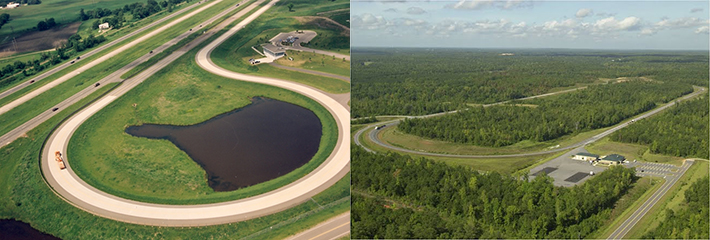
Aerial views of the pavement test tracks at MnROAD (left) and NCAT (right).

Partnership planned for nation’s top pavement testing facilities

The nation’s two largest pavement testing centers are planning to partner in order to better leverage research performed at their cold and hot-weather facilities.

MnROAD, located in Albertville, Minnesota, and its southern U.S. equivalent, the National Center for Asphalt Technology in Auburn, Alabama, are full-scale test tracks that evaluate different types of pavement material under real-life conditions using semi-trailer truck and live interstate traffic.

Each facility has a history of evaluating the performance of pavement preservation treatments, including chip sealing, micro-surfacing, crack sealing and thin overlays. To address needs in both northern and southern climates, similar test sections would be developed at each facility to address national issues.

“By working together we can maximize the potential for each track,” said MnROAD Operations Engineer Ben Worel. “A closer relationship between NCAT and MnROAD is a logical progression in developing and evaluating new sustainable technologies, pavement systems and construction methods that lead to safer, quieter, lower-cost and longer-lasting roads.”

A test track at the National Center for Asphalt Technology in Alabama, MnROAD's hot-weather equivalent.
A test track at the National Center for Asphalt Technology in Alabama, MnROAD’s hot-weather equivalent.

The partnership idea was introduced to federal officials earlier this month at a national pavement performance conference in Minneapolis. Final details must still be worked out.

One of the workshops at the event discussed the proposed partnership between MnROAD and NCAT. Further talks are expected at the end of October.

“NCAT is thrilled about the opportunity for a partnership with MnROAD to address pavement research needs at a national level,” said NCAT Director Randy West. “Bringing NCAT and MnROAD results together will expand the climate base, loading distribution and other important pavement factors.”

Pavement conference

Pavement engineers from around the nation gathered Sept. 2 to 5 for the Midwestern Pavement Preservation Partnership forum and the SHRP2 R26 Workshop for the Preservation of High-Traffic-Volume Roadways, which featured tours of MnROAD, Minnesota’s cold weather pavement testing facility.

Conference participants also reviewed the latest preservation techniques being developed for high volume roads. MnROAD’s chip sealing study, which demonstrated that highways with an average daily traffic (ADT) of 58,000 can be successfully chip sealed, was especially attention-grabbing for agencies who don’t chip seal on roads with more than 2,000 ADT.

A national panel of speakers included Michael Trentacoste, director of the federal Turner-Fairbank Highway Research Center (pictured in top photo), who discussed Federal Highway Administration’s support of pavement preservation research and implementation.

With about 160 people in attendance over four days, MnDOT Materials Engineer Jerry Geib said the conference was successful in sharing the benefits of pavement preservation techniques with other state DOTs and federal highway officials who want adopt new practices to help alleviate budget constraints.

Chip sealing: not just for local roads anymore (video)

Chip-sealing — spraying an asphalt emulsion over existing pavement and then covering it with fine aggregate — is a cost-effective alternative to resurfacing asphalt pavements. Traditionally, however, it has only been used on rural and low-volume urban roadways.

During a recent visit to MnROAD, we filmed a road crew chip-sealing a test section on I-94 and spoke with MnDOT Research Project Supervisor Tom Wood, who explained why chip sealing can also be an effective treatment for high-volume roadways.

*Note: This story was updated on 08/12/2014 to clarify that the chip sealing shown in the video involves spraying an “asphalt emulsion” rather than “hot liquid asphalt,” as stated in an earlier version of this post.

What it’s like to drive a 40-ton truck in circles for science (video)

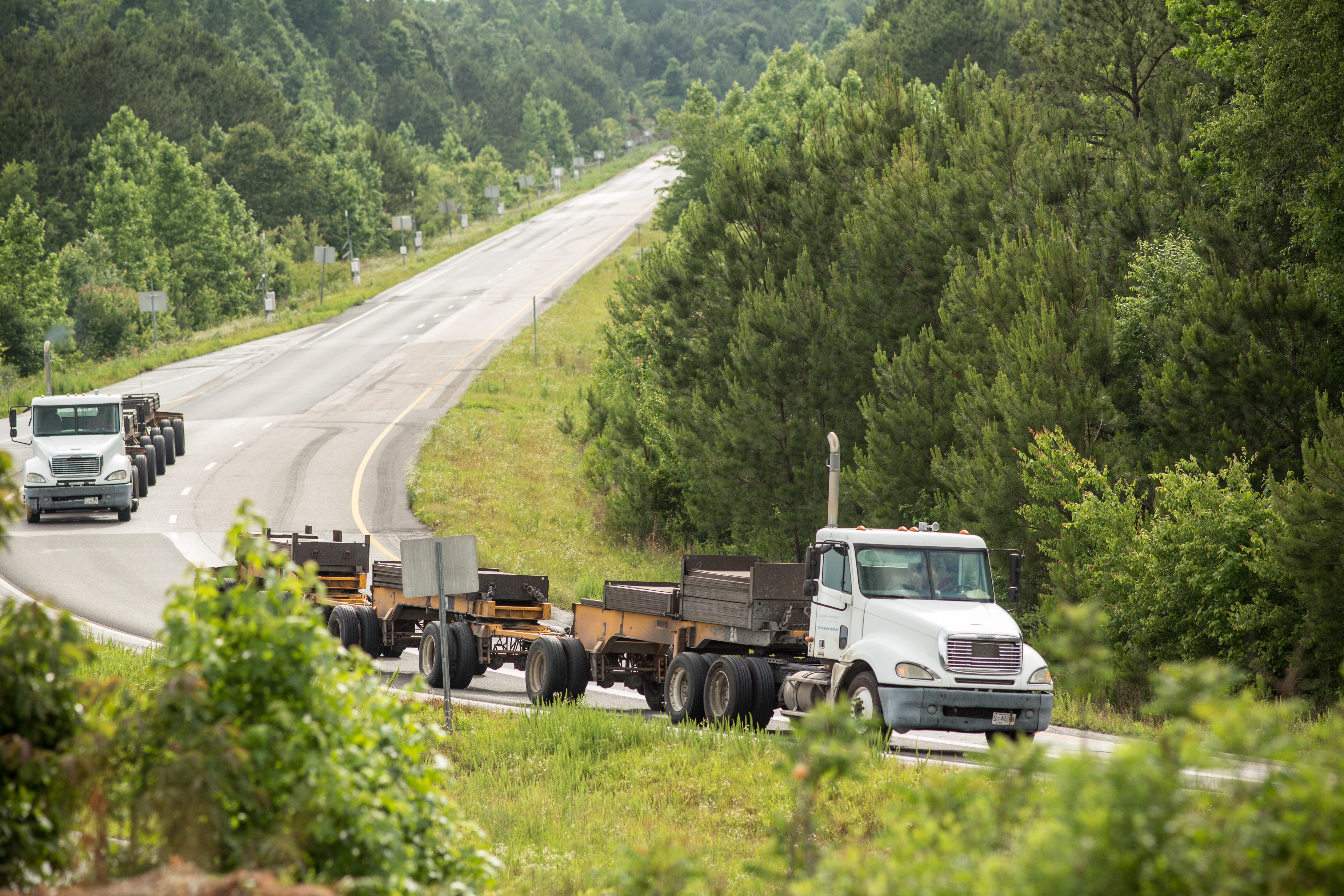
The only way to test pavements is to destroy them — slowly and painstakingly, one moving vehicle at a time. At MnROAD, the state’s world-renowned pavement research facility, the bulk of this monotonous-but-necessary work is performed by live traffic passing through Albertville on I-94. But on the facility’s 2.5-mile low volume road test track, which simulates rural road conditions, more controlled methods are preferred.

Doug Lindenfelser is one of several MnROAD employees who take turns driving an 80,000-pound semi tractor trailer in laps around the closed-loop low-volume track. The truck is loaded to the maximum allowable weight limit on Minnesota roadways. As it passes over the facility’s 23 distinct low-volume test cells, an array of sensors capture data on the pavement’s performance, which researchers then use to design stronger, longer-lasting roads. The truck only drives on the inside lane; that way, the outside lane can be used as an “environmental lane” to compare  damage caused by loading  vs. damage caused by environmental factors.

He has other duties as well, but on a given day, Doug might drive the truck 60 or 70 times around the low-volume road test track. It might not sound very exciting, but as Doug explains, some days his job can be quite interesting. We interviewed him on camera during a recent visit to MnROAD. The resulting video is available above and on our YouTube channel.

For those who might be wondering, all this diligent destruction of pavement has paid off. It is estimated that MnROAD’s first phase of research (from 1994-2006) has resulted in cost savings of $33 million each year in Minnesota and $749 million nationally. Cost savings from its second phase (2007-2015) are being calculated, and the facility is scheduled to enter its third phase in 2016.

Learn More:

Peer Exchange: Pavement researchers face similar issues, financial pressures

Soaring construction costs and a rapidly aging infrastructure will require states to revolutionize how they maintain their roadways — but without each other’s help, they won’t be successful.

That was a key message from pavement researchers last week at a MnDOT-hosted peer exchange event, where pavement experts from around North America shared their ideas and research experiences.

“You’ve got to partner with other states, the FHWA and industry,” said Research Engineer Steve Bower of the Michigan Department of Transportation. “We can’t go it alone anymore.”

Researchers at the event reviewed recent pooled-fund studies conducted at MnROAD, MnDOT’s innovative pavement testing center, to review successful implementation strategies, develop common practices to calculate benefits and help prioritize research topics for MnROAD’s  core 2016 research and reconstruction.

The pavement engineers gathered for the event face similar problems in their home states, as demonstrated by the seven pooled fund projects that were discussed. These included developing a better understanding of pavement damage caused by oversized farm equipment, knowing when to chip seal a roadway, developing a test to predict asphalt cracking , creating a national design method for concrete overlays of asphalt roadways and improvements in diamond grinding of concrete pavements.

MnROAD leading the way

State research departments often lack the time or resources to focus on innovations that could reduce future maintenance costs. If not for Minnesota leading the effort on many of these topics and providing a top-notch research facility, the peer exchange attendees said much of this research just wouldn’t happen.

“We don’t have a closed-loop facility with all these different test sections that MnROAD has; no one does,” said Larry Wiser of the Federal Highway Administration’s Turner-Fairbank Highway Research Center.

Researchers came from Missouri, Maine, Texas, Illinois, Michigan, California, Ontario, Wisconsin, Indiana and Washington for the three-day workshop.

WisDOT Chief Materials Management Engineer Steven Krebs said the research done at MNROAD on the impact of modern farm implements on pavement was invaluable in drafting new state legislation. WisDOT was able to quantify the amount of damage done to the pavement and use the data to dispute mistruths and  misinformation. The state is now working with counties on possible remedies and weight-limit enforcement techniques.

Whereas Minnesota has taken the lead on studying such issues, it is now asking fellow states to not only participate in future such studies, but to also partner in the operations at MnROAD.  At the peer exchange, the response to this idea — especially from states closest to Minnesota — was positive, despite everyone’s lean budgets.

Peer exchange participants said more effort and funding is needed to implement research findings, which FHWA officials said costs significantly more than the research itself.

Past research also needs to be more accessible and there should be better sharing of information, particularly online, they said.

“This (peer exchange) gave us ideas to take back. Our research budget is getting tighter. It’s nice to be able to say, ‘You do a part of it and we’ll do a part of it,’ ” said California transportation researcher Joe Holland.

Further Resources

2014 Peer Exchange – Presentations

MnROAD 2014 Peer Exchange (photo gallery)

MnROAD is hosting pavement researchers from around North America this week to discuss research conducted at its cold weather pavement testing facility in Albertville, Minnesota.

Participants at the three-day conference (June 10 to 12) are reviewing the findings of recent pooled fund studies, sharing their implementation experience and recommending what projects should be picked for the next round of research.

Bob Orthmeyer from the Federal Highway Administration, said MnROAD was the only facility in the country that could supply several test sections needed for a recent study.
Bob Orthmeyer from the Federal Highway Administration said MnROAD is the only facility in the country that could supply several test sections needed for a recent study.
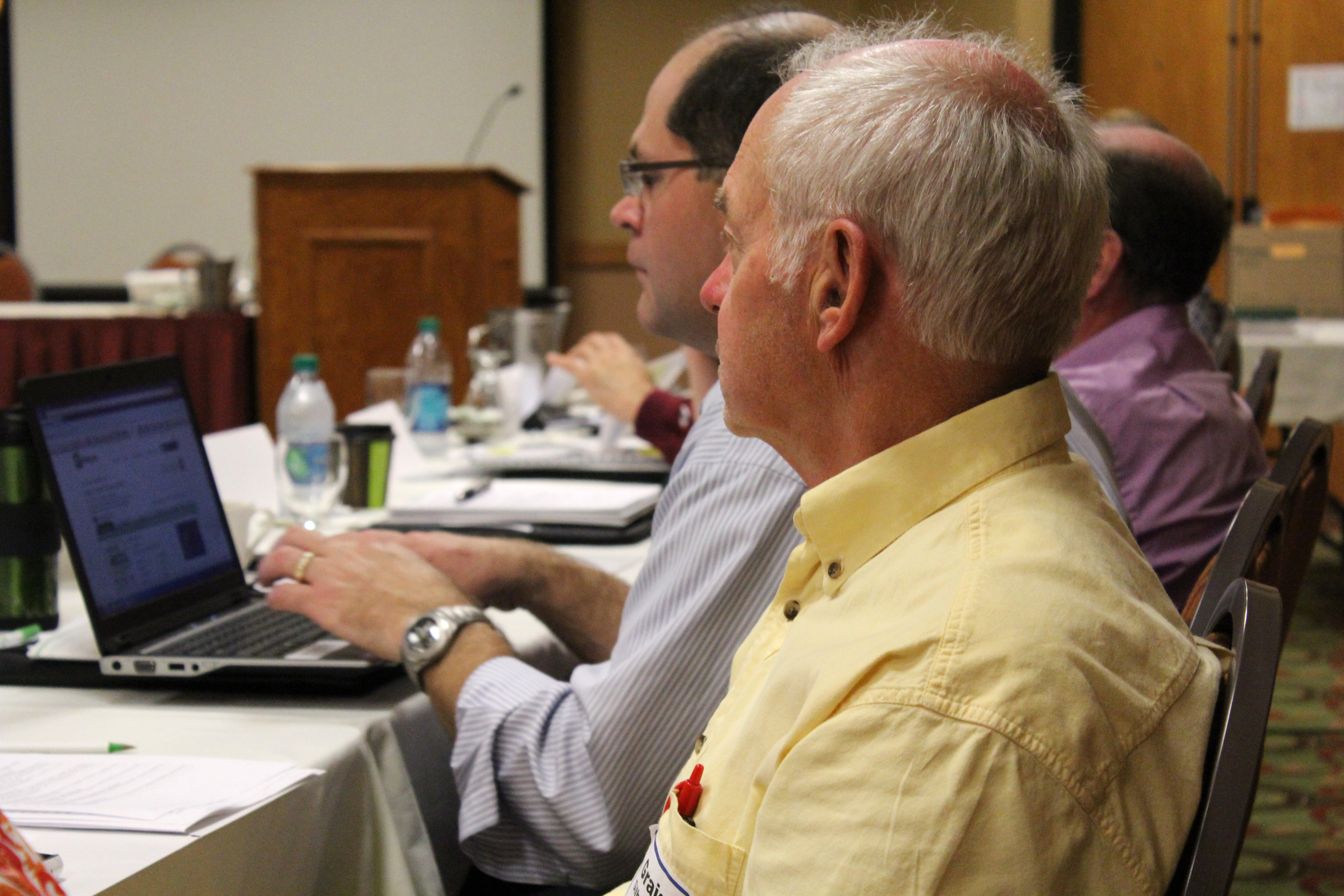
Graig Gilbertson from MnDOT District 8 listens to one of seven presentations Tuesday on the latest research.
Graig Gilbertson from MnDOT District 8 listens to one of seven presentations Tuesday on how agencies have implemented MnROAD’s second phase of research projects.
Stephen Lee shares the Ontario Ministry of Transportation's experiences during a discussion Tuesday on research implementation.
Stephen Lee shares the Ontario Ministry of Transportation’s experiences during a discussion Tuesday on research implementation.
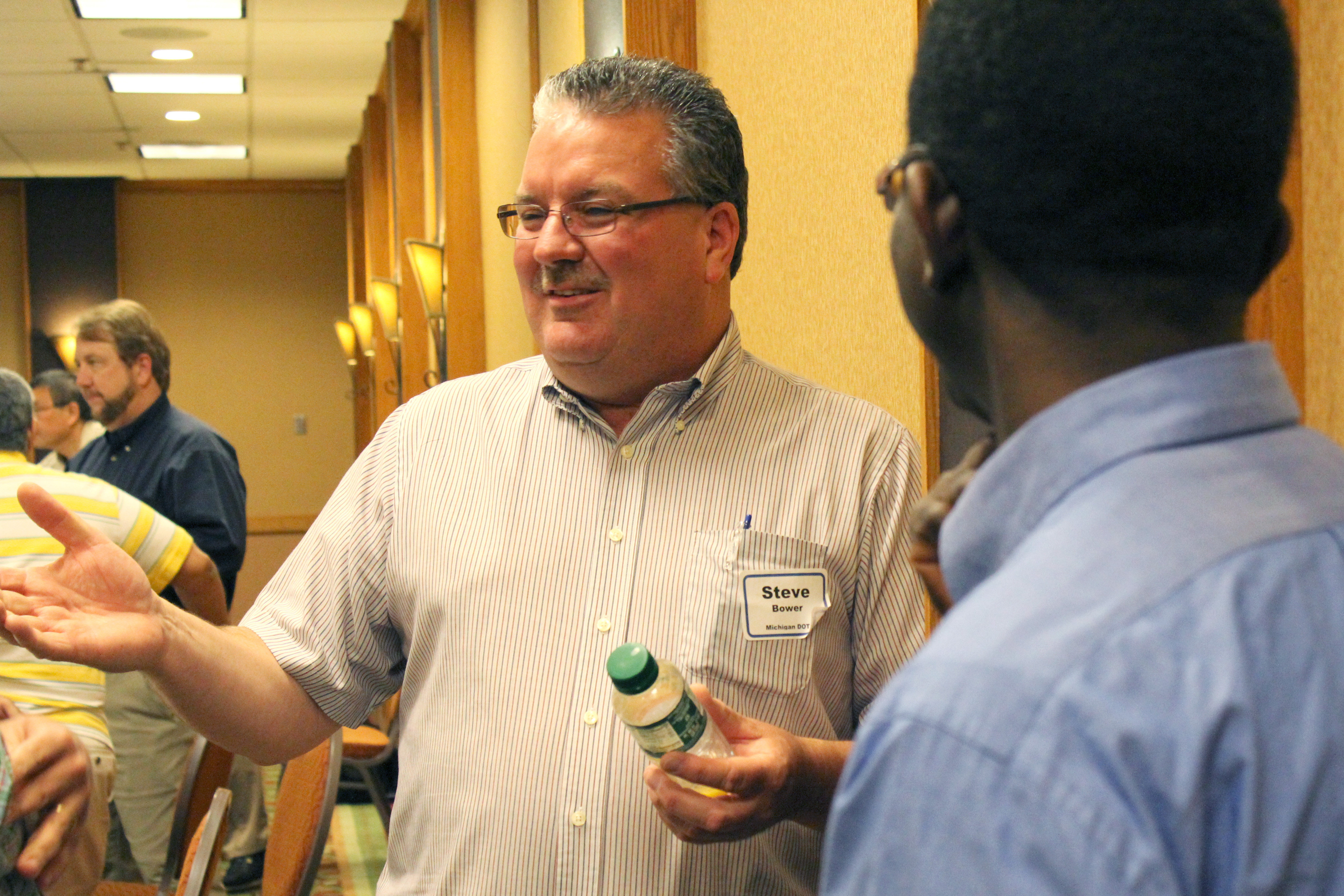
Steve Bower, a Michigan Department of Transportation Research Engineer, visits with MnROAD researcher Bernard Izevbakhai, right, and others during a break.
Steve Bower, a Michigan Department of Transportation Research Engineer, visits with MnROAD researcher Bernard Izevbakhai, right, and other peers.
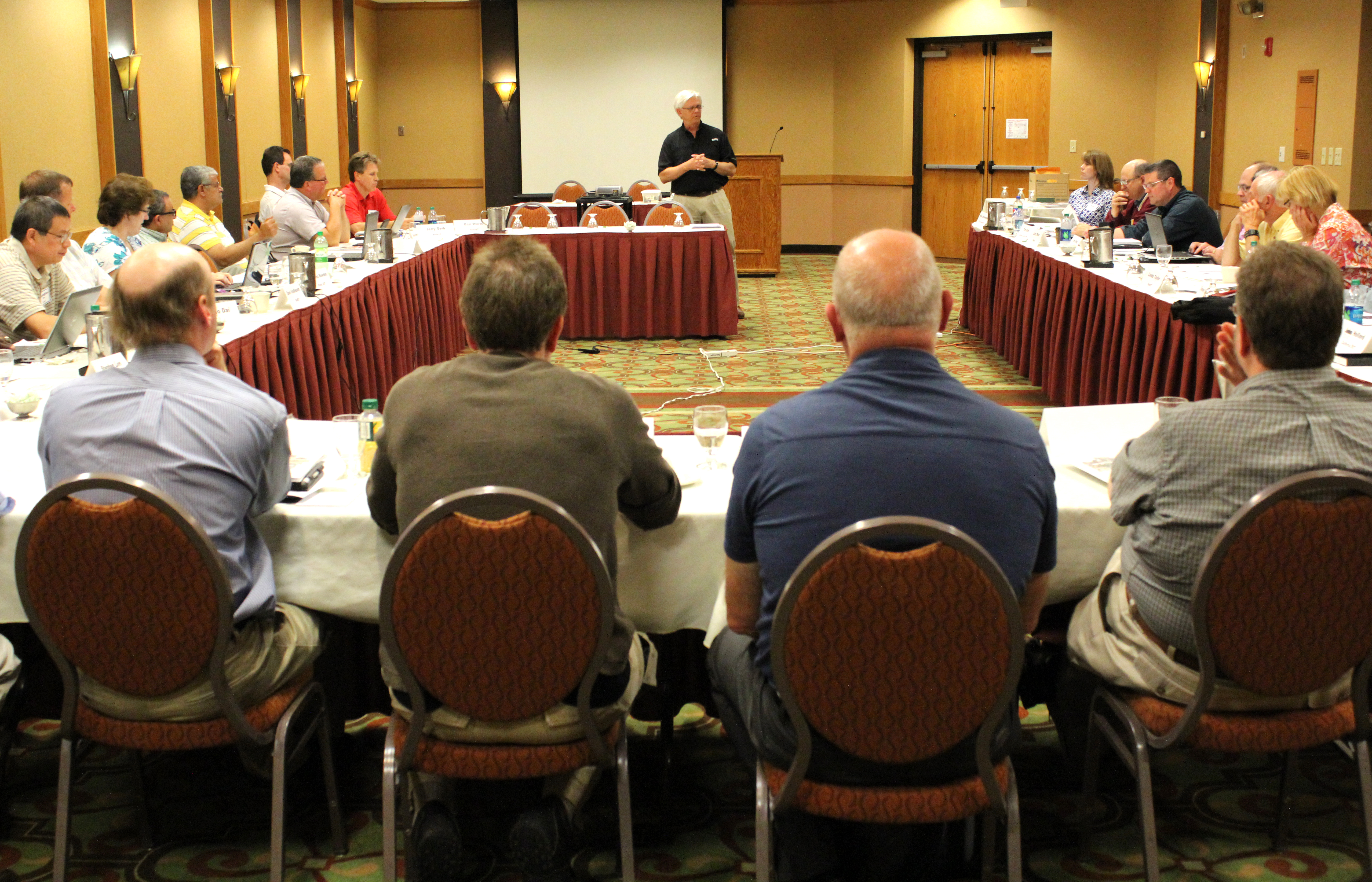
Construction engineering professor Joe Mahoney, from the University of Washington, leads a group discussion on improving research efforts at the close of the session Tuesday.
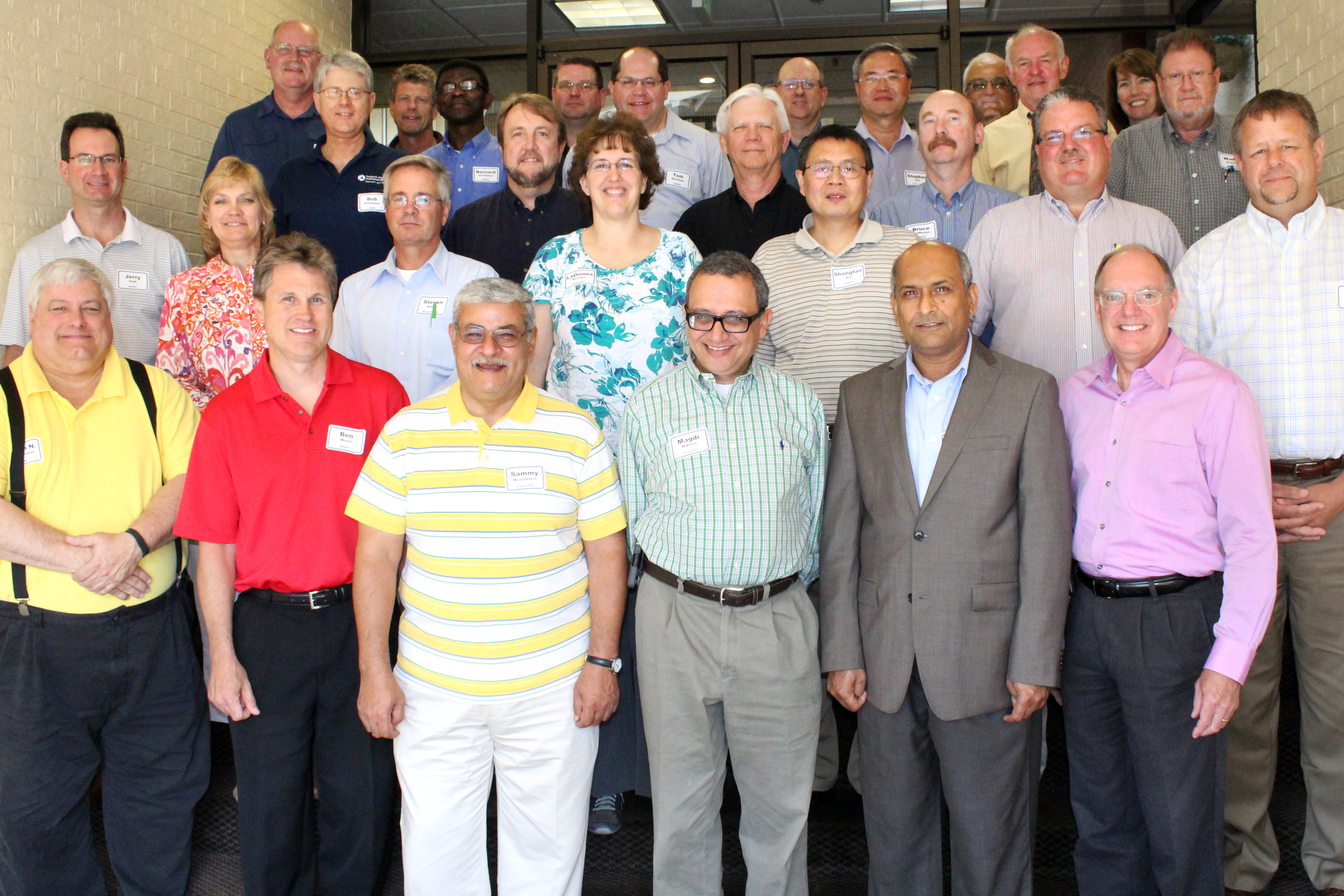
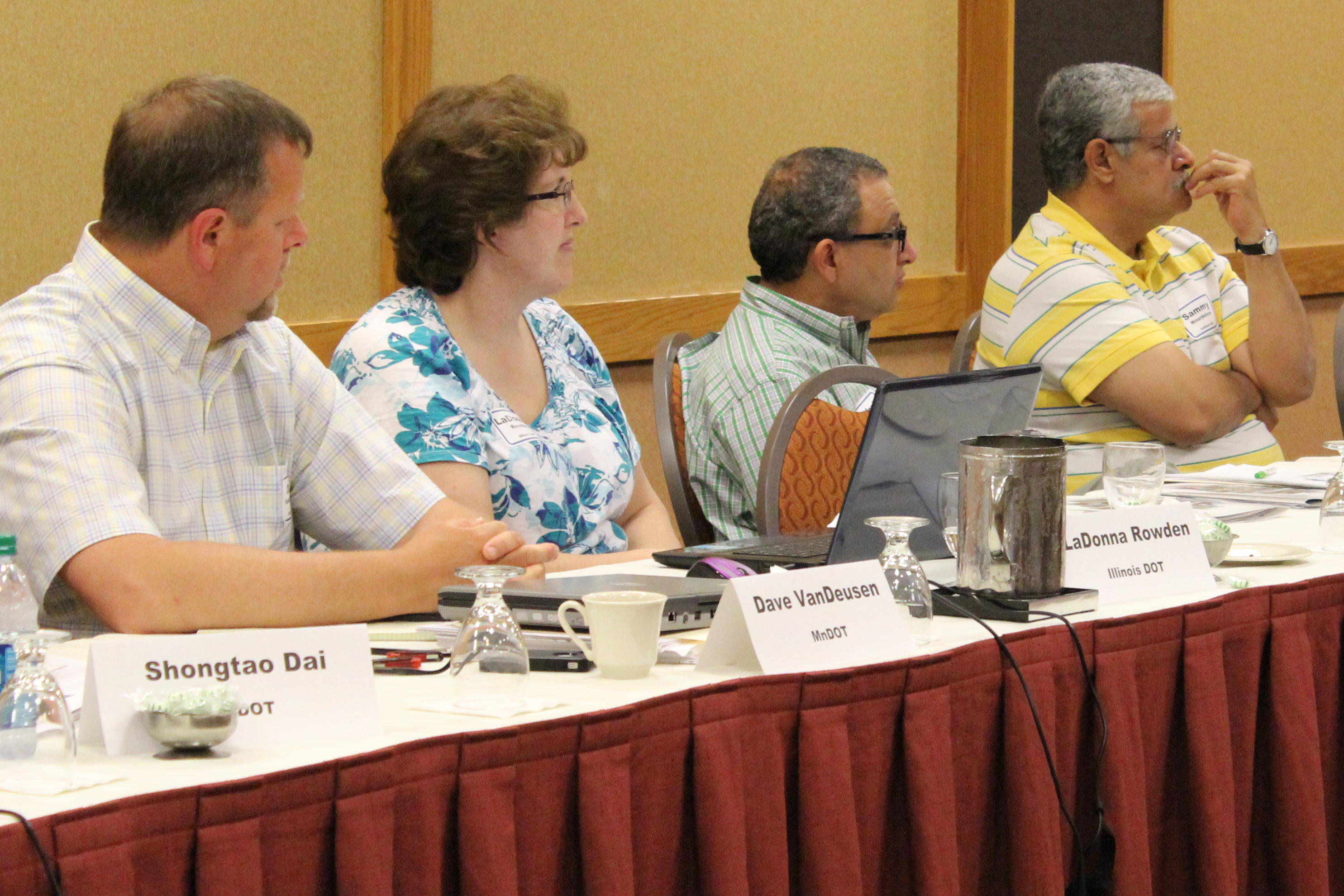
From left, Dave VanDeusen from MnDOT, LaDonna Rowden from the Illinois Department of Transportation, Magdi Mikhail from the Texas Department of Transportation and Samy Noureldin from the Indiana Department of Transportation. — at Holiday Inn Bloomington I-35W.
From left, Dave VanDeusen from MnDOT, LaDonna Rowden from the Illinois Department of Transportation, Magdi Mikhail from the Texas Department of Transportation and Samy Noureldin from the Indiana Department of Transportation.
Researchers came from Missouri, Maine, Texas, Illinois, Michigan, California, Ontario, Wisconsin, Indiana and Washington for the three-day workshop.


New test could help asphalt pavements survive winter intact

If there was ever a winter that demonstrated what cold weather can do to asphalt pavements, last one was it. But future winters may wreak less havoc on Minnesota roadways, thanks to a new asphalt mixture test in the final stages of evaluation by MnDOT’s Office of Materials and Road Research (OMRR).

Developed through a decade-long multi-state research project, the Disc-shaped Compact Tension (DCT) test evaluates the low-temperature performance of asphalt mixes. (See a video about the project that helped develop the DCT test below.)

For the first time, engineers will be able to predict how well a contractor’s proposed asphalt mix will hold up under harsh Minnesota winters.

“Performance testing is assuring that we’re getting what we’re paying for,” explained MnDOT Research Project Engineer Luke Johanneck.

Low-temperature cracking is the most prevalent form of distress found in asphalt pavements in cold climates. As the temperature drops, the pavement tries to shrink, creating cracks that allow water to seep in and eventually lead to pavement deterioration.

Until now, engineers have typically evaluated the individual components (such as amount of crushed aggregate and asphalt binder grade) and volumetric properties (such as air voids and asphalt content) of an asphalt mix, not how the final product performs in low temperature.

“It’s like baking a cake,” explained MnDOT Bituminous Engineer John Garrity. “Our current system says put in a half-cup of oil, two eggs and cake mix. Rather than just looking just at those individual components, taste the cake to see how good it is.”

Created by researchers at the University of Illinois, the DCT test applies tension to an asphalt mixture sample to determine its thermal fracture resistance. The test was determined to be the best of several methods looked at in another research study, conducted by the University of Minnesota with assistance from neighboring state universities.

The Disc-Shaped Compact Tension Test measures the fracture energy of asphalt  mixture lab or field specimens, which can be used in performance‐type specifications to control various  forms of cracking.
The test measures the fracture energy of asphalt mixture lab or field specimens, which can be used in performance specifications to control various forms of cracking.

The Office of Materials and Road Research is conducting pilot tests to become more familiar with the DCT test and to educate road contractors, who may eventually be required to use the test in Minnesota.

“This is very new to a lot of people that have been in the business for a long time,” Johanneck said.

Last summer, OMRR asked five contractors to submit asphalt mixes for testing. If a mix didn’t pass, the contractor was given suggestions for how to modify their recipe to better resist thermal cracking. This summer, OMRR plans to collect asphalt mixes from around the state to see how they measure up against a set of performance targets that were developed in the pooled fund study.

“We envision this at some point being part of our standard bid specifications,” Garrity said.

Those with a professional interest in the subject might be interested in a new video from MnDOT Research Services & Library (below) that demonstrates how to do the sample preparation for the DCT test.

Research Studies

Current DCT Test Implementation Project (2014) Pooling Our Research: Designing Asphalt Pavements That Resist Cracking at Low Temperatures (March 2013 Technical Summary) Synthesis of Performance Testing of Asphalt Concrete (September 2011) Investigation of Low Temperature Cracking in Asphalt Pavements National Pooled Fund Study 776 (2007 report)

Related Videos

Frost Damage in Pavement: Causes and Cures (full-length) Frost Damage in Pavement: Causes and Cures (short version)

Innovative pavement textures reduce noise, improve fuel economy

What if something as simple as changing the texture of the pavements we drive on could not only increase safety, but also reduce noise pollution and boost our vehicles’ fuel economy?

It’s possible, according to the latest research from MnROAD, the state’s one-of-a-kind pavement research facility. In a new report, investigators detail how quieter pavement textures, such as those applied by grinding grooves into pavements with diamond-coated saw blades (see the photo above), may also reduce rolling resistance — the force that resists a tire as it moves across the pavement’s surface.

The potential benefits to the public are significant. A 10-percent reduction in rolling resistance could reduce the U.S. public’s fuel consumption by 2–3 percent, eliminate up to $12.5 billion in fuel costs each year (as well as cutting carbon emissions). Add on the cost savings from reducing noise pollution (building noise barriers along highways can cost as much as $3 million per mile), and it’s clearly a win-win situation.

In the study, researchers used an innovative line-laser profiler to develop three-dimensional representations of test pavement surface textures. They then investigated the relationship between these surface characteristics and data on rolling resistance that was collected during a 2011 study using a special test trailer developed by researchers in Poland. This year, the same trailer will be used to conduct a second round of rolling resistance measurements at MnROAD.

The research is related to an ongoing pooled-fund study on concrete pavement surface characteristics. The goal is to produce data that will allow MnDOT to identify ideal ranges for surface characteristics that improve pavements’ quietness and ride quality while keeping them safe and durable.

Learn more
Researchers relied on rolling resistance data from a study conducted in 2011 with a test trailer developed by the Technical University of Gdańsk, Poland. This was the first time such measurements were taken in the United States.

MnROAD earns concrete pavement association award

Staff from MnROAD, the Minnesota Department of Transportation’s cold weather road research facility in Albertville, Minn., were presented with the Marlin J. Knutson Award for Technical Achievement by the American Concrete Pavement Association in December.

The award cites the facility’s well-deserved reputation for being a place where both agency and industry ideas are put to the test. This award was presented as a tribute to the agency’s commitment to learning and putting ideas into practice.

The Marlin J. Knutson Award for Technical Achievement is presented to an individual or group who has made significant contributions to advance the development and implementation of technical innovations and best practices in the design and construction of concrete pavements.

(far right) Gerald Voigt, ACPA president and CEO, presented MnDOT with the Marlin J. Knutson Award for Technical Achievement during a ceremony in December. Receiving the award are (from left) Luke Johanneck, Bernard Izevbekhai, Roger Olson, Tom Burnham, Glenn Engstrom, Maureen Jensen and Sue Mulvihill. (Photo courtesy of the ACPA)
(Far right) Gerald Voigt, ACPA president and CEO, presented MnDOT with the Marlin J. Knutson Award for Technical Achievement. Receiving the award are (from left) Luke Johanneck, Bernard Izevbekhai, Roger Olson, Tom Burnham, Glenn Engstrom, Maureen Jensen and Sue Mulvihill. (Photo courtesy of the ACPA)

“MnROAD is helping to make roads last longer, perform better, cost less, construct faster, and have minimal impact on the environment,” said Gerald Voigt, ACPA president and CEO. “It is a model for other agencies to follow.”

MnROAD is a pavement test track initially constructed between 1991-1993. It uses various research materials and pavements and finds ways to make roads last longer, perform better, cost less to build and maintain, be built faster and have minimal impact on the environment. MnROAD consists of two unique road segments located next to Interstate 94.

Staff from the MnROAD facility in Albertville were recognized during the ACPA’s Distinguished Service and Recognition Awards ceremony in December. (Photo by David Gonzalez)

This article, authored by Rich Kemp, originally appeared in Newsline, MnDOT’s employee newsletter.