

With the number of automated vehicles increasing on our roadways it is important to understand their potential impacts and how other road users will interact with them. In the future, there will be a more pronounced shared levels-of-automation transportation network, with fully manual, partially automated, and fully automated vehicles sharing the same Minnesota roads. While planners and engineers have a reasonable idea of how humans drive around other humans, what is not as well-known is human driving behavior around automated vehicles.
Continue reading New Project: Assessment of Pedestrian Safety and Driver Behavior Near Automated VehiclesCategory Archives: Traffic and Safety

Webinar Recording: The Health and Transportation Nexus
Transportation is a crucial contributor to health: it not only directly shapes the social and physical environments in myriad ways, but it also determines the types of places where people can live, learn, work, and play in their everyday life.
Continue reading Webinar Recording: The Health and Transportation Nexus
Making Freeway Travel Times in the Twin Cities Area More Reliable
Providing consistent freeway travel times for Twin Cities area drivers requires careful traffic management and well-planned freeway projects. To effectively respond to incidents and identify the most needed renovations, MnDOT traffic managers need to know precisely where, when and why congestion is happening.
Continue reading Making Freeway Travel Times in the Twin Cities Area More Reliable
New Technology and Existing Equipment Improve Statewide Vehicle Classification Counting Process
In a recent study, researchers leveraged previous MnDOT research and existing traffic monitoring infrastructure to refine inductive loop signature technology that counts and classifies vehicles. Positive results have given MnDOT a feasible and cost-effective way to collect vehicle classification data throughout the state for planning and decision-making.
Continue reading New Technology and Existing Equipment Improve Statewide Vehicle Classification Counting Process
Model Helps Predict Likelihood of Farm Vehicle Crashes on Public Roads
This article was originally published in Catalyst, January 2022.
A U of M study of farm vehicle safety on rural roads identified factors—such as crop type and number of vehicles operated—that can help predict the likelihood of a farm’s vehicles being involved in a crash on a public road.
Continue reading Model Helps Predict Likelihood of Farm Vehicle Crashes on Public Roads

How Did COVID-19 Affect Driver Safety?
The COVID-19 pandemic resulted in fewer drivers on Minnesota’s roads in 2020 than in the previous year. Emptier roadways seem like they should be safer, but many states measured increases in speeding. For example, California issued twice as many speeding tickets, Iowa reported a 65% increase in driving 25 mph or more over the speed limit, and Ohio experienced the highest number of traffic fatalities since 2007. Clearly, some drivers were taking advantage of empty streets to speed. The pandemic also strained police forces, resulting in less enforcement.
Continue reading How Did COVID-19 Affect Driver Safety?
Affordable Lane-Departure Warning System is on the Road to Market Readiness
This article was originally published in Catalyst, November 2021.
With the improvements made to their lane-departure warning system, U of M researchers are one step closer to preventing highway crashes and deaths. In a recent project, the research team enhanced its lane-departure warning system, which uses standard GPS data rather than expensive cameras or maps—moving toward an affordable, market-ready product to warn drivers about dangerous lane drift due to drowsiness or inattention.
Continue reading Affordable Lane-Departure Warning System is on the Road to Market Readiness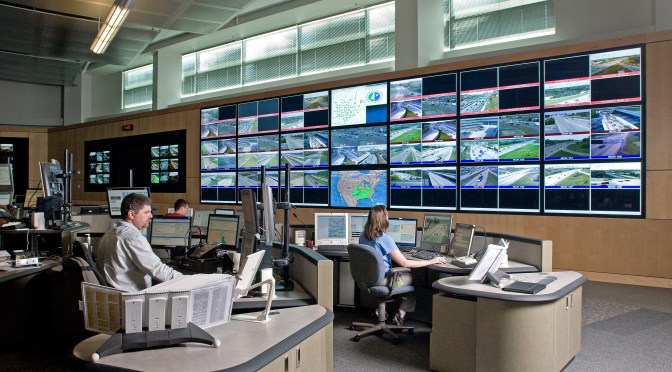
New Project: Performance Evaluation of Detection Technologies for Signalized Intersections in Minnesota
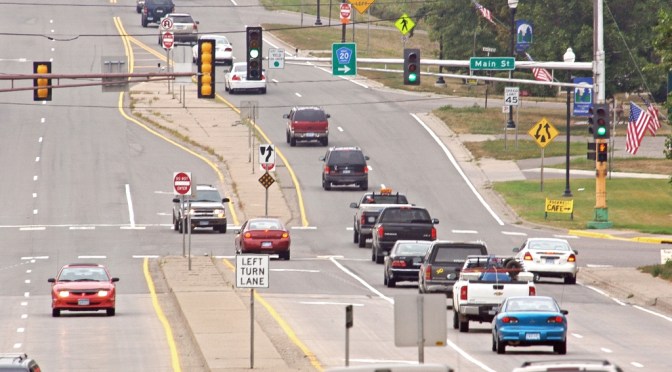
Intersections can be controlled through pretimed systems or vehicle-actuated systems, which detect the presence of a vehicle. Good vehicle detection is the foundation of actuated systems. While loop detectors have been effective workhorses of vehicle detection for MnDOT, changes in vehicle fleets—for example, the use of nonferrous materials—and an increased need to detect vulnerable road users has resulted in an increased use of nonintrusive detection technologies (NIT).
Continue reading New Project: Performance Evaluation of Detection Technologies for Signalized Intersections in Minnesota
