Category Archives: Traffic and Safety

Using SMART-Signal Data to Predict Red Light Running at Intersections

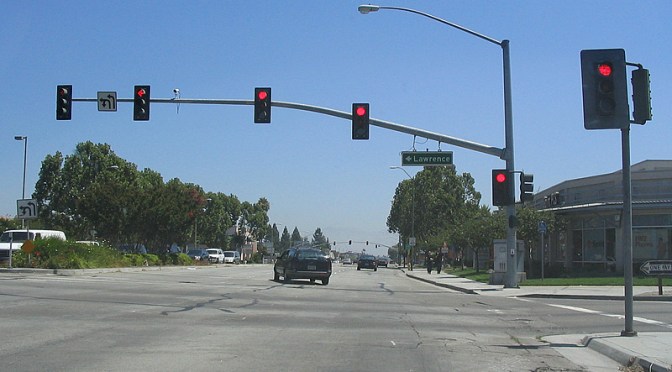
This project developed a methodology using traffic data collected by the SMART-Signal system to identify intersections prone to red light running and, therefore, serious crashes. This methodology could help MnDOT prioritize intersections for safety improvements.

“The essence of this project was to develop a toolbox that traffic engineers can use to determine an intersection’s safety performance,” said Henry Liu, Research Professor, University of Michigan Transportation Research Institute.

Liu served as the study’s principal investigator.

“This research provides a way to classify intersections that have a higher potential for red light running,” Mick Rakauskas, Former Research Fellow, HumanFIRST Program, University of Minnesota

What Was the Need?

Engineers traditionally measure an intersection’s safety using the number of crashes that actually occur there. However, collisions are rare and somewhat random events, and it can take a long time to collect enough data to accurately assess a single location’s safety.

Traffic conflicts—“close calls” in which one or both drivers must brake, swerve or take some other evasive action to avoid a crash—happen much more often than collisions do. As a result, many research projects use traffic conflicts as an alternative measure of safety.

Red light running (RLR) is one of the most common and dangerous causes of traffic conflicts at signalized intersections. While not every RLR event leads to a collision, it is often the first step in a process that ends in one.

Additionally, crashes caused when drivers run red lights are typically right-angle crashes, which are frequently severe. About 45 percent of right-angle collisions result in injury compared to about 25 percent of other crash types. Reducing right-angle-crash frequency can therefore significantly improve overall road safety and reduce costs related to traffic collisions.

MnDOT’s Safety Group wanted to determine whether it was possible to objectively and automatically identify intersections where RLR events are most likely to occur. Developing a methodology to identify the most dangerous intersections would help MnDOT prioritize locations for safety improvements.

What Was Our Goal?

Several previous MnDOT research projects had developed the SMART-Signal system, an automatic system that collects data from traffic signal controllers at signalized intersections. MnDOT has installed the system at more than 100 intersections in the Twin Cities. This project sought to develop tools that use SMART-Signal data to evaluate safety performance at intersections.

What Did We Do?

flowchart
This flowchart shows the methodology for determining whether an RLR event will result in a crossing conflict.

Researchers analyzed SMART-Signal data collected at the intersection of Boone Avenue and Trunk Highway 55 (TH 55) in Golden Valley between December 2008 and September 2009. This intersection is equipped with both stop-bar detectors and advance detectors located about 400 feet upstream of the intersection. Researchers used stop-bar-actuation data and details about traffic signal phases to identify RLR events at the intersection.

However, since most intersections are equipped only with advance detectors, this method cannot be used to measure RLR events at all intersections. As an alternative, re-searchers used vehicle-speed and traffic-volume data from the advance detectors, along with recorded traffic-signal-phase information from SMART-Signal, to identify potential RLR events. They compared these potential events to actual RLR events identified using stop-bar data and developed a formula to predict whether an RLR event would occur. This formula can be applied at intersections of major and minor roads that are not equipped with stop-bar detectors.

Researchers then used data from a minor road to develop a method that identified whether an RLR event would lead to a traffic conflict. In this method, an intersection is first divided into four conflict zones (two in each direction). When a vehicle from the main road enters the intersection, the method enables researchers to calculate when the vehicle enters and leaves each of the conflict zones it passes through. Then they determine whether a vehicle from the minor road is in the same conflict zone. Using this methodology, researchers estimated the number of daily traffic conflicts at other inter-sections on TH 55. These estimates were based on data collected in 2009 and between 2012 and 2015.

Finally, researchers developed a regression model to evaluate whether adding the number of predicted traffic conflicts to a more standard model that used average annual daily traffic (AADT) would correlate with the number of actual collisions at that site. They evaluated the model using data from seven four-legged intersections and two T-intersections on TH 13 and TH 55.

What Did We Learn?

The formula for predicting RLR events matched observations 83.12% of the time, based on more than 2,000 data points.

The number of daily crossing conflicts at TH 55 intersections ranged from 7.9 (at Glenwood Avenue in 2009) to 51.2 (at Winnetka Avenue in 2013).

While limited data were available for the regression model (as no site had more than four years of SMART-Signal data available, and there were only 11 crashes in total), the model suggests that estimated average traffic conflicts and minor-road AADT both contribute to accurate prediction of right-angle-crash frequency, while major-road AADT does not. Due to the limited data available, however, these conclusions should be considered preliminary.

What’s Next?

While there are currently no plans for follow-up studies, additional research efforts could include continuing to evaluate and improve the prediction model as more data are collected, and installing video cameras at intersections to validate the proposed methodologies.


This Technical Summary pertains to Report 2017-08, “Estimation of Crossing Conflict at Signalized Intersection Using High-Resolution Traffic Data,” published March 2017. 

Choosing Effective Speed Reduction Strategies for Roundabouts

Using survey results and prior research, this project developed a new resource to enable Minnesota local road engineers to select appropriate speed reduction measures for roundabouts. Further research is needed to determine the relative effectiveness of different measures alone and in combination.

“Although roundabouts are becoming common, single-vehicle crashes from drowsy, inattentive or unfamiliar drivers are still a concern, particularly in rural areas,” said Joe Gustafson, Traffic Engineer for Washington County. “This project provides an overview of existing speed reduction treatments that have been used in both roundabout and nonroundabout contexts, and a framework to properly evaluate the effectiveness of new treatments.”

“Rather than try to identify the right combination of treatments, the research was designed to give engineers a variety of options to consider for a given location,” said Susan Chrysler, Senior Research Scientist, Texas A&M Transportation Institute.

Gustafson served as the technical liaison for the study, and Chrysler was the principal investigator.

What Was the Need?

2017-14-p1-image

Roundabouts can provide a safer alternative to traditional intersection control devices like traffic signals and stop signs. Roundabouts have been proven to reduce crash severity by requiring drivers to decrease speed during the approach to the intersection. But failure to slow down sufficiently could result in a crash.

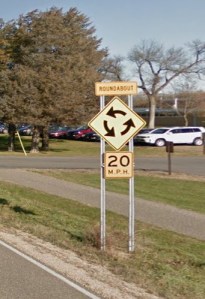
Signs and markings are key treatments used to communicate to drivers that they must slow down as they approach the roundabout. When navigated appropriately, roundabouts can eliminate or reduce the severity of crashes, reduce delays and reduce fuel consumption.

What Was Our Goal?

This project had two goals: to analyze existing research and conduct a survey of roundabout design and installation practitioners to determine best practices; and to develop a resource that engineers can use to identify appropriate speed reduction treatments for high-speed approaches to roundabouts.

What Did We Do?

Investigators surveyed transportation engineers from Minnesota and other states, along with technical consultants, to learn their experiences managing roundabouts with high-speed approaches. The survey addressed geometric design parameters and traffic control methods, changes in maintenance practices, crash history and speed reduction measures that were considered or eventually enacted.

Previous research on the subject was studied, including the Federal Highway Administration report Roundabouts: An Informational Guide and National Cooperative Highway Research Program Report 672: Roundabouts: An Informational Guide, Second Edition. Design manuals from four states were reviewed to provide a sample of the material avail-able to practitioners seeking guidance on design of high-speed roundabout approaches.

Based on their research, investigators provided information on the effectiveness of various treatments and on their installation and maintenance costs. They also developed a methodology for conducting a speed study to assist engineers in determining the most effective treatment for a given intersection. Treatments for alerting drivers that a round-about is ahead include traditional signs, pavement markings, illumination and other indicators, plus advanced devices like speed-activated, LED-enhanced warning signs.

What Did We Learn?

Each roundabout presents unique challenges. Local road engineers need to evaluate the characteristics of the intersection being considered (such as geometric design and adjoining land use) and the costs of installation and maintenance before recommending a specific treatment or combination of treatments.

Other findings include the following:

  • Speed reduction techniques found effective for horizontal curves, urban-rural transition zones and isolated rural intersections should be effective for rural roundabouts with high-speed approaches.
  • In rural locations, speed reduction treatments that have been used at railroad crossings, T-intersections and work zones may also be applicable to roundabouts.
  • Some unique treatments used internationally hold promise, but further study is needed before these treatments can be recommended for use in the United States.

What’s Next?

This study was the first phase of research. The findings provide the methodology to select, install and evaluate treatments at different locations. Further research is needed to accomplish the following:

  • Analyze the effectiveness of speed reduction treatments at different locations
  • Determine the impact of different combinations of treatments
  • Establish the comparative benefits of two or more treatments that fall within the same general cost and maintenance grouping
  • Analyze the impact of roundabout infrastructure (such as gateway treatments and illumination), various pavement markings and the long-term effects of specific signing treatments.

This Technical Summary pertains to the LRRB-produced Report 2017-14, “Strategies for Effective Roundabout Approach Speed Reduction,” published May 2017. 

Self-propelled auto-flagger keeps workers out of traffic

Working with a Minnesota manufacturer, researchers developed a moving automated flagger assistance device (AFAD) that signals traffic at work zones. The AFAD is operated remotely by a worker who can stand off the roadway out of traffic.

“Everybody who has used the mobile AFAD has liked it. We love our stationary AFAD unit. These units have really big stop-slow signs—they’re so visible,” said Jeremy Gjovik, Transportation Operations Supervisor, MnDOT District 3.

“The AFAD is a one-of-a-kind device. We were able to basically start from scratch and come up with a device that meets all the needs it was designed for,” said Edward Terhaar, Principal, Traffic Engineering, Wenck Associates, Inc.

Terhaar served as the principal investigator for the study.

What Was the Need?

According to data from the U.S. Bureau of Labor Statistics, 149 roadway workers were killed nationwide from 2003 to 2015 while flagging or directing traffic, and many near misses have been reported with the increase in distracted driving that has come with mobile device use.

In 2014, MnDOT trained over 60 state and district maintenance workers in the use of an automated flagger assistance device (AFAD). The AFAD has been embraced in Minnesota as a highly visible device that effectively directs traffic in stationary maintenance and construction projects while keeping flagging personnel off the road during operation.

The AFAD does not, however, suit moving operations (like pavement crack sealing) because the device requires towing. Engineers at MnDOT wanted to determine if the AFAD could be made into a mobile device that could be operated by a road crew near, but not on, the roadway.

What Was Our Goal?

MnDOT funded this research to develop a self-contained, self-propelled mobile AFAD for use on moving work zone roadway projects.

What Did We Do?

2017-09-p2-imageResearchers met with MnDOT engineers to identify the features that would be required in a moving AFAD. They determined that the device would have to be towable to a construction site with standard towing gear, operable remotely through wired or wireless controls, movable forward and in reverse, and able to use rechargeable onboard batteries.

The research team investigated existing self-propelled devices from the United States, Canada and Australia for moving wheeled objects, large and small, to see if they could be adapted to these needs. No suitable device was found.

After further consultation with the Technical Advisory Panel, researchers approached DJ Products of Little Falls, Minnesota, a company that designs and manufactures devices (including battery-operated devices) for moving trailers, dumpsters, shopping carts and aircraft.

Researchers met with DJ Products in February 2015, reviewed its products and agreed that DJ Products would develop a prototype vehicle on which the AFAD could be mounted. In August 2015, after evaluating and modifying designs, DJ Products hosted a demonstration of the prototype vehicle without the AFAD attached. The research team requested modifications, and in April 2016, the company presented a new self-propelled device with the AFAD attached.

What Did We Learn?

Initial field testing was delayed due to seasonal weather issues and device operating problems that required the replacement of components. In February 2017, a MnDOT operator tested the mobile AFAD on a crack-sealing project on State Highway 71 south of Sauk Centre.

The moving AFAD can be operated with a wired or wireless controller, as well as with controls on a handlebar mounted on the vehicle. Operators must use one remote for moving the wheeled unit, and the remote from the original AFAD for sign messaging. The new device moves forward and backward, can be towed with a standard hitch, and employs onboard batteries and a charger.

Setup and takedown require more effort than conventional flagging, but this effort is not considered cumbersome. The moving AFAD can be operated by one person standing 400 feet or more off the roadway, and the device is large enough to be easily seen and understood by road users.

The new device was used for only one hour initially. The sealing crew was outpacing the moving AFAD because the crack-sealing project entailed few repairs with greater distance between repair locations than is typical of such projects.

What’s Next?

The moving AFAD device can be used as is, and is still being tested by MnDOT. Further modifications will be requested, including enhancement of the battery-powered unit, as it currently requires a battery change to operate through an entire work shift.

Steering and controller design will likely be modified. Currently, the moving AFAD operates like a rear-wheel-drive vehicle and must be steered from its rear-wheel, traffic-facing axle, forcing the remote operator to guide it up the road as if backing up a boat trailer. MnDOT operators may ask that the device be redesigned to be steerable from the traffic-leading end of the vehicle, as if it were pulling the signage up the road, allowing for more intuitive control.

MnDOT personnel would also like to see the device’s controller integrated with the sign controller, eliminating the need for two controllers—one for moving, the other for operating the sign. Nevertheless, the device appears to be a promising option for mobile AFAD use by an operator who need not stand on the road to direct traffic.


This Technical Summary pertains to Report 2017-09, “Development of a Moving Automatic Flagger Assistance Device (AFAD) for Moving Work Zone Operations,” published March 2017. 


Previous research:

ATM Queue Warning Systems Can Reduce Freeway Crashes

ATM queue warning systems were developed and deployed on two freeways to alert motorists to queuing conditions ahead that could lead to rear-end crashes. At one test site, the prototype system substantially reduced crashes and near-crashes. At the other site, it reduced speed variances.

“The big lesson learned was that the detection method had to function quickly and display a message that was timely and accurate. This gains the trust and confidence of the motoring public,” said Brian Kary, Freeway Operations Engineer, MnDOT Metro District.

“Deploying the product of this research was not difficult. The challenge came in closing the gap to alert the drivers to slow down,” said John Hourdos, Director, Minnesota Traffic Observatory, University of Minnesota.

Kary served as the technical liaison for the study, and Hourdos was the principal investigator.

What Was the Need?

To reduce congestion and improve safety, MnDOT has deployed active traffic management (ATM) technology on two highways in the Twin Cities freeway network. The ATM system incorporates intelligent lane control signals (ILCS) placed over selected lanes at half-mile increments to warn motorists of incidents or hazards ahead. With advance warning, drivers can slow down and possibly avoid crashes.

The deployed system, however, does not specifically target the prevention of rear-end collisions, which are the most frequent type of crashes on freeways. Research has shown that rear-end collisions tend to occur during extended lines of stop-and-go traffic and at end-of-queue locations. Overhead, real-time electronic messages that warn of queuing conditions ahead can prepare motorists to reduce speed and avoid potential rear-end collisions. Such messages have the added benefit of improving mobil-ity since fewer crashes will improve traffic flow.

What Was Our Goal?

This project sought to develop and field-test two different prototypes for ATM queue warning systems. One prototype would address stop-and-go traffic and end-of-queue situations. The other would address shock waves, a crash-facilitating condition where there is a sudden change in traffic movement that causes a cascade of braking. The long-range goal of the project is to develop a unified ATM queue warning system that can be deployed at other locations within the freeway network.

What Did We Do?

Development of two prototype high-resolution ILCS warning systems began in 2014. The systems were then deployed on two high-traffic freeways in the Twin Cities: one on Interstate 35 West (I-35W) and the other on I-94. Both were still in operation in mid-2017.

The two locations have significantly different traffic conditions. On I-35W, congestion creates expanding queues that extend from the Trunk Highway 62 (TH 62) interchange to the 50th Street overpass. At the I-94 location, crashes are most likely to occur due to shock waves that can often quickly develop near the Portland Avenue overpass.

2017-20-p2-imageTo capture traffic data, researchers used either live video from closed-circuit-camera detector stations or data from existing in-pavement loop detectors. The ILCS units dis-played the message Slow Traffic Ahead, which would direct drivers to reduce speed due to the congested lanes ahead. Other messages, such as Prepare to Stop or Traffic Ahead 10 MPH, were considered but not tested during this initial study.

A server installed at the Minnesota Traffic Observatory at the University of Minnesota archived the time and location of each queue on I-94 and measured its duration and length. This provided the data needed to develop two algorithms that can be used to develop a rear-end-collision warning system that can be installed at freeway locations where similar queuing conditions exist.

What Did We Learn?

The data collected show that warning messages delivered by the ATM system can be effective in alerting drivers to queuing conditions. The ultimate benefit is a reduction in rear-end collisions in downstream locations on the freeway.

Data recorded at the I-35W location revealed that:

  • Messages delivered by the ILCS system helped drivers maintain a steady speed and eliminate stop-and-go travel.
  • The contents of warning messages should be crafted to have an impact on all motorists. Drivers responded differently to specific messages.
  • Queue warning systems can be made more effective through deployment of a real-time, lane-specific ILCS system and collection of high-resolution data.
  • Some drivers did not always heed the first queue warning message to decrease speed, but they did slow down further along the roadway.
  • There was no significant difference in impact between warning messages issued during the morning peak travel period and those issued during the evening peak.

In the first three months of queue warning system operation, the crash frequency re-corded at the I-94 test site was 9.34 crashes per vehicle miles traveled (VMT) and 51.8 near-crashes. This was a 22 percent decrease from the 11.9 crashes per VMT recorded at the site in 2013 monitoring data, and a 54 percent decrease from the 111.8 near-crashes recorded there in 2013.

The research showed that to prevent potential collisions, the ATM system had to deliver messages quickly and accurately to give drivers enough time to adjust their speeds. Also, the control algorithms developed in this project can provide the queue-estimation projections needed by MnDOT and other transportation departments to enhance the effectiveness of their ATM systems.

What’s Next?

While the deployment of the two queue warning system prototypes was a relatively cost-effective option, a longer trial period of two to three years is needed to ensure that the ATM system delivers sustainable benefits.


This Technical Summary pertains to Report 2017-20, “Development of a Queue Warning System Utilizing ATM Infrastructure System Development and Field Testing,” published June 2017. 

Gauging safety of heavy vehicles on older concrete bridges

Bridges built using prestressed concrete girders are among the most common in Minnesota and throughout the U.S. because of their good performance, lower initial material costs, and relatively low ongoing maintenance costs. However, the federal requirements for these bridges have changed considerably over the years. As a result, bridges built to older specifications may score poorly when subjected to new bridge rating standards even though they are actually in good condition.

“One area in which this discrepancy between ratings and reality can cause problems is determining safe legal load limits for bridges, which are used to decide whether larger trucks may cross the bridge with an overload permit,” says Catherine French, CSE Distinguished Professor in the Department of Civil, Environmental, and Geo- Engineering and the study’s principal investigator.

“Our goal was to evaluate whether the current guidelines regarding shear forces (which transfer the loads to the supports) may be overly conservative for these older concrete bridges that are in good condition.”

Sponsored by MnDOT, the study was conducted by a team of U of M researchers including Carol Shield (co-investigator) and Benjamin Dymond.

Researchers used a multipronged approach consisting of numerical modeling and tests in both the laboratory and the field. The numerical modeling was used to apply the results of the laboratory and field tests to a study examining the effects of key parameters on the distribution of shear in a bridge system. Parameters included span length, girder spacing and depth, deck thickness, and load position.

Results showed that the shear forces for some bridges are not as high as those predicted by distribution factors in the current specifications—at least partially explaining why some MnDOT bridges with low shear ratings show no signs of distress, French says. The researchers provided recommendations for more refined methods of evaluating prestressed concrete girder bridges that rate low for shear and developed a screening tool to identify which bridges that rate low for shear should be further analyzed.

“The results of this project will help us re-evaluate aging bridges in our inventory, to distinguish those that really do have shear problems from those that don’t, and make decisions about whether they need to be replaced or rehabilitated for extra capacity,” says Yihong Gao, bridge designer with MnDOT’s Office of Bridges and Structures.

Resources:

Reducing speeds to improve safety for work-zone flaggers

When drivers approach a roadway work zone at high speeds, they put the lives of work-zone flaggers at risk. To keep flaggers safe on the job, U of M researchers are looking for better ways to capture drivers’ attention—and compel them to slow down—as they approach flagger-controlled work zones.

Kathleen Harder, director of the Center for Design in Health, and John Hourdos, director of the Minnesota Traffic Observatory, identified and tested new work-zone warning elements to more effectively capture and sustain driver attention. The project was funded by MnDOT and the Minnesota Local Road Research Board.

The project began with a simulator study in which participants completed three drives, each featuring a work zone with different warning treatments. One condition was a traditional four-sign configuration currently used to warn drivers approaching work zones. The other two conditions featured a variety of new elements, including signage with new messaging such as  a “one-lane road ahead” sign with flashing LED lights, a dynamic speed warning sign equipped with a loud warning horn that sounded if drivers exceeded the speed limit, and portable rumble strips.

“Overall, we found that the new set of elements is more effective than the elements currently used to reduce driving speeds on the approach to a flagger-controlled work zone,” Harder says.

Although adding LED lights to the one-lane road sign had no significant effect on drivers’ speeds, findings indicated that the dynamic speed sign coupled with the horn was more effective than the dynamic sign alone.

To test these new elements under real-world conditions, the researchers conducted field tests evaluating two configurations in Minnesota work zones. The first configuration followed the minimum standards outlined in the Minnesota Manual on Uniform Traffic Control Devices. The second deployed signs employing new messaging and attention-getting devices, including a dynamic speed warning sign, horn, and rumble strips.

Findings showed that the combination of the dynamic speed warning sign and the horn successfully reduced the overall speed of vehicles approaching the work zone. The portable rumble strips did not cause any significant speed reduction, but this may have been related to their location downstream from the dynamic speed sign and horn.

“Our findings reveal that the new set of elements designed to capture driver attention—including new messaging, a dynamic speed trailer, and horn—had a significant influence on reducing driver speed,” Harder says. “The experimental layout practically eliminated high-speed outliers and successfully reduced the approach speed to the flag operator.”

Work-zone warnings could soon be delivered to your smartphone

Imagine that you’re driving to work as usual when your smartphone announces, “Caution, you are approaching an active work zone.” You slow down and soon spot orange barrels and highway workers on the road shoulder. Thanks to a new app being developed by University of Minnesota researchers, this scenario is on its way to becoming reality.

“Drivers often rely on signs along the roadway to be cautious and slow down as they approach a work zone. However, most work-zone crashes are caused by drivers not paying attention,” says Chen-Fu Liao, senior systems engineer at the U’s Minnesota Traffic Observatory. “That’s why we are working to design and test an in-vehicle work-zone alert system that announces additional messages through the driver’s smartphone or the vehicle’s infotainment system.”

As part of the project, sponsored by MnDOT, Liao and his team investigated the use of inexpensive Bluetooth low-energy (BLE) tags to provide in-vehicle warning messages. The BLE tags were programmed to trigger spoken messages in smartphones within range of the tags, which were placed on construction barrels or lampposts ahead of a work zone.

17245-NR20F5

The researchers also developed two applications for the project. First, they designed a smartphone app to trigger the audio-visual messages in vehicle-mounted smartphones entering the range of the BLE work-zone tags. A second app allows work-zone contractors to update messages associated with the BLE tags remotely, in real time, to provide information on current conditions such as workers on site, changes in traffic, or hazards in the environment.

Field tests proved the system works. “We found that while traveling at 70 miles per hour, our app is able to successfully detect a long-range BLE tag placed more than 400 feet away on a traffic barrel on the roadway shoulder,” Liao says. “We also confirmed the system works under a variety of conditions, including heavy traffic and inclement weather.”

“This was a proof of concept that showed that smartphones can receive Bluetooth signals at highway speeds and deliver messages to drivers,” says Ken Johnson, work-zone, pavement marking, and traffic devices engineer at MnDOT. “Future research will look into how we should implement and maintain a driver alert system.”

This future work includes using the results of a human factors study currently under way at the U’s HumanFIRST Laboratory to create recommendations for the in-vehicle message phrasing and structure. Then, researchers plan to conduct a pilot implementation with multiple participants to further evaluate the system’s effectiveness.

According to MnDOT, another phase of the project may investigate how to effectively maintain the BLE tag database. This phase could also investigate implementation options, such as how MnDOT can encourage drivers to download and use the app.

Infrared Sensing Not Yet Suitable for HOV/HOT Lane Enforcement

Could the same infrared technology that’s used by security firms to detect trespassers be used to spot carpool lane violators? Not yet, says new research sponsored by MnDOT, which shows that to consistently detect passengers through windshield glass, the system would require a laser that might harm people’s eyes.

“Some vendors have proposed significant investments in sensing technology for HOV/HOT lane enforcement,” said Nikos Papanikolopoulos, Professor, University of Minnesota Department of Computer Science and Engineering. “This research demonstrated that it’s not safe, so the tests saved a lot of money and protected the well-being of drivers.”

“Development is still continuing in the industry, so we will cautiously evaluate sensing technologies as they come along,” said Brian Kary, MnDOT Freeway Operations Engineer. “This research gave us a solid base of knowledge about what we’ll be looking for and what we need to avoid.”

Papanikolopoulos served as the research project’s principal investigator, and Kary served as technical liaison.

What Was the Need?

High-occupancy vehicle/high-occupancy toll (HOV/HOT) lanes have gained popularity in recent years as a way to address highway congestion in urban areas. However, enforcing the provisions that either prohibit or charge a toll to single-occupant vehicles in HOV/HOT lanes can be challenging. Currently, enforcement is handled by law enforcement officers, but this is a labor-intensive process that can’t catch every violator and can create a traffic safety hazard.

Obtaining technology to assist officers with enforcement is a goal for MnDOT and many other agencies that operate HOV/HOT lanes, and several manufacturers are working to develop enforcement cameras. But this has proven to be a difficult task. Window tinting and glare from sun-light can thwart common sensing technologies like video cameras and microwave radar (commonly used in speed limit enforcement). Previous research using near-infrared sensors has shown promise, but none has produced completely successful results.

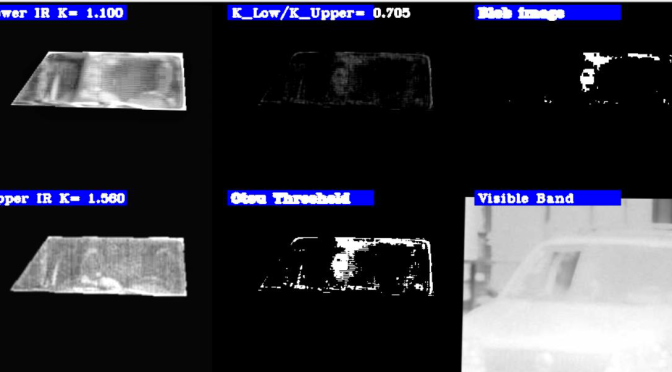
This study tested Honeywell’s Tri-Band Infrared (TBI) sensor, which was originally used to automatically detect intrusions at high-security entrance gates. In addition to a black-and-white camera and an illuminator, the TBI has two co-registered near-infrared cameras. The system takes advantage of the fact that human skin reflects infrared light much more effectively at wavelengths below 1400 nanometers. The TBI’s infrared cameras are sensitive to different wavelengths, one below and one above that threshold, and fusing the images from these two cameras makes silhouettes of faces more prominent.

What Was Our Goal?

The goal of this project was to evaluate whether the TBI sensor is suitable for HOV/HOT lane enforcement applications.

Illuminator
Infrared lasers helped the TBI sensor detect people through glass, but they also pose a danger to eye safety.

What Did We Do?

Investigators first tested the sensor outdoors on oncoming vehicles with known positions that ranged from 25 to 140 feet from the sensor. These tests demonstrated that the sensor had limited ability to penetrate modern vehicle glass, possibly because the system’s illuminator component was ineffective.

Investigators purchased two infrared lasers providing illumination at wavelengths of 1064 nanometers and 1550 nanometers to increase the TBI sensor’s ability to detect people through windshield glass. Then they conducted indoor tests to compare the impact of these illuminators with that of the original illuminator: With a test subject holding front passenger windows from several manufacturers in front of his face, the lasers were aimed at the subject while the TBI attempted to detect him.

Finally, investigators conducted outdoor tests using the TBI to detect people in three test vehicles from the front and the side under both sunny and cloudy conditions. These tests were conducted both without illumination and with the aid of high-power incandescent spotlights modified to output infrared light, and with the sensor at several different distances from the vehicles.

What Did We Learn?

The indoor tests demonstrated that when aided by supplementary illuminating lasers, the TBI sensor was capable of detecting humans through commonly manufactured vehicle window glass.

However, to achieve successful results, these lasers must operate with high power in a narrow range of wavelengths. Despite operating outside the visible spectrum, they can damage human eyes when operating at the necessary power level to enable effective detection through glass. While investigators conducted this project’s indoor tests with adequate protection, there is currently no way to ensure safe usage of the lasers in real-world applications.

In the second outdoor tests, the unilluminated sensor successfully detected a passenger only once out of 24 attempts. With illumination, the sensor successfully detected people in some cases, particularly when there was no direct sunlight or reflective glare. One surprising discovery was that high-band (above 1400 nanometers) infrared light penetrated window glass more consistently, even though the low band had more spectral energy.

What’s Next?

Due to safety concerns about using the illuminating laser at a high enough power to penetrate all windshield glass, the system is not suitable for HOV/HOT lane enforcement. There is some indication that sensor technology has improved since the release of the TBI, and MnDOT will continue to monitor industry developments, but it has no current plans to pursue using infrared cameras for this application.

The technology may be suitable for other sensing applications that do not require high-power illumination. For example, the sensors might be useful in systems that provide information to drivers in real time, such as applications that identify available truck parking spaces in rest areas or that alert drivers to the presence of workers in work zones.

This Technical Summary pertains to Report 2017-05, “Sensing for HOV/HOT Lanes Enforcement,” published February 2017. The full report can be accessed at mndot.gov/research/reports/2017/201705.pdf. 

Project seeks to ease traffic congestion in a roundabout way

Freeways and highways aren’t the only urban roads with traffic congestion, even though traffic management strategies have been largely directed toward improving traffic flows there. So, U of M researchers have taken to city streets to reduce congestion in an innovative—albeit roundabout—way.

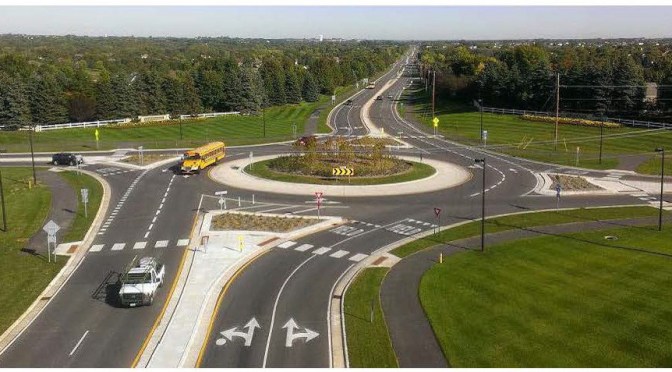
“There’s been a lot of research focused on controlling congestion on major highways and freeways, but there’s relatively less when it comes to looking at controlling traffic on urban arterials,” says Ted Morris, a research engineer with the Department of Computer Science. “It’s a very different picture when you get into urban arterials and the traffic behaviors going on there, because of the dynamics of route choice, pedestrian interactions, and other factors.”Image of overhead view of roundabout

Morris is part of a research team that aims to create a framework for testing and evaluating new urban traffic sensing and control strategies for arterial networks. The goal is to balance safety and efficiency for all users—especially in places where new types of urban transportation facilities are planned in the next few years.

The team is using the 66th Street corridor in Richfield as a test bed for its research. The city, along with Hennepin County, is in the process of converting a series of signalized intersections along the route to roundabouts over the next few years. The roundabout designs also incorporate new facilities for pedestrians, bikes, and bus transit as part of a multimodal approach.

Initially, the researchers sought to create a larger network of interconnected sensors and a live test bed, Morris says. But funding limitations kept the project area to approximately 10 miles of arterial roads, a portion of which will be supported by a network of interconnected traffic sensors. The research team is instrumenting major intersections along 66th Street with a reliable, low-cost, high-resolution camera mounted on a center pole and supporting electronics as the intersections are being reconstructed.

“You can zoom in pretty closely to capture all the different movements and events that we need to use for measurement and detection,” Morris adds. “The key to this, to really make it reliable, is you need to very carefully quantify gap acceptance and how that varies in time and time of day. You also need to know how pedestrian activities interact with the traffic flow.”

The use of roundabouts has grown in the region because they cost less to build and maintain than signalized intersections, they meet the latest design standards, and they improve safety by reducing traffic conflicts. But predicting the capacity of roundabouts can be especially challenging when factoring in pedestrian traffic, uneven traffic origin-destination flow, heavy vehicle volumes, and approach vehicle gap-selection timing.

In addition to creating a sensor network to obtain real-time vehicle and pedestrian data to help control traffic and keep it flowing smoothly, the researchers also are developing a traffic simulation model that includes almost all of Richfield—more than 140 signalized intersections covering 21 square miles, including the arterials. The simulation model will be used to develop and test traffic control strategies under different scenarios. Minnesota Traffic Observatory director John Hourdos is leading that effort.

This research and the field deployment system are funded through a collaborative grant from the National Science Foundation Cyber Physical Systems program. SRF Consulting is the industrial partner to help design the sensor network and evaluate the system.

Minnesota Partners with Neighboring States to Improve Traveler Information

Interstates 90 and 94 between Wisconsin and the state of Washington are major corridors for commercial and recreational travel. Extreme winter weather conditions, prevalent in the northern states within this corridor, pose significant operational and travel-related challenges. Recognizing the value of coordinated, cross-border collaboration for ITS deployment, Minnesota spearheaded the development of a transportation pooled fund study, called North/West Passage, in 2003.

The eight states – Minnesota, Idaho, Montana, North Dakota, South Dakota, Washington, Wisconsin and Wyoming – involved in the study are predominantly rural and face similar transportation issues related to traffic management, traveler information and commercial vehicle operations. They developed an ITS Integrated Work Plan and have completed nine work plans containing 50 projects.

North West Passage Traveler Information Website (roadstosafediscovery.com), the group’s hallmark project, offers travel information for I-90 and I-94 in a single interactive map. In addition to checking weather conditions, road closures and temporary truck restrictions, motorists can find the location of gas stops, rest areas and parks.

The states are currently evaluating a program that allows citizens to report driving conditions so that they can be included in traveler information reporting (a pilot is underway with MnDOT’s 511 system), and another project is comparing winter maintenance practices between corridor states.

“The biggest benefit of this pooled fund study is that it allows MnDOT to see what its neighbors are doing when developing solutions for operational issues. This awareness really helps us make better decisions about our projects at the state level,” said Cory Johnson, Traffic Research Director, MnDOT Office of Traffic, Safety and Technology.

Other major accomplishments:

  • North and South Dakota 511 callers can select to receive information on Minnesota’s highways.
  • An online portal for coordination of traffic management center operations, including guidelines, maps and contact information to manage major events across states.
  • Development of one proposal to hire a contractor to perform work in two states.
A map of possible routes from Milwaukee going west past North Dakota, with boxes the user can check to show Road Work, Weather Alerts, Road Conditions, and other features of the route.
Eight states maintain the North West Passage Traveler Information Website, which shows real-time travel information between Wisconsin and Washington along Interstates 90 and 94. A mobile app is under development.

For more than 30 years, the Federal Highway Administration’s (FHWA’s) Transportation Pooled Fund (TPF) Program has been providing state departments of transportation and other organizations the opportunity to collaborate in solving transportation-related problems. The TPF Program is focused on leveraging limited funds, avoiding duplication of effort, undertaking large-scale projects and achieving broader dissemination of results on issues of regional and national interest.