

Finding resources that address manhole and catch basin issues occurring in Minnesota can be challenging. In a recent project, researchers surveyed 83 municipalities and interviewed other engineers and product representatives to gather data about manhole and catch basin installation and maintenance practices. The resulting report provides current information for municipal engineers about these essential installations.
Continue reading New Resource for Manhole and Catch Basin InstallationCategory Archives: Maintenance Operations

Evaluating Pavement Thickness With 3D Ground-Penetrating Radar
Building on previous MnDOT-sponsored work, researchers have developed a nondestructive method of assessing pavement thickness using 3D ground-penetrating radar (GPR). A vehicle equipped with an array of transmitting and receiving antenna pairs travels at traffic speed collecting full-width GPR data for analysis, minimizing the amount of pavement coring required.
Continue reading Evaluating Pavement Thickness With 3D Ground-Penetrating Radar
Edina Studies Snowmelt To Reduce Chlorides From Deicing Operations
In Minnesota’s metro region, areas of shallow groundwater show increasing evidence of chloride contamination from winter road maintenance operations, particularly deicing. More than a quarter show chloride concentrations at the maximum contaminant level for municipal drinking water. In addition, 123 lakes and rivers show chloride impairment or risk of impairment for aquatic life. Chlorides are now considered the second most important threat, after phosphorus, to Minnesota’s urban waters.
The City of Edina, with funding from the Local Road Research Board, hired the University of Minnesota to analyze chloride accumulation in city snowmelt following winter maintenance operations to learn how to most effectively adjust its deicing strategies to reduce chloride contamination.
Over two winters, researchers collected data from city deicing operations and correlated it with chlorides present in meltwater runoff. A sampler box collected data continuously, and snow pile cores were also analyzed. Snowplow operators then examined the results during workshops, yielding innovative ideas for reducing salt use.
Continue reading Edina Studies Snowmelt To Reduce Chlorides From Deicing Operations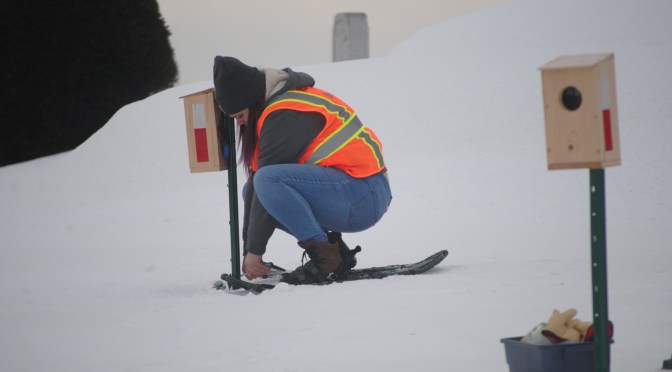
Evaluating “Hot Shots”: Winter Roads Treatment of Hardest Icy Spots
A new six-part video series, “Hot Shots for Cold Climates” explores treating Minnesota’s iciest roadways, with safety and environmental impact in mind.
Continue reading Evaluating “Hot Shots”: Winter Roads Treatment of Hardest Icy Spots
Improving Winter Maintenance: Pilot Testing New Snowplow Technologies
![[Infographic] Testing Snowplow Technologies: Slurry Spreader (target direction of salt, reduce salt use, reduce corrosion on trucks), Two-Way Reversible Plow (located on side of plow, providing more mobility in plowing and directing snow), Underbody Scraper (located under plow, clears compacted snow and ice from roads), True-Float Wind (mounted on front or side of plow, providing more mobility in plowing and directing snow)](https://mntransportationresearch.org/wp-content/uploads/2020/12/snowplowinfographic.jpg)
Every winter, MnDOT ensures Minnesotans can travel safely by plowing more than 30,000 lane miles with approximately 800 snowplows.
In a new research implementation project jointly funded by the Office of Research & Innovation and Office of Maintenance, MnDOT is pilot testing five new pieces of snowplow equipment: two slurry spreaders (one from Henke, one from Swenson), a two-way reversible plow, an underbody scraper and a true-float wing (all from Henke).
Continue reading Improving Winter Maintenance: Pilot Testing New Snowplow Technologies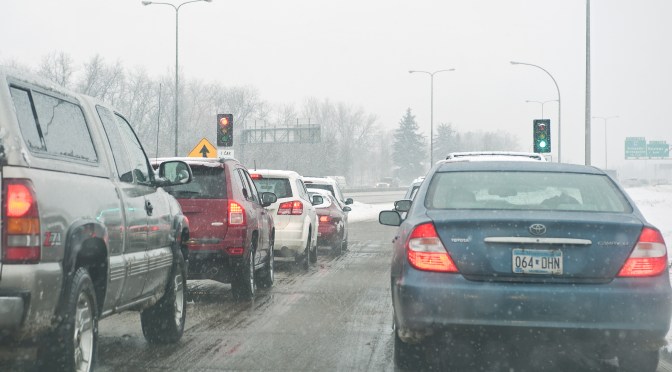
New Project: Have Minnesota’s Warmer Winters Increased the Number of Freeze Thaw Cycles?
Minnesota is experiencing warmer winters and an increase in freeze-thaw events may negatively impact pavement systems. However, the impacts of these recent climate changes on freeze-thaw cycles have not been well studied.
Continue reading New Project: Have Minnesota’s Warmer Winters Increased the Number of Freeze Thaw Cycles?
Green Stormwater Infrastructure: Tradeoffs and Maintenance
This article was originally published in Catalyst, August 2020.
Using “green” infrastructure is a useful strategy for handling city stormwater, which may contain deicers and other contaminants from streets and sidewalks. Choosing the right method and ensuring it doesn’t cause unforeseen damage, however, is another matter.
Continue reading Green Stormwater Infrastructure: Tradeoffs and Maintenance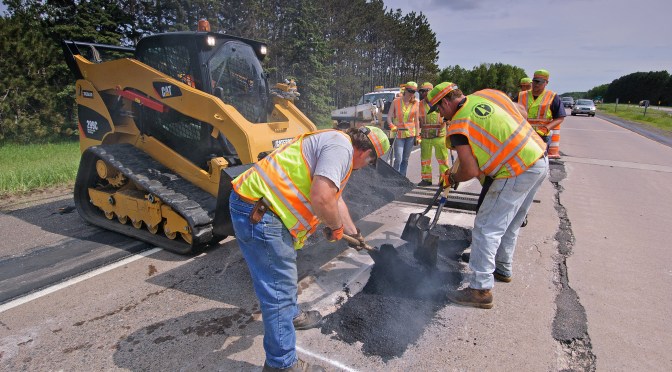
New Project: The Impact of Deferred Maintenance in Minnesota
Expenditures for maintenance are not keeping pace with the needs of the local transportation system. When local governments face fiscal stress, planned maintenance gets postponed to make funding available for other purposes. As deferred maintenance grows, the work and investments needed to bring an asset into a good condition grow too.
Continue reading New Project: The Impact of Deferred Maintenance in Minnesota
Pavement Preservation Techniques for Local Agencies
Cities and counties need affordable pavement preservation treatments, but preservation strategies are often geared towards higher-volume roads. The Minnesota Local Road Research Board has developed new guidance on five lower-cost treatments that is more applicable to local agencies and can be used to preserve pavements based on the type and severity of pavement distress.
Continue reading Pavement Preservation Techniques for Local Agencies
Promoting Snow Fence Adoption in Minnesota
A new research study has shown that few landowners know about MnDOT’s snow fence program, its benefits to community safety and mobility, and incentives to install snow fences. Following community meetings and surveys in four regions of Minnesota, researchers identified promising promotional methods for the snow fence program, the constraints landowners face in adopting snow fences, and incentives and assistance to improve snow fence adoption. Project results will guide MnDOT’s efforts to expand the use of snow fences around the state
Continue reading Promoting Snow Fence Adoption in Minnesota Crossroads