
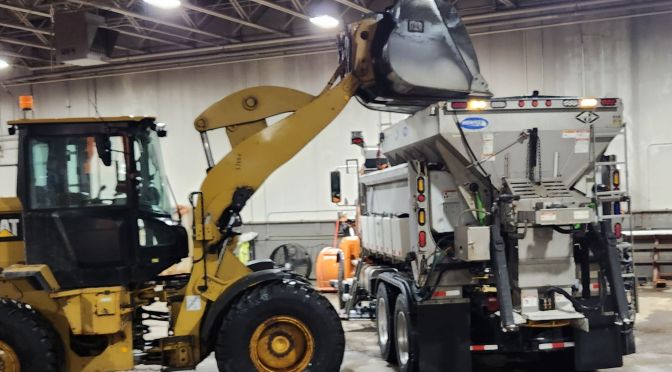
MnDOT maintenance practitioners and managers are always looking for new and better ways to handle winter weather. A recent evaluation of new products revealed which of several new pieces of high-potential winter maintenance equipment were appropriate for use on Minnesota highways. Just as importantly, the agency uncovered the shortcomings of other equipment, identifying critical issues to address before acquiring additional equipment.
Continue reading Evaluating New Slurry and Plow EquipmentCategory Archives: Maintenance Operations

Sensor and Drone Technologies Help Maintain Minnesota’s Aging Bridge Infrastructure
Reprinted from Catalyst, September 9, 2023
As bridge infrastructure in Minnesota and across the country ages, maintaining and preserving the existing bridge network becomes increasingly important—and increasingly challenging. In Minnesota alone, 25 percent of bridge-deck area is more than 50 years old, and the number of bridges rated in “fair” condition has recently overtaken the number rated in “good” condition.
Continue reading Sensor and Drone Technologies Help Maintain Minnesota’s Aging Bridge Infrastructure
Refining the Lane Boundary Guidance System for Snowplow Operators
Snowplow operators work in difficult, often low-visibility conditions. A new system assists drivers in knowing their lane position and warns of approaching obstacles. After operators tested the system over two winters, researchers gathered feedback, revised the system and readied it for the next step in statewide deployment.
Continue reading Refining the Lane Boundary Guidance System for Snowplow Operators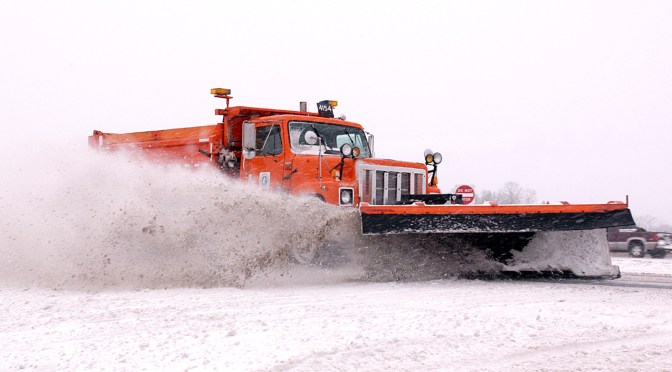
New Clear Roads Research: Evaluating high-performance plow blades
A variety of factors can affect a snowplow blade’s long-term performance, making it difficult for an agency to determine which blades are the most cost-effective overall. By developing a field test protocol and cost-benefit analysis methodology, the new research will make it easier for Clear Roads agencies to evaluate and compare blades in the future using the same standard procedures used in this project.
Continue reading New Clear Roads Research: Evaluating high-performance plow blades
New Project: Evaluation of Gravel Stabilizer Used on Gravel Roads and Shoulders
Approximately 50% of roads in Minnesota are gravel. The performance and long-term sustainability of such roads depend on the quality of the surface layer. Unbound large particles can form an unstable road surface that becomes rough, developing potholes and corrugations as this material is scattered by vehicles or washed away by rain. As a result, more frequent maintenance and reconstruction is required, which becomes very expensive for Minnesota counties.
Continue reading New Project: Evaluation of Gravel Stabilizer Used on Gravel Roads and Shoulders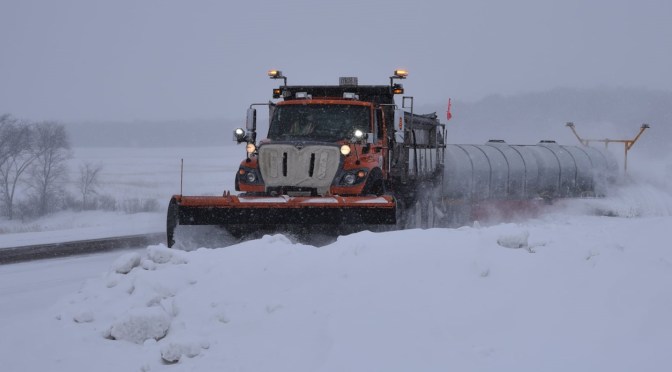
Talking about Winter Road Maintenance
AASHTO’s SICOP Talks Winter Ops podcast tackles a variety of topics about winter road maintenance in four recent podcasts. Listen to conversations with experts and practitioners who have real-life experience maintaining roads under snow and ice.
Continue reading Talking about Winter Road Maintenance
Research, Updated Tools Help MnDOT Encourage Landowners to Join Snow Fence Program
This article was originally posted on Catalyst, November 2022.
Snow fences are a useful tool for controlling snow and ice on Minnesota’s roads. However, installing them relies on the cooperation of landowners. An ongoing collaboration between U of M researchers and the Minnesota Department of Transportation (MnDOT) aims to develop outreach tools that can be used to attract more landowners to the MnDOT snow fence program.
Continue reading Research, Updated Tools Help MnDOT Encourage Landowners to Join Snow Fence Program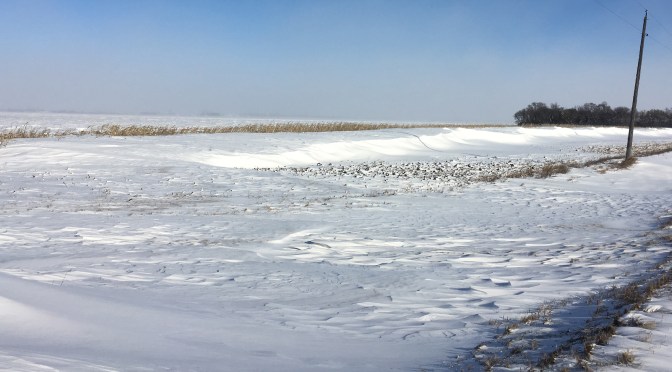
Expanding Alternative Snow Control Through Landowner Engagement
Some rural landowners maintain snow fences to prevent blowing snow from reaching highways, decreasing the resources MnDOT spends on winter maintenance. A recent project provided new information and updated tools to encourage more landowners to adopt this alternative snow control method.
Continue reading Expanding Alternative Snow Control Through Landowner Engagement
Tractor, Meet Snowplow: Snow Removal Innovation
Over the years, dozers have been the desired tool for pushing snow drifts back along highways. While dozers work well, they are limited by the drivability between drift locations.
Continue reading Tractor, Meet Snowplow: Snow Removal Innovation
Innovative Additions Could Help Asphalt Pavements Sense Damage—and Repair Themselves
This article was originally published in Catalyst, January 2022.
University researchers are investigating ways to extend the life of asphalt pavements and generate cost savings by adding innovative materials to asphalt mixes. In a recent study, they found that improving asphalt mixes with graphite nanoplatelets and taconite concentrates offers new possibilities for enhancing damage-detection techniques and restoring subsurface cracking using microwave energy.
Continue reading Innovative Additions Could Help Asphalt Pavements Sense Damage—and Repair Themselves
