
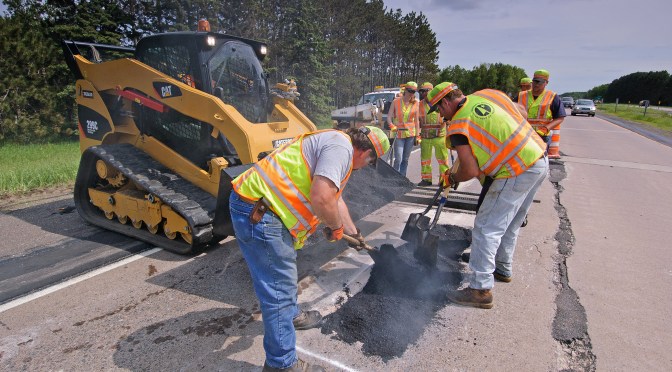
Expenditures for maintenance are not keeping pace with the needs of the local transportation system. When local governments face fiscal stress, planned maintenance gets postponed to make funding available for other purposes. As deferred maintenance grows, the work and investments needed to bring an asset into a good condition grow too.
Continue reading New Project: The Impact of Deferred Maintenance in MinnesotaCategory Archives: Maintenance Operations

Pavement Preservation Techniques for Local Agencies
Cities and counties need affordable pavement preservation treatments, but preservation strategies are often geared towards higher-volume roads. The Minnesota Local Road Research Board has developed new guidance on five lower-cost treatments that is more applicable to local agencies and can be used to preserve pavements based on the type and severity of pavement distress.
Continue reading Pavement Preservation Techniques for Local Agencies
Promoting Snow Fence Adoption in Minnesota
A new research study has shown that few landowners know about MnDOT’s snow fence program, its benefits to community safety and mobility, and incentives to install snow fences. Following community meetings and surveys in four regions of Minnesota, researchers identified promising promotional methods for the snow fence program, the constraints landowners face in adopting snow fences, and incentives and assistance to improve snow fence adoption. Project results will guide MnDOT’s efforts to expand the use of snow fences around the state
Continue reading Promoting Snow Fence Adoption in Minnesota
Guide for Converting Distressed Low-Volume Paved Roads to Unpaved Roads
Working with an advisory panel of road managers from local agencies, researchers have developed a practitioner-ready guide for converting severely distressed low-volume paved roads to improved, easily maintained gravel roads. The guide includes decision-making tools and an online webinar for training.
Continue reading Guide for Converting Distressed Low-Volume Paved Roads to Unpaved Roads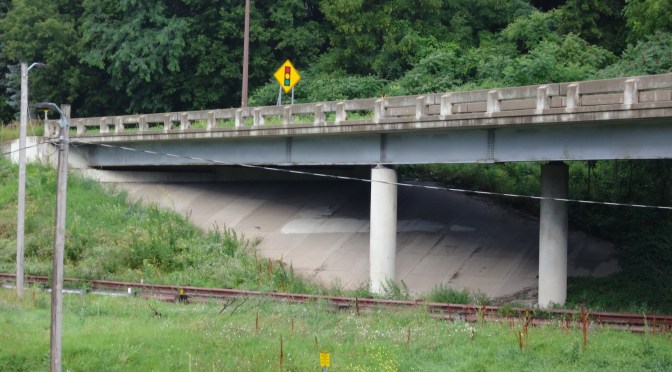
Detecting Corrosion Early Extends Service Life of Bridge Paint Coating
An evaluation of five maintenance paint coating systems on Minnesota steel bridges with localized corrosion found that each maintenance coating performed well, and, if corrosion is identified early and maintenance painting occurs, the service life of the paint coating system can be extended five years before repainting is required. Based on the test data, researchers recommended an update to MnDOT’s Bridge Maintenance Painting Manual that includes guidance on when to apply maintenance paint coatings and when to remove paint and recoat bridges.
Continue reading Detecting Corrosion Early Extends Service Life of Bridge Paint Coating
Performance Testing of Regional Roadside Turfgrass
Keeping Minnesota’s roadsides green is about more than just aesthetics—healthy turfgrass can improve water quality, reduce erosion and road noise, and provide animal habitat. However, harsh conditions such as heat, drought, and salt use can make it difficult for roadside turfgrass to thrive.
Researchers tested a wide variety of turfgrass cultivars over several growing seasons—in both urban and rural environments across five states.
Continue reading Performance Testing of Regional Roadside Turfgrass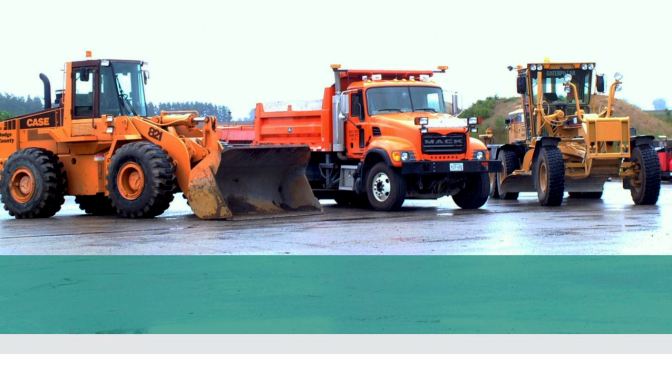
Guidebook helps cities and counties choose tools for managing fleets
Managing a fleet of trucks, heavy equipment, and other vehicles challenges road agencies large and small. While large agencies like MnDOT use software and specialized administrators to manage fleet management systems electronically, city and county agencies often do not. For some small agencies, fleet management may fall to a shop mechanic or two.
Continue reading Guidebook helps cities and counties choose tools for managing fleets
Recycling Asphalt Pavement Offers Strong Alternative to New Aggregate Base
In a newly completed study, researchers found that stabilized full-depth reclamation has produced stronger roads for commercial loads in Minnesota, and the method shows promise for uses in rural agricultural areas. How much greater the strength gained with each stabilizing agent is better understood, though not conclusively.
Continue reading Recycling Asphalt Pavement Offers Strong Alternative to New Aggregate Base
New Tools to Optimize Truck Station Locations
The Minnesota Department of Transportation (MnDOT) has 137 truck stations across the state. These stations house and allow maintenance of MnDOT highway equipment as well as provide office and work space for highway maintenance staff. Within 20 years, 80 of these stations will need to be replaced as they reach the end of their effective life spans. Researchers developed a geographic information system based modeling tool to determine the most effective locations for truck stations in the state. Using data from many sources, a new research study has determined that MnDOT could rebuild 123 stations, relocate 24 on land available to MnDOT and combine two. MnDOT would save millions of dollars using the location optimization alternatives over the 50-year life cycle of a typical truck station.
Continue reading New Tools to Optimize Truck Station Locations
Rout-and-Seal Offers Slight Cost–Benefit Over Clean-and-Seal Repairs
In a recently completed study, Minnesota researchers compare the performance and cost-benefit of the clean-and-seal versus rout-and-seal techniques for repairing asphalt pavement cracks.
Continue reading Rout-and-Seal Offers Slight Cost–Benefit Over Clean-and-Seal Repairs
