

Deer-vehicle collisions are a significant safety hazard on Minnesota roads. While MnDOT strives to employ safety measures on roads at high risk for these collisions, identifying these areas can be challenging. Numerous variables impact where deer are more likely to be present near roads, and many collisions go unreported. A new tool estimates the risk levels—based on road type, geographical features, deer population and other characteristics—for each road segment in the state. In addition, a new method of estimating reporting rates will help MnDOT understand the extent of deer-vehicle collisions in a specific area.
Continue reading Identifying Risk Factors for Deer-Vehicle CollisionsTag Archives: research
General research posts.
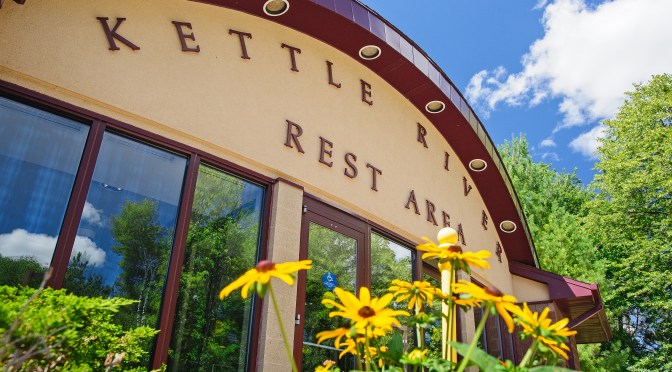
New Project: Cost Benefit Analysis for Sustainable Energy Building Upgrades at Safety Rest Areas and Travel Information Centers
MnDOT manages over 50 large safety rest areas (SRAs) with several amenities and travel information centers (TICs) with expanded customer service. Many of the SRA and TIC buildings were built before the significant advancements in energy efficiency and building technology made in the past few decades.
Continue reading New Project: Cost Benefit Analysis for Sustainable Energy Building Upgrades at Safety Rest Areas and Travel Information Centers
TZD Traffic Safety Hotdish: A Roadmap for Traffic Safety Culture Research and the Road Ahead
Wednesday, July 17, 2024
10:00 – 11:15 a.m. CDT
As states and localities adopt a vision of zero traffic fatalities, greater attention must be given to communication, collaboration, leveraging resources, and applying a systemic approach to traffic safety which requires a change in culture among road users and traffic safety agencies. This change in culture is tied to education, engineering, enforcement, and emergency services.
This free virtual event will highlight the Traffic Safety Culture Research Roadmap, recently released by the National Academies of Sciences, Engineering, and Medicine. The roadmap (Research Report 1091) presents a path forward to promote traffic safety culture among state departments of transportation and other transportation safety agencies.
Dr. Wes Kumfer, who led the creation of the roadmap, will review its development and contents. Jay Otto will share example projects and show how they fit into research on traffic safety culture. Join us to learn how you can identify traffic safety culture research needs and get insights to take back to your own organizational cultures!
The webinar is free to attend, but registration is required. Once you have registered, you will receive an email confirmation with a Zoom link. The link should not be shared with others; it is unique to you.

New Project: Long-Term Field Performance Evaluation of Chip Seals
Chip seals are an economical road surface treatment that MnDOT and counties use to enhance existing pavement performance and service life. A thin layer of asphalt emulsion sprayed on the pavement surface and mixed with aggregate chips can address minor pavement distresses and seal the pavement surface to reduce the impacts of further wear.
Continue reading New Project: Long-Term Field Performance Evaluation of Chip Seals
Dedicated transit lanes help attract riders, reduce carbon emissions
Public transit systems are instrumental for reducing auto travel and related greenhouse gas (GHG) emissions. But how much of a reduction depends in part on how transit lines operate—on dedicated right-of-way (ROW), in mixed traffic, or some variation.
Continue reading Dedicated transit lanes help attract riders, reduce carbon emissions
New Project: Species from Feces: A New Tool to Identify Bats in Culverts and on Bridges
Three bat species in Minnesota have been decimated due to white-nose syndrome. The northern long-eared bat is listed as endangered by the U.S. Fish and Wildlife Service, the tricolored bat listing is imminent, and the little brown bat listing is under consideration.
Continue reading New Project: Species from Feces: A New Tool to Identify Bats in Culverts and on Bridges
PFAS “Forever Chemicals” Can be Reduced in Highway Construction and Maintenance Projects
Taken from TRB Weekly – June 25, 2024
Per- and polyfluoroalkyl substances (PFAS) are a class of more than 6,000 contaminants of emerging concern that can harm both ecosystems and human health. These anthropogenic compounds contain carbon–fluorine bonds that make them stable and persistent in the environment, earning them the nickname “forever chemicals.”
Continue reading PFAS “Forever Chemicals” Can be Reduced in Highway Construction and Maintenance Projects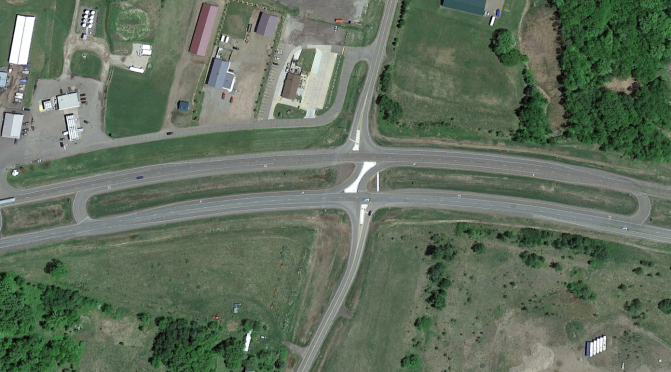
Evaluating the Traffic Safety Benefits of J-Turns in Minnesota
MnDOT traffic engineers are increasingly installing J-turn intersections on high-speed, multilane expressways to limit potential crash points. An analysis of crash data from intersections before and after the installation of J-turns demonstrated significant safety benefits from this alternative design. MnDOT researchers also explored crash history differences among J-turn intersections with varying characteristics. Consistent with the results from a previous study, this analysis found a clear decrease in fatal and other serious crashes after a J-turn was installed.
Continue reading Evaluating the Traffic Safety Benefits of J-Turns in Minnesota
Understanding Factors That Influence Driver Yielding to Pedestrians
Vehicle speeds, type of pedestrian, road characteristics and other variables can impact whether drivers yield to pedestrians attempting to cross a road at an unsignalized intersection. An analysis of data collected from 18 intersections identified human and site attributes that correlate to higher rates of driver yielding. Knowledge of these potentially influential factors will help local engineers build safer crossings at intersections.
Continue reading Understanding Factors That Influence Driver Yielding to Pedestrians
Enhancing Public Transit with Autonomous Mobility Service to Cover the “Last Mile”
The benefits of public transportation, including reducing individual vehicle use and traffic congestion, aren’t always optimized beyond densely populated urban settings. While transit may extend to more suburban or rural areas, land development patterns can make it challenging for people to reach their destinations by transit alone. Pairing transit with an autonomous mobility service is a potential solution. Researchers assessed transportation needs in a suburban shopping area and developed a system designed to deliver passengers from the end of a transit line to their ultimate destination. Simulations of the autonomous mobility service revealed its potential to increase transit efficiency and reduce individual vehicle use.
Continue reading Enhancing Public Transit with Autonomous Mobility Service to Cover the “Last Mile”
