

Vehicle speeds, type of pedestrian, road characteristics and other variables can impact whether drivers yield to pedestrians attempting to cross a road at an unsignalized intersection. An analysis of data collected from 18 intersections identified human and site attributes that correlate to higher rates of driver yielding. Knowledge of these potentially influential factors will help local engineers build safer crossings at intersections.
Continue reading Understanding Factors That Influence Driver Yielding to PedestriansTag Archives: MnDOT

Enhancing Public Transit with Autonomous Mobility Service to Cover the “Last Mile”
The benefits of public transportation, including reducing individual vehicle use and traffic congestion, aren’t always optimized beyond densely populated urban settings. While transit may extend to more suburban or rural areas, land development patterns can make it challenging for people to reach their destinations by transit alone. Pairing transit with an autonomous mobility service is a potential solution. Researchers assessed transportation needs in a suburban shopping area and developed a system designed to deliver passengers from the end of a transit line to their ultimate destination. Simulations of the autonomous mobility service revealed its potential to increase transit efficiency and reduce individual vehicle use.
Continue reading Enhancing Public Transit with Autonomous Mobility Service to Cover the “Last Mile”
Finding High-Performing Aggregate Bases for Long-Lasting Pavement
Two county roads provided a testing ground for three combinations of aggregate bases and asphalt binders. Results from more than two decades of research and monitoring of pavement test sections validated previous conclusions. A larger gradation aggregate base showed superior performance over the pavement life cycle when compared with the standard aggregate base. Additionally, sections constructed without transverse joints to allow natural thermal cracking outperformed sections with sawn and sealed joints.
Continue reading Finding High-Performing Aggregate Bases for Long-Lasting Pavement
Effectively Alerting the Public About Local Road Closures
Navigation apps can be valuable timesavers for drivers in Minnesota. To maximize their use, these apps need traffic information that is timely and accurate. While state highway closures are reported effectively, reporting road closures on local roads and highways is inconsistent. This project aimed to improve local road closure reporting by exploring the development of a streamlined reporting system and creating guidance for reporting local road closures to third-party navigation apps.
Continue reading Effectively Alerting the Public About Local Road Closures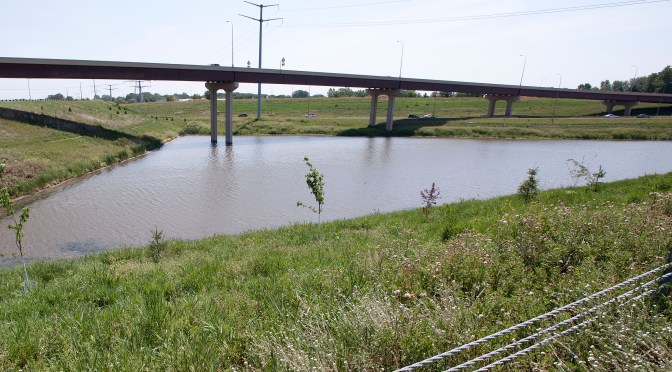
Managing Stormwater in a Changing Climate Will Require Updates to Minnesota’s Infrastructure
Reprinted from CTS News, March 21, 2024
—Sophie Koch, contributing writer
Changing precipitation patterns caused by the onset of climate change mean that Minnesota’s stormwater management systems—the ponds, pipes, and other structures meant to control runoff in the event of a heavy rainstorm—are going to need an upgrade.
Continue reading Managing Stormwater in a Changing Climate Will Require Updates to Minnesota’s Infrastructure
Measuring the Livability Framework
MnDOT’s Office of Livability developed the Livability Framework to help guide planning, programming, and project development processes. It is being piloted in MnDOT Metro District. The outcomes should result in more people focused outcomes for the plans, programs and projects in the District. The Livability Initiative wants each of the Livability Pillars of the Livability Framework to be thoroughly considered and evaluated when planners, project managers, and others make decisions about transportation policies, programs, and/or projects.
Continue reading Measuring the Livability FrameworkStormwater Research Sees Practical Application in Twin Cities Metro, St. Cloud
Sophie Koch, CTS News, February 22, 2024
A long-running series of U of M research projects aimed at improving stormwater quality are beginning to see practical application by stormwater specialists from the Twin Cities metro area and beyond.
Continue reading Stormwater Research Sees Practical Application in Twin Cities Metro, St. Cloud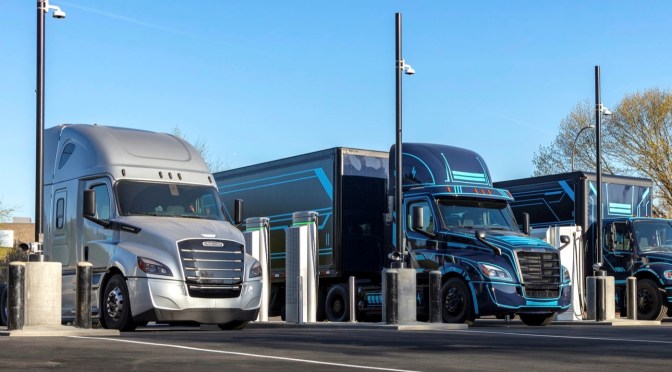
Researchers identify Minnesota’s best charging locations for e-trucks, aiming to boost adoption
By Megan Tsai, reprinted from CTS News, February 8, 2024
Aiming to eliminate barriers to electric truck adoption in Minnesota, U researchers have identified the state’s most suitable e-truck charging locations.
Currently, the adoption of electric medium- and heavy-duty trucks is lagging compared with the rising popularity of personal and transit electric vehicles. There are several reasons behind the delay, but one key factor is the lack of an adequate charging station network for e-trucks. The Minnesota Department of Transportation (MnDOT) called on U of M researchers for insight and guidance.
“Our goal was to understand the needs and opportunities for e-truck charging stations and to optimize the location of charging stations in Minnesota, ” says Alireza Khani, associate professor with the Department of Civil, Environmental and Geo-Engineering and the project’s principal investigator.
The project was conducted in two stages. In the first stage, researchers identified the most important criteria to consider when planning e-truck charging stations; this was done with a survey of experts and stakeholders, including staff from MnDOT, the Freight Mobility Research Institute, and the American Trucking Associations.
Based on this survey, researchers ranked the relative importance of the criteria and assigned each a weighted value. The top three criteria were ease of access for e-truck drivers, proximity to power substations, and proximity to existing truck stops. Other criteria included environmental conditions (land cover, water resources, and flood risk), land prices, and the potential to generate onsite solar energy.
During the second stage, researchers developed geographic information system layers for each criterion and pared down candidate locations using optimization modeling. The model was designed to consider truck demand in Minnesota, the routing and charging activities of e-trucks, and the market penetration rate of e-trucks, with a goal of minimizing total travel costs to promote greater adoption of e-trucks.

“This optimization model is a novel decision-making tool that will help MnDOT maximize its return on investment in the charging station network,” Khani says. “The model can be expanded to incorporate other contributing factors and inform policy decisions.”
To gain additional insight into Minnesota e-truck adoption, researchers tested the model with several assumptions based on the reduced per-mile operating costs of e-trucks over diesel trucks. They found that the adoption of e-trucks would grow sharply as the charging station network is developed; the growth rate would be highest when the first 30 to 40 stations are added. The modeling also found that solar generation was not a viable option to fully power truck charging stations.
MnDOT is focused on meeting the state’s greenhouse gas reduction goals, and increasing the adoption of e-trucks would help MnDOT proactively address this significant subsector of transportation greenhouse gas emissions.
“This project helped us understand considerations for e-truck charging stations, such as electric power substation location and capacity,” says Andrew Andrusko, freight planning director with MnDOT’s Office of Freight and Commercial Vehicle Operations. “It also identified optimal locations for truck charging stations to support intrastate freight movement.”

A Mobile App to Report Driver Intrusions Into Work Zones
Transportation workers face critical safety risks when drivers fail to comply with traffic control instructions in work zones. These intrusions threaten not only the flaggers who are directing traffic, but all workers on the job site and the drivers themselves. Knowing the nature and frequency of intrusions is necessary to develop effective prevention strategies. A new mobile phone app enables workers to quickly and easily report incidents, allowing MnDOT to analyze risks and improve worker safety.
Continue reading A Mobile App to Report Driver Intrusions Into Work Zones
Skid-resistant pavement markings could help stop slips
Reprinted from Catalyst, January 23, 2024
Retroreflective pavement markings such as bike lane indicators, crosswalks, and lane lines are designed to increase safety. However, the same retroreflective properties that add nighttime visibility can also make them slippery for vulnerable road users such as pedestrians, bicyclists, and motorcyclists—especially in wet or icy conditions.
Continue reading Skid-resistant pavement markings could help stop slips Crossroads