Tag Archives: featured

Taking on potholes with new prevention and repair strategies

Potholes are one of the biggest and most costly ongoing maintenance challenges faced by highway agencies. Despite considerable progress in pavement materials and mechanics, pothole repair has remained an area in which little progress has been made.

To make headway in this area, Minnesota transportation researchers studied critical factors in pothole formation and repair in order to identify solutions that would reduce the occurrence of potholes and increase the durability of repairs. They also investigated the potential of newer materials, such as taconite and graphite nanoplatelets (GNP), in repair mixes. Researchers looked at how to make winter patches more durable and also different shapes of patches.

“Our goal was to provide a scientific assessment of pothole repair materials and practices,” said University of Minnesota professor Mihai Marasteanu, the lead researcher. Project sponsors were the Minnesota Department of Transportation (MnDOT) and the Minnesota Local Road Research Board.

What Did We Do?

Researchers began by reviewing national and international literature about pothole causes and repair activities. They also surveyed MnDOT maintenance superintendents and local engineers on current repair practices.

Next, the research team conducted simulations of square, diamond, and round pothole repair shapes to determine if some shapes were more conducive to reducing stress in repair materials. This stress analysis included the use of different common pothole filling mixes and their interface with existing pavement materials.

In the next stage of research, the team evaluated six asphalt mixes for relevant mechanical properties: four winter mixes, a polymer-modified hot-mastic asphalt mix suitable for winter and summer use, and a summer mix in two forms modified with GNP. Mixes were evaluated for compaction and bonding, tensile strength, and water penetration.

Laboratory test of pothole repair sample
Pothole repair samples performed poorly in water penetration tests, which suggested that most mixes will perform poorly under seasonal freeze-thaw stresses.

Finally, researchers studied national and international pavement preservation and pothole prevention practices and the cost-effectiveness of pothole repair.

What Did We Learn?

Through this work, researchers learned that pothole prevention requires repairing pavement cracks as they develop—and sometimes, even timely repairs only slow pothole development.

Laboratory analysis showed that cold mixes compact and bond poorly. To be more effective, these materials require significant curing not possible in the field unless heating is provided. The polymer-modified mastic patching material that was heated was stronger than the winter mixes even at very cold temperatures. Most mastics are used in warm weather, but this material may be effective for winter uses.

Durable winter repairs require expensive patching materials and on-site heating technologies such as truck-mounted microwaves. “To make winter repairs last longer, you need to provide an external source of heat to cure winter patching materials,” Marasteanu says.

Taconite-based materials activated chemically or by heating potholes before and after filling offer promise for more durable repairs. GNP modifiers improved compaction, tensile strength, fracture energy, and fracture resistance in the summer mix.

Pothole repair samples performed poorly in water penetration tests, which suggests that most mixes will perform poorly under seasonal freeze-thaw stresses.

Also of note, the study’s exploration of pothole repair shapes found that circular repairs offer the best filling and compacting performance; repair materials cannot fill corners, even with significant compaction.


“We had been squaring off potholes, making sure patches were all at right angles. But in this study, we found that square patches increase stresses at the boundaries. The ideal is a circular patch,” said Todd Howard, Assistant County Engineer, Dakota County.

What’s Next?

The most common pothole repair in Minnesota is throw-and-roll with HMA (using a truck’s tires to compact shoveled-in asphalt). Newer, more durable repairs include taconite-based materials activated chemically or by heating potholes with a truck-
mounted microwave unit before and after filling. While promising and, in the case of the microwave method, potentially effective in extreme cold, these approaches require further research before becoming widely used in winter and spring repairs.

GNP-modified mixes also warrant further study, especially in winter mixes. If MnDOT can encourage cost tracking, analysis of the cost-effectiveness of various pothole repair methods, including the mastic tested in this research, may become possible.

This research is part of a larger effort by MnDOT to improve pothole repair approaches and develop pothole repair guidance for crews throughout the state, including a recently released asphalt patching best practices guide with decision trees.

This post pertains to the Report 2018-14, “Pothole Prevention and Innovative Repair,” published April 2018. Part of this story was adapted from a June 2018 article by the Center for Transportation Studies. Further information is available on the project page and technical summary.
Traffic Tubes Still Provide More Accurate Counts Than GPS Smartphones

Collecting traffic volume information from smartphone data, navigation systems and other GPS-based consumer and mobile technologies is not yet ready for use by MnDOT. However, the emerging technology offers useful information on driving origins and destinations for traffic monitors and planners.

“We’re on the cusp of using GPS technology to get traffic data from more facilities. We’re not there today, but we’ve spurred the industry to look at this opportunity,” said Gene Hicks, Director, MnDOT Traffic Forecasting and Analysis, who helped lead the research study on this topic.

MnDOT conducts traffic counts on its roadway network at regular intervals: every other year on state trunk highways, approximately every four years on city and county roadways, and every 12 years on low-volume roads. To make these traffic assessments, MnDOT currently stretches pneumatic tubes across traveled lanes and counts passing axles for up to 48 hours.

2017-49-p1-image
Using pneumatic road tubes to collect traffic data is an old and reliable practice, but installing them is time-consuming and puts workers in harm’s way.

“Using road tubes to collect traffic volume data is a proven method, but it’s an old practice and puts people in harm’s way. Smartphones may offer a useful alternative,” said Shawn Turner, Division Head, Texas Transportation Institute, who helped evaluate a beta version of traffic volume estimates derived from global positioning system (GPS)-based mobile devices.

What Was Our Goal?

With this project, researchers aimed to explore using smartphones and other GPS-based systems instead of pneumatic tubes to collect traffic volume data. The information collected was compared with actual volume counts from MnDOT traffic monitoring sites.

What Did We Do?

In May 2016 researchers began identifying data collection firms interested in participating in this research effort. These firms were developing products that gather, aggregate and analyze sufficient location data from GPS mobile devices to estimate traffic volumes. Researchers assessed and sorted packages from these firms to identify the best match for MnDOT’s needs.

Two firms that were initially interested withdrew from the project because their products were not ready for rigorous testing. The research team then developed an agreement to work with a third firm, StreetLight, to develop and evaluate traffic volume estimates from GPS-based devices.

Researchers and StreetLight worked together to develop and evaluate traffic volume data. Investigators provided MnDOT traffic count data to the vendor for calibration of its approach, and investigators suggested several ways to enhance StreetLight’s analytics.

2017-49-p2-image
Smartphones, navigation devices and other GPS-based consumer and commercial personal devices collect data that can be used to develop traffic volume estimators.


The vendor developed its proprietary approach, combining GPS-based navigation data with location-based service data. The firm normalized these two data sets with U.S. Census population projections, then calibrated and scaled samples with data from 69 MnDOT permanent ATR sites. StreetLight then estimated traffic volumes for MnDOT based on 7,837 short-duration count sites.

What Did We Learn?

On multiple-tube, high-volume roadways, MnDOT expects an accuracy of over 95 percent. The correlation between AADT tube-based data and StreetLight’s data was 79 percent without calibration and scaling, and 85 percent when scaled and calibrated. GPS-linked traffic volume estimations are approaching acceptable accuracy for MnDOT, but are not yet sufficiently accurate to replace tube counting for assessing AADT.

Estimation accuracy varies heavily with traffic volume levels. At high levels of traffic, larger sample sizes of mobile devices seem to drive more accurate assessments. At over 50,000 AADT, StreetLight estimates reached mean absolute percent error levels of 34 percent. At AADT levels below 20,000, the percent error rates ballooned. At all traffic levels, GPS-based data was measured at 61 percent mean absolute percent error.

Low-volume roads and frontage roads where multiple roadways converge had to be removed from count sites for estimating AADT. Overall, some of the GPS-based data fell within 10 to 20 percent absolute percent errors, which is acceptable, but other estimates fell well outside an acceptable range, and the highest errors occurred in low-volume roadway assessments.

What’s Next?

GPS-based data offers granular information that tube counts cannot, like average annual hourly volume estimates, and origin and destination data. With improvements to analytical processes for all data, GPS-based data may provide value outside of AADT estimates.

Currently, MnDOT is evaluating origin-destination data that StreetLight is providing for use in traffic studies and planning analyses. Current research by the University of Maryland and the National Renewable Energy Laboratory is gathering data with better error rates and will be extended in Colorado, Florida and Rhode Island. MnDOT expects volume estimation from GPS-based data will continue to improve and will likely be an acceptable alternative to tube counting in a few years.

This post pertains to Report 2017-49, “Using Mobile Device Samples to Estimate Traffic Volumes,” published December 2017.

Darkness in Box Culverts Not a Likely Barrier to Topeka Shiner

Darkness box culverts does not present a complete barrier for southwestern Minnesota fish species, according to a new MnDOT study. The findings will reduce the cost and  delay of future box culvert replacement projects.

“This research will allow MnDOT to save both time and money when replacing other box culverts in southwestern Minnesota by eliminating the need for a fish passage study for each one,” said Scott Morgan, Principal Hydraulics Engineer, MnDOT District 7.

The research project is one of several undertaken by MnDOT and the Local Road Research Board to better understand fish passage (more at mndot.gov/research), and ultimately develop a Minnesota culvert design manual for accommodating aquatic species.

What Was Our Goal?

In this study, researchers developed several objectives in their efforts to assess the effect of low light levels on fish passage through replacement box culverts. As part of this effort, they wanted to determine typical light levels in the replacement culvert and other box culverts in the region. They also sought to determine if the Topeka shiner and other fish move through culverts in the same numbers they pass through control areas in the same stream, and whether light levels affect frequency of movement. Finally, if a barrier is determined, researchers sought to design or recommend a method for mitigating light in the culvert.

What Did We Do?

In the field, researchers characterized light in long box culverts (at least 8 feet by 8 feet) by collecting many light levels with a light meter at the water surface within the three culverts and at control reaches. They also measured light levels within the water column to characterize the light conditions a fish would experience.

To determine whether Topeka shiners passed through culverts in similar numbers as through control reaches of the same stream, and whether light levels affected their passage, researchers employed a mark-and-recapture process. They caught fish upstream and downstream from the culverts or control reaches, marked them with an identifier indicating where they were caught and released, and then resampled to see where fish moved. They also noted other culvert features that could affect passage, such as water depth and velocity.

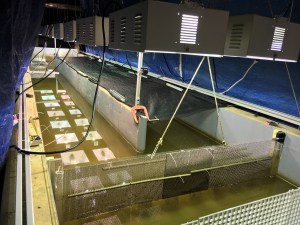
Image of fish tank.
In light manipulation experiments at the St. Anthony Falls Laboratory, Topeka shiners and fathead minnows were allowed to choose channels to swim along. The degree of shade in one channel was adjusted from light to deep shade.

To control for confounding variables that could affect fish movement, a laboratory study measured Topeka shiner preference for light or dark channels. Researchers used a 25-foot-long double channel box with water diverted from the Mississippi River. Fish could choose to swim along light or shaded lanes as they preferred in this light manipulation experiment.

What Did We Learn?

Although there has been increasing concern over the potential for culverts to create behavioral barriers for fish and other organisms, this was the first study that quantified these behavioral effects for fish passage. Light levels in large box culverts were not identified as a potential barrier to the fish communities present in southwestern Minnesota. Two out of the three culverts monitored showed reduced fish passage compared to the control reaches; however, fish—including Topeka shiners—were able to pass through all three.

The longest and darkest culvert had the greatest difference in movement between the culvert and the control, but this variation could not be attributed solely to light levels. This finding was supported by experiments at the St. Anthony Falls Laboratory, where fish that could select either a shaded or lighted channel showed no avoidance of the shaded channel regardless of the shading level.

The light measurements in three culverts yielded an extensive data set that can be used to model light levels through culvert barrels. Light levels at the water surface depended on the culvert entrance, dimensions, construction material, orientation and elbows, while light levels in the water column were also affected by turbidity.

What’s Next?

The conclusions of this study apply only to Topeka shiners and other small warm water fish species, and to large box culverts like those studied. Additional research is required to investigate possible barriers created by smaller, darker culverts to light-sensitive fish species and the interactions between light and other variables such as velocity.

This post pertains to Report 2017-44, “Culvert Length and Interior Lighting Impacts to Topeka Shiner Passage,” published November 2017. The full report can be accessed at mndot.gov/research/reports/2017/201744.pdf.

MnDOT installs safety countermeasures at stop signs, stop lights

MnDOT is working on ways to reduce crashes at intersections by making stop signs and stop lights more visible to motorists. The agency will apply reflective red metal strips on nearly 1,000 stop sign posts and fluorescent yellow tape around 100 traffic signal lights across the state this summer.

“We think these two low-cost safety countermeasures will help reduce crashes at these higher risk intersections,” said Derek Leuer, traffic safety engineer.

13-JuneSafetyMeasures_400
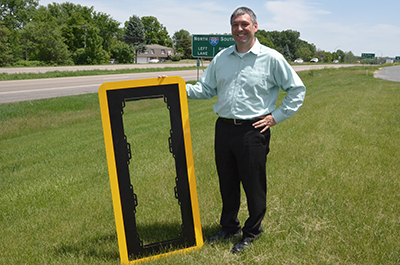
Derek Leuer, traffic safety engineer, displays what the yellow reflective tape looks like around the back plate of a traffic signal light. This tape will be installed on 101 signals statewide this summer. Photo by Sue Roe

The stop sign project will be implemented on locally owned roads that intersect with two-lane, two-way state highways. The highways chosen are considered moderate- and high-risk crash corridors.

The reflective red strips will be installed on the stop sign post directly beneath the stop sign.

Rural intersection crashes are a serious issue in Minnesota, according to Leuer. From 2008 to 2012, there were 533 serious and fatal injury crashes at rural state highway intersections.

“This project aims to reduce those fatal and serious injury crashes in the state by making the stop signs easier to see,” he said. “Fatal right-angle crashes often are the result of one or more drivers failing to comply with a stop sign.”

The traffic signal project includes installing fluorescent yellow tape around the rectangular back plate that contains the green, red and yellow traffic signal bulbs. Leuer said this is a proven Federal Highway Administration safety countermeasure already used by other states.

“The reflective tape will make the signals look bigger and help motorists be more aware of them,” Leuer said. “This will be especially helpful at night and in low-visibility conditions.”

The florescent yellow tape will go on signals at intersections that are considered higher risk for crashes and may have a record of past crashes.

Cost of both projects is about $500,000.

MnDOT will evaluate both projects for effectiveness on an ongoing basis over the next three years.

“The installation of red reflective strips to stop sign posts and yellow fluorescent tape around signal lights may become another low-cost tool to help MnDOT improve roadway safety and move Minnesota toward zero deaths,” Leuer said.

This article by Sue Roe originally appeared in the June 13, 2018 MnDOT Newsline.

Investment in Transportation is Linked to Job Creation in Minnesota Counties

A new study by the Local Road Research Board (LRRB) shows that transportation investments within a county can increase the local employment rate, while investments in trunk highways surrounding a county can also enhance county and regional employment.

The goal of this project was to quantify the relationship between transportation investment and economic development as it is represented in data showing the effect of  the investment on job creation in counties.

“The entire project was new and useful. It provided answers to questions about the benefits for counties building local roads, beyond getting traffic from here to there,”
said Bruce Hasbargen, County Engineer, Beltrami County.

Background

As federal resources for transportation development have declined, state departments of transportation and local organizations have needed to be selective in funding transportation projects, choosing those that generate the greatest local return on investment.

Transportation engineers and planners understand the positive effects new roadway projects have on local and regional economies. But to demonstrate these effects to elected officials who develop the budgets—as well as to the tax-paying public— they have needed supporting quantitative data.

Previous LRRB research has produced data linking transportation investments to increases in local property values in Minnesota counties. More analysis and information were required about the possible links between local transportation investment and other economic indicators, such as job creation.

What Did We Do?

After an initial literature search, researchers followed the methodology of the earlier study by gathering and examining data from several sources. The Minnesota County Finances Report yielded investment information. Since 1985, this report has collected information about grants and expenditures for county-managed local roads. MnDOT’s Trunk Highway Construction and Maintenance Costs provided data related to these expenditures collected from 1995 to 2012.

To determine transportation investment effects on job creation and employment, researchers used several comprehensive data sources to measure employment across the state and in counties: the Quarterly Census of Employment and Wages (which reports overall employment); County Business Patterns (which reports private employment only, based on business register data); and data from the Minnesota Department of  employment and Economic Development.

Researchers combined data on transportation investment, business patterns and socioeconomic conditions in Minnesota counties from 1995 to 2010. The data included the number of county business establishments, jobs in Minnesota counties by sectors and the amount of the annual payroll. Investigators also examined spatial (GIS-map based) data from counties.

By linking the data of county business patterns to expenditures on local roads and trunk highways, researchers performed statistical analyses and created an econometric model to address these questions:

• How does transportation investment affect the employment rate, aggregate employment (number of jobs) and annual payrolls in Minnesota counties?
• Which type of transportation investment—trunk highways or local roads—is more effective in job creation?
• Does the link between transportation investment and job creation differ between metropolitan and rural counties?

The model’s design controlled for unrelated factors that would affect employment rates, including population, age structure, population density, educational attainment and level of urbanization.

What Did We Learn?

The literature search showed evidence of connections between transportation projects and local economic development across many decades and countries, although the results were varied and not predictive.

The data analysis found that long-term transportation investments contribute to employment in Minnesota counties, including several positive and statistically significant relationships:

• A 1 percent increase in local road capital within a county is associated with a 0.007 percent increase in the employment rate in the county, holding constant various socioeconomic factors.
• A 1 percent increase in trunk highway capital in surrounding areas is associated with a 0.008 percent increase in the employment rate of a county, again holding constant various socioeconomic factors.

The impacts are significant but not substantial, which researchers say may be explained by the fact that most Minnesota counties are rural and already have relatively high employment rates. Moreover, not all areas are positively affected by these investments.

The overall findings are largely driven by rural areas, while the evidence for metropolitan and micropolitan areas is mixed.

The results suggest that in Minnesota it would be more effective to invest in rural areas compared to urban areas as far as employment growth is concerned.

“As federal transportation money decreases, state and local agencies must make difficult policy decisions with diminishing budgets. This research provides quantifiable data about the local and regional benefits of new roads, which agencies can use to promote and support transportation projects,” said Zhirong (Jerry) Zhao, Associate Professor, University of Minnesota, Humphrey School of Public Affairs.

Image of trunk highway 61
Investments in trunk highways, such as Trunk Highway 61 in northeast Minnesota, are associated with employment rate increases in the counties where improvements are built, as well as regional benefits.

What’s Next?

The results of this project provide an internal decision-making tool for local agencies. They also offer quantitative data in support of transportation investment to convey to elected officials and the tax-paying public. Although no follow-up research is currently planned, many further studies of this type are feasible. For example, studies could evaluate associative effects of transportation investment on other socioeconomic factors, such as sales tax bases, small business development, workforce specialization and public education.

This post pertains to LRRB-produced Report 2018-04, “Transportation Investment and Job Creation in Minnesota Counties,” published January 2018. The full report can be accessed at mndot.gov/research/reports/2018/201804.pdf.

Adding Snowplow Camera Images to MnDOT’s Traveler Information System

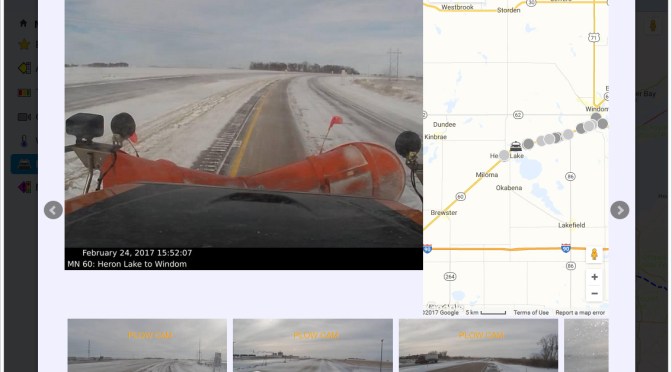
MnDOT installed network dash cameras and ceiling-mounted cameras on 226 snowplows, approximately one-quarter of MnDOT’s snowplow fleet. The cameras, integrated with the onboard mobile data computer and automated vehicle location equipment, automatically captured snapshots of road conditions during plowing. The snapshots were incorporated into several facets of MnDOT’s 511 traveler information system: the desktop and mobile versions of the website and the 511 app. Motorists and MnDOT alike found the project to be valuable, with the up-to-the-minute imagery helping members of the public and MnDOT’s maintenance staff make well-informed decisions during winter storm events.

“The largest barrier to implementation involved the development of the software package for integrating snowplow cameras into the current AVL system. It required a great deal of back-and-forth to get things right,” said oe Huneke, Maintenance Decision Support Systems (MDSS)/AVL Section Manager, MnDOT Office of Maintenance.

“We did research to make sure the cameras did not block drivers’ views, taking state and federal regulations into consideration, and we tested the cameras to make sure they were capturing images at the right resolution,” said Jon Bjorkquist, Maintenance Technology Development/ Implementation Coordinator, MnDOT Office of Maintenance.

What Was the Need?

Reliable information about road conditions during winter weather allows motorists to make informed travel decisions and helps MnDOT responders maintain roads. While meteorological updates on a winter storm and automated status reports on Minnesota’s snowplow fleet are important sources of data, they do not provide visual information about road conditions.

In 2015, a pilot project allowed MnDOT to take road condition pictures from cameras mounted on selected snowplows during winter storms. The system was limited, however. Few snowplows were outfitted with these cam-eras, images were not available to the public, and network infrastructure did not allow for easy scaling. A larger scale program was needed to capture road imagery taken from snowplows across Minnesota and to share the pictures with Minnesota motorists.

What Was Our Goal?

MnDOT sought to install cameras on a sizable portion of MnDOT’s snowplow fleet. In addition to making hardware and network enhancements to collect and compile the image data, MnDOT also set out to make the photos avail-able in near-real-time to its internal maintenance staff and the traveling public.

Camera mounted on the ceiling of a MnDOT snowplow cab.
To capture images of road conditions, MnDOT mounted cameras in the cabs of one-quarter of MnDOT’s snowplow fleet.

What Did We Do?

In 2015 and 2016, MnDOT installed network dash cameras and ceiling-mounted cameras on 226 snowplows, approximately one-quarter of the agency’s total snowplow fleet. The cameras, integrated with the onboard mobile data computer and automated vehicle location (AVL) equipment, automatically captured snapshots of road conditions during plowing. This system included the following key operational features:

  • The dash cameras automatically recorded images whenever the computer-AVL system was on.
  • The cameras recorded an image of the road ahead of the plow.
  • Images were taken once every five minutes and were only retained if the plow was moving at least 10 mph.
  • The cameras were capable of taking operator-initiated snapshots and video clips.
  • Video clips could be classified into three categories: accident, general interest or work zone.

The system sent the plow camera images and metadata (geolocation, plow, camera and conditions) to a MnDOT server upgraded to accommodate the data. MnDOT set a data retention schedule for mobile snapshots and video segments as well as the data server.

Plow images were incorporated into several facets of MnDOT’s 511 traveler information system, including the desktop and mobile versions of the website and the 511 app. Plow images plotted at 10-minute intervals on the 511 maps provided motorists with up-to-the-minute, easily accessible information on road conditions. The images were also incorporated into MnDOT’s internal website called Condition Acquisition and Reporting System.

What Did We Learn?

The project demonstrated the successful integration of various hardware, software and network systems, carrying the road weather imagery step by step from the cameras to the public 511 interface. The project also succeeded in scaling up an earlier, modest effort to furnish snowplows with cameras.

In addition, MnDOT collected input on the value of the cameras from a range of interested parties: the public, snowplow operators and supervisors, and MnDOT management staff.

The public response was overwhelmingly positive, with 319 Facebook users responding to a MnDOT post about the cameras. All the respondents used positive emote icons (“heart” or “thumbs up”). Several members of the public provided responses through Facebook and MnDOT’s “Contact Us” Web page about the value of being able to view actual road conditions, though others expressed concern about the cost of the system.

Surveys of MnDOT snowplow drivers and supervisors and interviews of MnDOT managers revealed that supervisors and managers had a largely positive view of the program as well. Drivers provided mixed reviews. Comments from these groups yielded the following recommendations about implementing a program of this nature:

  • Perform outreach efforts that clearly communicate benefits to achieve broad buy-in from snowplow drivers. Provide training and follow-up instruction on use of the cam-era’s features to encourage drivers to use the manual snapshot and video features.
  • Address drivers’ concerns about privacy (such as “Big Brother is watching”) directly, and understand that these concerns have lessened over time. Supervisors should be advised not to react too quickly to privacy concerns.
  • Address concerns about in-cab distraction by adjusting the system configuration or hardware. This might include making dash camera screens dimmable at the driver’s option, or placing screens and cameras out of critical sightlines.

What’s Next?

This project was a success, with snowplow camera images providing significant benefits to MnDOT staff and the traveling public. Based on this work, MnDOT plans to install camera systems on additional snowplows in the state fleet—as deemed necessary by district management—and to continue displaying snowplow images on MnDOT’s 511 system.


This post pertains to Report 2017-41, “Installing Snowplow Cameras and Integrating Images into MnDOT’s Traveler Information System,” published October 2017.

New video traces progress of accessibility research

CTS has been celebrating its 30th anniversary this year with a look back at significant milestones. One of our goals for the anniversary was to show how research progresses over time to lead to new knowledge.

In February we shared videos that trace the path of progress in two of our key research areas: traffic operations and pavement design. Today, at our 28th Annual Transportation Research Conference, we debuted a video about another important research topic: accessibility metrics.

In the new video, Andrew Owen, the director of the U’s Accessibility Observatory, explains how accessibility looks at the end-to-end purpose of transportation: fulfilling people’s need to reach destinations. “The Observatory is pushing the envelope and staying ahead of research into what new types of metrics are possible,” he says.

The Observatory builds on tools and expertise developed in two previous University research studies: the Transportation and Regional Growth Study (1998–2003) and the Access to Destinations study (2004–2012).

Establishment and Care of Salt-Tolerant Grass on Roadsides

Kentucky bluegrass, the grass species that MnDOT typically uses for roadsides, was sensitive to salt; many installations could not tolerate winter deicing salts and died. Research on salt-tolerant grasses begun in 2009 resulted in MNST-12, a grass mix of fine fescues (with 20 percent Kentucky bluegrass for sod cutting, transport and installation stability) that is more salt-tolerant. MNST-12 was installed at many roadsides sites but by 2013, many MNST-12 installations were not thriving. Research into the reasons for these failures and the ways to best establish and care for MNST-12 revealed that this salt-tolerant grass mix requires a different planting and irrigation regimen than the standard MnDOT protocols that had been used for decades on Kentucky bluegrass. When installed as seed, MNST-12 should be planted in August or September; when installed as sod, it can be laid between May and November if sufficient irrigation is available. MNST-12 roots slowly and needs a particular irrigation regimen in early stages. Moisture replacement of 60 percent of its evapotranspiration rate is sufficient to promote establishment.

“The [highway] construction critical path for program delivery rarely includes a biological requirement for establishing vegetation. For salt-tolerant fescue grasses, planting dates and irrigation regimens matter,” said Dwayne Stenlund, Erosion Control Specialist, MnDOT Office of Environmental Stewardship.

“Basing irrigation approaches on evapotranspiration could reduce water consumption and, ultimately, the cost of establishing areas by sod,” said Eric Watkins, Professor, University of Minnesota Department of Horticultural Science.

Failed Kentucky bluegrass along a roadway
Because of its poor salt tolerance, Kentucky bluegrass has failed at many roadside sites in Minnesota.

What Was the Need?

Minnesota has more than 24,000 acres of green, grassy roadsides, ranging from street terraces to Interstate high-way medians. These roadside environments have many stressors, including heat, drought, insects, weeds, traffic and salt.

MnDOT has traditionally used Kentucky bluegrass for turfgrass, but its poor salt tolerance has resulted in many failed installations. Seed and sod research begun in 2009 produced MNST-12, a salt-tolerant grass mix of mostly fine fescues. By 2013, however, many roadside installations of MNST planted under MnDOT’s standard turf care protocols had failed and the reasons were unclear.

Replacing an acre of failed sod costs up to $25,000. MnDOT needed to learn why the turf failed and find the right methods to establish and care for salt-tolerant grass.

What Was Our Goal?

Researchers sought to assess installations of MNST seed and sod across the state to determine the planting and care practices that resulted in successful establishment or in failure. They also wanted to identify best practices for salt-tolerant turf establishment and care.

What Did We Do?

The study had two phases. In the first phase, researchers identified 16 roadside sites located throughout the state with salt-tolerant turf that had failed or performed poorly. They assessed these sites from July 2013 through 2014, and gathered detailed information about the sites from MnDOT, landscape contractors, sod producers and weather data sites. Information included date and time of installation, sod or seed used, temperature and precipitation at installation, and irrigation and mowing protocols. At each site, researchers also took measurements of ground cover, salinity, temperature, moisture content, surface hardness and depth of soil to top of curb. Soil samples were tested for pH, available phosphorus and organic matter.

Beyond variations in soil moisture, it was unclear whether any other soil aspect promoted the success or failure of site turf. Homeowners at various locations suggested that installation date and supplemental irrigation might have influenced a site’s success.

In the second phase of the study, investigators identified the best management practices for MNST by examining three factors that could influence turf performance:

  • Use of soil amendments during establishment. Researchers examined the effects on MNST performance of seven types of soil amendments, from slow-release fertilizers to various composts, used in trial plots.
  • Timing of seed and sod installations. Subsections of large trial plots at St. Paul and Blaine, Minnesota, were seeded or sodded monthly starting May 1 through Nov. 1. The watering regimens followed MnDOT’s 2014 specifications.
  • Post-installation watering regimens. Researchers planted sod plots of MNST and Kentucky bluegrass in a controlled outdoor area using an automatic sheltering system that protected the test areas when it rained. Irrigation was carefully controlled to test seven watering regimens. Researchers studied turf cover, root growth and shear strength of grasses at the sites.

What Did We Learn?

Soil amendment treatments had little effect on turfgrass performance, whether the plots were seeded or sodded.

MNST planted as seed cannot tolerate the heat and frequent drought conditions of Minnesota’s summers during establishment. Seeding should therefore only occur in August and September. Sod may be laid between May and November, provided there is adequate irrigation.

MNST differs biologically from Kentucky bluegrass and has different watering needs. Root development occurs more slowly and requires a longer period of irrigation during establishment, thriving with moisture replacement between 60 and 100 percent of the evapotranspiration rate. With adequate water, MNST establishes well.

MNST should not be mown until roots are established several inches into the soil profile. Drought-stressed turf should not be mown.

What’s Next?

Revisions to MnDOT’s specifications and guidelines are needed. In addition, MnDOT will need to adjust its previous recommendations for watering MNST-12 sod to ensure a successful installation. Further, guidelines for designers and inspectors must be updated. MNST is a different grass community than Kentucky bluegrass–dominated sods: The perception of what “success” looks like must be changed, and this change can be best accomplished through images. New methods of irrigation will need to be devised and implemented. Providing water only as the plant needs it could result in considerable savings in water and labor over time. Additional studies related to best management practices are pending.


This post pertains to the LRRB-produced Report 2017-31, “Best Management Practices for Establishment of Salt-Tolerant Grasses on Roadsides,” published July 2017. 

Design Considerations for Embankment Protection During Overtopping Events

Roadways in Minnesota’s Red River watershed are prone to flooding and overtopping, where wide flows of water wash across the surface of the roadway. Repairing the resulting damage to roadway embankments can be costly and time-consuming, requiring lengthy road closures. Protecting roads from destructive scour could significantly reduce the cost and time of repairs after a flood event. Researchers investigated three “soft” design methods using full-scale models and field monitoring, with flexible geogrid mat providing the best erosion protection. Regardless of protection technique, any physical separation from the soil beneath led to failure by creating a pathway for water to follow. Establishing root growth and vegetation would improve the performance of all techniques by anchoring the soil.

“This project developed a fairly complete matrix of useful erosion protection measures that our own staff can implement—techniques that are less elaborate and more cost-effective than hiring contractors,” said J.T. Anderson, Assistant District Engineer, MnDOT District 2.

“This project was a combination of basic and applied science, and is a great example of the university and MnDOT working together successfully to solve problems unique to our geography and climate,” said Jeff Marr, Associate Director, Engineering and Facilities, University of Minnesota St. Anthony Falls Laboratory.

What Was the Need?

Roadways in the Red River watershed are prone to flooding and overtopping, where wide flows of water wash across the surface of the roadway. Downstream scour and erosion of roadway embankments can result in breach or washout of the entire roadway. Repairing the damage caused by flooding and overtopping can be costly and time-consuming, requiring lengthy road closures. Frequent flood events in recent years reinforce the need to protect roadways where flooding is likely to occur.

Raising the roadway to prevent overtopping is not a feasible solution, as flood plain law does not allow moving the problem elsewhere by backing up the water. The most cost-effective option is to allow floodwaters to overtop roadways and to try to protect their embankments from scour. Protecting roads from destructive scour and erosion by developing cost-effective scour prevention measures could greatly reduce the cost of repairs, as well as the time required to reopen the roadway after a flood event.

What Was Our Goal?

The goal of this project was to investigate the effectiveness of slope protection techniques to shield overtopped roadways and their downstream embankments from scour and erosion. A further goal was to use cost-effective methods that could be installed by local agencies instead of contractors. The researchers evaluated several “soft” design methods using an integrated approach of full-scale models and field monitoring.

What Did We Do?

Using the findings from a literature review, the research team developed a field-based program to collect data on the hydraulics associated with full-scale overtopping events. Researchers recorded flood stage at several locations near the Red River during over-topping events and evaluated the failure modes under natural conditions. Annual field monitoring occurred from 2013 through 2016 during overtopping events.

Next, the research team conducted a series of experiments at a full-scale laboratory facility to study the hydraulic and erosional processes associated with overtopping. The facility simulated a transverse section of a roadway and included an upstream water supply, road crest, shoulder and downstream embankment slope.

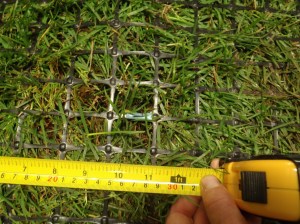
Photo of sod growing through square mesh plastic geogrid material
Sod is overlaid with geogrid to help stabilize the sod’s root system and soil beneath.

Two slopes were examined in the lab: 4:1 (horizontal:vertical) and 6:1. With bare soil used as a control, three erosion protection techniques were investigated: armored sod hydraulic soil stabilization, turf reinforcement mat (Enkamat) and flexible concrete geogrid mat (Flexamat). All three are alternatives to riprap and other hardscapes, and encourage vegetation to grow through a mat, helping to stabilize the soil and protect the embankment from scour and erosion.

What Did We Learn?

The researchers were able to draw some definitive conclusions from the laboratory experiments:

  • Bare soil with no vegetative cover (the control) is highly susceptible to erosion and is the worst-case scenario. New installations should have established vegetation before the first overtopping event is expected.
  • All three mitigation techniques reduced erosion, but the flexible concrete geogrid mat provided the best protection. Researchers noted that these results describe overtopping that occurred immediately after the protection treatments were installed. Established vegetation and root growth would likely improve the performance of all techniques.
  • Initiation of erosion appears to be linked to small-scale inconsistencies in the soil, erosion control material and placement of the protection technique. Small failures can quickly develop into mass failure of the embankment.
  • Failure occurred in areas where the protection technique physically separated from the surface of the soil and exposed a direct pathway for the water to flow. Inflexible protection techniques were the poorest performers.
  • Common locations for failure were the toe of the slope and the upstream transition from the shoulder to the soil slope, with steeper slopes failing most often.

What’s Next?

No mature vegetation existed on the embankment slope in the laboratory flume, which mimics the post-construction period in the field. Full vegetation is more typical for much of an embankment’s life cycle. Since one of the most important functions of vegetation on a slope is the ability of its roots to anchor soil, further study of these techniques with mature vegetation could provide a better understanding of their effects.

Future studies should include other stabilization techniques as well as the effects of overtopping on frozen and thawing soils, through-embankment seepage or piping, and various soil types on performance of the stabilization technique. Future projects could also evaluate the use of multiple techniques along with the study of anchoring improvements and longevity of the erosion control products.


This post pertains to the LRRB-produced Report 2017-21, “Design Considerations for Embankment Protection During Road Overtopping Events,” published June 2017. NCHRP Synthesis Report 496, “Minimizing Roadway Embankment Damage from Flooding” provides the state of the practice on mitigating damage from overtopping. 

MnDOT Explores the Use of a Unified Permitting Process for Oversize/Overweight Loads

Researchers produced a proof-of-concept for developing a one-stop permitting process that would allow commercial haulers to plan a travel route and secure all required permits from a single source. MnDOT is working to develop a first-of-its-kind, unified permitting process to consolidate the requirements of every jurisdiction in the state into a single, quick-response platform that meets the needs of haulers.

“From a hauler’s perspective, the permitting process can be very cumbersome. Each agency’s application is different as are the general provisions that haulers need to follow,” said Renae Kuehl, Senior Associate, SRF Consulting Group, Inc.

“As carriers, we’re trying to do our due diligence in getting permits. But the current process can lead to significant safety and legal risks,” said Richard Johnson, Transportation Manager, Tiller Corporation.

What Was the Need?

Hauling oversize or overweight freight on Minnesota’s roadway system—highways, county roads, township roads and city streets—requires approval by each governing authority along the route. Roadway managers must review hauler travel plans to make sure size and weight limits for vehicles and loads will not endanger roadway facilities, hauler equipment and personnel before issuing the over-size or overweight permit.

Any single hauling route may require permits from multiple roadway authorities, each with different application procedures and response times. Some governing bodies, MnDOT among them, issue these permits online and can turn them around in minutes. Other agencies issue permits by mail, fax or email, which can take several days.

Haulers, however, may not have time to wait for a permit. If equipment breaks down at a loading site, for example, replacement equipment is needed immediately to meet contract deadlines and avoid paying labor costs for idle workers. A construction emergency may also demand large equipment be towed to a site. In situations like these, haulers often make the trip without appropriate permitting, accepting the legal and safety risks.

What Was Our Goal?

To simplify the permitting process, Minnesota local agencies would like to develop an online permitting application process that would allow permit-seekers to determine routes based on their vehicle and load size, and secure all necessary permits at one time. This research, the first phase of a multiphase study, aimed to determine the feasibility of a one-stop, unified permitting process by studying its technological and operational needs and gathering input from various stakeholders.

What Did We Do?

Investigators worked with the Technical Advisory Panel (TAP) and a group of policy experts from county and state agencies, commercial haulers and consultants to identify audiences with a stake in a unified permitting process. During meetings in northern Minnesota and in the Twin Cities area, investigators and TAP members met with key stakeholders: haulers and representatives from industry organizations; seven MnDOT offices (including Freight and Commercial Vehicle Operations, Information Technology, Maintenance and Geospatial Information); Minnesota counties; the City of Duluth; the Duluth-Superior Metropolitan Interstate Council; Minnesota State Patrol; the State Patrol Commercial Vehicle Section; and a county sheriff’s office.

The research team identified the challenges and needs of each stakeholder and organized the concerns according to policy, process and technology. Then they explored solutions that would allow the development of a one-stop permitting process.

What Did We Learn?

Researchers determined that a unified permitting process is feasible. Policy issues include the need to standardize general provisions statewide, such as travel hours, insurance requirements and warning devices such as flagging needs. For example, currently the color of flags and lettering on banners vary from jurisdiction to jurisdiction; well-framed general provisions could make these requirements more uniform to serve multiple jurisdictions. The information required by each governing authority in its permit applications could also be normalized.

Process issues were about workflow. More than 80 percent of hauler requests are repeat-able: A commercial haul may be run on the same route with the same-size load three times a month for four months and may not require a full reapplication each time. Some agencies rely on paper, fax or emails to receive permit requests; others purchase permit-ting software; still others build their own software. These systems could be made more uniform so they could interact and share information among agencies.

Technology issues called for an interoperable system that could bring together geographic information system (GIS) capabilities and regulatory data that could be both received and shared. Mapping data could identify each permit required along a route being developed, and a portal could allow agencies to share information as well as allow permit-seekers to enter information and retrieve permits themselves. A portal could also integrate different software packages while offering information like Minnesota’s Gopher State One Call digging hotline.

What’s Next?

In Phase II of this project, which has already begun, researchers will develop a pilot portal that allows users to create route plans, identify permits needed and apply for all permits in one action. Investigators will test the platform with a three-county group. If this effort is successful, researchers will build a unified permitting process for use within all jurisdictions in Minnesota.

MnDOT is also enhancing its software for handling oversize/overweight permits and carrier credentials. Transportation Research Synthesis 1704 surveyed state agencies about current offerings.


This post pertains to the LRRB-produced Report 2017-26, “Oversize/Overweight Vehicle Unified Permitting Process (UPP) Phase I,” published August 2017.