
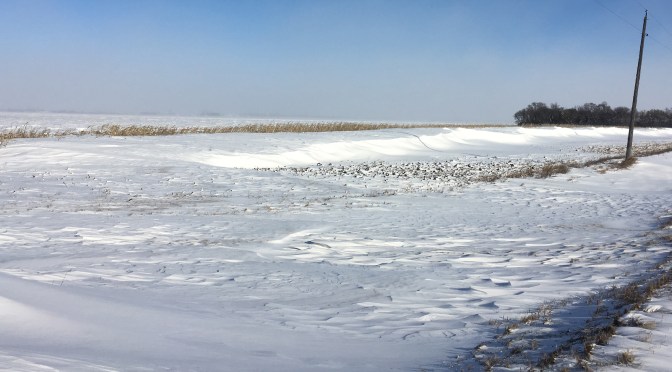
Some rural landowners maintain snow fences to prevent blowing snow from reaching highways, decreasing the resources MnDOT spends on winter maintenance. A recent project provided new information and updated tools to encourage more landowners to adopt this alternative snow control method.
Continue reading Expanding Alternative Snow Control Through Landowner Engagement
MnDOT CAV Launches Demonstration Projects in White Bear Lake and Grand Rapids
Two exciting new MnDOT CAV projects will be kicking off in the months ahead.
Continue reading MnDOT CAV Launches Demonstration Projects in White Bear Lake and Grand Rapids
Pond Maintenance Strategies to Retain Phosphorus
Cities and counties depend on stormwater retention ponds to protect water quality in lakes and streams. New research sponsored by the Minnesota Local Road Research Board has identified cost-effective methods for ensuring pollutants remain in pond sediment and are not released into other bodies of water.
Continue reading Pond Maintenance Strategies to Retain Phosphorus
Clear Roads Selects 2022 Research Projects
This article was originally published by Clear Roads, July 2022.
Each spring, the Clear Roads Technical Advisory Committee meets to review research proposals and select new projects for funding. This year, the committee selected five projects:
Continue reading Clear Roads Selects 2022 Research Projects
Research Pays Off Webinar Series: Intelligent Compaction Technology as a Service and for Compliance
The National Road Research Alliance (NRRA) is hosting “Intelligent Compaction Technology as a Service and for Compliance – How ICT Research has led to the Removal of Technicians from Construction Sites in the UK” on July 19 at 10 a.m. CST, presented by Ruairi Charlesworth of Highway Data Systems.
Continue reading Research Pays Off Webinar Series: Intelligent Compaction Technology as a Service and for Compliance
Increasing Cold In-Place Recycling Efficiency for Pavement Rehabilitation
New tools will help local road engineers reliably estimate the curing time of a cold in-place recycling (CIR) layer. Researchers identified factors that affect asphalt curing when a CIR method is used to know when pavement is sufficiently hardened, which will minimize delays in road construction and reopening.
Continue reading Increasing Cold In-Place Recycling Efficiency for Pavement Rehabilitation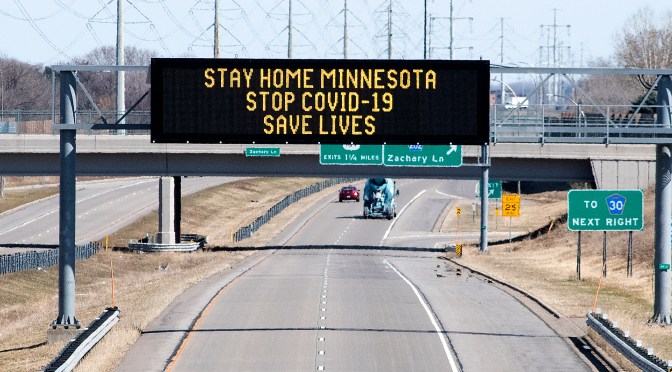
Understanding Telecommuting Trends for Traffic Management
Work-at-home orders during the COVID-19 pandemic resulted in drastic reductions in traffic congestion. To aid in highway planning and also inform state telework policies, MnDOT wanted to learn about telecommuting during the pandemic and future forecasts of remote work from both employers and employees of private and public organizations.
Continue reading Understanding Telecommuting Trends for Traffic Management
The Intersection of Health and Transportation: A Planning Framework for MnDOT
This article was originally published in Catalyst, May 2022.
Transportation is a crucial contributor to health: It directly shapes the social and physical environments in myriad ways and determines the types of places where people can live, learn, work, and play in their everyday lives.
Continue reading The Intersection of Health and Transportation: A Planning Framework for MnDOT
Developing Transportation Systems Climate Resilience Performance Measures
Climate change is exacerbating weather-related impacts on the transportation system. As floods, droughts, wildfires and other extreme weather events become more common and destructive, transportation infrastructure will need to adapt to become more resilient.
Continue reading Developing Transportation Systems Climate Resilience Performance Measures
Researcher Charts Path for Greater use of Electric Freight Vehicles in Minnesota
This article was originally published in Catalyst, May 2022.
In Minnesota, trucking produces about 13 percent of the total pollutants in the state. Moreover, a 2019 EPA report identified the transportation sector as the source of the highest share of greenhouse gas emissions in the United States, a problem compounded by the fact that this pollution is more concentrated in urban areas.
Continue reading Researcher Charts Path for Greater use of Electric Freight Vehicles in Minnesota Crossroads