

Local agencies need cost-effective and durable turfgrass seed mixes to ensure grass coverage remains optimal along roadsides. In a recent study, researchers analyzed the performance of grass seed mixtures and planting costs, recommended region-specific mixes and developed a cost estimation tool for local agencies to be confident in their roadside vegetation choices.
Continue reading Exploring Region-Specific Roadside Turfgrass Varieties
Study of Alcohol Overservice Finds Lack of Enforcement
Originally published as Study of alcohol overservice finds a lack of enforcement—and opportunities to improve in Catalyst, February 2023.
Overservice—the act of serving alcohol to an obviously intoxicated person—contributes to motor vehicle crashes and violence, and it’s illegal in 48 out of 50 states. Still, U of M researchers say overservice tends to be understudied and underenforced.
Continue reading Study of Alcohol Overservice Finds Lack of Enforcement
Findings Lay Groundwork for Shared Mobility Transit in Rural Minnesota
Originally published in Catalyst, February 13, 2023.
Public transit services are vital for community health and connectivity, yet the transit solutions found in urban areas—such as frequent bus service and light rail—don’t exist in rural areas. As a result, mobility may be limited in rural communities because of the high costs and low availability of affordable, reliable transportation options.
Continue reading Findings Lay Groundwork for Shared Mobility Transit in Rural Minnesota
Putting Research Into Practice: Fog Sealing Chip Sealed Roads Can Improve Performance
Applying a protective surface—or chip seal—to existing asphalt on relatively low-traffic roads is a pavement preservation method used by many transportation agencies. Yet despite its popularity, chip seals can cause various issues. Some agencies have found that applying a fog seal following a chip seal is a cost-effective strategy for improving asphalt performance and public satisfaction.
Continue reading Putting Research Into Practice: Fog Sealing Chip Sealed Roads Can Improve Performance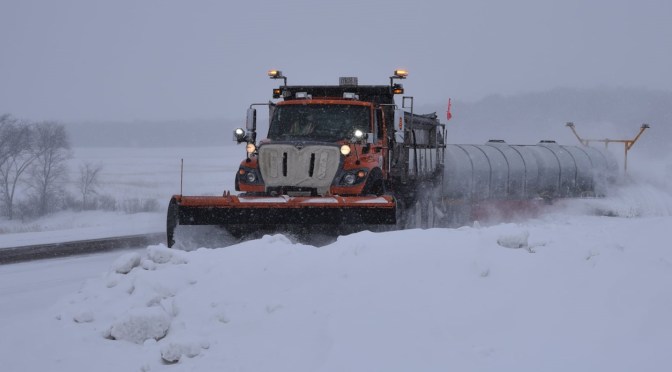
Talking about Winter Road Maintenance
AASHTO’s SICOP Talks Winter Ops podcast tackles a variety of topics about winter road maintenance in four recent podcasts. Listen to conversations with experts and practitioners who have real-life experience maintaining roads under snow and ice.
Continue reading Talking about Winter Road Maintenance
Effective Placement of High-Tension Cable Median Barriers
While cable median barriers have drastically reduced fatal and other serious crashes, the barrier’s distance from the road may impact its safety effectiveness. MnDOT has a new method to estimate the change in the frequency of crashes based on this distance, facilitating informed decisions about installing or moving cable median barriers.
Continue reading Effective Placement of High-Tension Cable Median Barriers
Wearable technology for highway worker’s safety
This article was originally posted on Catalyst, January 2023.
Wearable technology could improve work-zone safety, but are highway workers on board?
Despite ongoing safety efforts, highway maintenance and operations workers have dangerous jobs. According to the Federal Highway Administration, an average of 135 highway workers loses their lives each year because of traffic incursions and limited space for maneuvering. Wearable technology embedded in work gear offers the promise of preventing injuries and deaths—and is already being used successfully in other construction fields. The big question: Would highway workers accept this technology?
Continue reading Wearable technology for highway worker’s safety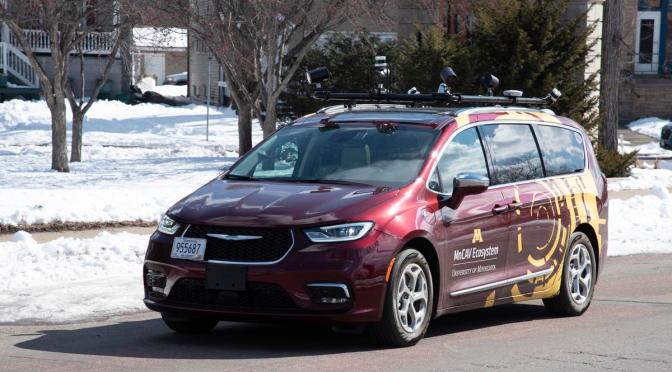
Paving the way for smarter and safer AVs
This article was originally posted on Catalyst, January 2023.
There’s been a lot of progress toward self-driving cars in recent years, but we still have a long way to go before the system runs like a well-oiled machine. Even with all the advances in artificial intelligence and machine learning, automated vehicles (AVs) are still not well-equipped to handle crashes, bad weather, poor visibility, and other unexpected situations on the road.
Continue reading Paving the way for smarter and safer AVs
Could an alternative to monthly parking contracts promote more sustainable mobility?
This article was originally posted on Catalyst, January 2023.
Transportation is the largest source of greenhouse gas emissions in both the US and the Twin Cities, and commuting trips are a major contributor to these emissions. To meet its emission-reduction mandates, Minnesota needs strategies to reduce auto trips—especially driver-only trips without passengers.
A recent U of M project aimed to leverage existing transportation infrastructure and systems to provide more flexible, multimodal transportation options for parking contract holders at Minneapolis’ ABC Ramps—thereby reducing the number of solo trips.
Continue reading Could an alternative to monthly parking contracts promote more sustainable mobility?
Investigating Max-Pressure Traffic Signal Timing
Inadequately timed traffic signals at intersections are a major contributor to traffic congestion and increased travel times. Adaptive signal timing can detect and respond to real-time vehicle queues, resulting in more efficient vehicle movement through a corridor than traditional traffic signals. A revised max-pressure traffic signal controller could decrease delays and increase vehicle throughput at intersections.
Continue reading Investigating Max-Pressure Traffic Signal Timing Crossroads