

The goods that continuously move through Minnesota by road, rail, air, water, and pipelines drive the state’s economy, making efficient freight transit—and excellent freight infrastructure—a high priority for the Minnesota Department of Transportation (MnDOT).
Continue reading Researchers Identify Freight Data Sources, Create Guidance to Aid Infrastructure Planning
Model Helps Identify Strategic Sites for Truck Charging Stations
An influx of electric trucks is expected on our highways, but where will they charge? Few public stations today can serve large freight vehicles. The challenge? Fast chargers are expensive, and new ones need to be placed strategically to keep pace with growing demand.
Continue reading Model Helps Identify Strategic Sites for Truck Charging Stations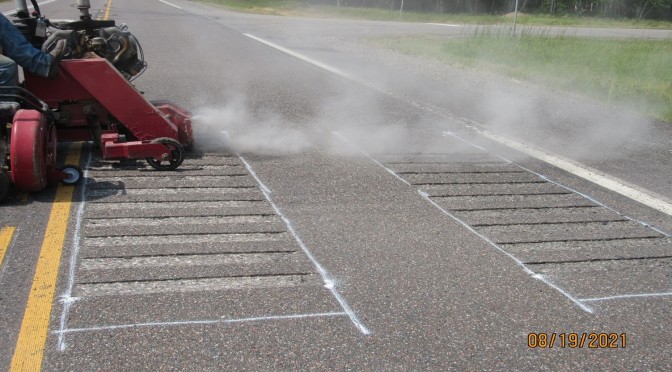
Using Rumble Strips to Encourage Stops at Rural Intersections
Vehicle crashes in rural areas often happen at intersections. Transverse rumble strips placed before a stop sign can be an effective safety measure that warns drivers approaching an intersection. Recent research has provided an increased understanding of the most effective rumble strip designs and noise characteristics to help county traffic engineers decide when and where to deploy the strips.
Continue reading Using Rumble Strips to Encourage Stops at Rural Intersections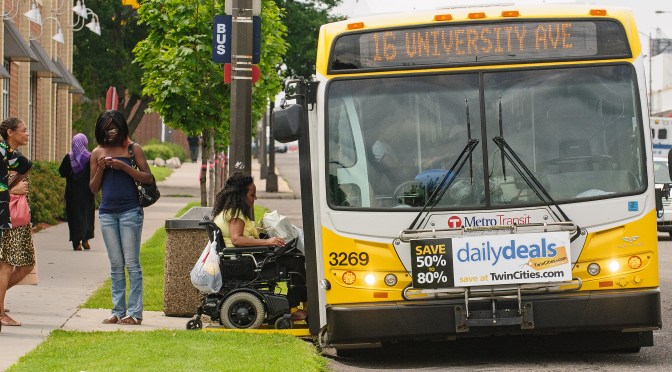
Personal Stories Illustrate Transportation Inequities in Minnesota
Transportation research is often about numbers. In a recent study, however, U of M researchers looked beyond the data to hear the transportation experiences of real people from underserved communities in Minnesota.
Continue reading Personal Stories Illustrate Transportation Inequities in Minnesota
New Project: Development of Process to Lower Global Warming Potential of Construction Materials
Advances in science of life cycle assessment (LCA) have set the stage to develop methods that meet global warming potential (GWP) reduction targets for construction materials, specifically, using instruments such as Environmental Product Declarations (EPD).
Continue reading New Project: Development of Process to Lower Global Warming Potential of Construction Materials
Preparing for the Future of CAVs: Cybersecurity, Winter Weather Research
Connected and automated vehicles (CAVs) hold promise for improving transportation operations—but could also provide pathways for “malicious actors” to compromise vehicle security, said Rafael Stern, a U of M assistant professor, in a recent CTS webinar.
Continue reading Preparing for the Future of CAVs: Cybersecurity, Winter Weather Research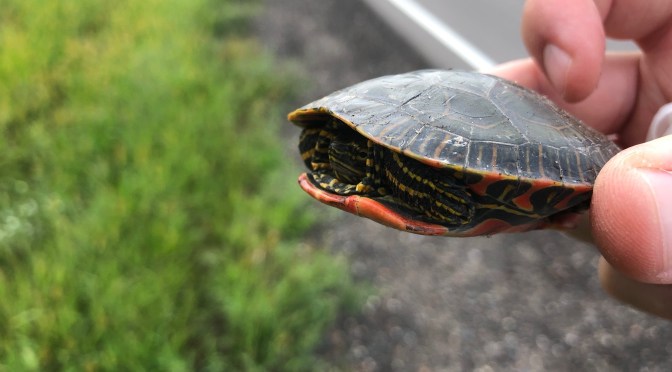
New Project: Assessing a New Tool for Early Detection of Endangered Turtles on Proposed Transportation Projects
As turtle populations decline worldwide, increased protections (e.g. United States Endangered Species Act) yield increased regulatory burdens. As a consequence, monitoring of imperiled turtle species is imperative to understand both their extant distributions, but also to ensure regulatory compliance.
However, conventional methods for surveying turtles are frequently costly, time consuming, require taxonomic expertise, and unlikely to yield detections without repeated visits. And these burdens are exacerbated when sampling rare, threatened, or endangered (RTE) species. In these instances, innovative technological advances may overcome these limitations, ultimately streamlining monitoring.
Continue reading New Project: Assessing a New Tool for Early Detection of Endangered Turtles on Proposed Transportation Projects
Evaluating Metrics and Performance to Advance Transportation Equity
Ensuring Minnesota’s transportation network does not create barriers or hardships for underserved or underrepresented communities is imperative. But knowing if the agency is planning and administering programs or projects equitably can be challenging to assess. New research suggests improved performance measures and strategies to support agency efforts to advance equity across the agency’s responsibilities.
Continue reading Evaluating Metrics and Performance to Advance Transportation Equity
Evaluating MnDOT’s Turfgrass Seed Variety List and Approval Process
As climate conditions change and seed development processes advance, some grass varieties may perform better than others. New research will allow MnDOT to update its approved turfgrass list and ensure it remains up to date with the most effective varieties.
Continue reading Evaluating MnDOT’s Turfgrass Seed Variety List and Approval Process
Comparing the Cost-Effectiveness of Asphalt Binders for Local Roads
Asphalt pavements with polymer-modified binders (PMBs) perform better than pavements with unmodified asphalt binders. While pavements with PMBs may cost more initially, performance is improved in the long run. In a recent study, researchers compared the performance and life cycle costs of modified and unmodified binders and found that modified binders are more cost-effective, even for local low-volume roads.
Continue reading Comparing the Cost-Effectiveness of Asphalt Binders for Local Roads Crossroads