As bridge infrastructure in Minnesota and across the country ages, maintaining and preserving the existing bridge network becomes increasingly important—and increasingly challenging. In Minnesota alone, 25 percent of bridge-deck area is more than 50 years old, and the number of bridges rated in “fair” condition has recently overtaken the number rated in “good” condition.
When a transportation innovation shows potential for significantly increasing safety, implementation may seem like the obvious next step. But without public support, a project can be met with resistance that results in delays, additional costs and a lost opportunity to save lives.
Providing traffic control in work zones is one of the highest risk jobs in the country. Flaggers are often considered the first line of defense against distracted, inattentive or aggressive motorists who may intrude into these work areas. A new, cost-effective system that tracks an oncoming vehicle’s trajectory can warn workers of an unsafe intrusion into the work zone and alert drivers to slow or stop.
As the demand for aggregate in construction increases, recycling concrete waste as aggregate has been recognized as an environmentally sustainable solution with potential cost savings. It would allow recycling of construction and demolition waste and reduce some of the need to quarry and haul virgin aggregate. However, the use of recycled concrete aggregate (RCA) has been limited by concerns over its quality and performance, and by lack of uniform specifications as to what kind and how much of the aggregate to use in pavement construction. Studies and on-the-ground experience have shown that high levels of RCA reduce the durability of pavements. The effects of lower replacement levels have not been well documented, however.
Snowplow operators work in difficult, often low-visibility conditions. A new system assists drivers in knowing their lane position and warns of approaching obstacles. After operators tested the system over two winters, researchers gathered feedback, revised the system and readied it for the next step in statewide deployment.
Pedestrian safety countermeasures near roadways require year-round maintenance to be effective. Clearing snow and ice has not generally been a design consideration for safety treatments, but new research has identified specific design criteria to help MnDOT and other agencies keep walkways clear without impeding maintenance efforts.
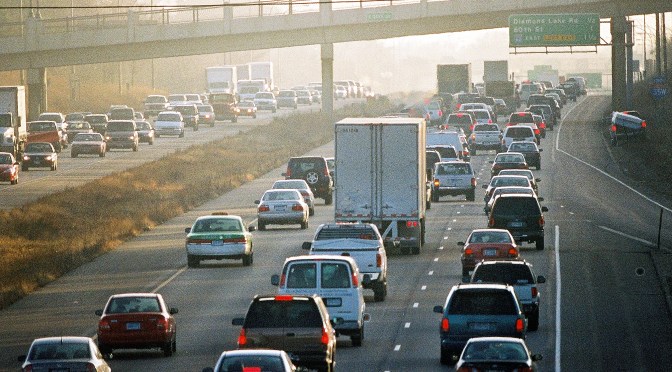
Combining real-time traffic data, vehicle trajectories and computer algorithms allows queue warning systems to trigger traffic warnings on overhead message signs that alert drivers to congestion or crashes ahead. A recent study evaluated the warning system previously installed on a segment of Interstate 94 (I-94) and deployed the system in a second location, providing an improved understanding of its efficacy and considerations for expanding its use.
Stormwater ponds and wetlands reduce flood risk and keep pollutants from entering other bodies of water. As ponds age and change, however, they may not perform as designed. Local agencies now have tools to assess whether a pond is likely to retain phosphorus, which can help guide stormwater management efforts.
Managed lanes provide transportation agencies with a strategy for reducing congestion and improving travel times along urban highways. A common perception is that the benefits of managed lanes are greater for higher-income people than for those with lower incomes, often from underrepresented communities. New research illustrates the diversity of managed lane users and provides new metrics and recommendations to factor equity into the highway project planning process.
The issue of reducing speed limits to increase public safety is an emotional, political, and controversial topic that has been debated by safety advocates, engineers, politicians, transportation officials, and the public for many years. A statutory change in 2019 put a spotlight on the topic, requiring a deeper look into how speed limits are established and the effectiveness that lowering speed limits has on reducing vehicle traveling speeds, as well as the impacts on pedestrian and bicycle traffic.




 Crossroads