

While roundabouts improve traffic efficiency and reduce accidents, pedestrian safety concerns linger. A study of driver–pedestrian interactions at roundabouts produced guidance for local agencies to increase driver yielding and enhance the pedestrian experience.
Continue reading Enhancing Pedestrian Experiences at RoundaboutsCategory Archives: Traffic and Safety
Using Signal Phasing and Timing Data to Reduce Fuel Use
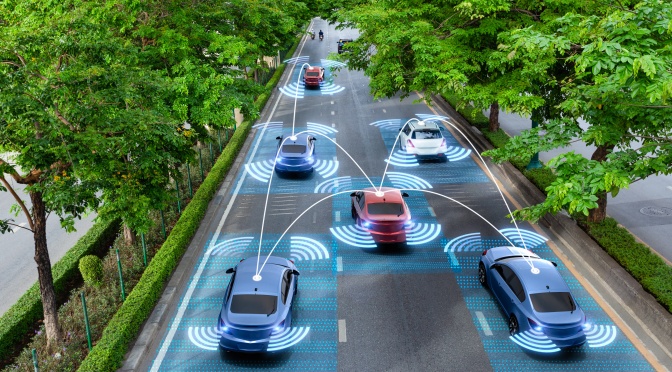
Fuel consumption increases when vehicles stop and start at traffic signals. Transmitting traffic signal data to connected vehicles could control vehicles’ driving speed and limit unnecessary stopping and starting, potentially lowering fossil fuel use. A recent study looked at the benefits and costs of deploying more signal messaging technology to inform future infrastructure investments.
Continue reading Using Signal Phasing and Timing Data to Reduce Fuel Use
Study of Alcohol Overservice Finds Lack of Enforcement
Originally published as Study of alcohol overservice finds a lack of enforcement—and opportunities to improve in Catalyst, February 2023.
Overservice—the act of serving alcohol to an obviously intoxicated person—contributes to motor vehicle crashes and violence, and it’s illegal in 48 out of 50 states. Still, U of M researchers say overservice tends to be understudied and underenforced.
Continue reading Study of Alcohol Overservice Finds Lack of Enforcement
Effective Placement of High-Tension Cable Median Barriers
While cable median barriers have drastically reduced fatal and other serious crashes, the barrier’s distance from the road may impact its safety effectiveness. MnDOT has a new method to estimate the change in the frequency of crashes based on this distance, facilitating informed decisions about installing or moving cable median barriers.
Continue reading Effective Placement of High-Tension Cable Median Barriers
Wearable technology for highway worker’s safety
This article was originally posted on Catalyst, January 2023.
Wearable technology could improve work-zone safety, but are highway workers on board?
Despite ongoing safety efforts, highway maintenance and operations workers have dangerous jobs. According to the Federal Highway Administration, an average of 135 highway workers loses their lives each year because of traffic incursions and limited space for maneuvering. Wearable technology embedded in work gear offers the promise of preventing injuries and deaths—and is already being used successfully in other construction fields. The big question: Would highway workers accept this technology?
Continue reading Wearable technology for highway worker’s safety
Investigating Max-Pressure Traffic Signal Timing
Inadequately timed traffic signals at intersections are a major contributor to traffic congestion and increased travel times. Adaptive signal timing can detect and respond to real-time vehicle queues, resulting in more efficient vehicle movement through a corridor than traditional traffic signals. A revised max-pressure traffic signal controller could decrease delays and increase vehicle throughput at intersections.
Continue reading Investigating Max-Pressure Traffic Signal Timing
New Project: Red Light Running Warning System
Red-light violations at traffic signals are a major contributor to crashes and fatalities. Right-angle type crashes typically account for the most serious of these collisions, and most of them are caused by vehicles running red lights. This research will explore technology that could be used to warn drivers when they are about to run a red light.
Continue reading New Project: Red Light Running Warning System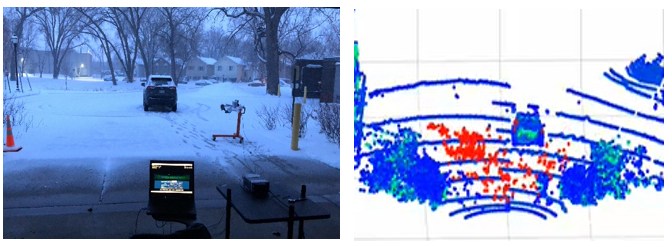
Evaluating Weather’s Effects on the Accuracy of Automated Vehicles
Fully automated vehicles may not be market-ready yet, but one day, they expect to provide a variety of benefits like reduced emissions and greater safety and transportation equity. These vehicles and the complex combination of underlying technologies that power them are continually being tested and improved to ensure the vehicles will meet the highest standards of safety and performance.
Continue reading Evaluating Weather’s Effects on the Accuracy of Automated Vehicles

COVID-19 Travel Reductions: Lessons for Relieving Traffic Congestion
As the COVID-19 pandemic restrictions in 2020 kept people at home, reduced travel and, therefore, traffic congestion were to be expected. But how much of an impact did the restrictions have on traffic congestion? After analyzing changes in traffic levels due to the COVID-19 pandemic travel restrictions, researchers identified how incremental changes in vehicle miles traveled impact regional congestion. These results will inform efforts by MnDOT and its partners on the outcomes of reduced travel demand.
Continue reading COVID-19 Travel Reductions: Lessons for Relieving Traffic Congestion Crossroads