
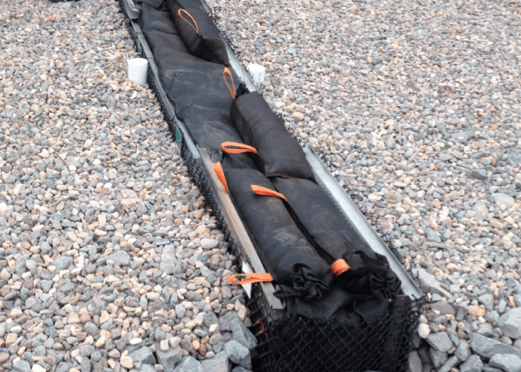
Researchers documented performance of an iron-enhanced ditch check filter to remove phosphorus from stormwater over three years. The filter was effective, but its performance decreased over time, and it will require relatively frequent maintenance. Several design changes may be considered.
Continue reading Evaluating Iron-Enhanced Swale Ditch Checks for Phosphorus RemovalCategory Archives: Materials and Construction
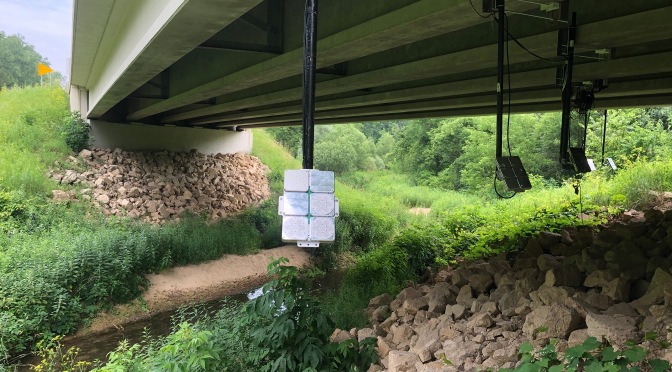
New Project: Use of Innovative Technology to temporarily Deter Bat-Bridge Use Prior to and During Construction
MnDOT has funded a study to evaluate the use of non-lethal ultrasonic acoustic devices to temporarily deter bats from bridges before and during construction projects.
Continue reading New Project: Use of Innovative Technology to temporarily Deter Bat-Bridge Use Prior to and During Construction
Recycling Asphalt Pavement Offers Strong Alternative to New Aggregate Base
In a newly completed study, researchers found that stabilized full-depth reclamation has produced stronger roads for commercial loads in Minnesota, and the method shows promise for uses in rural agricultural areas. How much greater the strength gained with each stabilizing agent is better understood, though not conclusively.
Continue reading Recycling Asphalt Pavement Offers Strong Alternative to New Aggregate Base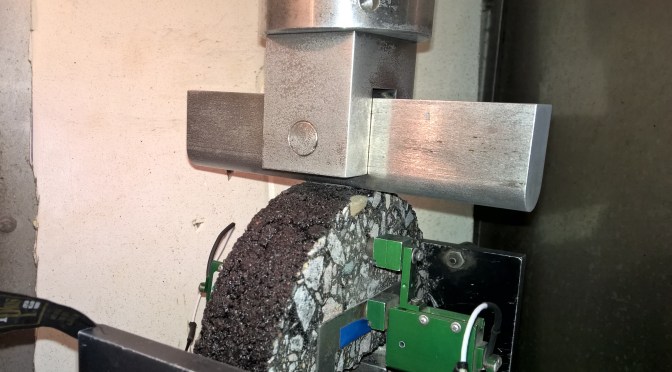
Testing Methods for Crack Resistance in Asphalt Materials
The Minnesota Department of Transportation is working with other state agencies in a pooled fund study to improve methods for testing crack resistance of asphalt mixtures. To expand options further, MnDOT asked researchers to evaluate alternative tests with standard lab equipment. The new tests produced repeatable results. Methods include the semicircular bend (SCB) test in a nontypical configuration, a dynamic modulus test of smaller asphalt mixture samples, a bending beam rheometer (BBR) test of mixtures, and a BBR of asphalt material for binder selection.
Continue reading Testing Methods for Crack Resistance in Asphalt Materials
Study Suggests 70 Percent RAP for Minnesota Gravel Road Surfaces
Researchers examined mixtures of recycled asphalt pavement (RAP) and aggregate for new gravel road surface layers in the lab and in the field. Although test results did not align perfectly, and field results were somewhat uneven, findings suggest that mixtures with 70 percent RAP content can reduce dust generation. After a year of service these roadways can match all-aggregate gravel road performance in terms of strength, but with a smoother ride.
Continue reading Study Suggests 70 Percent RAP for Minnesota Gravel Road Surfaces
Sediment Control Log Guidance for Field Applications
Researchers tested sediment control logs in the lab and in the field to determine the relative filtration capabilities of these devices. They also developed design guidelines for correct selection and contributed to ongoing educational efforts.
Continue reading Sediment Control Log Guidance for Field Applications
Concrete Grinding Residue Doesn’t Appear to Negatively Affect Roadside Vegetation and Soil
A new MnDOT research study determined that depositing concrete grinding residue (CGR) slurry at specific rates on roadside vegetation and soil may not cause lasting harm to plant growth and soil quality; however, follow-up research is recommended.
Continue reading Concrete Grinding Residue Doesn’t Appear to Negatively Affect Roadside Vegetation and Soil
Culvert Design Manual Provides Guidance for Accommodating Fish Passage
Several years of research have culminated in the publication of a culvert design manual that promotes the safe passage of fish and other aquatic organisms, as well as stream connectivity, throughout the state.
“Engineers designing culverts for Minnesota’s diverse ecological regions will benefit from this document, which offers sound guidance from many practicing experts about how to design culverts that allow aquatic organism passage and preserve stream integrity,” said Petra DeWall, former Bridge Waterway Engineer, Minnesota Department of Transportation (MnDOT).
What Was the Need?
Minnesota’s 140,000 miles of roads and approximately 92,000 miles of streams and rivers meet at tens of thousands of places. Culverts are a cost-effective solution to allow traffic to cross over smaller waterways. Historically, culverts have been designed with the safe passage of vehicles in mind. Recently, a state and national appeal for the safe passage of fish and other aquatic organisms, as well as for waterway integrity and connectivity, has influenced culvert design.

MnDOT has supported many research projects examining fish and aquatic organism passage (AOP) through culverts, and nationally, a number of published resources exist on appropriate design. Because of the variety of ecological regions in the state, the range of culvert geometries and many other factors, no single solution can accommodate AOP through culverts statewide. A comprehensive culvert design guide was needed to inform designers about solutions that can effectively facilitate the movement of fish and other aquatic organisms in Minnesota while maintaining healthy streams.
What Was Our Goal?
The objective of this project was to produce a comprehensive and accessible culvert design guide that could be used by Minnesota practitioners to design culverts for AOP and stream connectivity. The guide would provide the following benefits:
• More efficient culvert design and permitting process for AOP.
• A central definition of typical designs, which would improve contractors’ familiarity with designs and lower construction costs.
• Avoidance of designs that could be detrimental to the natural environment.
• Avoidance of designs likely to lead to roadway damage and need for repairs.
• Fishery improvement through increased stream connectivity.
What Did We Do?
To determine the scope of the guide, researchers worked with experts from the Minnesota Department of Natural Resources (DNR), the U.S. Forest Service and others with knowledge of civil engineering, AOP and stream geomorphology.
They then sought information for the guide from a wide range of authoritative resources. A literature search examined current and past research by the research team and others; guidance documents from federal agencies; guidance from other states; permit requirements from the DNR and other agencies; and databases of fish populations, stream attributes and culvert data. The literature search also sought to reveal gaps in knowledge where further research specific to Minnesota was needed.
Additionally, researchers surveyed a cross section of highway design engineers and managers from MnDOT, county and city agencies, resource agencies and engineering consultants to identify current design practices for AOP and stream connectivity, and the degree of their effectiveness.
What Did We Learn?
The project resulted in the Minnesota Guide for Stream Connectivity and Aquatic Organism Passage Through Culverts, a thorough guide for culvert designers, hydraulic engineers and others involved in culvert design and construction in Minnesota. Topics addressed in the guide include:
• The need for culvert designs that include AOP and stream connectivity, as well as the current regulatory context.
• An overview of culvert design, categories of design methods that incorporate AOP and waterway connectivity, and a list of best practices.
• Site characteristics, analysis and tools related to energy dissipation, hydraulic analysis for AOP and sediment transport.
• A design method selection chart, information on certain designs and references for further information.
• Further guidance about design issues such as multiple barrel and floodplain culverts, grade control, retrofits and other cost considerations.
What’s Next?
The culvert design guide will be made available to users online. Future considerations for this project include an associated webinar and efforts to coordinate information presented in the guide with expectations and permitting requirements of MnDOT departments charged with culvert creation and implementation. Additional research is underway to assess culverts and fish passage with respect to storm vulnerability and future hydrologic scenarios.
This post pertains to the MnDOT and LRRB-produced Report 2019-02, “Minnesota Guide for Stream Connectivity and Aquatic Organism Passage Through Culverts,” published January 2019.
New Resource for Using Cone Penetration Testing in Geotechnical Design
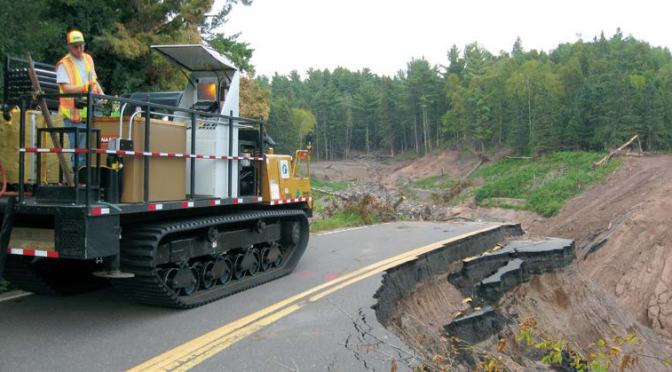
Designing foundations for bridges and pavements requires understanding the soil conditions and properties at the site. One of the best methods for calculating site conditions is the cone penetration test (CPT), in which a rod with a cone-shaped tip outfitted with sensors is driven into the soil. Engineers attach more rods to the first as the device is gradually driven to depths of 30 to 150 feet.
Researchers have developed a new manual to show geotechnical engineers how to conduct the CPT and use the data it gathers. The guide walks engineers through the process of CPT-based foundation design for sand and clay soils in deep and shallow foundations, helping engineers put the best technology to use.
A supplement to the Minnesota Department of Transportation’s Geotechnical Engineering Manual, this resource will provide improved methods for using CPT data in geotechnical design.
What Was the Need?
Designs for new bridges and structures require geotechnical investigation of a site’s soil conditions to evaluate the strength, settlement and drainage of a proposed foundation. Common design procedures rely on boring samples from the site and on standard penetration tests (SPT), which entail driving a weighted steel rod into the soil and recording the number of blows it takes to drive the rod a specified distance. Using lab analysis of samples and on-site tests, engineers determine foundation properties for the new design.
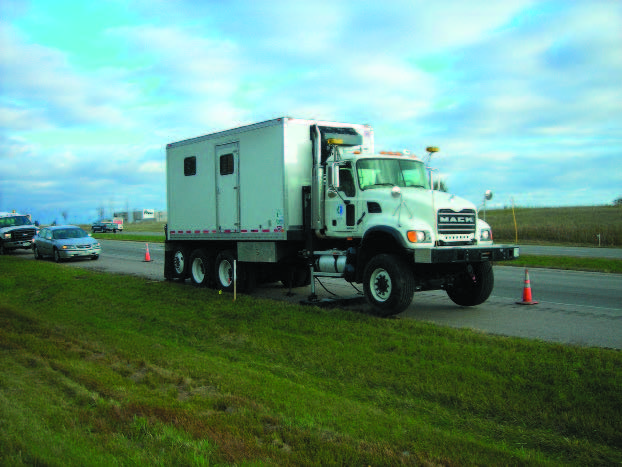
The cone penetration test (CPT) has become an attractive alternative to the SPT. CPT employs a probe with a cone-shaped tip outfitted internally with various sensors. Equipment in a CPT truck pushes the probe into the soil at the site; engineers attach rod sections behind the probe to continue pushing it in the soil to the desired investigation depth, which is usually 30 to 150 feet for transportation projects. Standard sensors allow the CPT to directly measure tip stress, pore water pressure and soil resistance; other parameters can be measured with additional sensors.
“One of the biggest impediments to deploying cone penetration testing more widely has been the lack of a practical document that integrates the latest findings and best approaches, and puts that information to use,” said Derrick Dasenbrock,
Geomechanics/LRFD Engineer, MnDOT Office of Materials and Road Research.
The CPT safely and efficiently produces accurate data and repeatable results, yet relatively few engineers in the United States know how to employ these tests and use the data for geotechnical design inputs. Users can search geotechnical engineering resources to learn how CPT results can be applied, but no standard procedure or manual is widely available for transportation projects.
What Was Our Goal?
Investigators sought to develop a new CPT design guide based on the most current CPT in situ testing research and development. The guide is intended for use in evaluating the performance of proposed bridges and structures, embankments and roadway features.
What Did We Implement?
The research team produced the 2018 CPT Design Guide for State Geotechnical Engineers, with step-by-step instructions for using the CPT to evaluate soil properties at sites and to design shallow footings and deep foundations. The document provides an overview of the CPT, its use in analyzing and characterizing soils, background on computing engineering parameters derived from CPT measurements, and detailed procedures for using those parameters to design and analyze shallow and deep foundations. Also included are derivation background, case studies and examples to help guide the user through the design process.
How Did We Do It?
Investigators began by reviewing guidelines for geotechnical engineering design based on CPT methods. The research team identified the key soil properties measurable by the CPT that are required for designing shallow and deep foundations. Then team members evaluated numerous CPT-based methods used for shallow foundations and over 40 use for deep foundations. Using the results of this evaluation, investigators identified methods with sufficiently robust and reliable performance that could be easily implemented by design engineers.
The team used CPT data from MnDOT geotechnical site investigations and developed short design case studies applying the recommended CPT design methods. After reviewing the CPT procedures with the Technical Advisory Panel, investigators organized design modules for soil characterization, shallow foundations and deep foundations, and documented the process in the design guide.
What Was the Impact?
The new guide is based on the current best practices for the CPT and was developed to establish MnDOT’s geotechnical design process while accommodating ongoing research. The guide presents recommended design methods and offers step-by-step instruction on how to calculate engineering parameters from CPT measurements and apply those design inputs to efficiently design foundation systems. Examples of problems and solutions are provided in the context of Minnesota cases, although the techniques are broadly applicable.
“Engineers can start using this design guide immediately in Minnesota—and elsewhere. The format is adaptable; California could add another module about earthquakes, for instance,” said David Saftner, Associate Professor, University of Minnesota Duluth Department of Civil Engineering.
The guide begins with a focus on characterizing soil properties from CPT measurements, providing an example for both sand and clay soils. The shallow foundation design module describes how to determine strength and soil settlement characteristics from CPT sensor readings using a method based on 166 full-scale field load tests. The deep foundation design module explains how to use the CPT to determine the required axial compression capacity of piling from a method based on 330 pile load tests.
What’s Next?
The guide is a much-needed resource for geotechnical engineers both within MnDOT and outside of the agency. The improved methods for using CPT data will encourage more frequent and widespread use of the method, improving the quality and reducing the time and cost of site investigations.
Available on MnDOT’s Geotechnical Engineering website as a supplement to the 2019 revision to the Geotechnical Engineering Manual, the guide will also be shared with a Federal Highway Administration CPT users group. Future considerations for the guide include a module on characterizing peat in organic soils and on seismic soil analysis.
This post pertains to Report 2018-32, “Cone Penetration Test Design Guide for State Geotechnical Engineers,” published November 2018.
Modeling Demonstrates Benefit of Geogrid-Reinforced Aggregate Base
Improved modeling of geogrid for use with MnDOT’s pavement design software, MnPAVE Flexible, will allow pavement designers to simulate field tests of stiffness and resiliency in pavements over bases with and without geogrid. MnDOT is using modeling results from a recent study to develop a design input that quantifies the benefit of geogrid in terms of pavement service life and aggregate thickness.
“This innovative study will be especially beneficial for designs in areas with poor subgrade. We worked closely with the geogrid manufacturer to develop codes that accurately simulate geogrid behavior in a pavement,” said Bruce Tanquist, Pavement Computer Applications Engineer, MnDOT Office of Pavement Design.
What Was the Need?
Many highways in Minnesota are built upon soft subgrades. These weak subgrades lower the roadway pavement life. In the past, timber and cement have been used to stiffen pavement foundations with mixed success. However, for the last 20 years, geogrids have been shown to be a beneficial and cost-effective method to stiffen the existing pavement structure.
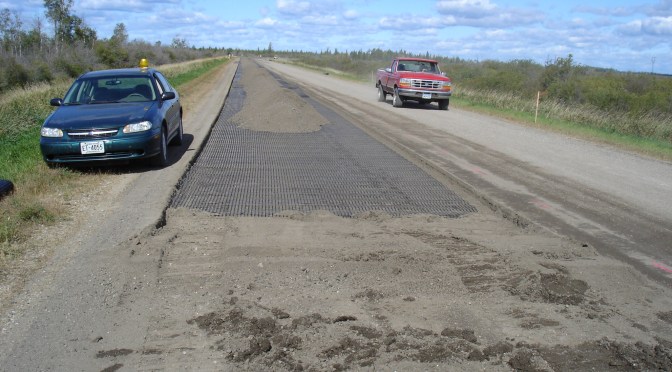
Geogrid is a stiff polymer webbing with apertures that interlock with aggregate in the base. The material is placed within the new or reclaimed aggregate base, usually two-thirds the distance from the top of the base. After the remaining aggregate is placed, the road is paved with either asphalt or concrete.

Geogrid increases the stiffness of the aggregate base layer by locking aggregate in place for improved resilience. Though the benefit of geogrid has been observed in the past, it was not quantified for pavement design purposes, and designers were not able to include the properties in their calculations when designing a pavement. Geogrid was sometimes seen as an extra expense with no calculated benefit.
A 2016 study was also tasked to quantify the benefits of geogrid in mechanistic design, but deflection testing results were inconclusive and did not support a reliable design factor for geogrid use in aggregate base.
What Was Our Goal?
MnDOT pavement designers requested a model to show how using geogrid in the roadway base impacted pavement life. Researchers used new software to evaluate geogrid behavior in different design permutations and to quantify its benefit to pavement performance using MnDOT’s pavement design software, MnPAVE Flexible.
What Did We Do?
The updated software was used to expand the geogrid modeling capability and test modeled nonreinforced and geogrid-reinforced bases. Research began by identifying geogrid parameters useful in modeling and as inputs to MnPAVE. Investigators worked with a geogrid manufacturer to specify and code the physical characteristics and properties of triaxial geogrid (with triangular-shaped apertures) used in the field for modeling.
Researchers then worked closely with a software developer to refine modeling capabilities, expanding on previous work that focused on biaxial geogrid (with rectangular-shaped apertures) to include triaxial geogrid, and to model behavior of geogrids in variable parameters for geogrid and aggregate.
Geogrid and aggregate models were tested extensively, adjusting geogrid and aggregate characteristics and simulating dynamic cone penetrometer (DCP) and light weight deflectometer (LWD) tests. Researchers collected numerical modeling results on geogridand aggregate performance to use with MnPAVE design software and to develop design factors that quantify the impact of geogrid on pavement performance.
What Did We Learn?
Field testing from previous research was insufficiently detailed because it did not include specific pavement structure and subgrade conditions below each deflection-tested location. Additionally, lab testing, which evaluated geogrids by testing their behavior within 6-inch by 12-inch cylinders, did not correlate well with the dimensions and shapes of field geogrid installations.
Effective modeling aids in quantifying the benefits of geogrids. The modeling developed in this research effectively began to bridge the gap between field and lab examination by testing forces in 1-foot-square models with 4- to 12-inch aggregate thicknesses, which is more appropriate for estimating geogrid and aggregate behavior in the field.
“We were asked to quantify the benefit of geogrid. It is important to keep the aggregate layer thick for benefits like drainage, so it’s important to know that we were getting extra years of life with geogrid-reinforced aggregate base,” John Siekmeier, Research Engineer, MnDOT Office of Materials and Road Research.
New modeling capabilities allow testing of various parameters, including geogrid aperture dimensions and configurations, the thickness and shape of geogrid ribs, aggregate roughness and gradation, and moisture content. Test simulations of geogrid and aggregate configurations run for hours or days, and model a wide range of behaviors to capture reliable data from DCP and LWD tests of stiffness, resilience, and strength of bases with and without geogrids.
Test results showed that depending on moisture content and the time of year, bases reinforced with geogrids offer 1.5 to 2.5 times the resiliency under loading compared to nongeogrid-reinforced bases.
What’s Next?
Investigators are working with MnDOT designers to codify a geogrid factor in MnPAVE that determines the improved service life or the aggregate thickness equivalent that geogrid provides to aggregate bases in pavements. The geogrid factor could be incorporated early in 2019.
Further research could include comparing modeling results to LWD and DCP field test results of new pavements with geogrid-reinforced aggregate bases. Such implementation and site testing could continue with new pavement installations to collect data to confirm or calibrate geogrid design factors and geogrid modeling for MnPAVE.
This post pertains to Report 2018-30, “Performance Specification for Geogrid Reinforced Aggregate Base,” published October 2018.

