
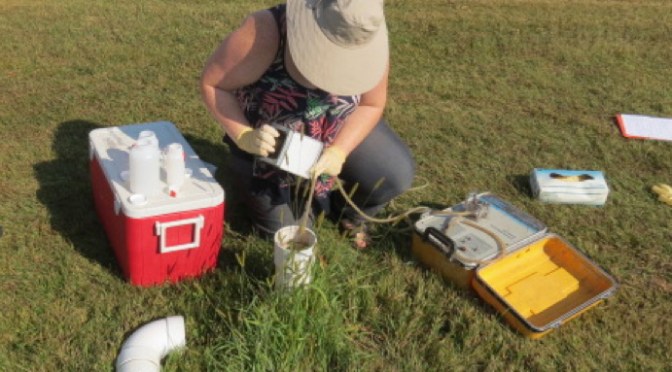
Researchers have provided MnDOT with a comprehensive and practical evaluation of what the agency would need to do to develop wastewater reuse systems for its truck stations and rest areas. Two sites will install the research project’s recommended systems soon.
Continue reading Investigating Wastewater Reuse at Rest Areas and Truck StationsCategory Archives: Environment

Using Regional Materials to Manage Stormwater Runoff
Researchers determined that natural soil amended with locally sourced materials performed well in bioslopes and bioswales. This practice will allow MnDOT to avoid hauling in costly commercial materials for stormwater management installations.
Continue reading Using Regional Materials to Manage Stormwater Runoff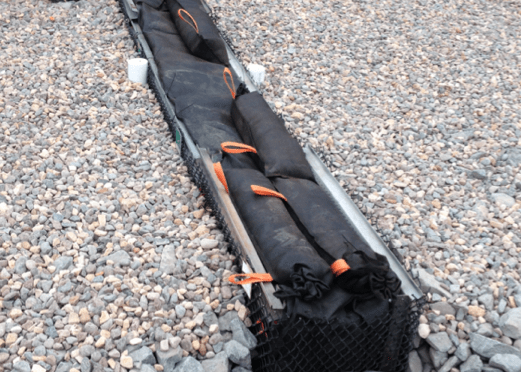
Evaluating Iron-Enhanced Swale Ditch Checks for Phosphorus Removal
Researchers documented performance of an iron-enhanced ditch check filter to remove phosphorus from stormwater over three years. The filter was effective, but its performance decreased over time, and it will require relatively frequent maintenance. Several design changes may be considered.
Continue reading Evaluating Iron-Enhanced Swale Ditch Checks for Phosphorus Removal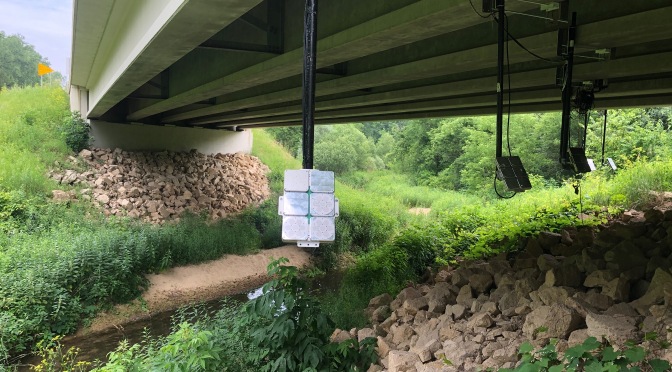
New Project: Use of Innovative Technology to temporarily Deter Bat-Bridge Use Prior to and During Construction
MnDOT has funded a study to evaluate the use of non-lethal ultrasonic acoustic devices to temporarily deter bats from bridges before and during construction projects.
Continue reading New Project: Use of Innovative Technology to temporarily Deter Bat-Bridge Use Prior to and During Construction
Roadside Turf That Tolerates Salt, Heat and Ice
A recently completed research study has identified turfgrass species and cultivars that perform best under the heat and salt on Minnesota roadsides.
Continue reading Roadside Turf That Tolerates Salt, Heat and Ice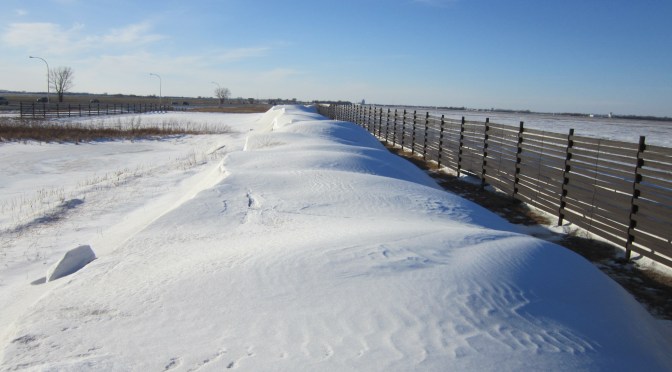
Study Underway to Harness Renewable Energy from Minnesota’s Highways
Sound barriers and snow fences along highways have the potential to provide clean energy in Minnesota.
A newly funded MnDOT study, Harnessing Solar Energy through Noise Barriers and Structural Snow Fencing, is investigating how to utilize existing noise barriers and snow fences on Minnesota highways to harvest clean, cost-effective energy.
Continue reading Study Underway to Harness Renewable Energy from Minnesota’s Highways
Culvert Design Manual Provides Guidance for Accommodating Fish Passage
Several years of research have culminated in the publication of a culvert design manual that promotes the safe passage of fish and other aquatic organisms, as well as stream connectivity, throughout the state.
“Engineers designing culverts for Minnesota’s diverse ecological regions will benefit from this document, which offers sound guidance from many practicing experts about how to design culverts that allow aquatic organism passage and preserve stream integrity,” said Petra DeWall, former Bridge Waterway Engineer, Minnesota Department of Transportation (MnDOT).
What Was the Need?
Minnesota’s 140,000 miles of roads and approximately 92,000 miles of streams and rivers meet at tens of thousands of places. Culverts are a cost-effective solution to allow traffic to cross over smaller waterways. Historically, culverts have been designed with the safe passage of vehicles in mind. Recently, a state and national appeal for the safe passage of fish and other aquatic organisms, as well as for waterway integrity and connectivity, has influenced culvert design.

MnDOT has supported many research projects examining fish and aquatic organism passage (AOP) through culverts, and nationally, a number of published resources exist on appropriate design. Because of the variety of ecological regions in the state, the range of culvert geometries and many other factors, no single solution can accommodate AOP through culverts statewide. A comprehensive culvert design guide was needed to inform designers about solutions that can effectively facilitate the movement of fish and other aquatic organisms in Minnesota while maintaining healthy streams.
What Was Our Goal?
The objective of this project was to produce a comprehensive and accessible culvert design guide that could be used by Minnesota practitioners to design culverts for AOP and stream connectivity. The guide would provide the following benefits:
• More efficient culvert design and permitting process for AOP.
• A central definition of typical designs, which would improve contractors’ familiarity with designs and lower construction costs.
• Avoidance of designs that could be detrimental to the natural environment.
• Avoidance of designs likely to lead to roadway damage and need for repairs.
• Fishery improvement through increased stream connectivity.
What Did We Do?
To determine the scope of the guide, researchers worked with experts from the Minnesota Department of Natural Resources (DNR), the U.S. Forest Service and others with knowledge of civil engineering, AOP and stream geomorphology.
They then sought information for the guide from a wide range of authoritative resources. A literature search examined current and past research by the research team and others; guidance documents from federal agencies; guidance from other states; permit requirements from the DNR and other agencies; and databases of fish populations, stream attributes and culvert data. The literature search also sought to reveal gaps in knowledge where further research specific to Minnesota was needed.
Additionally, researchers surveyed a cross section of highway design engineers and managers from MnDOT, county and city agencies, resource agencies and engineering consultants to identify current design practices for AOP and stream connectivity, and the degree of their effectiveness.
What Did We Learn?
The project resulted in the Minnesota Guide for Stream Connectivity and Aquatic Organism Passage Through Culverts, a thorough guide for culvert designers, hydraulic engineers and others involved in culvert design and construction in Minnesota. Topics addressed in the guide include:
• The need for culvert designs that include AOP and stream connectivity, as well as the current regulatory context.
• An overview of culvert design, categories of design methods that incorporate AOP and waterway connectivity, and a list of best practices.
• Site characteristics, analysis and tools related to energy dissipation, hydraulic analysis for AOP and sediment transport.
• A design method selection chart, information on certain designs and references for further information.
• Further guidance about design issues such as multiple barrel and floodplain culverts, grade control, retrofits and other cost considerations.
What’s Next?
The culvert design guide will be made available to users online. Future considerations for this project include an associated webinar and efforts to coordinate information presented in the guide with expectations and permitting requirements of MnDOT departments charged with culvert creation and implementation. Additional research is underway to assess culverts and fish passage with respect to storm vulnerability and future hydrologic scenarios.
This post pertains to the MnDOT and LRRB-produced Report 2019-02, “Minnesota Guide for Stream Connectivity and Aquatic Organism Passage Through Culverts,” published January 2019.

Pilot Program Promotes Benefits of Snow Fences
A new program piloted in western Minnesota to increase snow fence use among private landowners has been so successful that MnDOT is looking at rolling it out statewide.
The University of Minnesota’s Center for Integrated Natural Resource and Agricultural Management worked with MnDOT District 8 staff for more than a year to develop and test a snow fence outreach program that could be used by MnDOT district offices.
“After our training, we saw a 300 percent increase in the number of standing corn rows, and that was on the initiative of a few people in the maintenance group. We’d like to spread the training to other districts,” said Dean Current, Director, University of Minnesota Center for Integrated Natural Resource and Agricultural Management.
Background
Living snow fences are natural vegetative barriers that trap blowing snow, piling it up before it reaches a road, waterway, farmstead or community. It could include leaving a few rows of corn or hay bales along the road side, or even temporary fencing.
MnDOT has about 3,700 sites that are suitable for snow fences. It estimates that if 40 percent of problematic sites had snow fences, the state could save $1.3 million per year in snow management costs. Despite the cost, safety and environmental benefits, private landowners have shown limited interest in the program. An effective outreach program was needed along with strategies for identifying MnDOT personnel who could promote the practice and recruit landowners to the program.
“If we can implement our blowing snow control program more consistently, we can help reduce crash severities, improve operational efficiencies due to snow and ice control measures, and improve the mobility of the public,” said Dan Gullickson, Snow Control Program Administrative Coordinator, MnDOT Office of Environmental Stewardship.
How Did We Do It?
In January 2016, investigators surveyed MnDOT District 8 employees to gauge their understanding of snow fences as well as their approach to working with landowners to implement blowing snow control measures. The investigators studied survey responses to assess awareness of and interest in promoting the use of snow fences and grading to reshape road environments for snow and erosion control. They also examined snow fence programs from around the country, identifying types of snow fences used and characteristics of programs that successfully recruit landowner participation.
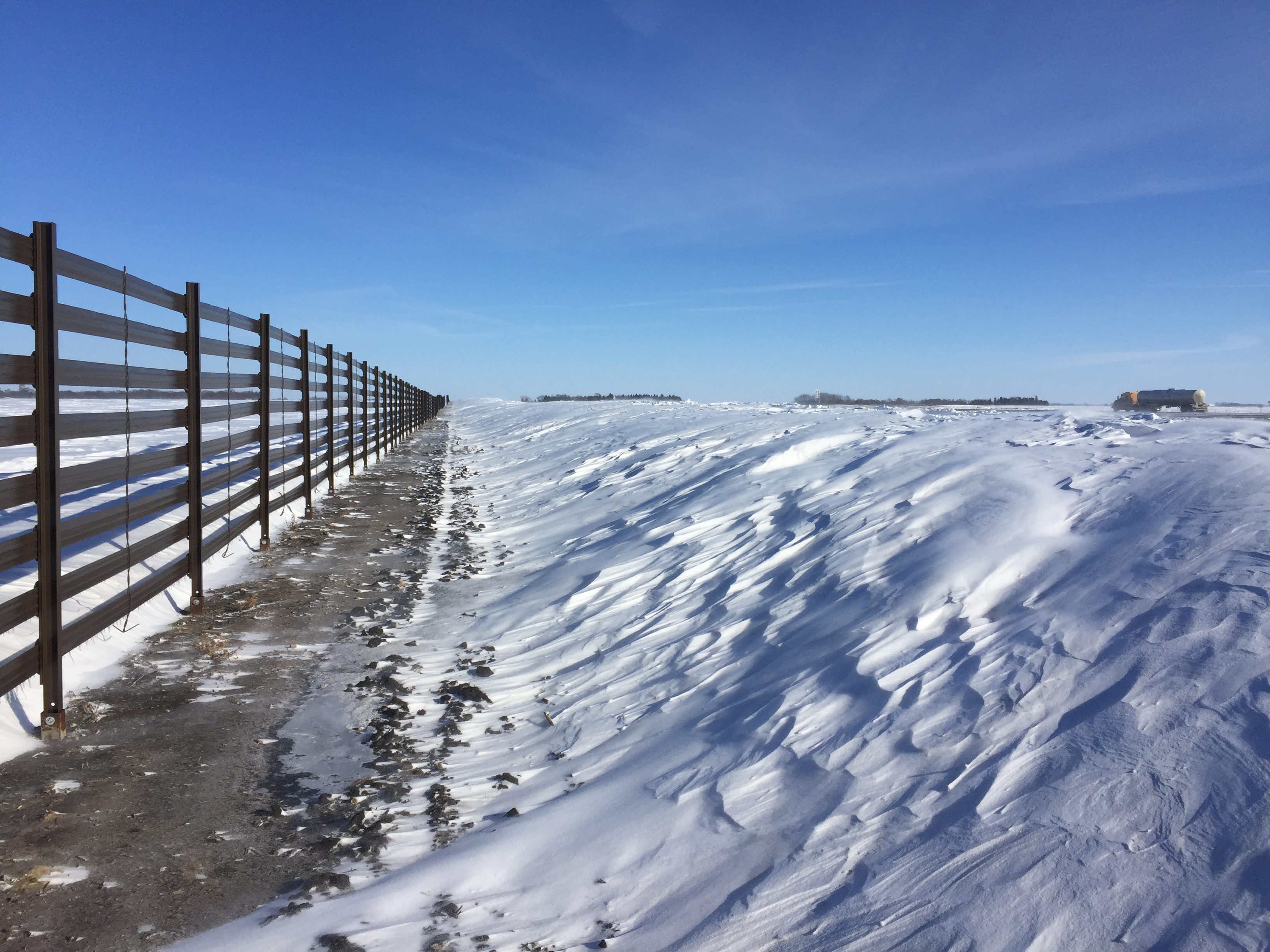
Results from these efforts were used to design an outreach program that was presented to District 8 staff. In January 2017, investigators surveyed the staff to evaluate the training and redesign the program accordingly. Finally, investigators evaluated market values of various snow fence designs.
What Was the Impact?
Initial survey results identified two relevant types of district personnel: maintenance and program delivery staff. Maintenance staff involved in plowing and road care interact more with landowners than do program delivery staff, who design or redesign roadways and may be involved in acquiring land for snow fences. Though tailored for each group, all training described the MnDOT blowing snow control program and its implementation, the role of snow fence coordinators, operational benefits and awareness of how promotion of the program fits within the scope of an employee’s duties.
Keys to the success of snow fence programs around the country include strong relationships and direct communication with local landowners, funding, landowner interest in conservation and public safety, and observable benefits.
A follow-up survey showed marked improvement in staff knowledge of the program and willingness to promote it. Landowner participation grew from four sites to 15 in the year after training, due mostly to maintenance staff participation. Survey respondents suggested potential program improvements such as more program champions; outreach in spring and summer at community and farmer gatherings as well as at local and state fairs; and a clearer understanding of how program promotion fits within job responsibilities.
The market study demonstrated that nonliving snow fences, though the most expensive option for MnDOT, offer the largest benefit per acre. Landowners seem to prefer living snow fences and standing corn rows. MnDOT may wish to raise the annual payment for all living snow fences.
What’s Next?
Considerations for MnDOT include implementing the training program in other districts, further defining central and district staff roles in snow fence promotion and implementation, incentivizing snow fence champions, developing more outreach material and maintaining relationships with landowners.
A new project currently under way aims to further expand these efforts.
This post pertains to Report 2017-42, “Expanding the Adoption on Private Lands: Blowing-and-Drifting Snow Control Treatments and the Cost Effectiveness of Permanent versus Non-Permanent Treatment Options.” Related research can be found by searching “snow fences” under “Projects” at MnDOT.gov/research.

New Project: Re-Using Water at Safety Rest Areas and Truck Stations
Water is being drawn out of the state’s aquifers faster than it is being replenished, so public agencies like MnDOT are increasingly interested in figuring out how to reduce water usage.
A two-year research project underway at MnDOT is investigating how the agency can re-use wastewater at its safety rest areas and truck-washing stations. In addition to preserving groundwater, MnDOT hopes to reduce utility and septic system costs.
MnDOT owns and operates over 1,000 buildings, including 68 safety rest areas, 137 truck stations, 18 regional/headquarters maintenance sites and 15 weigh stations and truck scales.
These facilities either discharge their wastewater to a subsurface sewage treatment system or a wastewater treatment plant.

Researchers from the University Of Minnesota’s Onsite Sewage Treatment Program have been hired to investigate the potential avenues for wastewater re-use at MnDOT. They will consider when re-use makes sense from a regulatory, environmental, economic and management perspective; recommend the most appropriate applications for reuse and identify any challenges with implementation.
Potential benefits include:
- Preserve ground and drinking water for potable drinking.
- Reduced life-cycle costs in areas where low-producing wells could meet drinking water needs while reused wastewater could be used for toilet flushing and equipment wash-down.
- In areas with municipal water, lower water utility costs.
- Increased longevity of septic systems due to decreased loads.
As the state, counties, or cities construct new facilities or upgrade existing ones, this research will provide insight into what options are readily available to reduce water consumption and improve water efficiency. If these types of reuse systems are demonstrated by MnDOT, then they could lead to usage by other properties across Minnesota.
Watch for new developments on this project. Other Minnesota research can be found at MnDOT.gov/research.

Pervious Concrete Pavement Reduces Runoff into Shoreview Lake
The city of Shoreview, Minnesota was on the right track when it took the unusual step of paving a residential neighborhood with pervious concrete to help control stormwater and pollutant runoff into a nearby lake, according to a recently released seven-year performance study.
Typically used for parking lots and sidewalks, porous paving material allows stormwater to filter through the pavement and an aggregate base into the soil rather than run off the pavement and drain into storm sewers.
Shoreview bucked convention by using pervious concrete in a traffic application — low-volume, low-speed roads in the Woodbridge neighborhood near Lake Owasso. The city thought pervious pavement could help meet community sustainability goals and federal clean water regulations by reducing pollutants in waterways and groundwater while keeping water safely off driving surfaces.
Traditionally, pervious concrete hadn’t been used for roadways because engineers didn’t consider it strong enough for traffic (this and other projects have now demonstrated its application for low-volume roads like neighborhood streets). The impact on ride quality, tire-pavement noise and filtration was also not well understood, particularly in cold climates with freeze-thaw cycles like those in Minnesota.
Pervious concrete also presented a maintenance challenge: Organic debris, sand and other grit can clog the pavement’s pores. Periodic vacuuming is required to maintain the intended flow of water through the pavement. Concerned about how best to maintain the pavement and interested in tire-pavement noise levels and filtering performance, Shoreview, MnDOT and the Local Road Research Board monitored the Woodbridge roadways for seven years.
Installation and Evaluation
Shoreview replaced 9,000-square -feet of asphalt roads with 7 inches of pervious concrete over 18 inches of coarse aggregate base; near the lake, highly drainable sand served as the base. About twice each year for five years, researchers tested sound absorption, water infiltration and ride quality one day after the pavement had been vacuumed. In 2015, they repeated these tests without vacuuming the day before.
The pervious pavement performed well in filtering stormwater. By 2012, at least 1.3 acre-feet of water had filtered through the pavement and ground, and by 2015, nearly 2 acre-feet of water had filtered through the surface—all of which would otherwise have run directly into Lake Owasso.
Water infiltration and sound absorption rates were higher than traditional concrete, although rates declined over time because organic material continued to clog pavement pores despite vacuuming twice a year.
Conclusions
Initial construction of the pervious concrete streets and stormwater filtration system was slightly more costly than construction of comparable asphalt pavement with culverts. Life-cycle costs, including projections of maintenance costs over 15 years, however, showed somewhat lower costs for pervious pavement. While the pervious concrete pavement may require diamond grinding after 10 years, monthly vacuuming could make this unnecessary. Asphalt pavement would typically require a mill-and-overlay at year 15, and culverts would require periodic cleaning.
Additional benefits of the pervious pavement system that were not included in cost calculations—but were clearly significant—included complying with the federal Clean Water Act, recharging groundwater and avoiding direct pollution of Lake Owasso. Shoreview’s investment in pervious concrete has paid off economically and environmentally.
For additional information about this line of research, see these resources:
- Seven-year study final report
- Technical summary of preliminary study of pervious concrete
- Related ongoing study: Permeable Pavement for Road Salt Reduction
 Crossroads
