

Researchers tested ultrasonic bat deterrence devices at two MnDOT bridges, tracking bat activity with acoustic echolocation recorders and field inspections. Deterrence devices used in short- and long-term trials dramatically reduced bat activity at bridge site. Analysis showed that bats return promptly when devices are turned off.
Continue reading Ultrasonic Devices Deter Bats During Bridge RepairCategory Archives: Environment
New Project: Comparison of Compost and Proprietary Soil Amendments for Vegetation Establishment
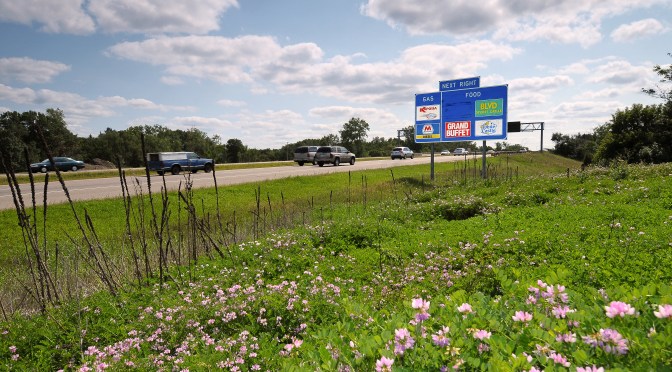
After road construction, the adjacent disturbed soil has a diminished capacity to sustain vegetation, overall soil health is compromised from soil disturbance and there is an increased risk for erosion.
Soil quality in these areas can be replenished by importing topsoil (the preferred choice) or using organic composts. If organic compost is not available, proprietary soil amendments provide a cost-effective alternative. But information regarding the effects, mix ratios and application techniques for these products is limited. Research is needed to better understand optimal organic compost ratios and how to integrate these amendments to improve soil quality.
Continue reading New Project: Comparison of Compost and Proprietary Soil Amendments for Vegetation Establishment
Stormwater Bioslope Site Monitoring Continues Using Local Filter Media
MnDOT and local agencies control stormwater runoff from roadways through a range of settlement, filtration and infiltration facilities, such as wet ponds, infiltration basins, trenches and swales. Infiltration facilities have been used for more than 30 years, but a high rate of failure has been tied to inaccurate determination of soil infiltration rates. Researchers developed new tools and protocols to provide designers and engineers with the accurate infiltration measures they need, from initial site selection through construction. These tools and methods will support the development of successful stormwater infiltration facilities along Minnesota roadways.
Continue reading Stormwater Bioslope Site Monitoring Continues Using Local Filter Media
Edina Studies Snowmelt To Reduce Chlorides From Deicing Operations
In Minnesota’s metro region, areas of shallow groundwater show increasing evidence of chloride contamination from winter road maintenance operations, particularly deicing. More than a quarter show chloride concentrations at the maximum contaminant level for municipal drinking water. In addition, 123 lakes and rivers show chloride impairment or risk of impairment for aquatic life. Chlorides are now considered the second most important threat, after phosphorus, to Minnesota’s urban waters.
The City of Edina, with funding from the Local Road Research Board, hired the University of Minnesota to analyze chloride accumulation in city snowmelt following winter maintenance operations to learn how to most effectively adjust its deicing strategies to reduce chloride contamination.
Over two winters, researchers collected data from city deicing operations and correlated it with chlorides present in meltwater runoff. A sampler box collected data continuously, and snow pile cores were also analyzed. Snowplow operators then examined the results during workshops, yielding innovative ideas for reducing salt use.
Continue reading Edina Studies Snowmelt To Reduce Chlorides From Deicing Operations
A Long-Term Approach to Green Stormwater Infrastructure
This article was originally published in Catalyst, May 2021.
Strategies for managing stormwater runoff have been steadily undergoing a shift in recent decades toward “green” infrastructure. This is a potentially beneficial change, but transportation professionals are beginning to recognize a need for better information on how to properly design, implement, and maintain these facilities.
Continue reading A Long-Term Approach to Green Stormwater Infrastructure
New Project: Identifying and Optimizing Electric Vehicle Corridor Charging Infrastructure for Medium- and Heavy-Duty Trucks
Transportation is the number one emitter of greenhouse gas emissions in Minnesota and medium to heavy duty trucks contribute to about 40% of transportation carbon pollution.
While electric cars and buses are becoming more common, medium and heavy duty electric trucks are still in their infancy, and the nationwide infrastructure needs to support them still has to be determined.
In a new study, MnDOT will identify the electric charging infrastructure needed along Minnesota highway corridors to support clean freight transportation.
Continue reading New Project: Identifying and Optimizing Electric Vehicle Corridor Charging Infrastructure for Medium- and Heavy-Duty Trucks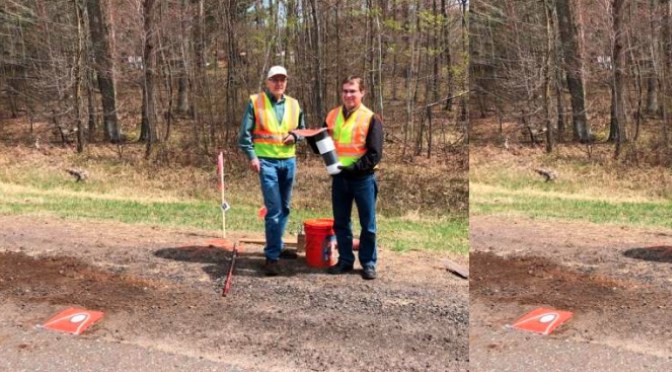
Low-Volume Road Runoff Analyses Suggest Optimal Treatments
Assisted by many county agency staff, researchers collected and analyzed runoff from low-volume rural roads over two years to determine how their contaminants compared to those of high-volume roadways. Results documented that runoff from low-volume roads has a lower contaminant concentration and that ditches and swales can be used to effectively treat rural road runoff.
Continue reading Low-Volume Road Runoff Analyses Suggest Optimal Treatments
Monitoring Performance of an Iron-Enhanced Stormwater Filtration System
A recent study determined the effectiveness of a two-cell iron-enhanced stormwater filtration basin to remove phosphorus from highway stormwater runoff collected from 2012 to 2018. Researchers recommended design changes that would allow for more accurate monitoring of these filter basins.
Continue reading Monitoring Performance of an Iron-Enhanced Stormwater Filtration System
New Project: Have Minnesota’s Warmer Winters Increased the Number of Freeze Thaw Cycles?
Minnesota is experiencing warmer winters and an increase in freeze-thaw events may negatively impact pavement systems. However, the impacts of these recent climate changes on freeze-thaw cycles have not been well studied.
Continue reading New Project: Have Minnesota’s Warmer Winters Increased the Number of Freeze Thaw Cycles?
Green Stormwater Infrastructure: Tradeoffs and Maintenance
This article was originally published in Catalyst, August 2020.
Using “green” infrastructure is a useful strategy for handling city stormwater, which may contain deicers and other contaminants from streets and sidewalks. Choosing the right method and ensuring it doesn’t cause unforeseen damage, however, is another matter.
Continue reading Green Stormwater Infrastructure: Tradeoffs and Maintenance
