This article was originally published inCatalyst, May 2020.
Many of us would never drive after drinking, but we’re not as hesitant about getting behind the wheel after being awake for too long or not getting enough sleep. It turns out that can be just as dangerous as driving while impaired by alcohol or drugs.
This article was originally published inCatalyst, May 2020.
Waymo and Uber have started trials of shared autonomous vehicle (SAV) service in several US cities. Without the expense of drivers, autonomous service could one day make the cost of a ride so low that people choose SAVs for their daily transportation needs instead of owning a vehicle.
This article was originally published in Catalyst, April 2020.
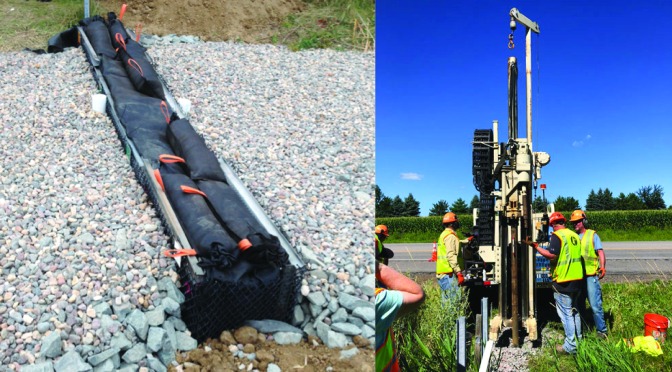
The Minnesota Department of Transportation (MnDOT) is exploring innovative ways to filter pollutants from stormwater runoff and meet permit requirements for construction projects. In a recent study, U of M researchers documented the performance of an iron-enhanced ditch check filter to remove phosphates from stormwater. They found that the filter was effective, though its performance decreased over time.
This article was originally published in Catalyst, April 2020.
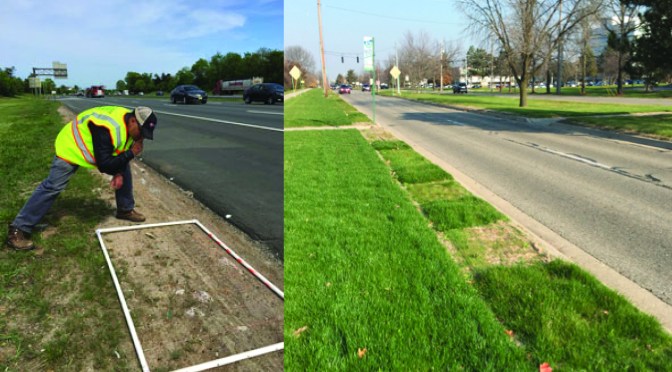
Vibrant green grass along roadways is a common sight across urban and rural landscapes in Minnesota and many other states, but its survival is a significant challenge—especially in cold climates. Roadway salt and other stressors can cause turfgrass installations to fail, requiring expensive reseeding or sodding efforts.
Transportation contributes to many broad societal outcomes, such as employment, wealth, and health. Some Minnesotans, however, are underserved by current systems and face disparities and barriers in reaching their destinations. According to new research from the U of M, efforts to improve transportation equity need to focus on societal inequities—such as racial segregation and auto dependency—as well as the transportation barriers that affect specific communities and population groups.
Lane-departure crashes on curves make up a significant portion of fatal crashes on rural Minnesota roads. To improve safety, solutions are needed to help drivers identify upcoming curves and inform them of a safe speed for navigating the curve.
“Traditionally there are two ways to do this: with either static signage or with dynamic warning signs,” says Brian Davis, a research fellow in the U of M’s Department of Mechanical Engineering. “However, while signing curves can help, static signage is often disregarded by drivers, and it is not required for roads with low average daily traffic. Dynamic speed signs are very costly, which can be difficult to justify, especially for rural roads with low traffic volumes.”
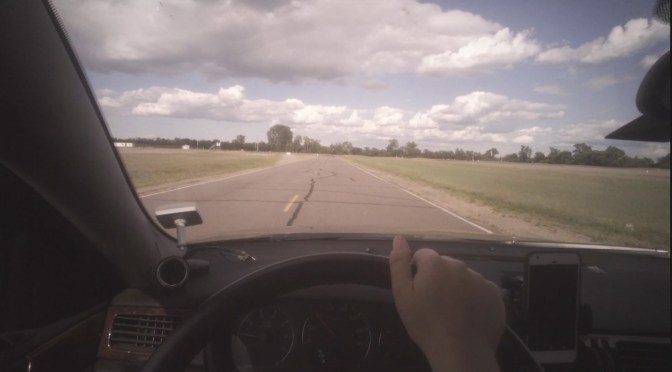
In a recent project led by Davis on behalf of MnDOT and the Minnesota Local Road Research Board, researchers developed a method of achieving dynamic curve warnings while avoiding costly infrastructure-based solutions. To do so, they used in-vehicle technology to display dynamic curve-speed warnings to the driver based on the driver’s real-time behavior and position relative to the curve. The system uses a smartphone app located in the vehicle to provide the driver with visual and auditory warnings when approaching a potentially hazardous curve at an unsafe speed.
“Highway curves [make up] 19 percent of the total mileage of the paved St. Louis County highway system, yet these curves account for 47 percent of all severe road departure crashes,” says Victor Lund, traffic engineer with St. Louis County. “In-vehicle warnings will be a critical strategy to reduce these crashes.”
To begin their study, researchers designed and tested prototype visual and auditory warning designs to ensure they were non-distracting and effective. This portion of the study included decisions about the best way to visually display the warnings and how and when audio messages should be used. “To create the optimal user experience, we looked at everything from how to order the audio information and when the message should play to the best length for the warning message,” says Nichole Morris, director of the U’s HumanFIRST Lab and co-investigator of the study.
Next, a controlled field test was conducted to determine whether the system helped reduce curve speeds, pinpoint the best timing for the warnings in relation to the curves, and gather user feedback about the system’s usefulness and trustworthiness. The study was conducted with 24 drivers using the test track at the Minnesota Highway Safety and Research Center in St. Cloud, Minnesota. The selected course allowed drivers to get up to highway speeds and then travel through curves of different radii, enabling researchers to learn how sensitive drivers are to the position of the warnings.
Based on the study results, the system shows both feasibility and promise. “Our in-vehicle dynamic curve warning system was well-liked and trusted by the participants,” Davis says. “We saw an 8 to 10 percent decrease in curve speed when participants were using the system.”
The project was funded by MnDOT and the Minnesota Local Road Research Board.
Social media can be effective as a strategic and select part of public engagement plans, according to findings of a University of Minnesota study. Co-principal investigators were Professor Ingrid Schneider of the Department of Forest Resources and Associate Professor Kathryn Quick of the Humphrey School of Public Affairs. “Public engagement for transportation planning and programs is not only required, it’s a crucial component in policy and project success,” Schneider says. “Since 2000, advances in technology and communications provide opportunities to engage with more people in new ways.”
The multipronged, multiyear project investigated current knowledge about public engagement through social media nationwide and in Minnesota. It also developed guidance about how social media may be used to reach and engage diverse populations in the state about transportation planning and projects.
For the analysis, the team used multiple methods: a literature review, telephone interviews, and four case studies. “The literature review indicated social media needs to be part of a multipronged engagement plan,” Schneider says. “While 90 percent of U.S. adults are online and 69 percent use social media, a social-media-only plan may not reach people over the age of 65 or with a high school education only. Platform use also varies considerably: African Americans and Latinos, for example, use video-sharing more than other groups.”
Phone interviews of more than 800 Minnesotans found that 72 percent use social media, and 11 to 21 percent participated in some way in planning transportation programs, policies, and projects in the previous year. In addition, 36 percent expressed interest in using social media to get information, provide feedback, or make suggestions related to transportation programs, policy, and planning.
The case studies compared pairs of transportation projects in Minnesota: two with significant social media use (Richfield, Red Wing), and two with low use (Saint Paul, Detroit Lakes). Findings revealed that the two projects with higher levels of social media had more connections with stakeholders. The quality and effectiveness of those connections, however, varied. “Government social media primarily informed audiences, while community-created pages fostered deeper engagement and dialogue,” Quick says. “In addition, the quality of social media, and their combination with other outreach technologies, influenced stakeholders’ perceptions of the engagement efforts.”
The project was funded by MnDOT and the Minnesota LRRB. “MnDOT and LRRB are committed to listening to and learning from the public,” says Renee Raduenz, MnDOT market research manager. “Social media provides a unique, efficient, and potentially inclusive tool in those efforts. This research brings us one step closer to understanding how we can maximize the power of social media to its fullest.”
Taken as a whole, the findings suggest at least four main opportunities to strengthen meaningful social media engagement:
Integrate social media into multipronged, dynamic engagement approaches. Pay attention and contribute to community-created social media pages, and provide a regular diet of new information and updates.
Consider the demographic qualities of the key stakeholders to determine how social media can be most useful.
Employ best practices for social media management, such as using hashtags to organize data, posting dynamic content (project videos, live streams), and clearly stating social media guidelines.
Expand and/or develop research and evaluation plans to understand and assess future social media engagement efforts.
CTS has been celebrating its 30th anniversary this year with a look back at significant milestones. One of our goals for the anniversary was to show how research progresses over time to lead to new knowledge.
In February we shared videos that trace the path of progress in two of our key research areas: traffic operations and pavement design. Today, at our 28th Annual Transportation Research Conference, we debuted a video about another important research topic: accessibility metrics.
In the new video, Andrew Owen, the director of the U’s Accessibility Observatory, explains how accessibility looks at the end-to-end purpose of transportation: fulfilling people’s need to reach destinations. “The Observatory is pushing the envelope and staying ahead of research into what new types of metrics are possible,” he says.
The Observatory builds on tools and expertise developed in two previous University research studies: the Transportation and Regional Growth Study (1998–2003) and the Access to Destinations study (2004–2012).
Keeping Minnesota’s roadsides green is about more than just aesthetics—healthy turfgrass can improve water quality, reduce erosion and road noise, and provide animal habitat. However, harsh conditions such as heat, drought, and salt use can make it difficult for roadside turfgrass to thrive.
In 2014, as part of a study funded by the Minnesota Local Road Research Board (LRRB), researchers in the University of Minnesota’s Department of Horticultural Science identified a new salt-tolerant turfgrass mixture that could be used on Minnesota roadsides. But, when MnDOT began using the mixture, called MNST-12, the agency experienced a series of installation failures.
Now, led by Professor Eric Watkins, the research team has identified new best management practices for installing and establishing this type of salt-tolerant turfgrass. The study, funded by the LRRB, specifically focused on watering practices, soil amendments, and planting date for both seed and sod.
“Newer improved seed or sod mixes like MNST-12 may have differing requirements for successful establishment compared to other species or cultivars that contractors and other turf professionals are more familiar with,” Watkins says. “Since all of these management practices are prescribed—or not prescribed—in the MnDOT specifications, generating data that can inform future specifications is a valuable outcome of this work.”
The study, which was conducted over several years, included experiments on how water should be applied to new MNST-12 turfgrass installations, the use of soil amendments at the time of establishment, and the effect of the seeding or sodding date on the success of a new planting.
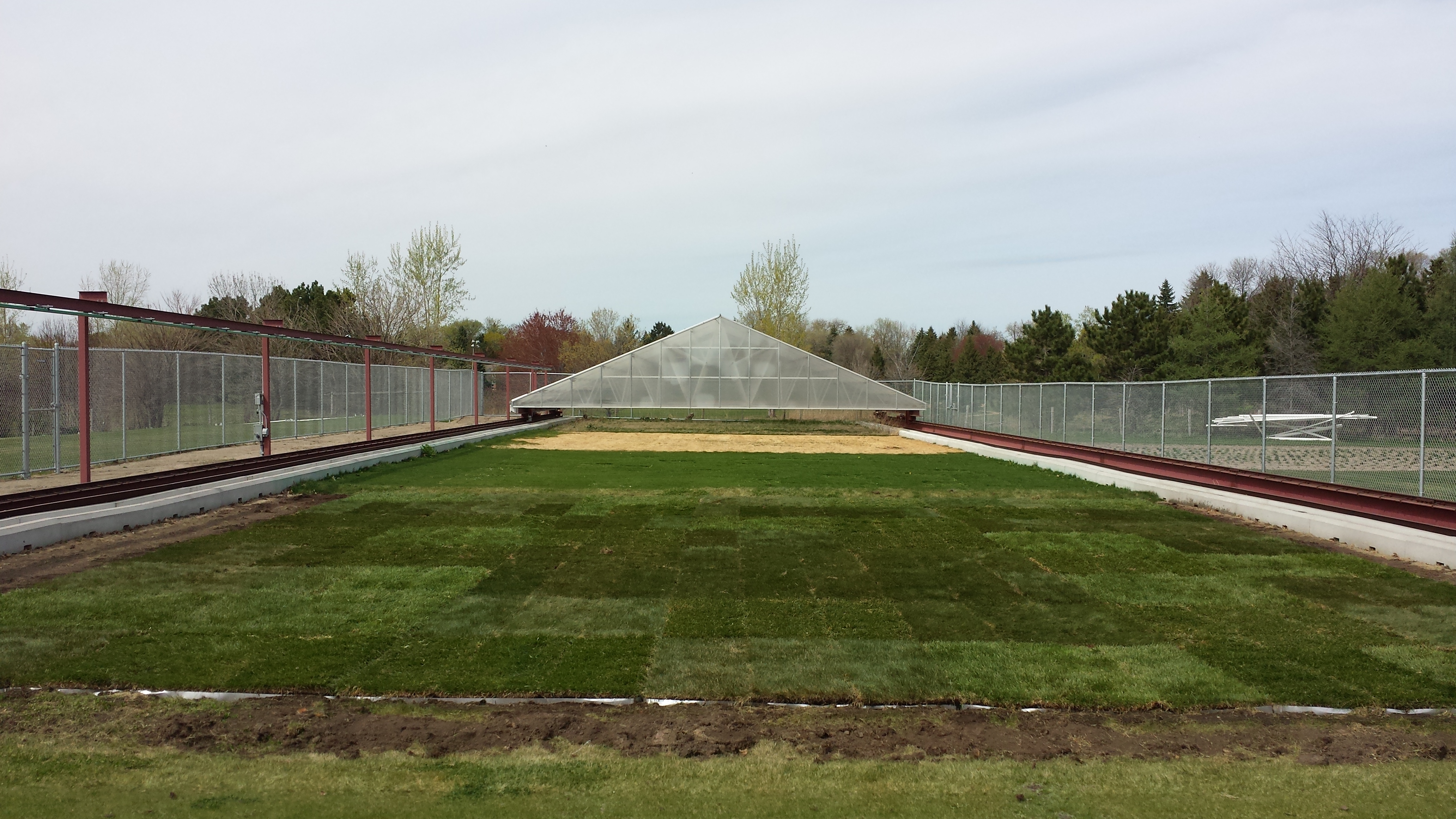
Researchers tested turfgrass watering requirements using an automated rain-out shelter. Photo: Matt Cavanaugh
Based on their findings, the researchers recommend these changes to MnDOT specifications:
No soil amendments are necessary, but adequate seedbed preparation is important.
Seeding is preferred to sodding between August 15 and September 15.
Sodding can be permitted throughout the year, but only if the installer is able to supply frequent irrigation.
When watering in sod, attention should be given to the species being used and local rates of evapotranspiration (evaporation from both the soil and plant leaves). Sod installers can anticipate using between 100,000 and 170,000 gallons of water per acre to ensure a successful establishment.
Sod can be mowed as soon as sufficient root growth prevents an operator from manually pulling up pieces by hand, but it should not be mowed if wilting from heat or drought.
Currently, the researchers are using the results of this project to develop methods for educating and training stakeholders, including turfgrass installers, on these best management practices. They are also developing systems that could be used by installers in the field to help maximize the success rate of turfgrass installations.
“These best management practices can help limit installation failures and reduce maintenance inputs for future installations, providing both an economic and environmental benefit,” Watkins says.
“The knowledge and improved specifications we gained through this research will allow us to make our contractors more successful, which makes MnDOT successful,” says Dwayne Stenlund, MnDOT erosion control specialist. Because local agencies often rely on these MnDOT specifications as a guide for their projects, they will also benefit from the improved practices.
Stenlund also says the new specifications—especially those related to watering requirements—could allow for a clearer understanding of the true cost and value of turfgrass installation and maintenance work, which could ultimately improve the accuracy of the project bidding process.
In another project, the research team is exploring other turfgrass stresses, such as ice cover and heat. They are also testing additional turfgrass species and mixtures in an effort to continue improving MnDOT specifications for roadside turfgrass installations.
Bridges built using prestressed concrete girders are among the most common in Minnesota and throughout the U.S. because of their good performance, lower initial material costs, and relatively low ongoing maintenance costs. However, the federal requirements for these bridges have changed considerably over the years. As a result, bridges built to older specifications may score poorly when subjected to new bridge rating standards even though they are actually in good condition.
“One area in which this discrepancy between ratings and reality can cause problems is determining safe legal load limits for bridges, which are used to decide whether larger trucks may cross the bridge with an overload permit,” says Catherine French, CSE Distinguished Professor in the Department of Civil, Environmental, and Geo- Engineering and the study’s principal investigator.
“Our goal was to evaluate whether the current guidelines regarding shear forces (which transfer the loads to the supports) may be overly conservative for these older concrete bridges that are in good condition.”
Sponsored by MnDOT, the study was conducted by a team of U of M researchers including Carol Shield (co-investigator) and Benjamin Dymond.
Researchers used a multipronged approach consisting of numerical modeling and tests in both the laboratory and the field. The numerical modeling was used to apply the results of the laboratory and field tests to a study examining the effects of key parameters on the distribution of shear in a bridge system. Parameters included span length, girder spacing and depth, deck thickness, and load position.
Results showed that the shear forces for some bridges are not as high as those predicted by distribution factors in the current specifications—at least partially explaining why some MnDOT bridges with low shear ratings show no signs of distress, French says. The researchers provided recommendations for more refined methods of evaluating prestressed concrete girder bridges that rate low for shear and developed a screening tool to identify which bridges that rate low for shear should be further analyzed.
“The results of this project will help us re-evaluate aging bridges in our inventory, to distinguish those that really do have shear problems from those that don’t, and make decisions about whether they need to be replaced or rehabilitated for extra capacity,” says Yihong Gao, bridge designer with MnDOT’s Office of Bridges and Structures.





 For the analysis, the team used multiple methods: a literature review, telephone interviews, and four case studies. “The literature review indicated social media needs to be part of a multipronged engagement plan,” Schneider says. “While 90 percent of U.S. adults are online and 69 percent use social media, a social-media-only plan may not reach people over the age of 65 or with a high school education only. Platform use also varies considerably: African Americans and Latinos, for example, use video-sharing more than other groups.”
 The case studies compared pairs of transportation projects in Minnesota: two with significant social media use (Richfield, Red Wing), and two with low use (Saint Paul, Detroit Lakes). Findings revealed that the two projects with higher levels of social media had more connections with stakeholders. The quality and effectiveness of those connections, however, varied. “Government social media primarily informed audiences, while community-created pages fostered deeper engagement and dialogue,” Quick says. “In addition, the quality of social media, and their combination with other outreach technologies, influenced stakeholders’ perceptions of the engagement efforts.”


 Crossroads