

Gov. Tim Walz proclaimed April 23-29 Capitol Area Library Consortium Week to recognize CALCO libraries during National Library Week.
Continue reading MnDOT Library is Among State Government Libraries Recognized by Gov. WalzTag Archives: research

Enhancing Pedestrian Experiences at Roundabouts
While roundabouts improve traffic efficiency and reduce accidents, pedestrian safety concerns linger. A study of driver–pedestrian interactions at roundabouts produced guidance for local agencies to increase driver yielding and enhance the pedestrian experience.
Continue reading Enhancing Pedestrian Experiences at Roundabouts
COVID’s Effects on Public Transportation Use and Perceptions
How has the pandemic affected downtown commuters’ travel behavior and perceptions of public transportation?
The COVID-19 pandemic has taken a major toll on public transit ridership—raising questions for the future. Will people associate public transportation with health and safety risks and avoid using it? Will they see public transportation as a less desirable transportation alternative?
Continue reading COVID’s Effects on Public Transportation Use and Perceptions
MnDOT Library launches digital library
The MnDOT Library recently got a request for a copy of Minnesota Standard Specifications for Highway Construction from 1938. It might seem obscure, but the request was easy to fulfill because a digitized version of the manual was readily available in the newly launched MnDOT Digital Library.
Continue reading MnDOT Library launches digital library
Comparing Additives Used in Stabilized Full-Depth Reclamation
Beltrami and Hubbard counties planned pavement rehabilitation on a shared road, presenting a unique opportunity to directly compare two stabilizers: engineered emulsion and Base One, a proprietary mix. While there were some variations in performance and cost, both met design values for pavement strength.
Continue reading Comparing Additives Used in Stabilized Full-Depth Reclamation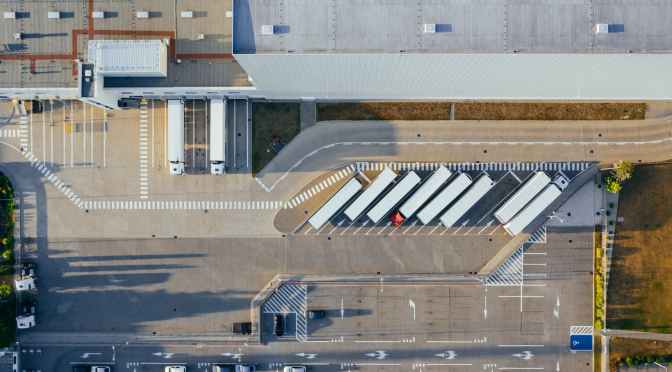
CTS Symposium Speakers Offered Ideas for Building Supply Chain Resilience
Article originally published in Catalyst, February 6, 2023.
Supply chains aren’t normally at the top of the news, but pandemic-related disruptions and empty shelves have put them there. What does the future hold for freight and supply chain resilience? Speakers at the 25th Annual Freight and Logistics Symposium reviewed recent challenges and discussed how to make supply chains more cooperative, connected, and resilient.
Continue reading CTS Symposium Speakers Offered Ideas for Building Supply Chain Resilience
Study of Alcohol Overservice Finds Lack of Enforcement
Originally published as Study of alcohol overservice finds a lack of enforcement—and opportunities to improve in Catalyst, February 2023.
Overservice—the act of serving alcohol to an obviously intoxicated person—contributes to motor vehicle crashes and violence, and it’s illegal in 48 out of 50 states. Still, U of M researchers say overservice tends to be understudied and underenforced.
Continue reading Study of Alcohol Overservice Finds Lack of Enforcement
New Project: Update of Stormwater Management Best Practices Manual
The Local Road Research Board published the Stormwater Best Management Practice (BMP) Maintenance Resource Guide in 2009, and best practices for stormwater management have since evolved. Much has been learned about the benefits and limitations and inspection and maintenance activities of stormwater ponds, bioretention facilities, underground treatment devices, underground detention, and infiltration. Regulatory requirements have also changed as indicated in the Minnesota Stormwater Manual.
Continue reading New Project: Update of Stormwater Management Best Practices Manual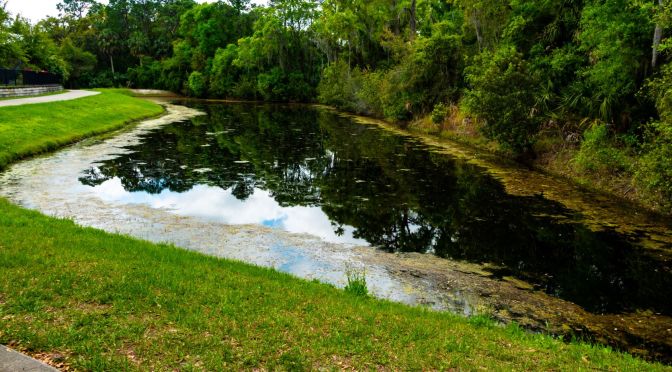
New Project: Sustainable Application of Tire Derived Aggregate in Stormwater Infiltration/Treatment
The reuse of old tires that often end up in landfills has a significant environmental benefit. Tire derived aggregate (TDA), a waste product from automobile tires, can be used in stormwater treatment systems and has shown to be effective at retaining phosphate. However, TDA does not prevent the leaching of metals including zinc and copper.
Developing media for stormwater infiltration/filtration that uses TDA in combination with materials that can capture metals has several advantages. It would prevent more pollutants from being released into Minnesota’s lakes and streams, save on landfill space and reduce stormwater management costs.
“The use of TDA has been proposed in the past for use in stormwater treatment. However, local agencies aren’t very familiar with the product being used for this application and have concerns about its potential to contaminate groundwater resources,” said Mark Hansen, city engineer, City of Coon Rapids. “Initial research is showing positive benefits for the use of TDA as a component of the stormwater treatment process, while minimizing its impacts to groundwater. Using TDA for this application provides a great opportunity to redirect old car tires from landfills and beneficially reuse them to assist in providing stormwater treatment.”
Objectives
- Select blend materials identified in literature review and mix them in different ratios with TDA.
- Measure the pollutant removal performance from runoff, leaching of zinc and copper from TDA, and infiltration capacity of each mix.
- Analyze the observed values to choose the suitable blend material/ratio.
- Perform lab batch tests to evaluate the potential leaching or removal of polyfluoroalkyl substances (PFAs) by TDA and the blends.
- Determine impact of biofilms on the leaching of zinc and copper from the mix (Biofilms will be grown on an already defined mix of TDA with blend material).
- Conduct outreach on project results and implications to management to key stakeholder groups.
Project Details
- Estimated Start Date: 06/03/2022
- Estimated Completion Date: 06/30/2025
- Funding: Local Road Research Board
- Principal Investigator: John Gulliver
- Co-Principal Investigator: Meijun Cai
- Technical Liaison: Mark Hansen
Details of the research study work plan and timeline are subject to change.
To receive email updates about this project, visit the Local Road Research Board website to subscribe.
Research Pays Off Webinar Series: Intelligent Compaction Technology as a Service and for Compliance
The National Road Research Alliance (NRRA) is hosting “Intelligent Compaction Technology as a Service and for Compliance – How ICT Research has led to the Removal of Technicians from Construction Sites in the UK” on July 19 at 10 a.m. CST, presented by Ruairi Charlesworth of Highway Data Systems.
Continue reading Research Pays Off Webinar Series: Intelligent Compaction Technology as a Service and for Compliance Crossroads