

Approximately 62,000 miles of Minnesota’s roads are bituminous, or asphalt, surfaces. Bituminous roads are cost-effective and offer improved ride quality and safety.
Continue reading New Project: Amount of Bituminous Surface Lost Each YearTag Archives: MnDOT

Safety Considerations Associated with Driverless Shuttles
Driverless vehicles present an enticing opportunity for increased traffic safety and reduced labor costs. However, technical issues and concerns remain regarding the interaction between driverless vehicles and human drivers. This project included observing and analyzing the interactions of a driverless shuttle and other road users in a pedestrian-heavy area to develop strategies for decreasing potential threats. Increasing the speed of the driverless shuttle and displaying clearer electronic messaging on the back of the shuttle could improve safety challenges.
Continue reading Safety Considerations Associated with Driverless Shuttles
Improving Pedestrian Safety on Reservations in Minnesota
MnDOT has identified Native Americans as one of six priority populations in the state that experience disproportionate risks as pedestrians. To access everyday services such as grocery stores, workplaces and schools, pedestrians may have to cross a state or county roadway at unmarked crossings. Installing traffic safety countermeasures at these crossings is intended to reduce the risk faced by pedestrians. This project analyzed pedestrian safety at 23 locations within seven reservations and the effectiveness of countermeasures implemented at six locations.
Continue reading Improving Pedestrian Safety on Reservations in Minnesota
Administrative Rules and Structures of Speed Safety Camera Systems
Speed Safety Cameras (SSCs) detect the speed of vehicles through the use of radar technology or detectors that are embedded in the surface of the roadway, and associate those readings with a photograph or video of the vehicle. They can be deployed as fixed units (a stationary camera targeting a specific location), point-to-point units (multiple cameras that capture average speed over a set distance) or mobile (a portable camera positioned in a trailer or vehicle). The results are then “read” by trained analysts in a data center, who may or may not be members of law enforcement. Speeding tickets are then issued on the basis of this technology. The question facing the Minnesota Legislature in 2024 was, is this needed? And what are the best practices for implementing it?
Continue reading Administrative Rules and Structures of Speed Safety Camera Systems
MnDOT and the Local Road Research Board Fund New Research Projects to Address Critical Transportation Issues
MnDOT and the Local Road Research Board have funded 27 new research projects out of 82 proposals submitted this year. Every MnDOT and LRRB project is guided by a Technical Advisory Panel, with each member serving an important role in the success of the project. MnDOT and LRRB are actively seeking volunteers to serve as Technical Advisory Panel members. TAP members will help with guiding research and reviewing final project deliverables.
To receive updates on any of the funded projects, select “subscribe” on the project webpage.
Bridges and Structures
Environmental
- Quantifying the Influence of Driver Behavior on Greenhouse Gas Emissions and Air Quality
- Incorporation of Soil Health Engineered Measures on MnDOT Construction Projects and Resilient Stormwater Management
- Innovative Stormwater Solutions for Linear Projects
- Feasibility of LED Solar Street Lighting
- Development of Biochar Specification Criteria as Soil Amendment for Slopes, Conveyances and Stormwater Treatment Systems, Phase 2
Maintenance Operations
Materials and Construction
- Tools to Improve the Durability of Asphalt Pavements
- Feasibility of InSAR for Continuous Monitoring of Ground Deformation and Performance Tracking of Geotechnical Assets
- Evaluating and Implementing Ground Penetrating Radar (GPR) for Continuous and Rapid Monitoring of Moisture Fluctuations in In-service Roads
- Are Current Rigid Pavement Roundabout Designs Working in Minnesota?
- Holistic Design and Selection Criteria for Unbound Geomaterials Used in Pavement Systems
- Design Guidance and Best Practices for the Use of Light Fill
Multimodal
- Navigating Healthier Community Outcomes with Transportation Corridor Rankings
- Operational Characteristics of Conventional and Electric-Assisted Bicycles and Their Riders
Policy and Planning
- Leveraging Transportation Investments for Economic Development and Wealth Building
- Refining the Understanding of Parking Space Requirements and Its Impact on Vehicle Miles Travelled
- Speed Impacts on Complete Streets Elements, Phase 2
- Freeway Corridor Economic Impact
Traffic and Safety
- High Tension Cable Median Guardrail Expected Lifespan
- Use of Colors in Dynamic Message Signs for Both Travel Times and Static Sign Simulation
- Evaluation of Driver Speeds After Implementation of Speed Limit Reduction on Urban Streets
- Estimating Likely Mode Shift and Vehicle Miles Travelled Reduction Potential Using TBI Data and AI Algorithms
- Bike Infrastructure Planning Based on Mobile-Sourced Data and Anticipated Route Shifts
- Exploring Completeness and Accuracy of Driver Crash Reporting of Property Damage Only Crashes
- Leveraging C-V2X and Advanced Communications/Sensing for Rural Road Safety
- A Novel Red Light Running Warning System Using Connected v2i Technology, Phase 2: Driver Testing on Public Roads

New Project: Speed Impacts from Roundabouts and Other Traffic Control Devices
Roundabouts are effective at reducing driver speeds and lowering serious crash rates compared to other intersection types. Speeds vary in roundabouts, however, depending on geometric factors such as the number of lanes, entry and exit widths, and diameter. The use of supplementary control devices such as sign types, sign placement and pavement markings may also impact entry and exit speeds.
Continue reading New Project: Speed Impacts from Roundabouts and Other Traffic Control Devices
New Project: Effect of Centerlines on Prevailing Traffic Speeds of Low-Speed, Two-Lane, Two-Way Roads in Urban Contexts
Vehicle speed has a substantial influence on both the likelihood and severity of crashes involving nonmotorized road users. Reducing speeds on urban streets, in particular, enhances safety for the greatest number of vulnerable road users.
Continue reading New Project: Effect of Centerlines on Prevailing Traffic Speeds of Low-Speed, Two-Lane, Two-Way Roads in Urban Contexts
New Project: Quantify the Benefits of Using Geotextiles and Geogrids to Improve the Performance of Unbound Pavement Layers
MnDOT uses geosynthetic materials to stabilize or reinforce road pavements. Various types of geosynthetics help maintain separation between pavement layers, improve drainage and prevent erosion.
Continue reading New Project: Quantify the Benefits of Using Geotextiles and Geogrids to Improve the Performance of Unbound Pavement Layers
In rural Minnesota, the GoMARTI self-driving shuttle demo is paving the way for autonomous transit
Originally published August 6, 2024 in Catalyst
Upcoming Webinar: Friday, December 6, 2024, from 1:30–3:00 pm.
For more information and to register, go to: Unlocking Autonomous Transportation Potential—Key Insights.
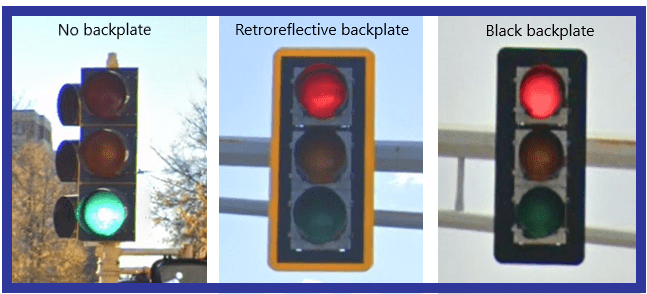
Improving Traffic Signal Visibility
Inconspicuous traffic signals are often cited as contributing to collisions at intersections. If that is true, making traffic signals more conspicuous should lead to fewer crashes. A study published at the TRB conference in 2005 suggested that yellow retroreflective backplates were most effective, reducing accidents by 15% at intersections, and the FHWA later adopted this as a Proven Safety Countermeasure.
Continue reading Improving Traffic Signal Visibility Crossroads