

Chip seals are an economical road surface treatment that MnDOT and counties use to enhance existing pavement performance and service life. A thin layer of asphalt emulsion sprayed on the pavement surface and mixed with aggregate chips can address minor pavement distresses and seal the pavement surface to reduce the impacts of further wear.
Continue reading New Project: Long-Term Field Performance Evaluation of Chip SealsTag Archives: chip seal

Putting Research Into Practice: Fog Sealing Chip Sealed Roads Can Improve Performance
Applying a protective surface—or chip seal—to existing asphalt on relatively low-traffic roads is a pavement preservation method used by many transportation agencies. Yet despite its popularity, chip seals can cause various issues. Some agencies have found that applying a fog seal following a chip seal is a cost-effective strategy for improving asphalt performance and public satisfaction.
Continue reading Putting Research Into Practice: Fog Sealing Chip Sealed Roads Can Improve Performance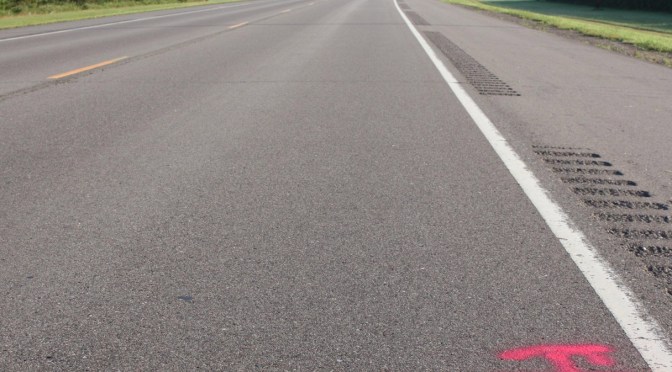
New Project: Benefit/Cost of Applying a Higher Asphalt Film Thickness vs. Doing a Chip Seal at One Year
In Minnesota, reducing the effects of oxidation is a continuous challenge.
In a new study, funded by the Local Road Research Board, researchers will compare the effectiveness of two different methods: applying a surface treatment (typically a fog or chip seal) and increasing the asphalt film thickness during original construction.
Continue reading New Project: Benefit/Cost of Applying a Higher Asphalt Film Thickness vs. Doing a Chip Seal at One Year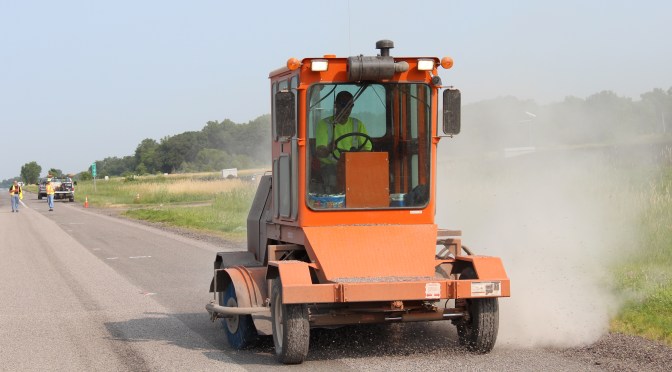
Chip sealing: not just for local roads anymore (video)
Chip-sealing — spraying an asphalt emulsion over existing pavement and then covering it with fine aggregate — is a cost-effective alternative to resurfacing asphalt pavements. Traditionally, however, it has only been used on rural and low-volume urban roadways.
During a recent visit to MnROAD, we filmed a road crew chip-sealing a test section on I-94 and spoke with MnDOT Research Project Supervisor Tom Wood, who explained why chip sealing can also be an effective treatment for high-volume roadways.
*Note: This story was updated on 08/12/2014 to clarify that the chip sealing shown in the video involves spraying an “asphalt emulsion” rather than “hot liquid asphalt,” as stated in an earlier version of this post.
 Crossroads