A new guidebook published by the Minnesota Local Road Research Board offers a uniform approach and practical methods for selecting locations and the right treatment for uncontrolled pedestrian crosswalks in Minnesota.
The five CTS councils are holding this special webinar to discuss how the COVID-19 pandemic is affecting traffic and transit networks in Minnesota. The webinar will feature representatives from Minnesota transportation agencies sharing what they’re seeing in the Twin Cities metro and statewide, presentations from University of Minnesota researchers, and time for an audience Q&A.
MnDOT construction projects require tons of hot mix asphalt each year, with over 188 road and bridge projects in the 2020 construction season alone.
Historically, plant mixed asphalt has been weighed, tracked and paid for with computer-generated paper tickets. Paper ticketing isn’t an ideal process for a variety of reasons—on-site ticket collection poses safety risks, tickets can be easily lost, and data must be tabulated manually, just to name a few.
This article was originally published inCatalyst, May 2020.
Many of us would never drive after drinking, but we’re not as hesitant about getting behind the wheel after being awake for too long or not getting enough sleep. It turns out that can be just as dangerous as driving while impaired by alcohol or drugs.
This article was originally published inCatalyst, May 2020.
Waymo and Uber have started trials of shared autonomous vehicle (SAV) service in several US cities. Without the expense of drivers, autonomous service could one day make the cost of a ride so low that people choose SAVs for their daily transportation needs instead of owning a vehicle.
Cities and counties need affordable pavement preservation treatments, but preservation strategies are often geared towards higher-volume roads. The Minnesota Local Road Research Board has developed new guidance on five lower-cost treatments that is more applicable to local agencies and can be used to preserve pavements based on the type and severity of pavement distress.
Reinforced concrete bridges are built to handle heavy loads and routine traffic for 75 years or more. But bridges in climates like Minnesota’s are exposed to moisture and chlorides from road salts that may penetrate these structures and corrode the steel.
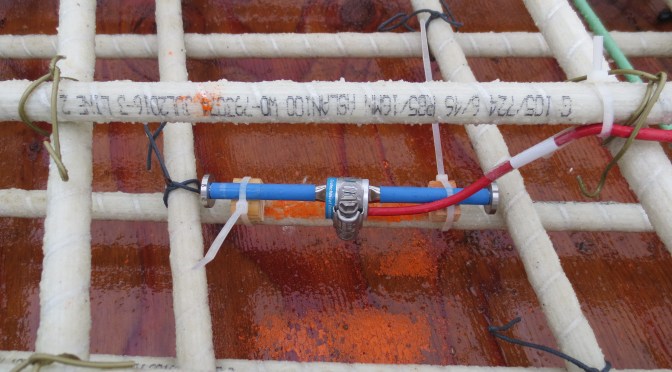
In a recently completed research project, funded by MnDOT and the Local Road Research Board, researchers studied a rural bridge built in 2017 near Elgin, MN, that used glass fiber–reinforced polymer (GFRP) rebar in the bridge deck. They found that GFRP performed well, proving sufficiently strong for use as an alternative to corrosion-susceptible steel rebar.
Just in time for spring, new guidance is available from the Minnesota Local Research Board on the best irrigation methods to establish fresh turfgrass. Researchers tested five irrigation methods for watering new installations of salt-tolerant turfgrass. They developed an instructional course for contractors and guidance for homeowners to promote successful turfgrass installation.
A newly developed system helps traffic engineers quickly spot failing loop detectors, which are used to monitor traffic volumes on Minnesota highways. The software program, developed by the University of Minnesota-Duluth for the Minnesota Department of Transportation, evaluates loop detector data and reports current loop detector health in an easy-to-read graphic format, making it easy to identify loop detectors in need of repair and which loop detectors should be used for the most accurate traffic counts.
This article was originally published in Catalyst, April 2020.
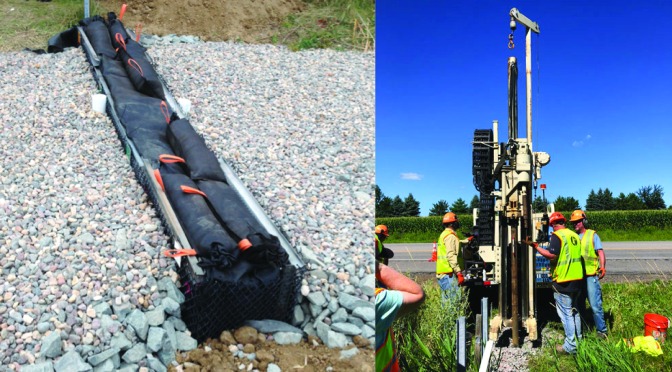
The Minnesota Department of Transportation (MnDOT) is exploring innovative ways to filter pollutants from stormwater runoff and meet permit requirements for construction projects. In a recent study, U of M researchers documented the performance of an iron-enhanced ditch check filter to remove phosphates from stormwater. They found that the filter was effective, though its performance decreased over time.









 Crossroads