Speeding is one of the top 5 factors in crashes in Minnesota. Prioritizing the most effective methods to encourage safe speeds is critical to maximizing effort and funding to reach zero deaths on our roadways.
In 2019, legislation passed to allow Minnesota cities to establish speed limits for city streets under the city’s jurisdiction without conducting an engineering or traffic investigation.
Flashing yellow arrow indicators have been deployed at many signalized intersections in recent years to control left-turn movements and improve traffic flow.
When illuminated, the flashing yellow arrow allows waiting motorists to make a left-hand turn after yielding to oncoming traffic.
The Federal Highway Administration considers flashing yellow arrows to be a significant safety improvement over traditional yield-on-green indicators, which are believed to be less intuitive. However, motorist complaints and some high-profile crashes indicate that there is still some level of driver confusion.
In Minnesota, reducing the effects of oxidation is a continuous challenge.
In a new study, funded by the Local Road Research Board, researchers will compare the effectiveness of two different methods: applying a surface treatment (typically a fog or chip seal) and increasing the asphalt film thickness during original construction.
Complete Streets is a transportation policy and design approach that requires streets to be planned, designed, operated, and maintained to enable safe, convenient, and comfortable travel and access for users of all ages and abilities regardless of their mode of transportation.
This article was originally published in Catalyst, July 2020.
Local government contributions for Minnesota’s roadway system have increased in recent years. This includes local spending on trunk highways—the roads under MnDOT’s jurisdiction—that are part of local transportation systems.
This article was originally published in Catalyst, July 2020.
The City of Ramsey is wearing down its roads faster than it can fund their maintenance and construction. In light of this, the city is investigating ways to fund road projects sustainably, and it partnered with the University of Minnesota’s Resilient Communities Project (RCP) to advance the investigation.
This article was originally published in Catalyst, July 2020.
A new study from researchers in the Humphrey School of Public Affairs found that transitway investment adds considerable economic value to metropolitan regions, including the Twin Cities area, and it increases access to the places people need to reach to prepare for, get, and keep a good job.
MnDOT has successfully piloted a European knowledge retention method to preserve the expertise of retiring workers who are subject matter experts. The agency has produced interactive multimedia books that use graphics, video and written material to present valuable information on concrete pavements, asphalt pavements and steel bridges, learned over a person’s entire career, for use by future engineers.
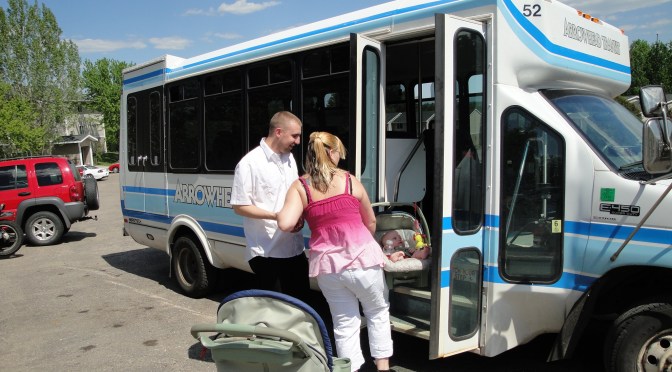
The benefits of Minnesota’s rural and small urban transit systems exceed the costs of services, according to a study sponsored by the Minnesota Department of Transportation (MnDOT). For every dollar spent to provide transit services in Greater Minnesota, benefits worth $2.51 are shared throughout the communities, according to the “Measuring the Economic Benefits of Rural and Small Urban Transit Services in Greater Minnesota” report.
Roadside dynamic message signs with breakaway components handle wind-induced vibrations adequately for an almost 24-year fatigue life. Rural intersection conflict warning signs vibrate noticeably under wind forces and require design changes to resist fatigue damage.
These are the results of a new research study sponsored by the Minnesota Department of Transportation that investigated the effects of wind loading on roadside message and conflict warning signs.







 Crossroads