

Although Minnesotans drove significantly less in 2020 due to the COVID-19 pandemic, there was a substantial increase in fatal motor vehicle crashes. MnDOT Traffic Safety Engineer Derek Leuer and his colleagues want to know why, particularly in rural areas where fatalities and injury rates were higher.
Continue reading New Project: COVID-19 Impacts on Speed and Safety for Rural Roads and Work Zones
New Project: What COVID Travel Reductions Tells Us About Effective Congestion Relief
As Minnesota worked to slow the transmission of COVID-19 in 2020, travel on MnDOT roadways dropped sharply and carried with it a corresponding drop in congestion.
Continue reading New Project: What COVID Travel Reductions Tells Us About Effective Congestion Relief
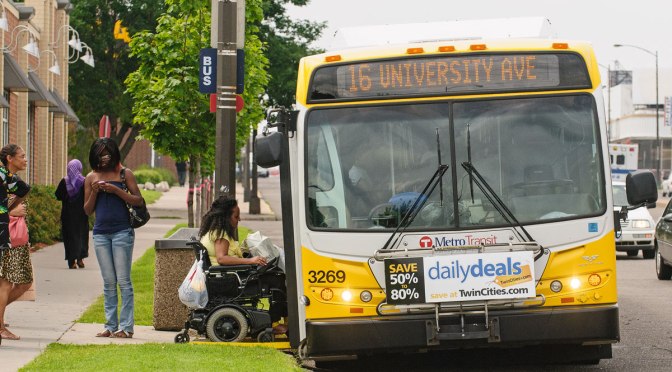
New Project: Understanding Post-COVID Safety Concerns, Perceptions and Preferences of Transit and Shared Mobility Users in Minnesota
Transit ridership dropped significantly last year in Minneapolis, Duluth and other cities during the COVID-19 pandemic.
Continue reading New Project: Understanding Post-COVID Safety Concerns, Perceptions and Preferences of Transit and Shared Mobility Users in Minnesota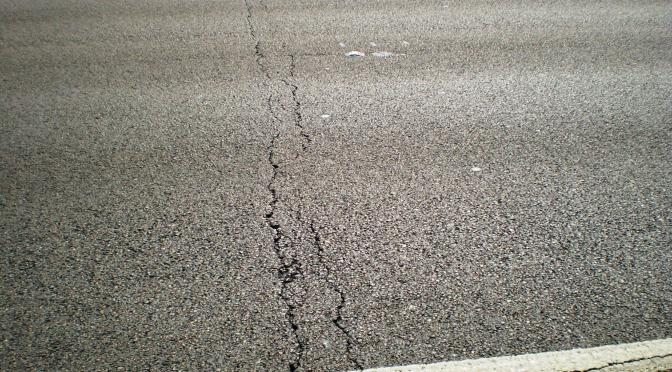
Evaluating Cracking Resistance Test Methods for Asphalt Pavements
A new method of testing low-temperature cracking in asphalt pavement shows promise for design, quality control and quality assurance. Test results produced by the new method, which is faster and less expensive than the previous method, match well with results from the older method.
Continue reading Evaluating Cracking Resistance Test Methods for Asphalt Pavements
Urban Rapid Transit Reduces Traffic on Nearby Roads
Light rail transit and bus rapid transit in the Twin Cities provide urban residents with fast, safe and reliable transportation. These transitways have the potential to attract more riders and further reduce automobile traffic, relieving the growth of congestion on nearby roads as people decide to be transitway passengers rather than motorists.
Continue reading Urban Rapid Transit Reduces Traffic on Nearby Roads
Strategies for Recruiting and Retaining Minnesota’s Transportation Workforce
Across the transportation industry, public and private employers are experiencing workforce shortages and an uncertain future. As older employees retire and younger workers fill their roles, organizations must naturally adjust to accommodate their changing workforce. In the transportation industry, shifting demographics have also brought new attitudes regarding technical jobs. The result is that fewer engineers and other highly skilled professionals are entering the field, and keeping those who do is becoming increasingly difficult. To address this changing landscape, transportation agencies of all sizes must be prepared to meet the challenges ahead or risk falling behind.
Continue reading Strategies for Recruiting and Retaining Minnesota’s Transportation Workforce
Evaluating the Impact of J-Band on Pavement Service Life and Crack Resistance
Potholes and other pavement failures in asphalt typically occur at the seams between lanes, where the mixture loses density during compaction because the edges are not confined like they would be with cement concrete forms. Researchers found that spraying J-Band, a void-reducing asphalt membrane (VRAM), in a band along longitudinal joints before asphalt layers are applied increased bond strength, lowered permeability and air void levels, and improved crack resistance.
Continue reading Evaluating the Impact of J-Band on Pavement Service Life and Crack Resistance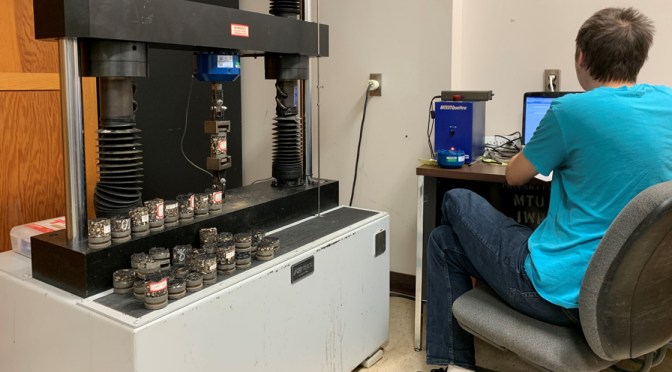
Investigating Asphalt Pavement Stripping Under Seal Coats
A recent Local Road Research Board (LRRB) study confirmed that increased freeze-thaw activity during Minnesota winters leads to delamination of seal coats from underlying pavements. Researchers identified optimal seal coat mix combinations and site conditions that may ensure effective seal coating of asphalt pavements in cities and counties around Minnesota.
Continue reading Investigating Asphalt Pavement Stripping Under Seal Coats
Evaluating “Hot Shots”: Winter Roads Treatment of Hardest Icy Spots
A new six-part video series, “Hot Shots for Cold Climates” explores treating Minnesota’s iciest roadways, with safety and environmental impact in mind.
Continue reading Evaluating “Hot Shots”: Winter Roads Treatment of Hardest Icy Spots Crossroads