

Deer-vehicle collisions are a significant risk to public safety on Minnesota roads—causing injuries and death for humans and animals, and property damage. Minnesota ranks among the top 10 riskiest states for deer-vehicle collisions in the nation.
Continue reading New Project: Identifying Deer-Vehicle Collision Concentrations in Minnesota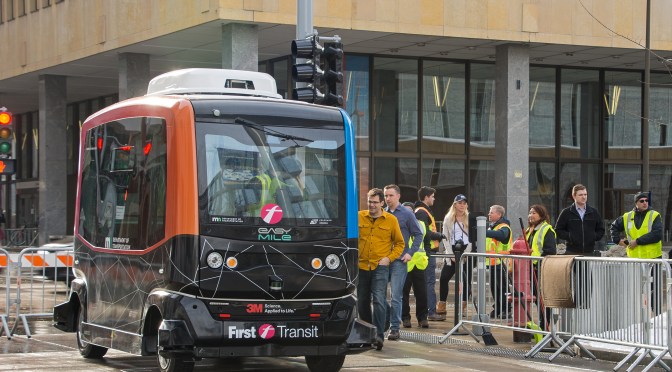
New Project: Designing An Autonomous Service to Cover Transit Last Mile in Low-Density Areas
Public transportation provides a safe, convenient, affordable, and eco‐friendly mobility service. However, due to its fixed routes and limited network coverage, it is sometimes difficult or impossible for passengers to walk from a transit stop to their destination. This inaccessibility problem is also known as the “transit last mile connectivity problem”.
Continue reading New Project: Designing An Autonomous Service to Cover Transit Last Mile in Low-Density Areas
New Project: Bridge Low Slump Concrete Overlay Mix Design for Mobile Mixers
In recent years, MnDOT has seen an increase in cracking of low slump overlays. Cracking of overlays allows chlorides to get into the bridge deck which leads to deterioration of the reinforcement and eventual delamination or spalling. This means that the bridge deck needs to be repaired or even replaced before the service life has been reached.
What is a low slump overlay? A low slump overlay is a technique used by DOTs to extend the life of bridge decks. They are typically 2″ thick and designed to provide low permeability.
Continue reading New Project: Bridge Low Slump Concrete Overlay Mix Design for Mobile Mixers
Quantifying the Effect of Geogrids in Asphalt Pavement Foundation Layers
Geogrid inserted between the layers of asphalt pavement during construction can increase the strength and durability of the finished road. To help engineers decide whether to use geogrids in road construction projects, researchers calculated just how much strength and durability geogrid material can add to an asphalt pavement and integrated the findings into MnDOT’s design software.
Continue reading Quantifying the Effect of Geogrids in Asphalt Pavement Foundation Layers
Innovative Materials and Technologies for Sustainable Pavement Infrastructure
In search of enhanced pavement damage detection practices, researchers investigated two innovative additives to asphalt binders: graphite nanoplatelets and taconite concentrates. They also examined the ability of microwave energy to restore subsurface cracking.
Continue reading Innovative Materials and Technologies for Sustainable Pavement Infrastructure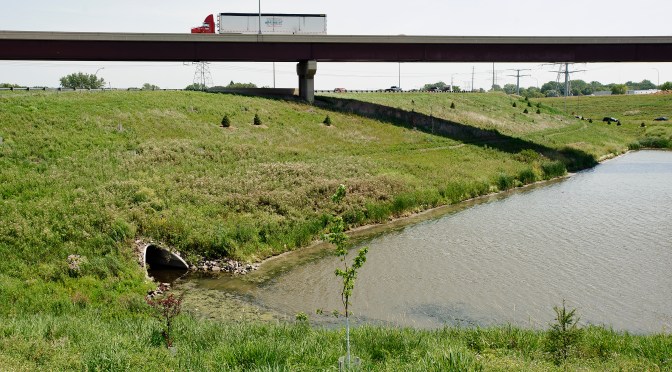
New Tools and Protocols for Successful Infiltration Facilities
Roadside infiltration facilities like wet ponds and swales have been used for more than 30 years to filter roadway contaminants from stormwater runoff, but they have a high rate of failure due to inaccurate determination of soil infiltration rates.
Continue reading New Tools and Protocols for Successful Infiltration Facilities
Investigating Pavement Segments With Long-Term Poor Ratings
Researchers investigated pavement segments within MnDOT’s pavement management system that had received a poor ride quality level rating for more than five years. Their investigations showed that for most segments, the true pavement conditions differed from listed ratings due to the pavement segments’ unique characteristics.
Continue reading Investigating Pavement Segments With Long-Term Poor Ratings

How Did COVID-19 Affect Driver Safety?
The COVID-19 pandemic resulted in fewer drivers on Minnesota’s roads in 2020 than in the previous year. Emptier roadways seem like they should be safer, but many states measured increases in speeding. For example, California issued twice as many speeding tickets, Iowa reported a 65% increase in driving 25 mph or more over the speed limit, and Ohio experienced the highest number of traffic fatalities since 2007. Clearly, some drivers were taking advantage of empty streets to speed. The pandemic also strained police forces, resulting in less enforcement.
Continue reading How Did COVID-19 Affect Driver Safety?
Evaluating Improved Specifications for Retightening Anchor Rods on Support Poles
In this follow-up study, researchers checked the effectiveness of revised specifications for tightening anchor rods on sign and signal support poles. The revised specifications will ensure correct tightening procedures, which will result in better installations and maintenance.
Continue reading Evaluating Improved Specifications for Retightening Anchor Rods on Support Poles Crossroads